In ‘Appropriate Behavior’: What Does It Take for a Woman to Author Herself?

What’s more, to understand ‘Appropriate Behavior’ as the bisexual Iranian version of someone else’s work would be to miss the point of the film entirely. While on the surface, the film is about a bisexual Iranian American coming to terms with a breakup and with the messiness of her sexuality, it’s really a film about identity, about what it means not to take the easy way out by shaving off or hiding the parts of yourself that don’t fit into a neat package. By failing, spectacularly, to fit, the film, like its main character, becomes something more than the sum of its seemingly discordant parts, something entirely of its own.

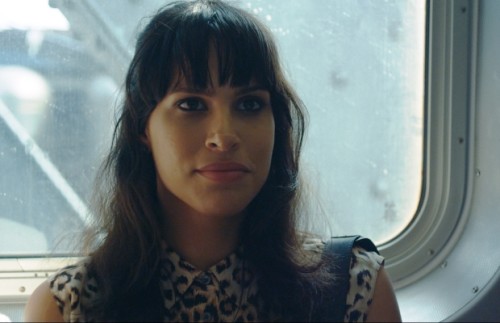
Desiree Akhavan in Appropriate Behavior


This is a guest post by Dena Afrasiabi.


It’s tempting to try to fit Desiree Akhavan’s unique and hilarious first feature, Appropriate Behavior, into the appropriate box. In the age of tagging and buzzwords, a film of its kind lends itself to a plethora of catchy categories: Iranian, Brooklynite, lesbian, coming of age, categories that have never all been represented on the same screen at the same time. Add to that some awkward (i.e. realistic) sex scenes and it’s no wonder that so many reviewers have described Akhavan as the bisexual Iranian version of Lena Dunham. Or is it? Upon reading other articles on the film, as well as interviews with Akhavan, on the topic, it becomes glaringly apparent that the comparisons say a lot less about the film or about Akhavan as an artist than they do about the relationship between the media and women artists of color. Granted, Akhavan and Dunham do share some surface similarities: both filmmakers are young women, both make work set in Brooklyn that features flawed (i.e. real), intelligent female characters, characters who harbor real desires, make real mistakes and find themselves in real, awkward, often cringe-worthy sexual encounters. And in all fairness, the comparison is certainly a flattering one, as Akahavan herself has acknowledged.

Nor is Akhavan the first filmmaker or writer to be compared to Dunham. Both Greta Gerwig, writer and star of Frances Ha and Gillian Robespierre, the director of Obvious Child, have also held the somewhat dubious honor, one that’s apparently granted to any talented young female filmmaker who makes a funny film about a smart woman who lives in Brooklyn and doesn’t have her life all figured out by her mid-20s. Indeed, linking filmmakers to one another seems to be a favored pastime of film critics. Dunham herself has oft been dubbed the new Woody Allen. And the interwebs does yield its share of comparisons between male filmmakers as well (Paul Thomas Anderson has been compared to Quentin Tarantino, Tarantino to Scorcese, Judd Appatow and Ed Burns to Woody Allen). But these linkages occur much less frequently and carry less weight than comparisons between female filmmakers, and especially the ubiquitous comparisons between Akhavan and Dunham.

Lena Dunham and Greta Gerwig


Great artists locate themselves in a tradition. Most filmmakers, including Allen himself, are quick to name their biggest influences. But the above-mentioned comparisons point to something more than just the creation of a genealogy. They reek of a tokenism that only makes room for one successful woman at a time and that fosters acceptance for women of color by linking them to their white counterparts. This tokenism diminishes or even erases the nuances of these filmmakers’ distinct voices and minimizes the range and complexity of experiences they convey.

What’s more, to understand Appropriate Behavior as the bisexual Iranian version of someone else’s work would be to miss the point of the film entirely. While on the surface, the film is about a bisexual Iranian American coming to terms with a breakup and with the messiness of her sexuality, it’s really a film about identity, about what it means not to take the easy way out by shaving off or hiding the parts of yourself that don’t fit into a neat package. By failing, spectacularly, to fit, the film, like its main character, becomes something more than the sum of its seemingly discordant parts, something entirely of its own.

AB-STILLS-9-

The film’s narrative follows Shirin (Desiree Akahavan), a 20-something bisexual Iranian American living in Park Slope whose barely held together life is coming apart at the seams. She and her girlfriend, Maxine (Rebecca Henderson), have just broken up, sending Shireen out of Park Slope domestic bliss and into a self-destructive spiral inside a dark and cluttered apartment in Bushwick that she shares with a hipster artist couple who look like they just walked off the set of Buffy the Vampire Slayer. She quits her job at the Brooklyn Paper, where she has been replaced as the token Middle Easterner by a Syrian woman whose Syrianness is more exciting to her coworkers than Shirin’s more understated Iranianness and goes to work as a teacher for an after-school filmmaking class full of Park Slope toddlers more interested in eating their cameras than shooting precocious art films she imagines them making. As Shirin deals with her grief over the breakup, we learn of the relationship through a series of bittersweet flashbacks—that’s right, Annie Hall style. In one scene, Shirin and Maxine meet on a stoop just before midnight on New Year’s Eve, where they bond over their mutual disdain (“I hate so many things, too” Shirin tells her, just before their first kiss). In another, they make the romantic discovery while smoking pot together for the first time that they’re “the same type of high person.” The romance quickly unravels, however, as Shirin and Maxine repeatedly butt heads over Shirin’s unwillingness to come out to her socially conservative Iranian parents (Hooman Majd and Anh Duong).

appropriate-behavior2-640x371

Throughout the film, we watch Shirin repeatedly fail to fulfill the expectations of those around her. She doesn’t embody Maxine’s idea of the right kind of lesbian, one who reads queer studies classics like Stone Butch Blues, embraces gay activism with earnest enthusiasm and wears her sexuality as a badge. Nor does she fit her family’s definition of the right kind of Iranian offspring, by contrast to her successful doctor brother (Arian Moayed) or his polished Iranian fiancée (Justine Cotsonas), who performs reconstructive surgery on pediatric burn victims. She also fails to be the right kind of Iranian in the eyes of Park Slope’s upper middle class liberals, who expect her to be one of the hip young Tehranis they read about in the Times. When asked by her new boss (Scott Adsit) if she’s part of the underground hip-hop scene in Tehran, she answers, “I spend most of time in Iran watching Disney videos with my grandmother while she untangles jewelry.” The slapstick film she makes with her class also clashes hilariously with Park Slope’s collective Disney-like fantasy of a harmonious multicultural world, epitomized by her bohemian coworker, Tibet (Rosalie Lowe), who attends West African dance classes religiously and makes a film featuring white and African American children poetically climbing trees. Shirin’s eventual coming out to her mother, too, defies expectations of the genre with its quiet ambiguity. “Mom, I’m a little bit gay,” Shirin tells her mother one night at her parents’ New Jersey home. And rather than set off a show of hysterics or threats to ship her off to Iran or to straight camp, her mother meets this confession with a simple dismissal, the tip of a cultural iceberg that alludes to beliefs and attitudes that will not melt overnight. It’s such moments of ambiguity that set Akhavan apart as a filmmaker, moments that can’t be separated from her unique vantage point and that get lost in the Dunham comparisons and the branding.
Desiree-Akhavan-in-APPROPRIATE-BEHAVIOUR-2-620x400

What makes the story so resonant is that Shirin doesn’t ever tie up her identity’s loose ends. A lesser film may have shown the protagonist reaching an epiphany of self-acceptance or end with a celebration of her sexuality or of her identity as an immigrant. Instead, the film vividly details Shirin’s loneliness and discomfort (albeit with much hilarity) as she stumbles from one awkward discovery to another and eventually into a more honest self while also acknowledging, in its own subtle way, the empowerment that comes with resisting the pressure to wrap your identity around any one thing, be it your sexuality or your ethnicity or the neighborhood where you live. This isn’t to say the film is a Song of Myself celebration of American individualism. She doesn’t receive a trophy at the end for “being herself.” Shirin doesn’t defy categorization to make a point or prove herself; she does so because it’s ultimately the only way she knows how to be, a way of being that comes at its own price but whose benefits far outweigh the cost of self-erasure.

Like Shirin, who finally comes into her own by the film’s end through her inability to meet other’s expectations of her identity, it’s Akhavan’s deft and nuanced, not to mention hysterically funny, chronicling of this journey that makes her a filmmaker bound to defy and surpass the already high expectations of her future work—and perhaps in this one sense, it is fair to say she does have something in common with Lena Dunham, a.k.a the straight white Desiree Akhavan.


Dena Afrasiabi is the co-editor of the literary magazine Elsewhere Lit. Her fiction has appeared in Kartika Review, JMWW and Prick of the Spindle. She resides in Austin, Texas and sometimes vents or raves about films here.


‘Her Side of the Bed’: One Bitch’s Story in Navigating the World of Indie Film Production

If I were to give any advice to indie filmmakers, and especially women in this industry it would be this: It’s going to be hard. Really, really hard. You must be unrelenting. But practice tact, learn how to read people, know when to to keep pushing and when to let go. You’re going to need to hustle. Grow a thick skin. Learn to take rejection gracefully, because it’s going to happen. A lot.


This is a guest post by Bryn Woznicki.


As a female, indie filmmaker, you must be a Jane of all trades. At once a benevolent monarch, the next minute kissing someone’s ass. Constantly selling yourself, but maintaining confidence (this makes you attractive). Toeing the line of being interested but not being too eager (we don’t want to appear desperate, after all) and keeping a stiff upper lip, and just the right amount of bend-or-else-you’ll-break attitude so you can adeptly navigate inevitable rejection and whatever Murphy’s Law may throw your way. Cake, right?

I’m Bryn Woznicki, director, co-producer and co-writer of Her Side of the Bed (if that isn’t enough, I’m also in the damn thing).

unnamed

Her Side of the Bed is about Rachel Nolan, a recently dumped, 20-something writer living in New York. She moves in with her best friend Nicole, who vows to get her over the heartbreak by any means possible, but after sharing an intimate night together their friendship is forever changed. It is a coming-of-age story that follows one womanʼs journey through self discovery and the evolution and ultimate deterioration of a friendship. The film channels the raunch, wit, and self-aware insecurity of Girls as well as the explorative vulnerability of Blue is the Warmest Color.

In the film, best friend Nicole (Bryn Woznicki) and Rachel (Chelsea Morgan) discover a lot about themselves, and each other.


The film was written by me and my my co-star, Chelsea Morgan, who plays Rachel. We began this journey in 2012, and the cultivation and birth of this film baby has been a real bumpy fucking road.

On set and in bed, Nicole mugs for the camera while Rachel sets her sights set on something else.


Both creators and performers by nature, Chelsea and I met in a musical theatre class in community college. Upon meeting each other, we both had the distinct feeling that we’d met somewhere before. We were sure of it, in fact. But in comparing our histories, we realized that we had never met. We agreed our previous meeting must have been in a past life and we left it at that. We created together. We had chemistry. We had fun. We both had an innate sense of humor and a penchant for “yes, and-ing.”

We found that we were vibrating on the same frequency. Creating together came naturally, and laughs were abundant. We shared common ground: we wanted to tell stories and we wanted to act, but we were left in limbo. Skimming through casting notices was always disheartening: not ugly or fat enough to play the ugly fat friend, and not perfect enough to play anyone else. And that’s what the casting notices focused on. Looks and body types. “Overweight best friend; she’s very happy despite never having had a boyfriend.” Or “Sexy, gorgeous legal assistant.” Or “Fit and pretty waitress.” Or “Girl next door… think Keira Knightly.”

Bryn Woznicki directs Rachel (Chelsea Morgan) as she walks home barefoot through the streets of Brooklyn.


We didn’t fit into the molds presented to us, and we weren’t sure we wanted to. And anyway, who’s to say we weren’t sexy and gorgeous? Who’s to say we must be happy in spite of never having had a boyfriend? Who’s to say any boyfriend, lack thereof, or any other person aside from OURSELVES should be in charge of our happiness? And where are the deep, layered, female roles? Characters with personalities, defining qualities outside of their outward appearance or ability to pull dudes? So we started creating our own projects and our own roles.

At the time, I was in film school and was spending a ton of time in production, learning every job on an indie set, the dynamics and idiosyncrasies, and the most important lesson of indie filmmaking: making something from nothing, creating with no money, little help and few resources.

In 2012, I teamed up with the talented Fiona Bates and together we produced Love On-The-Line, an 11-episode web series that I directed and produced. Chelsea and I also played supporting roles.

Love On-The-Line, an 11 episode web series produced and directed by Bryn, starring Chelsea and Bryn.
Love On-The-Line, an 11-episode web series produced and directed by Bryn, starring Chelsea and Bryn.


This was the first project where I directed and acted at once. It’s very difficult. At that point I had directed half a dozen projects and produced several dozen, and only then did I feel somewhat comfortable bridging the gap between actor and director. For those just starting out, I suggest you find strong footing in both roles before you perform both at the same time. It’s still a struggle, at once being the “watcher” and the “watched,” and it calls for a ton of grace under pressure.

Love On-The-Line was a lot of work. It was calling in all of our favors, asking our talented friends to work for free, giving up our weekend, every weekend, and hustling. Lots and lots of hustling. But we were creating. And we were being funny. And we were paving the road for ourselves.

The summer of 2012 we wrote and shot a pilot in two months. After a particularly adventuresome summer, we were high on life and our creative accomplishments. We wanted to do more. But bigger this time. We’d just shot a half hour pilot… next step, feature film! How hard could it be, right?

I called Chelsea one day. “I have an story for a feature film,” I told her. “So do I,” she countered. “You go first.” Much like our first meeting, by some strange, cosmic coincidence, our ideas for our features were eerily similar. We essentially both came up with the same idea, independently of one another. We took this as a sign, and we went to work.

For two months we overdosed on each other. We slept at each other’s houses nearly every night. We watched movies for reference, we drank a lot of wine. Sometimes, many times, the wording of a sentence wouldn’t ring true to us. We’d mull it over, turn it upside down, search for alternatives, and an hour later conclude that our original wording was the best. We sent our first draft around and had people read it. We revised it half a dozen times. Then a dozen. We acted scenes out to see how they felt. We lived and breathed this film.

In a way we kind of put the cart before the horse. We were so high on our idea, so confident, that we raised what money we could, flew to New York and shot what we could on our small budget. “The money will fall into place…” “Wait till they see this footage, investors will be chomping at the bit!” But that’s not what happened. We did capture some gorgeous footage, as well as some important lessons.

Armed with a small budget and a positive attitude, the crew flew to New York to begin shooting.


After we returned from New York, we used what little money we had left to shoot in L.A. We weren’t remotely close to being finished but we had enough footage to make a nice trailer for fundraising purposes. And we created a Facebook. And a Twitter. A Tumblr. We held and Indiegogo campaign, and a Kickstarter. And made a website. We got fiscal sponsorship from The Film Collaborative. We took meetings with anyone who would meet us. We showed the trailer to everyone. We get interviewed and written up, but still we could not finish the film.

Some of the players pose for a photo during Her Side of the Bed’s Film Finishing Fundraiser held in 2014, (L to R) Chris Ferro (playing “Ernest” in the film), Bryn Woznicki (“Nicole”), Chelsea Morgan (“Rachel”), and Steven Anthony Lawrence (who plays a caricatured, drug-dealer version of himself in the film)


Creation of an independent feature film and all that its production entails was outside of the scope of our understanding. It takes a LOT of money. And a LOT of people. Good, competent people. who believe in the work and who are willing to put in crazy hours and energy, probably getting paid a lot less than their worth.

After sitting on our footage and our social media campaigns for over a year, I was feeling very depressed. I’d heard it takes three years, start to finish, to make an indie film. But no one told me it would feel so long. We had almost everything in place that we needed to finish this film: gorgeous locations, talented crew, a few actors with recognizable faces… but we didn’t have the money. And we didn’t know where to get it.

Although we’d received a ton of support from friends online… even garnering a bunch of fans from around the world that we’d never met before, these numbers didn’t, unfortunately, translate to money. We didn’t know if the lack of financial support was due to the fact that most of our friends are starving artists like we are, or perhaps people weren’t so quick to advertise their support of such seemingly “subversive” material. All we know is we put in a ton of work for very little payout and we still didn’t have to resources to finish our film.

But the long, excruciating pause between bouts of production was also fruitful. It allowed our frenetic energy to settle a bit, giving us time and space to become more grounded. No longer in a race to the finish line, we had something very valuable: time. We had time to sit back and review what we’d done thus far. We made space for learning and for changes. We had time to reassess and then reassemble our team, hiring new crew where we found it beneficial, letting go of others that didn’t quite fit. The year plus of non-shooting allowed us to really appreciate this project, to yearn for its fruition, and to appreciate it in the way that you can only appreciate something that’s elusive, dangling attractively in front of you yet slightly beyond your grasp.

unnamed-1

By some stoke of luck, or as my grandmother would call it, “a little mazel,” we found a benevolent donor. A family friend. Someone with some cash and a belief in us, and we made budget. We will finish shooting in May.

What would we have done had we not received money from this gracious supporter? I shudder to think. It would have probably been a mix of grant applications upon grant applications (WHICH of course, is still on our agenda), scrimping and saving our own money, conducting another low-yielding fundraising campaign. And lots of hairs graying, and pacing, and panic attacks, and wondering, “Am I wasting my time? Should I just give this up and get a ‘big girl’ job with more security? Will I ever forgive myself if I abandon my dreams?” But the money did come. And we are moving forward, and this film, this child, which has given me so much hope, and joy, and anxiety and pain, will finally evolve into its next stage of being.

If I were to give any advice to indie filmmakers, and especially women in this industry it would be this: It’s going to be hard. Really, really hard. You must be unrelenting. But practice tact, learn how to read people, know when to to keep pushing and when to let go. You’re going to need to hustle. Grow a thick skin. Learn to take rejection gracefully, because it’s going to happen. A lot. You can’t let it break you and you can’t take it personally; you just need to learn whatever you can (all bad experiences are a chance to learn, dontchya know!), dust yourself off, and try again tomorrow.

Hold onto the people who build you up: positive people who believe in you. Dump the people who don’t. Learn positive self talk, at the very least create three positive thoughts for each negative one. Be kind to yourself. Be kind to others, but don’t be a pushover. Don’t be afraid to say exactly what’s on your mind, and ask for exactly what you need.

People will underestimate you. If you’re a woman, you may be labeled “bossy” or a “bitch.” Or more likely, the sexism won’t be blatant, but rather subtle and insidious. You won’t be exactly sure why, but you’re left with a bad taste in your mouth. I found that it most often rears its ugly head when I’m at a film festival; the program directors call the directors on stage and there’s one woman to every 10 men. Or it is manifest in the form of someone’s incredulity. “Oh, wow. A feature film? How did you manage that?” A subtle put down, that could almost be misinterpreted as kind. Or when speaking to people about your work, they won’t give you their full attention. As if you’re not worth it. As if you’re not to be taken seriously. “Oh, you’re a filmmaker? How fun!” Yeah, guy. Fun. Barrels of it.

Ultimately, it doesn’t matter what they think. Whether it’s filmmaking or shoemaking, directing or designing, if you’ve found something that calls to you… something that excites you, turns you on mentally and emotionally… something that makes you feel happy when you’re doing it… run toward it. Keep running. And don’t look back.


Bryn Woznicki is a writer, director, producer, and (although she doesn’t like to admit it) actor living in her hometown of Los Angeles, California. When not making art, she likes making people laugh, speaking Italian and experimenting in the kitchen. You can find her on IMDb here and on Twitter here


The Sublime Sadism in ‘Breaking the Waves’

Her role as sexual martyr is better suitable for Bess than the role that is expected of her: the patriarchal role of the woman. The religious community in which Bess is brought up is stifling and oppressive, in which male domination prevails in both the personal and public life of the community (the household and the entire commune is dominated by the elderly male church leaders).

Bess talks to God
Bess talks to God


This is a guest post by Giselle Defares.


The relationship between faith and love, the religious experience that is love, suffering and sacrifice, are themes that frequently recur in our pop culture. For some, love can be seen as the most powerful emotion we know, an emotion that can entail spiritual forces. In Breaking The Waves love and faith appear, despite the spiritual connotations, as matters proposed in a very earthly and physical manner. However, the age-old trope of the suffering woman who sacrifices herself so that the man triumphs is nothing new.

The Danish director Lars von Trier follows the beat of his own drum. Von Trier can be called many things: neurotic, shit stirrer and allegedly misogynist. In 2011 he was declared persona non grata after his ridiculous remarks in Cannes during a press conference for Melancholia: “I really wanted to be a Jew, and then I found out that I was really a Nazi… What can I say? I understand Hitler.” He took a “vow of silence” after this debacle. Not only did von Trier make various headlines in his career via his questionable, controversial statements, it’s also the result of the themes portrayed in his films. In most of his films the female characters are placed in violent and sexual situations. In an old interview with The Guardian, Von Trier said “Basically, I’m afraid of everything in life, except filmmaking.” Right.

Breaking the Waves centers round a strict Calvinist community in rural Scotland. Bess McNeill (Emily Watson) is a young woman who expresses her piety by cleaning the church. Here she holds various conversations with God. When Bess wants to marry Jan Nyman (Stellan Skarsgård), an outsider who works on the oil rigs, the church elderly are hesitant. Nevertheless, the first weeks of their marriage are successful. When Jan needs to get back to work at the rig, Bess becomes emotionally unhinged and begs God to bring him back. As a result of a fatal accident on the rig, Jan is brought back to the mainland. He is completely paralyzed, and his life is uncertain; both Bess and “God” blame themselves for Jan’s situation. When she asks God for help, he answers with the question: “Who do you want to save, yourself or Jan?” Bess then makes the fatal decision to save Jan.

Love
Love


Whether or not it was the intent of von Trier, Bess is frequently compared to the Christ figure in a modern tragedy. Her sacrifice was for a higher purpose and “not in vain.” In Bible and Cinema: Fifty Key Films, Adele Reinhartz gives two basic criteria that a movie character must meet in order to be seen as a Christ figure: “That there be some direct and specific resemblance to Christ and that the fundamental message associated with the possible Christ figure has to be consistent to the life and work of Christ, and contrary to his message about liberation and love.”

On the basis of these two criteria Bess can be seen as the female representation of a Christ figure. Her love, like that of Christ, is selfless and knows no boundaries. Bess commits herself entirely to sacrifice her being for this selfless love, even if it leads to death. However, this form of sacrifice is soon to be regarded as a specific element in her life. Bess is easily persuaded by Jan, because “God” commands her to fulfill his wishes. Jan’s requirements are so also God’s requirements. Bess is obedient and submissive to the male power, which forces her to place herself in unpleasant situations trying to save a man.

A representation of this point can be seen in the middle of the film when Bess prays directly to a hospitalized Jan. Bess exclaims, “I love you, Jan.” Jan answers, “I love you too, Bess. You are the love of my life.” Both Jan and God have the same voice, thereby Jan and God are put on the same pedestal. The masculine is the divine, the women must be submissive therein.

Bess and Jan
Bess and Jan


The female suffering in Breaking the Waves is deemed more important than the female existence. Her role as sexual martyr is better suitable for Bess than the role that is expected of her: the patriarchal role of the woman. The religious community in which Bess is brought up is stifling and oppressive, in which male domination prevails in both the personal and public life of the community (the household and the entire commune is dominated by the elderly male church leaders).

The position of the women in this patriarchal community is determined by the male counterparts. The imposed position of the wife doesn’t sit well with Bess; in the first chapter she goes against the grain by marrying Jan in the church, then she speaks in the church, which is forbidden for women. They also ask the women in the community that they remain calm and adhere to their men. Not the whimsical Bess: she beats Jan as he arrives late to their wedding, and is hysterical when he leaves her to work on the rig. This latter characteristic, hysteria, is considered as one of the “weakest” properties of a woman. Alyda Faber, a theologian, states in Redeeming Sexual Violence? A Feminist Reading of Breaking the Waves: “Von Trier creates the image of Bess as sexual martyr through a peculiar valorization of feminine abjection as madness, formlessness, malleability, hysteria. This common reiteration of femininity as weakness.”

Although Bess has more difficulty with the role of sexual martyr, she fulfills the role better than the imposed patriarchal role of a woman. Von Trier uses Bess as a sinner and as a martyr; archetypes that enable that Bess – from a feminist theological approach- is seen as a Mary Magdalene. Von Trier also literally refers to Mary Magdalene in Bess. This happens in the dialogue in which God speaks to Bess: “Mary Magdalene had sin, and she is my beloved.” Bess is caught between the two paradigms where Mary Magdalene was stuck as the virgin and the whore.

Her character begins as that of a virgin, which fits into the mold created by the church until she persists throughout the film and turns into a “whore.” It starts with her sexual relationship with her husband, where she learns to give her love of God over to Jan. Her faith and love into “the word” God has been replaced by the belief in carnal love. Bess at one point states: “You cannot love words. You cannot be in love with a word. You can love another human being.” Her faith for the greater good is stronger than the word of God; this faith in love has led her to sexual freedom–from virgin to whore. Despite Bess being often compared to Mary Magdalene and represented as a Christ figure she remains an ordinary woman who only has to offer her goodness.

Watson is phenomenal in her role as Bess and she deservedly received an Oscar nomination. She truly carries the film and has great chemistry with Skarsgård in the first chapters. Her suffering is stretched throughout the film causing pain and simultaneously pity for her character. Admittedly, the plot is very thin and at times feels illogical. The other characters feel like cardboard cutouts but the film is saved by Watson as the whimsical Bess.

Von Trier styled the film almost like a documentary while using the handheld camera work of cinematographer Robbie Müller. The images are grainy, gray and pale in color, and there’s almost no use of a musical score. At first, the angular camera work doesn’t seem to work with the emotional storyline nor the strict and rigid community in which it takes place. Only with the announcement of a new chapter in the film are images shown that almost resemble moving paintings in beautiful, vibrant colors. As if the gaze of God descends on rural Scotland.

Breaking the Waves is, in essence, just an good old fashioned melodrama. It’s captivating and moving, but there’s no room for false sentiment.

[youtube_sc url=”https://www.youtube.com/watch?v=NmcnddpruXM”]


Giselle Defares comments on film, fashion (law) and American pop culture. See her blog here.


You May Meet Alex and Hedy As You Progress Through Life

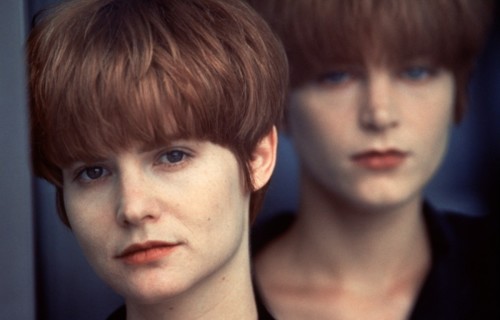
Though we might sympathize, mostly we reflect on them, after escaping them, with awe and terror. They are not good. They are not our lovers nor our friends; they do not have our best interests at heart.


This is a guest post by Stephanie Brown.


“‘I won’t be ignored, Dan.'”

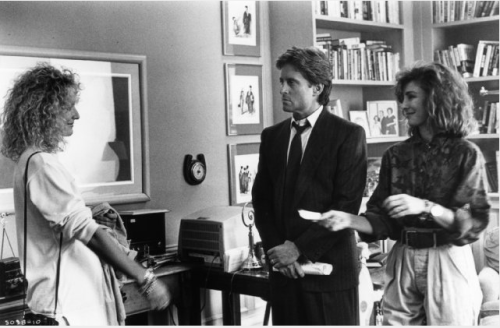
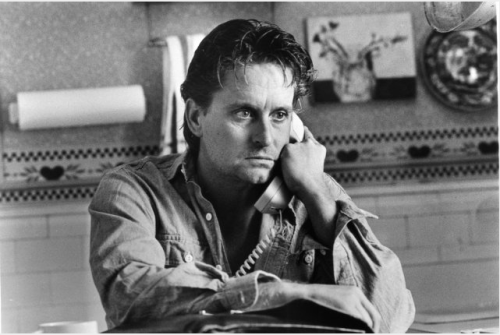
As a new friend and I got to know each other during the past couple of years, this became our shorthand joke. We’d say it when we worried we were calling or texting too often. We used that line because the character Alex Forrest, who says the line (actually “I’m not going to be ignored, Dan!”)  in the film Fatal Attraction is the symbol for a person who doesn’t take a hint, let alone an outright declaration that a person doesn’t want an involvement. She’s a person who becomes a stalker because she’s delusions about her relationship with a married man. She becomes as destructive and vengeful as a witch in a fairy tale.

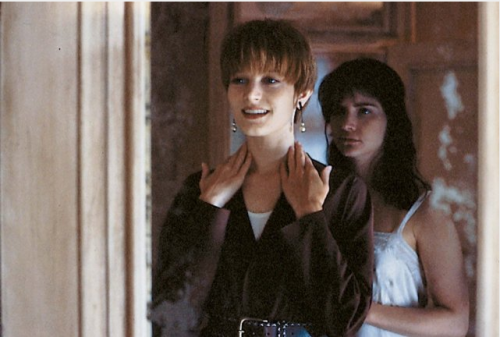
No one wants to be the person who has no common sense about other people. No one wants to be Alex Forrest, or Hedra “Hedy” Carlson in Single White Female, another film that gave us a character so needy and envious, she puts Snow White’s stepmother to shame. When someone “goes all Single White Female” on you, you know you’re dealing with someone who can suck the life out of you by copying your moves and destroying you in the process. Viewers, like the victims who surround an evil witch in a fairy tale, learn that it’s almost impossible to outwit these two, as their nasty feelings manifest into destructive actions, but outwit them we must.

tumblr_lswsyiRofY1qmxmrao1_r1_400

Both films are misogynistic. They depict women we hate and would hate to be like. If we knew more about them we’d probably feel compassion for what made them so evil–but like figures in fairy tales, the backstory is irrelevant to the action and to the victims facing their wrath. Alex and Hedy are symbols for those hatable people who are normal-on-the-surface-but-crazy-underneath. They are hatable because they are impossible to like once you get to know them. Their big, destructive personalities can be glimpsed in people we know, as we can glimpse Snow White and her stepmother, Cinderella, and her sisters, or Jack-in-the-Beanstalk’s father-son rivalry in families we know. Male screenwriters and directors developed these characters, and they can be dismissed as depictions of exaggerated, baseless male fears. But hatable women exist, be they one’s partner, relative, or friend. Like fairytale archetypes, Alex and Hedy harken back to significant relationships–and by being sort of preposterous they are kept at a safe remove. Alex is not our own wife or nightmare ex, she is only a one-night stand who lied to us and herself about having sex with no strings attached. Hedy is not the mother, sister or co-worker who envies us, she is someone we randomly met to share expenses on an apartment. We can displace our hatred on the fictional character, while we might not be able to admit hatred for those we are close to due to fate or necessity.

single-white-female3

I saw Fatal Attraction by myself when I was living by myself, an SFW (single white female, in the shorthand of classified seeking-roommate ads of the day) in Oakland, Calif. The theater was packed and the audience’s shout-outs to the screen funny and raucous as Alex’s behavior became increasingly bizarre.

Screen Shot 2015-03-03 at 10.25.52 AM

By the climax–where she is shot in the bathtub by the wife, Beth Gallagher–I was laughing out loud. The movie seemed ludicrous to me. Soon after seeing it, I tuned into the end of a radio show. The person speaking was animated about her subject, the movie Fatal Attraction, which she said was a hot conversation topic between men and women because the story reflected anxieties about feminism and working women. To me it seemed to be a cautionary tale for men about how the wages of sin (adultery) can lead them to ruin, but it was hard for me to believe that a person like Alex could even exist. But then, I lived alone (and was lonely) and had no one to really talk to about the movie, whether it was ludicrous or should be taken seriously, or about feminism or anything else.

What I did know about living alone was that it might make you go crazy. You forget how much you have been with your own thoughts when you finally talk to someone. Not having a romantic partner made me unhappy and disappointed with life, which are probably the feelings Alex and Hedy had, being alone in the world, looking for a connection. Why they did not have connections is only hinted at, and we can only guess why. I was in my 20s when I saw these films, the time of life when most people have temporary living arrangements, like the characters in Single White Female. I had lived in five different places by the time I was 26. You took chances on roommates and places and living alone in safe or unsafe neighborhoods. I had lived anonymously in two large cities. Like city dwellers Dan and Allie, in a city one has to take a person at her word when looking for a living arrangement or when meeting in the workplace. You don’t have a small town’s generational history to inform you that someone has been damaged by their childhood or was outcast by everyone. That’s also the reason why the city appeals to people–it’s a place to reinvent oneself, where no one really knows you, and where most relationships are friendly but safely superficial. This is the same in the large workplace, where one can observe another’s eccentric or charming or moody behavior at a distance. You only know what someone is really like by working closely with them. It’s amazing how personality deficits and disorders are revealed when one is in daily contact with someone else in the workplace. In all cases, your relationships are left mostly to chance.

At that time I still kept in touch with childhood friends and still felt close to them. Though we only saw each other a few times a year, we talked on the phone for hours sometimes, at long-distance expense, which I budgeted for; it felt so necessary to me. However, every time we got together I could feel us drifting apart.

The friend I was closest to called me soon after Fatal Attraction was released, and asked me what I thought of it. It had really struck a chord with her. She saw it by herself and then took her boyfriend to see it, because she wanted him to see her resemblance to Alex; she thought it would help him understand her better. In particular, the scene where Alex sits alone in her apartment and turns the light on and off is what she wanted him to see. She wanted him to understand how she felt–I suppose how she felt when she felt desperate? They were not in a cheating relationship and were not married, but she related to the character’s personality. I don’t remember if I told her this, but I found that very disturbing. I could not imagine relating to Alex at all, and I still don’t. Had I not known her for as long as I had, I would have dropped the friendship then and there. As it was, our friendship did not last and for me is was because of coming behaviors that did indeed evoke Alex’s. I also knew by that time that I ought not to live alone with few connections. It might make me into an Alex or a Hedy. I also knew that I had the capacity to be like Allie or Dan, using people and expecting them to not care, and I knew I had experienced envy from others, and I did not like how it felt.

These films were released within a few years of each other: Fatal Attraction in 1987, Single White Female in 1992. They are sometimes seen as mirrors of the era, especially as responses to ascending feminism. But to me, feminism had already ascended and was accepted–I suppose I was naive, but to me they were about women with damaged psyches whose gigantic wells of neediness and envy were so mythic they created tragedies because they did not know how to do anything else. In the 30 years or so since these films were released, I’ve come to know many women like both of these women–not that they’ve come to bloody conclusions, but they have created nightmares, migraines and heart attacks, for instance, as well as fear and anxiety and frustration. I wish we had had the characters’ back stories in the films. In the years since, I’ve become fascinated by what breaks people and makes them behave in such ways. I have learned compassion for them while still keeping them at arms’ length. The stories’ plots, however, depend upon us identifying with Dan in Fatal Attraction and Allie in Single White Female. It is possible to find yourself at a point in life where you must obtain a restraining order against someone. At that point, it is not hard to identify with these victims.

Screen Shot 2015-03-03 at 10.24.27 AM

Screen Shot 2015-03-03 at 10.27.27 AM

People like Alex and Hedy are people who feel dead and empty and hopeless; they can’t be helped, they push too hard, they want the impossible and don’t give up when they should. Someone who seems fun and lovely at first but who is impossible once the mask is taken off her face. We saw a few glimpses of Alex’s scrapbook in the film, but were not given enough to speculate about her background or what made her the way she was. We don’t know why they lack connections with others.

But maybe that is beside the point: the Alexes and Hedys I’ve known have few connections because everyone has left them behind and wants nothing to do with them. No one can stand them for very long. It’s hard to believe, because when you meet them, they are friendly and fun and have good heads on their shoulders. But after a while the mask slips and one finds oneself growing annoyed at giving the same advice to their requests for advice, or hearing the same complaints about the same person again and again, or finding out something that makes the hair stand up at the back of your neck: that the person was let go from a job because, you’re now told, the principal of the school did not understand how to discipline kids properly, the way she did. When your work acquaintance becomes your boss and you discover she yells and screams until you feel like you are living with an abusive mother in a tiny house where you are never fed or looked after, you know why she has gotten stuck at this particular rung in their career, and why you are likely to pass her as she drifts downward. People like her fake it by using buzzwords and speaking aggressively and sounding smart, while there is no substance to back it up. To mask their incompetence, they need to steal your ideas, block your ideas, exhaust your ears, or take on your mannerisms and demeanor because they see how others have a positive response.

Fairytales tell us how to make practical choices when faced with another’s envy or wrath. Children are instructed on what to do when faced with Snow White’s envy (leave home) or Cinderella’s sisters (wait it out–they will destroy themselves) or how to fell a jealous father-giant (be clever and nimble and you will cut him down eventually). There are people who wish us ill and mean us harm. There are people so envious and angry of those around them (usually those who are competent, gifted or kindhearted) that their satisfaction comes from seeing the envied fail and flail. As Jeanette Winterson wrote of her mother in Why Be Happy When You Could Be Normal, a book that uses fairytales tropes as a way to understand a destructive, cold mother: “She filled the phone box. She was out of scale, larger than life. She was like a fairy story where size is approximate and unstable. She loomed up. She expanded. Only later, much later, too late, did I understand how small she was to herself.” [1]

When we’ve escaped from an Alex or Hedy, we can look back and see how someone who destroys others is sad or desperate or lonely or feels small. I think Winterson is right–destructive women loom large, change size, extend themselves by loud voice, by taking things from you, by holding weapons because they feel small and overlooked. Though we might sympathize, mostly we reflect on them, after escaping them, with awe and terror. They are not good. They are not our lovers nor our friends; they do not have our best interests at heart.

Because I’ve  known them, I value my new friend all the more, the one with whom I can use a shorthand joke from Fatal Attraction. She also has known these kinds of people, who actually may be men or women.


1. Jeanette Winterson, Why Be Happy When You Could Be Normal?, p. 2-3. New York: Knopf, 2011.


Stephanie Brown is the author of two collections of poetry, Domestic Interior and Allegory of the Supermarket. She’s published work in American Poetry Review, Ploughshares, and The Best American Poetry series. She was awarded an NEA Fellowship in 2001 and a Breadloaf Fellowship in 2009. She has taught at UC Irvine and the University of Redlands and is a regional branch manager for OC Public Libraries in southern California.

Call for Writers: Asian Womanhood in Pop Culture

Asian women are often fetishized, objectified, eroticized, and/or infantilized in pop culture. “China doll” stereotypes that represent Asian women as compliant, doll-like sexual objects are still prevalent. Western attitudes are influenced by a history of exploitation and colonization of Eastern culture. This deep desire to possess seems to manifest in an eroticization of all things Asian, especially Asian Women.


Call-for-Writers-e13859437405011

Our theme week for March 2015 will be Asian Womanhood in Pop Culture.

Asian women are not safe from the generalized stereotypical rendering of Asian people as a whole, in that Asian women are often represented as very intelligent/nerdy or experts in martial arts. If we are to believe pop culture mythology, all Asian women are born with eyeglasses and an ability to kick ass in a school girl miniskirt.

Aging female Asian characters lean toward the wise, Old World crone trope, full of mysticism and tradition.

Asian women are often fetishized, objectified, eroticized, and/or infantilized in pop culture. “China doll” stereotypes that represent Asian women as compliant, doll-like sexual objects are still prevalent. Western attitudes are influenced by a history of exploitation and colonization of Eastern culture. This deep desire to possess seems to manifest in an eroticization of all things Asian, especially Asian Women.

Why do these female Asian archetypes exist, and why are they so popular? Are there examples of Asian womanhood that defy these archetypes? Is there space within these archetypes for nuanced characterization? Are Asian women allowed to be complex, multi-layered human beings, flawed heroines and villainesses?

Feel free to use the examples below to inspire your writing on this subject, or choose your own source material.

We’d like to avoid as much overlap as possible for this theme, so get your proposals in early if you know which film you’d like to write about. We accept both original pieces and cross-posts, and we respond to queries within a week.

Most of our pieces are between 1,000 and 2,000 words, and include links and images. Please send your piece as a Microsoft Word document to btchflcks[at]gmail[dot]com, including links to all images, and include a 2- to 3-sentence bio.

If you have written for us before, please indicate that in your proposal, and if not, send a writing sample if possible.

Please be familiar with our publication and look over recent and popular posts to get an idea of Bitch Flicks’ style and purpose. We encourage writers to use our search function to see if your topic has been written about before, and link when appropriate (hyperlinks to sources are welcome, as well).

The final due date for these submissions is Friday, March 20 by midnight.

Marco Polo

Lost

Monsoon Wedding

Gilmore Girls

Kill Bill

Agents of S.H.I.E.L.D

Grey’s Anatomy

The Mindy Project

The Joy Luck Club

Mulan

Big Hero 6

The Good Wife

Crouching Tiger, Hidden Dragon

Battlestar Galactica

Battle Royale

The Transporter

Wayne’s World

Rumble in the Bronx

In the Mood for Love

Slumdog Millionaire

Snow Falling on Cedar

Geisha

Shaolin Soccer

The Last Emperor

Bride and Prejudice

Street Fighter: The Legend of Chun-Li


Bitch Flicks’ Weekly Picks

Check out what we’ve been reading this week–and let us know what you’ve been reading/writing in the comments!

recommended-red-714x300-1


Diversity Sells — But Hollywood Remains Overwhelmingly White, Male at NPR

Feminism’s oppression obsession undermines women by Shikha Dalmia at The Week

The Latest: Black Women by Brianna Cox at For Harriet

Patricia Arquette’s Feminism: Only for White Women by Amanda Marcotte at Slate

Carnival of Souls: A Coming of Age Story for Queer Women? by Casey Quinlan at The Toast

Yes on Knope by Rachel Fields at Bitch Media

Leonard Nimoy’s Mr. Spock Taught Us Acceptance Is Highly Logical by Eric Deggans at NPR

Leonard Nimoy’s Advice To A Biracial Girl In 1968 by Gene Demby at NPR

Black History & Women in Horror Month: Get To Know Marsha A. Hunt by Ashlee Blackwell at Graveyard Shift Sisters

Interview: The Activist Survivors of “The Hunting Ground” by Michele Kort at Ms. blog

What Happened When a Handsome, White Actor Shed a Tear Over ‘Glory’ by Kirsten West Savali at The Root

Pussy Riot’s “Don’t Cry Genocide” Featuring Le Tigre Members Appears on “House of Cards” by Evan Minsker at Pitchfork

A Toxic Stew: Risks To Women Of Public Feminism by Barbara King at NPR


What have you been reading/writing this week? Tell us in the comments!

Unlikable Women: The Roundup

Check out all of the posts for our Unlikable Women Theme Week here.

Dolores Jane Umbridge: Page, Screen, and Stage by Jackson Adler

Umbridge works as Undersecretary to Minister of Magic Cornelius Fudge. Through her position in the patriarchal wizarding government, Umbridge enables job discrimination, segregation, incarceration and harsh sentencing, and physical violence and genocide against marginalized people. She not only politically supports these efforts, but personally enacts violence against marginalized people and their allies, including children.


Never Fear: Unlikable Black Women on Orange Is the New Black and Luther by Rachel Wortherly

When I searched my mental rolodex for Black female characters in film or television who are unlikable my mind continued to circle. I was lost.


“I’m Not Bad, I’m Just Drawn That Way”: The Exceptionally Beautiful Anti-Heroine by Jessica Carbone

And if you’re anything like me, every reader of this site wants the same thing: to see more portrayals of women on film, televisions, and beyond that reflect their complexities, strengths and weakness alike. We want a greater range of body types, a greater representation of lifestyle choices, a broader world of occupations and skill sets and backstories and destinies.


Evil-Lyn: Fantasy’s Underrated Icon by Robert Aldrich

A character with few rivals and even fewer scruples, Evil-Lyn was arguably one of the better developed villains in the show. And in the annals of females from sci-fi/fantasy, her name should be spoken of in the same breath as Wonder Woman and Princess Leia.


A Fine Frenzy: With an Outspoken Anti-Heroine and a Feminist Lens, Young Adult Is Excellent by Megan Kearns

In this witty, hilarious and bittersweet dramedy, Theron plays Mavis Gary, an author of young adult books living in Minneapolis. Mavis’ life is a hot mess. She’s divorced, drinks her life away and the book series she writes is coming to an end. She was the popular mean girl in high school who escaped to the big city. Mavis returns to her small hometown in Minnesota full of Taco Bells and KFCs intending to reclaim her old glory days and her ex-boyfriend, who’s happily married with a new baby. As she fucks up, she eventually questions what she wants out of life.


Political Humor and Humanity in HBO’s VEEP by Rachel Redfern

She’s a toxic political figure, a creator of monumental gaffes and inappropriate situations who doesn’t even have the excuse of good intentions. Her intentions are always self-serving and she treats her staff atrociously, often assigning them the blame for her mistakes.


Bad Girls and (Not-So)-Guilty Pleasures in The Bling Ring by Amy Woolsey

Coppola’s refusal to condemn, explain or apologize for her characters makes for a rather opaque experience. To state the obvious, these are not likable individuals. They exhibit no visible remorse for their crimes, seemingly oblivious to the concept of personal boundaries, and think about little besides fashion and D-list celebrities.


Why Maxine from Being John Malkovich Is The Best by Sara Century

Maxine is a perfect character. She stands up for herself, takes no guff off of anyone, and goes for what she wants while issuing remarkable and hilarious ultimatums to those around her. I don’t just like Maxine. I don’t just love Maxine. I am Maxine.


American Mary: In Praise of the Amoral Final Girl by Mychael Blinde

Directed by the Soska sisters, American Mary features a complicated female protagonist who starts out as a likable badass but ends up as an amoral psycho. The film celebrates the power of bodily autonomy and depicts the horror of taking it away.


Reclaiming Conch: In Defense of Ursula, Fairy Octomother by Brigit McCone

Ursula’s show-stopper, “Poor, Unfortunate Souls,” presents case studies of mermen and mermaids made miserable by culture. What this song really teaches is that internalizing cultural messages is a fatal weakness, and rejecting cultural conditioning is a source of great power. Small wonder that Ursula had to die the most gruesome onscreen death in all of Disney.

Bad Girls Go to Heaven: Hollywood’s Feminist Rebels by Emanuela Betti

Hollywood has produced some of the most memorable bad girls and wicked women on-screen—from silent era’s infamous vamps to film noir’s femme fatales—but bad women do more than just entertain, particularly if we’re talking about the sweepingly emotional and excessively dramatic world of woman’s melodrama.


Why We Love Janice and Why We Love to Hate Janice by Artemis Linhart

Is Chandler going somewhere, just minding his own business? Chances are that Janice is just around the corner. As Janice once put it, “You seek me out. Something deep in your soul calls out to me like a foghorn. Jaaa-nice. Jaaa-nice.”


Cristina Yang As Feminist by Scarlett Harris

As people, no matter what gender, it is seemingly second nature to want others to like us and to portray our best selves to them. Just look at the ritual of the date or the job interview. That Cristina defied this action (though we have seen her star-struck when meeting surgeons like Tom Evans and Preston Burke) made her not just a feminist character, but a truly human(ist) one.


Triumphing Mad Men’s Peggy Olson by Sarah Smyth

What exactly, then, makes a character “unlikeable”? How can we define this complex term? Broadly, a character is unlikeable when they behave in an amoral or unethical way (which, of course, depends upon our individual morals and ethics), particularly when their motivations are unclear. However, when it comes to female characters, this term seems to diversify and pluralize.


Hate to Love Her: The Lasting Allure of Blair Waldorf by Vanessa Willoughby

In an interview with the New York Times, Gillian Flynn says, “The likability thing, especially in Hollywood, is a constant conversation, and they’re really underrating their audience when they have that conversation. What I read and what I go to the movies for is not to find a best friend, not to find inspirations…It’s to be involved with characters that are maybe incredibly different from me, that may be incredibly bad but that feel authentic.”


Young Adult‘s Mavis Gary Is “Crazy” Unlikable by Diane Shipley

Mavis is truly transgressive. Not only is her plan against most people’s moral code, it shows no solidarity for the sisterhood and no respect for the institutions women are most conditioned to aspire to: marriage and motherhood. Mavis alienates feminists and traditionalists alike. Not that she cares–she only wants to appeal to men. And she has done so, seemingly effortlessly, for a long time.


Ruthless, Pragmatic Feminism in House of Cards by Leigh Kolb

Claire is a horrible human being for many, many reasons–but her abortions aren’t included in those reasons. The show makes that clear.


Top 10 Villainesses Who Deserve Their Own Movies by Amanda Rodriguez

While villainesses often work at cross-purposes with our heroes and heroines, we love to hate these women. They’re always morally complicated with dark pasts and often powerful and assertive women with an indomitable streak of independence.


Stephanie McMahon Helmsley: The Real Power in the Realm by Robert Aldrich

She’s proven herself to be as diabolical as she is brilliant, manipulating wrestlers against one another and circumventing any and all rules to reach the ends of her choosing. She’s pit wrestlers in matches with their jobs on the line, or the jobs of their spouses (in the case of a short-lived feud with Total Divas darling Brie Bella), added heinous stipulations to matches, or just flat-out fired anyone who disagreed with her.


Suzanne Stone: Frankenstein of Fame by Rachael Johnson

The would-be news anchor is not only an extraordinarily unlikable–though entertaining–protagonist; she also embodies certain pathological tendencies in the American cultural psyche.


King Vidor’s Stella Dallas and the Utter Gracelessness of Grace by Rebecca Willoughby

These repeated conflicts make for a number of scenes in the film that, as Basinger has also asserted, are painful to watch. Our emotions are in conflict: Stella’s aims are noble, her execution hopelessly flawed. It’s hard to like her when she’s so inept, impossible not to sympathize because her purpose is so noble.


The Complex, Unlikable Women of House of Cards by Leigh Kolb

These women are complex, if not likable, and that’s a good thing.


Summer: Portrait of a Recognizable Human by Ren Jender

When the family sits down to eat, a platter full of pork chops is placed in the center of the table just as Delphine announces she is a vegetarian. As the others interrogate her (a tedious line of questions familiar to many vegetarians) and one of the men even offers her a plate full of rose petals to feast on, she tries to walk the tightrope many women do–in all sorts of conversations–of not wanting to be seen as a “bother,” but still trying to stick up for her own beliefs.


Anne Boleyn: Queen Bee of The Tudors by Emma Kat Richardson

Anne Boleyn was considered by many contemporaries to be the very living, breathing definition of an unlikable woman. And perhaps “unlikable” is too soft a term here – at points in the 16th century, following her execution on trumped up charges of adultery and treason, Anne was so widely reviled that very few of her own words, actions, or even accurate portraits remain today, thanks to Henry’s redoubtable efforts to wipe her off the record completely.


Patterns in Poor Parenting: The Babadook and Mommy by Dierdre Crimmins

This is not to say that Amelia and Die are not sympathetic characters. Both want to do the best for their sons, but neither can handle the stress and actual responsibility of disciplining them. I do not mean for this to seem like an attack on Die and Amelia’s parenting skills, but rather a way to look at the sudden appearance of women in film who are not good at parenting.


The Real Hated Housewives of TV by Caroline Madden

Naturally, we are all on these anti-heroes’ sides, despite their bad deeds. And Tony Soprano, Don Draper, and Walter White all have an antagonist: their wives. They call their husbands out on their lies, moral failings, and oppose them. Thus, they are seen as the nagging wife that everyone hates.


Bad Girls Go to Heaven: Hollywood’s Feminist Rebels

Hollywood has produced some of the most memorable bad girls and wicked women on-screen—from silent era’s infamous vamps to film noir’s femme fatales—but bad women do more than just entertain, particularly if we’re talking about the sweepingly emotional and excessively dramatic world of woman’s melodrama.

Gene Tierney in Leave Her to Heaven (1945)


This guest post by Emanuela Betti appears as part of our theme week on Unlikable Women.


Hollywood has produced some of the most memorable bad girls and wicked women on-screen—from silent era’s infamous vamps to film noir’s femme fatales—but bad women do more than just entertain, particularly if we’re talking about the sweepingly emotional and excessively dramatic world of woman’s melodrama. The bad girls I will be discussing are different from the exotic vamps of the ‘20s and the dark femme fatales of film noir; while both these types have their own essence of “badness,” it’s the women in melodramas, specifically the woman’s film sub-genre from the 1930s through the 1950s, where you’ll find some of most unapologetic bad girls in cinema.

I will first explain why the vamp and film noir’s femme fatale are not as interesting, or at least not as groundbreaking compared to the bad woman in woman’s film. Although I’m personally fascinated by both archetypes, the vamp and femme fatale are “creatures of prey,” and that prey is always and inevitably a man. The femme fatale is in essence a selfish creature (this is most evident in the vamp, short for “vampire”) and their function is to extract every penny or remnants of a soul from the male character; in short, the purpose of the femme fatale is to cause a man’s downfall. Nothing wrong with that—but in this perspective, these female archetypes can hardly exist if not in relation to, or in the context of, a male-dominated world.

Olivia de Havilland as the twins in The Dark Mirror (1946)


The femme fatale also exists in the woman’s film, but due to the nature of the genre, the archetype is in a very different position. The woman’s film is a sub-genre of the melodrama, and is strictly centered around women. The genre takes place within a woman’s world, and the bad woman exists in relation to other women. A common trope is the “double woman,” which manifest as a look-alike or as a sister/twin: a good example are the twins in A Stolen Life or The Dark Mirror. Whether they’re rivals or friends, sisters or twins, the trope of the “double woman” implies that femininity is split into two sides, and the bad woman embodies the negative side of that spectrum.

While film noir tells us that women are dangerous flytraps, the woman’s films give us insight into how Hollywood spoke to women. Specifically in the case of “double woman” films, in which we are presented with a good character and a bad character, the good one always prevailed. Evil or fallen women were not permitted to win, and by the movie’s end, they were subjected to punishment either through death or abandonment. The woman’s film was a genre that allowed female spectators to live vicariously through a bad woman—Bette Davis, Gene Tierney—but by the end, female audiences were taught that being bad doesn’t pay. The path of the good woman was the most prosperous, and only those who submit and surrender get the man. Basically, the “negative” side of femininity was associated with women who did not submit or conform, and Hollywood eagerly discouraged any identification with them.

Ellen Berent, a cold-hearted bad girl


I am always disappointed and sad when the bad woman, who I usually root for, is finally subdued or destroyed. Yet, the act of being punished brings up a lot of questions: why is she punished, and what for? Not all bad women were murderers, criminals—and most often, they’re biggest fault was just stubbornness.

Jeanine Basinger describes woman’s films as a genre of limitations: the typical environments that these women inhabit are department stores, prisons, but most often these films take place in the home. Although the women may inhabit a woman’s world, they were restricted on every side. Their personality, their environment, and their success are all dictated by a male-governed ideology: women’s place is in the home, and their only career is love and marriage. The bad woman breaks out of these imposed limit: Gene Tierney in Leave Her to Heaven plays Ellen Berent—a sporty, outdoors type—completely defying the convention of a woman relegated to a domestic setting; Dorothy Malone plays Marylee, a promiscuous heiress in Douglas Sirk’s Written on the Wind, dressed in hot pink and flirting with the confidence of a playboy. These characters are punished because according to a male-governed system they go against what is deemed “acceptable” in a woman: they’re aggressive, stubborn, and active (compared to the good girls—Ellen’s sister, Marylee’s romantic rival—who are passive, submissive, and compliant).

Dorothy Malone as Marylee in Written on the Wind (1956)


Another important aspect of these bad women is the fact that men cannot understand them, which makes them harder to pin down and subdue. It’s not uncommon to see the inclusion of psychoanalysis in woman’s films, with characters described as “mad” or “hysterical.” To pin down unexplainable behavior is an attempt to subdue and control it: we see this in Leave Her to Heaven, in which Ellen’s doctor attempts to understand her lack of maternal instincts; in Cat People, Irena’s aggressive sexuality is described as a supernatural occurrence. The medical gaze, in which a doctor attempts to ascribe a woman’s bad or unusual behavior as a result of mental illness, is very close to the idea of the male gaze. When a woman defies the male gaze, the medical gaze may attempt to explain and understand her, in an effort to “fix” her. As much as on-screen psychiatrists and analysts try to “help” the women, they always seem to fail, never able to pin-point why a woman would want to live outside a male-dominated system. So wanting to go horseback riding instead of cooking dinner meant the woman was evil. But was she, really? Or maybe she was just a woman who somehow managed to dodge every attempt at being domesticated.

Finally, bad girls in woman’s film are similar to femme fatales in some ways: they enjoy men, want men—but don’t really need men. Men often play marginal roles in the woman’s film, usually a romantic interest who is too often overwhelmed by the women’s personalities, and often fail to control the woman. In Jezebel, Bette Davis calls off her engagement numerous time, and always due to the fact that she’s too stubborn to submit to her fiancé’s idea of an “acceptable” idea of femininity. Jezebel, and Ellen, and Marylee are full-flesh women, and their existence is not defined by men—instead, their biggest conflict lies between maintaining their identity or giving it up for their man.

unnamed

The “bad girl” in woman’s film is not so much a wicked or evil person, but simply a woman who unapologetically inhabits her world, and the belief that she is ruler of that world is her biggest crime. In the end, her defeat is really a victory: she cannot exist in a world in which the rules are set by men. Her final demise leaves the men bitter, because they could never control the bad woman, and she never gave them the chance.


Emanuela Betti is a part-time writer, occasional astrologer, neurotic pessimist by day and ball-breaking feminist by night. She miraculously graduated with a BA in English and Creative Writing, and writes about music and movies on her blog.


Never Fear: Unlikable Black Women on ‘Orange Is the New Black’ and ‘Luther’

When I searched my mental rolodex for Black female characters in film or television who are unlikable my mind continued to circle. I was lost.

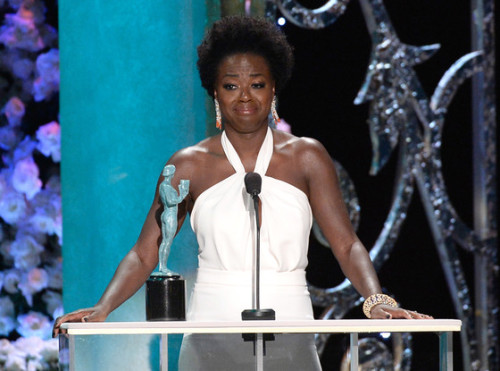
Viola Davis at the SAG Awards


This guest post by Rachel Wortherley appears as part of our theme week on Unlikable Women.


“Thank you … for thinking that a sexualized, messy, mysterious woman could be a 49-year old, dark skinned, African-American woman who looks like me.” – Viola Davis, Screen Actors Guild Awards (2015).

Viola Davis resounded these words in her acceptance speech at the 21st Annual Screen Actors Guild Awards when she won for “Outstanding Performance by a Female Actor in a Drama Series” for the ABC hit series, How to Get Away With Murder (2014). Davis’ speech shows how images of Black women in television are only beginning to change.   Before the inception of ABC’s Scandal (2012), a Black woman in a lead television role had not existed since 1968’s Julia starring Diahann Carroll.   Since Scandal, Fox’s Sleepy Hollow (2013) and How to Get Away With Murder have been allowed to flourish on network television. Viola Davis’ portrayal of Annalise Keating is brass, vulnerable, sexy, and threatening–all of which is the complete opposite of misconceived images of Black women as docile, maternal, and continuously doting. She is usually a figure who serves others while sacrificing her personal wants and needs.

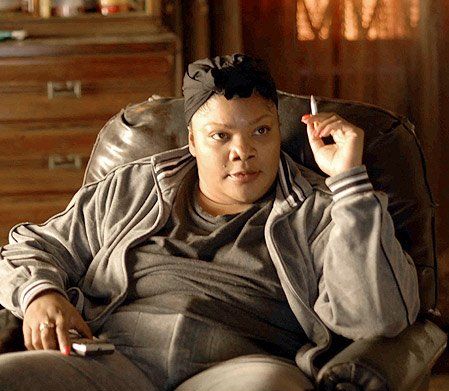
Mo'Nique as Mary Ann Johnson in Precious
Mo’Nique as Mary Ann Johnston in Precious


When I searched my mental rolodex for Black female characters in film or television who are unlikable my mind continued to circle. I was lost. With the exception of Mary Lee Johnston (played by actress and comedian Mo’Nique) in the 2009 Lee Daniels’ film Precious, I could not name one character. Writers and executives appear to have an inherent fear of writing women of color as unlikable, even evil. Often a character who looks and feels like Annalise Keating is ascribed as the “angry Black woman.” In fact, Alessandra Stanley, writer for the New York Times, attributed this ignorance in her article, “Wrought in Rhimes’s Image: Viola Davis Plays Shonda Rhimes’s Latest Tough Heroine,” in which she accuses the series’ executive producer Shonda Rhimes and Annalise Keating of being angry Black women. Meredith Grey (Grey’s Anatomy) and her angry rants should takes notes, lest she be an “angry white woman.”

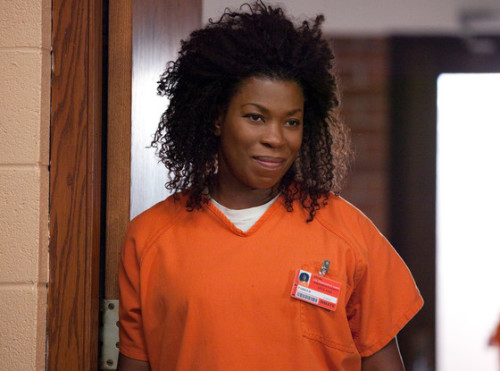
Then I remembered two recent characters from television. Yvonne “Vee” Parker of the Jenji Kohan, Netflix series, Orange is the New Black (2013) and Erin Gray of Neil Cross’ BBC series, Luther. Kohan and Cross create two women, whom also happen to be Black, who are unlikable and even volatile in the perception of general audiences.

Lorraine Toussaint as Yvonne "Vee" Parker in Orange Is the New Black
Lorraine Toussaint as Yvonne “Vee” Parker in Orange Is the New Black


Jenji Kohan is masterful in her conception of Vee because the quality that makes her unlikable is her ability to be likeable.   In Season 2, Episode 2: “Looks Blue, Tastes Red,” we flashback to see Tasha, a chubby, little, 11-year old Black girl croons the Christina Aguilera ballad “Beautiful” to prospective adoptive parents. She can recite the periodic table and memorize up to 56-digits of pi. Yet, despite this they choose another child.   Suddenly a tall, dark figure, big hair, in sunglasses approaches, sits, and lights a cigarette.   She looks over and Tasha and recognizes that she is from a group home. The woman asks if Tasha cares to learn “the trade” (the drug trade) and Tasha refuses. She wants to find her “forever family.” In that moment, Vee awakens Tasha to the reality that she may die waiting for her forever family and in the same moment Tasha becomes “Taystee Girl,” a nickname that will follow her into Litchfield Prison.

A couple of scenes later a teenage Taystee, who dons a uniform from the local fast food restaurant, is headed to work. Once again, Vee approaches Taystee to convince her to join the business. Here, Taystee continues to be resistant. She wants to make her own way. However, the third time, Vee does not approach her, rather Taystee goes to her.   Taystee, crying and desperate, turns to Vee lamenting that her situation in the group home has worsened. This time around, Vee rejects her until Taystee proves that she can be an integral asset to the business. As in the beginning of the episode, she shows off her math skills as she did for the adoptive parent and this time it works. Vee takes Taystee under her wing.

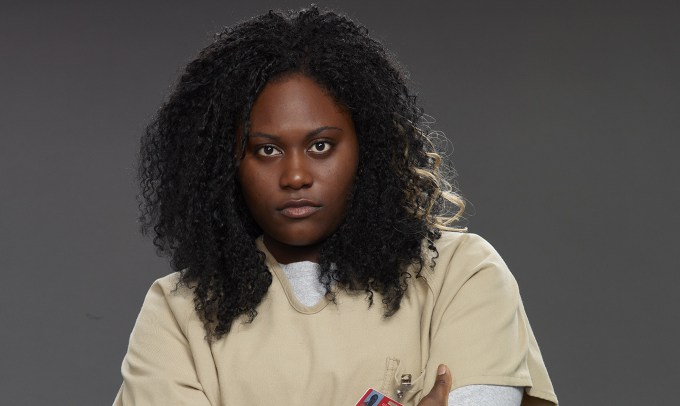
Danielle Brooks as "Taystee" on Orange Is the New Black
Danielle Brooks as “Taystee” in Orange Is the New Black


Kohan uses these flashbacks in order to demonstrate the humanity beneath the face of prison. In Taystee’s flashback audience see that she was a lonely child searching for her “forever family” but she unfortunately found refuge in the wrong person. A pivotal flashback occurs when Taystee arrives from the craft store with googly eyes, owl, and horse stamps.   Her idea is to label their heroin with a stamp in order to market it better. Despite the context of the conversation, what audiences learn is that Taystee is a businesswoman with bright ideas who wants to move beyond working for a “connect.”

As Taystee vocalizes this information, Vee is in the kitchen cooking dinner for R.J. (another young employee of Vee) and Taystee. In this moment, Taystee gazes at Vee as though she is a God-send. Here, Vee is the nurturing, maternal figure that Taystee has always wanted. Another scene in which Vee’s maternity is showcased occurs in real time at Litchfield prison. Vee quickly becomes close to Suzanne who is known to fellow inmates as “Crazy Eyes.” Suzanne who is afraid of Piper—due to Piper’s brutal beat down of another inmate in the previous season—becomes withdrawn around her. Vee sees this and tells her: “at the end of the day, you are a garden rose and that bitch is a weed.” That moment allows for Suzanne to “see” herself for the first time and it solidifies her loyalty to Vee.

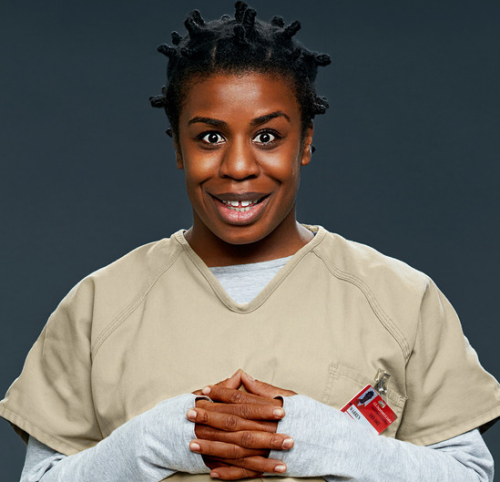
Uzo Aduba as Suzanne "Crazy Eyes" Warren in Orange Is the New Black
Uzo Aduba as Suzanne “Crazy Eyes” Warren in Orange Is the New Black


Vee’s declaration to Suzanne is the same method that allows her to insert herself into the lives of the other inmates: Black Cindy, Janae, and to some extent Poussey. Each of these women has experienced some type of loss in their past. Janae, a promising career in track and field, Black Cindy, her daughter, and Poussey her true identity. Vee is their opportunity to prove their worth at the prison amongst the women; to them she sees their purpose. She also becomes the maternal figure of the Black women in the prison where that role is vacant. The Hispanic inmates have Gloria, while the Caucasian inmates have “Red.” Vee’s ability to charmingly seduce individuals is what makes her most diabolical. Her maternity is sinister, a quality that is comparable to the description of the elms in playwright Eugene O’Neill’s play, Desire Under the Elms. Like the elms, Vee appears to “protect, yet subdue.” Vee predatorily isolates the group, specifically Taystee, from Poussey who quickly sees Vee as a danger. Vee uses her feelings of isolation in order to hurt her. For audiences the separation of Taystee and Poussey is the first offense. The second and third come to fruition in the form of injuring Red and allowing Suzanne to take the blame. As Black Cindy attempts to stand up to her, she and Janae quickly see that Vee’s physical threats are to be taken seriously. She is willing to discard of anyone in order to get what she wants. Just ask Taystee’s friend R.J. whom she sleeps with and murders all in one night.

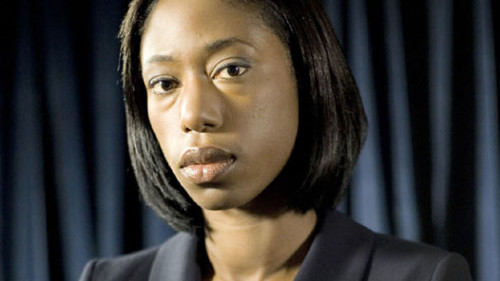
On the flipside of this is DS/DCI Erin Gray on Neil Cross’ BBC series Luther. Erin is the only woman on the police force which includes Detective Chief Inspector John Luther (Idris Elba). She is meticulous, driven, and she follows rules by the book. Despite her name, there are no “gray” areas in her concept of the law, just black and white. Erin is the only woman in newly formed “Serious and Serial Crime Unit” therefore has to prove herself as a woman and a woman of color. The first time audiences meet her she asks DS Justin Ripley, Luther’s partner, in reference to Luther’s police tactics: “is he really as dirty as they say?” Ripley quickly comes to his defense and continues to do so as the season progresses.

Nikki Amuka-Bird as DCI Erin Gray in Luther


Erin continues to question Luther’s methods. A prime example occurs when Luther orders her and Justin to confiscate the mobile phones of the public at a crime scene investigation. Erin questions, “On what grounds?” However, Justin explains that to Luther “confiscate” means something different. Erin does not completely understand Luther’s policing nor agree with them. This comes to a head when she witnesses Luther breaking into DSU Schenk’s computer files—in actuality he is obtaining files to set a teenaged prostitute free from her employer. As a result, she becomes suspicious and reports the case. However, she alerts Justin to her concerns, inadvertently allowing him enough time to wipe the history from Schenk’s computer. As a result, Erin is embarrassed and humiliated in front of her superior. She leaves the Serious and Serial crime unit in disgrace.

This moment is what allows Gray to join the unit that investigates police corruption and she is promoted to Detective Chief Inspector.   She joins forces with formerly retired DS George Stark to investigate Luther and bring a case against him. In the process, Gray attempts to convince Ripley that Luther needs to be stopped. Season three is when Gray begins to become unlikable for audiences. According to most audiences Gray is labeled as “annoying,” “grating,” and a “stupid bitch.” Upon my first viewing, I also found Gray unlikable. However, now I understand why audiences dislike her.

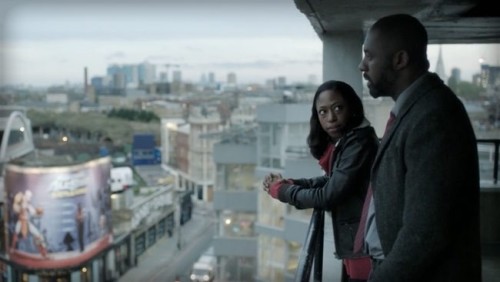
Erin Gray and Luther
Erin Gray and Luther (Idris Elba)


Gray’s biggest fault is that she goes against not just the main character, but a multitude of characters who support Luther. One of them being the beloved psychopath Alice Morgan (Ruth Wilson).   Audiences are quick to love the deliciousness of a possible intimate relationship between Alice and Luther and seemingly overlook the fact that when we meet her she murders her parents and the family dog, and gets away with it. She is clever, delightful, and continuously fights for John Luther. Alice like many of the women on the show has been saved by Luther (he cunningly helps Alice escape the mental institution). Erin is threatening because even as she faces the barrel of a gun in season three, she does not need to be saved by John. Erin’s ability to be independent of the main character is what makes her unlikable. She works to better herself and the law. It is also significant that the majority of women in the shows history who need saving, including the victims, are Caucasian women.   While I am not advocating that Black women or women in general, should be diminished to damsels in distress, it is obtuse that a majority of victims are of a specific demographic and gender. In a sense this disparity establishes how audiences are supposed to see Erin Gray in comparison to others. Because she is not a victim, she is other.

Though Vee’s story on Orange is the New Black is closed by Rosa, the escaped inmate who runs Vee over with the prison van, seemingly killing her, Erin’s is very much open. In the aftermath of her attack, audiences last see Erin on a stretcher, shell shocked, and speechless. For audiences her non-death may have been a disappointment, but she has been scared straight into ultimately believing in Luther. Viewers of Orange is the New Black and Luther have equally been satisfied in some capacity by each woman’s demise.

Unlikable white women characters


Claire Underwood, Maxine Lund, Mavis Gary, and Hannah Horvath are just a few of the many unlikable female characters in film and television. They are met with distaste, yet this quality places them under a microscope because they are often people we know. Viola Davis’ statement in congruence to Vee Parker and Erin Gray demonstrate that minorities, whether they are Black, Hispanic, or Asian, want to diversify their roles in film and television. While the general landscape of roles for women of color appear to be expanding on television, film continues to fall behind in the diversity of characters. She should be liked and disliked, loathed and loved, and the bitter pill to swallow, yet the one that we need.


Rachel Wortherley is a graduate of Iona College in New Rochelle, New York and holds a Master of Arts degree in English. Her downtime consists of devouring copious amounts of literature, television shows, and films. She hopes to gain a doctorate in English literature and become a professional screenwriter.

Why We Love Janice and Why We Love to Hate Janice

Is Chandler going somewhere, just minding his own business? Chances are that Janice is just around the corner. As Janice once put it, “You seek me out. Something deep in your soul calls out to me like a foghorn. Jaaa-nice. Jaaa-nice.”


This guest post by Artemis Linhart appears as part of our theme week on Unlikable Women.


You can hear her presence from a distance. If it isn’t the laugh that tips you off, it might just be her nasal, loud voice – the stuff that Chandler’s nightmares are made of. As a viewer, you can also feel her presence from a distance. Is Chandler going somewhere, just minding his own business? Chances are that Janice is just around the corner. As Janice once put it, “You seek me out. Something deep in your soul calls out to me like a foghorn. Jaaa-nice. Jaaa-nice.”

This holds true for all 10 seasons of Friends. Just when you thought she was out… they pull her back in.

The thing about Janice though, is that she is more than a running gag. What is established early on in the first season as the on-again, off-again love interest and general catchphrase provider, the inescapable fate of Chandler Bing’s love life, is in fact a statement about our – the fans’ – loyalty and commitment to the characters of the show.

Clearly, it’s a Love Hate Thing. The character evokes in the viewer split feelings of sympathy with both Chandler and Janice herself.

Why We Love Janice

She’s fun.

janice-gif-2

She may be whiny, but Janice is up for all sorts of fun stuff. Spending a day with her seems like a great thing to do – even though “Joey and Janice’s Day Of Fun” did nothing to change Joey’s feelings about her. Phoebe may be the only one to genuinely like her, but Janice truly cares about all six of the Friends and shows that she’s a fun person to be around.


She’s confident.

janice-gif-3

Not only is Janice confident when it comes to her style – she pulls off bold fashion choices with ease and, while others might be amused by her outfits, she wears them with pride – but she also never fails to show how strong a person she is. Janice knows what she wants and is not afraid to go ahead and get it.

When she hears about Joey hating her, instead of being offended or shamed, she confronts him and wants to make things right.

e894fc29361e108d9ad04a6b6e8c9b26


She has a good heart.

5bcaefa1d6c102c58752c43267112a66

Janice is loyal to Chandler despite all the pain he has caused her. She truly cares about him. Remember the customized candy hearts and the Bullwinkle socks she gave him for Valentine’s Day? Those were gifts that really showed how thoughtful she is.

Forget lobsters! – Janice is the Bullwinkle sock to Chandler’s pair of Rockys. She might get lost in the sock drawer at times, but she’s sure to resurface every once in a while for Chandler to mix and match.


She’s supportive.

janice-gif-1

When Chandler pretend-moved to Yemen, she helped pack, bring his luggage to the airport and, on top of it all, agreed to a long-distance relationship.


At one point, she did actually make Chandler happy.

janice-image-2

And we love a happy Chandler.


It is always fun to see Chandler’s pitiful tries to break up with her.

janice-image-1

New Year’s, Valentine’s Day, you name it. Chandler may be the worst breaker-upper there ever was.


Why We Love to Hate Janice

We feel the pain.

90s-best-beyonce-chandler-bing-Favim.com-2057916

Empathy, folks. We’ve got it.


It’s not just Chandler who suffers.

tumblr_kvswxmKHek1qzczc7o1_500

tumblr_kwvaba1ep41qzczc7o1_1280

Joey, Rachel and Ross also get their fair share of Janice-induced agony.


We are protective of Monica and Chandler’s romance.

For Monica, there might even be a hint of jealousy involved. After all, Mon/Chan is the One True Pairing.

[youtube_sc url=”https://www.youtube.com/watch?v=_CZiZiBF7YQ”]


It makes us part of the group.

We love our Friends. They hate Janice. We know Janice is awesome, but we love to be on their side and hate Janice together.

[youtube_sc url=”https://www.youtube.com/watch?v=VLgpoSYVTx4″]


Oh… My… God.

[youtube_sc url=”https://www.youtube.com/watch?v=oNjjeZO2AZ4″]

Admittedly, she is quite a bit irritating.


In conclusion, this video pretty much sums it all up:

[youtube_sc url=”https://www.youtube.com/watch?v=7rhoZrJXxsI”]


Artemis Linhart is a true Friends geek. She works and watches in Vienna, Austria.

“I’m Not Bad, I’m Just Drawn That Way”: The Exceptionally Beautiful Anti-Heroine

And if you’re anything like me, every reader of this site wants the same thing: to see more portrayals of women on film, televisions, and beyond that reflect their complexities, strengths and weakness alike. We want a greater range of body types, a greater representation of lifestyle choices, a broader world of occupations and skill sets and backstories and destinies.


This guest post by Jessica Carbone appears as part of our theme week on Unlikable Women.


“Beauty is in the eye of the beholder.” This expression is meant to remind those who hear it not to conflate a beautiful face with a beautiful soul. However, when it comes to starring roles for women on television, the most important tool an actress can bring to the table is traditional, indisputable beauty. Why is this so valuable? Because from a storyteller’s perspective, it’s the perfect narrative loophole—if your main character is physically gorgeous, no matter what horrendous moral or criminal violations she might commit, viewers are still going to be hungry to see her on screen. Some newer anti-heroines deliberately break this mold (see Hannah Horvath on Girls), and we should be happy about that—whether she’s the hero or the villain, a female character can be much more than eye candy. But a beautiful actress unlocks some very interesting plotlines in the modern television writer’s rooms, and with the rise of the antiheroine, a woman on television can now get away with murder—literally and figuratively. But to do that, she can’t just be smart, funny, and fierce—she’s also got to be HOT.

just a few of the pretty TV heroines who escaped criminal punishment for their murderous deeds over the last decade. From left to right, Blake Lively as Serena van der Woodsen, Gossip Girl; Evangeline Lilly as Kate Austen on Lost; Tatiana Maslany as Sarah Manning from Orphan Black
Just a few of the pretty TV heroines who escaped criminal punishment for their murderous deeds over the last decade. From left to right, Blake Lively as Serena van der Woodsen, Gossip Girl; Evangeline Lilly as Kate Austen on Lost; Tatiana Maslany as Sarah Manning from Orphan Black


A pretty girl on television has never been an oddity—but it used to be easier to know that the attractive lead character was virtuous, just as the mustache-twirling side character was the villain. But with the first appearance of Tony Soprano, a violent gangster we could root for, writers began to craft all main characters as internally conflicted and morally compromised, crime-fighter and criminal, mama bear and femme fatale. (See Dexter, Hannibal , and Mad Men for more of this archetype). Audiences are willing to tolerate a lot from male antiheroes, partially because of historical precedent—as men have traditionally been in power, we expect our leading men to wield their power both for good and evil. But a good woman who goes bad? That prototype is sexy and revolutionary as hell—and we see that reflected in the constant shaping of the beautiful villainess, a woman who gets by being bad because she looks so good doing it. To be a woman aware of and in control of her sexuality is to be newly powerful, potentially dangerous, and thus, perfect material for the perfect anti-heroine.

Nancy Botwin
Nancy Botwin


The introduction of Weeds, a half-hour comedy about a pot-dealing widow, shone a whole new light on the suburban femme fatale, especially one who comes into her own by way of her criminality and who, newly single and newly living a life of crime, gets to be a fully sexualized force of nature. Nancy Botwin (played by the radiant and ballsy Mary-Louise Parker) would do anything to keep her upper-middle class lifestyle in check—be it selling dime bags to teenagers, collaborating with a Mexican drug cartel, or romantically tie herself to any number of criminals (a fraudulent DEA agent, the murderous mayor of Tijuana, a sleazy insurance magnate). Through everything, Nancy kept her family safe with her sexuality—even in the first season, Nancy has sex with a competing dealer to defend her territory. In many ways Nancy acts as though she’s invincible—something she believes because society confirms her ability to pass unnoticed through the criminal underground. When you’re an attractive prosperous white woman in a world dominated by impoverished non-white men, it’s easy to escape because you don’t look like a criminal. And yet Nancy’s good at her job because she’s selling herself as part of the product. Hell, Snoop Dogg even names her product “MILF weed,” because its delightful effects are exactly like Nancy. What makes Nancy an admirable yet deeply troubling anti-heroine is that she doesn’t mind being objectified in order to get what she wants—sometimes she even embraces it, because it’s an effective method of negotiation. In Season 3, she literally shakes her moneymaker to get a brick of product from another dealer.


[youtube_sc url=”https://www.youtube.com/watch?v=qtlElBLg354″]

Nancy does the brick dance


What starts as a dance of awkward desperation very quickly becomes something fun for her—another moment for Nancy to hold all the cards, and get what she wants.

“Get a good look at me”


While Nancy discovers her powers of seduction on Weeds, many of our best antiheroines stride into view fully aware of their desirability. Fiona Goode, of American Horror Story: Coven, is a new version of the Wicked Queen prototype, updated and empowered for a 21st century kind of sexuality and MILF-status. As portrayed by the eternally flawless Jessica Lange, Fiona is the reigning Supreme (head witch) of the Salem coven, a inherited title passed down to a witch who shows mastery of her craft (which includes the power of concilium, mind-control, often demonstrated as flirtation and coercion) as well as blossoming health and beauty. Power and beauty are inextricably linked in Coven, and so Fiona is obsessed with her looks, to the point where she tries to sell her soul to a voodoo spirit to guarantee “life everlasting—no aging, no decrepitude, forever.” Fiona knows exactly how powerful beauty is, because she’s wielded it from a very young age—at age 17, she killed the reigning Supreme so she could claim the title, and given that the lone witness was in love with her, she had someone to cover up the crime (and future crimes as well). Fiona’s desire to eliminate all competition is strengthened by her love affair with the Axe Man, a murderous ghost who can be summoned to do Fiona’s bidding. (All the men on Coven are sidekicks or love interests, never once dominating the storyline, and that’s radical all by itself.) Whether Fiona is actually in love with the Axeman is unclear, but one thing is for certain—Fiona’s best weapon throughout her life has been her beauty and desirability. Whether or not the writers of Coven stand behind Fiona’s deeds, there is no question that she holds the screen, as well as all the other girls in the coven, in her thrall—when you hand a role like this to Lange, it comes a performance that’s part camp, part feminist tour-de-force, and you can’t help but admire it, even when she slaughters everyone in her wake.

"Who's the Baddest Witch?"
“Who’s the Baddest Witch?”


It’s one thing to wield beauty deliberately, to bend the universe to your will the way Nancy and Fiona can. But can a beautiful anti-heroine ever accidentally wield this power? Even with intelligence, ingenuity, and fearlessness to wield, does beauty become the most defining characteristic of an anti-heroine?

Olivia Pope
Olivia Pope


The last thing a real anti-heroine wants to be is a “damsel in distress,” and yet Olivia Pope, Scandal ’s most morally messed-up “gladiator,” is constantly finding herself in scenarios where being an object of lust is the only thing that will actually rescue her. Olivia Pope (played by the fiercely intelligent Kerry Washington) conceives of herself as a hero, a champion for the underdog, someone who “wears the white hat” and has an unfailingly good gut sense of right and wrong. But whatever ivory, bone-white, or champagne-colored hat she wears, Olivia is almost never championing the underdog. In fact, for the first two seasons of Scandal, the vast majority of her clients are powerful people needing a “fixer” to protect their image. And what better champion to call upon then, than a woman who is all perfect surface and no moral core? True, Olivia is constantly calling people out on their vile actions, but very often she is speaking more to the Scandal audience (or to her adoring employees) than to the actual person needing a shakedown. Yet Olivia is never punished for this hypocrisy because, as the series progresses, she is primarily valued for her beauty and the influence it wields—specifically, on the men who can’t resist her. But she never fully understands what that power means.


[youtube_sc url=”http://youtu.be/iJ3UBneiB9I”]

Fitz and Olivia


We know that Shonda Rhimes writes brilliant, passionate women of all orientations, races, ages, and life experiences. (We’ll be thanking her for Cristina Yang for years to come.) The development of the Rhimes heroine prototype makes for better and better television, and there’s no question that Olivia is part of that tradition—but she’s also a setback. Because every time she is imperiled, every time it looks like she will finally receive some comeuppance for any of the multitude of crimes she has committed, there’s a guy who loves her ready to swoop in and protect her. What the show does by making Olivia so desirable is actually reduce her exceptional qualities, and treats her more like a cardboard damsel in distress. (Unlike Fiona and Nancy, Olivia doesn’t suffer from the same delusions of untouchability, and that’s a byproduct of knowing just how hard she’s had to work as a black woman—class and race are a huge yet currently unexplored part of the Scandal storyline.) And while we’d like to say that Olivia’s love interests are merely incidental (and make for great soapy plotting), you could practically write a drinking game around what I call the “Pope” test. (Take a drink for any scene where two men talk to each other for more than a minute about someone other than Olivia. That’s one sober hour of television.) If Olivia really is claiming to choose herself, you’d think that would also mean choosing to take back the conversation about her own beauty, and what it can do. But instead of reckoning with that power, she constantly tries to throw it off, to disregard it or dismiss it as unimportant. And that doesn’t make her look strong—it makes her look naïve.


[youtube_sc url=”http://youtu.be/twNxmKU-jcI”]

Start at 0:52


So when we talk about television’s anti-heroines, which would we rather have—women behaving badly who are also, conveniently, beautiful? Or women who go full anti-heroine, knowing that they can be pretty when they need to? Making a female protagonist unaware of her own power, wherever it comes from, neuters her strength as a character. If Nancy didn’t know that she could get away with being a drug dealer, she’d never discover how much she could fight her own battles. If Fiona hadn’t known she was beautiful, she never would’ve become supreme. When will Olivia sit up and realize just how much she can take control of the men in her life, and use or discard them as she needs to? Rhimes has said repeatedly that she never intended Olivia to be a role model, that she “has always been an antihero,” and maybe that’s true. But maybe Olivia needs to realize that she might not be bad at the core, but being drawn that way sure makes being bad easier. And taking ownership of her sexuality, her allure, her ability to draw people in and make them love her isn’t a sign of weakness—it would be a sign of self-knowledge, and a new coat of armor. Just ask Amazing Amy. Or Cersei Lannister. Or Six.

Cersei Lannister, Six from BSG, Rosamund Pike as Amy


Of course, it does pain me to think that we need more beautiful villainesses, more femme fatales, more female bodies on screen to ogle over and objectify. Haven’t we had enough of that? And if you’re anything like me, every reader of this site wants the same thing: to see more portrayals of women on film, televisions, and beyond that reflect their complexities, strengths and weakness alike. We want a greater range of body types, a greater representation of lifestyle choices, a broader world of occupations and skill sets and backstories and destinies. But if we’re going to ask for more valid portraits of strong women, we also have to validate more sources of power—and maybe in looking at television’s most beautiful antiheroes, we have to consider the value of beauty as a legitimate weapon, used for both good and evil. When it comes to my nightly viewing schedule, I’d rather have lots of beautiful girls acting out across the moral spectrum than simple pretty ingénues any day.


Jessica Carbone spends her days researching food history and editing cookbooks, and her nights writing film, television, and literary think pieces for The Rumpus, The Millions, and The Los Angeles Review of Books, among others. She lives in Washington, D.C.


Recommended reading:

From The Artifice,Olivia Pope as modern antihero

From Complex,the women of American Horror Story: Coven rewriting male-dominated television”

From Flavorwire,Just Because There’s No Tony Soprano doesn’t mean we can’t have female antiheroines”


Cristina Yang As Feminist

As people, no matter what gender, it is seemingly second nature to want others to like us and to portray our best selves to them. Just look at the ritual of the date or the job interview. That Cristina defied this action (though we have seen her star-struck when meeting surgeons like Tom Evans and Preston Burke) made her not just a feminist character, but a truly human(ist) one.

unnamed


This guest post by Scarlett Harris is an updated version of a post that originally appeared on The Scarlett Woman and appears now as part of our theme week on Unlikable Women. Cross-posted with permission.


When it comes to “likable” female characters on TV, up until she departed Grey’s Anatomy last season, Cristina Yang probably wasn’t one of them.

She was abrasive, unfeeling, career-driven, ruthless and selfish. Everything a woman shouldn’t be, according to patriarchal norms.

Perhaps she could’ve been more like the ousted Izzie Stevens, who was bubbly and sexy and baked cookies. Or the virginal and highly strung April Kempner, whom Cristina praises for having “virgin super powers,” enabling her to be super-organized.

unnamed

But I, like many Bitch Flicks readers, loved Cristina just the way she is. She had her eye on the prize, wouldn’t compromise her personal beliefs or goals to be liked by her peers or loved by a man, and she had “tiny little genius” hands that enable her to roll with the big guns.

This is why Cristina Yang is one of an increasing cohort of “feminist”—or “strong female”—characters on television.

For one thing, she refuses to rely on her looks or her feminine wiles to get ahead. In “This is How We Do It” in season seven, she rejects Owen’s compliment about her beauty, saying, “If you want to appease me, compliment my brain.”

And in season seven’s final, we saw Cristina exercise her right to choose and schedule her second abortion on the show, after much (mostly solo) deliberation. While excluding the opinion of her significant other and biological contributor to the fetus wasn’t the most respectful thing to do, ultimately it came down to her choice, and she chose to terminate the pregnancy.

In season two, Cristina divulged that she was pregnant to Dr. Burke and, again, made the decision to get an abortion on her own. Whereas a character like Izzie seemed to serve the anti-abortion agenda (she gave up her own baby for adoption when she was a teenager growing up in a trailer park, and convinced a HIV-positive woman to carry her pregnancy to term), Cristina resisted the societal pressures to tap into her maternal instincts and give birth to a child she does not want. Shonda Rhimes has since proved that she’s one of the only truly pro-choice producers in television, and I have written further about her stance here.

unnamed

Regardless of whose agenda could be seen as being served by Cristina’s character, she acted without fear of what other people will think of her.

As people, no matter what gender, it is seemingly second nature to want others to like us and to portray our best selves to them. Just look at the ritual of the date or the job interview. That Cristina defied this action (though we have seen her star-struck when meeting surgeons like Tom Evans and Preston Burke) made her not just a feminist character, but a truly human(ist) one.

When Grey’s Anatomy first debuted, it seemed that Cristina Yang was positioned to challenge and grate on the audience, with Meredith or Izzie being more palatable to viewers. As the seasons continued (some would say dragged on), the women of Grey’s Anatomy were proven to be anything but likable, cheating on their spouses, meddling in medical cases that would see them lose their licenses and be sued for malpractice, grieving, quitting, and just dealing with the challenges that being a surgeon and a person throws at you. Though Seattle Grace/Seattle Grace Mercy West/Grey Sloan Memorial Hospital/what the hell is that hospital called now?! is a fictional medical institution, it’s one of the realest portrayals of not just women but people on TV today. Like Cristina’s departure last season, it will truly be a sad day when those doctors leave our living rooms for good.


Scarlett Harris is a Melbourne, Australia-based freelance writer and blogger at The Scarlett Woman, where she writes about femin- and other -isms. You can follow her on Twitter.