When Love Looks Like Me: How Gina Prince-Bythewood Brought Real Love to the Big Screen

Gina Prince-Bythewood’s choice to center these themes around a young Black couple shouldn’t feel as revolutionary as it does. But when you consider that “universal” is too often conflated with “white,” Love & Basketball feels like such a turning point in the romance genre. It was certainly a turning point for me because, for a moment, Black love and romance, as told by Hollywood, weren’t mutually exclusive.

Love and Basketball

This guest post written by Shannon Miller appears as part of our theme week on Women Directors.


Growing up, I used to stare at my mother’s seemingly impressive VHS collection, which she maintains to this day. What fascinated me most was its eclectic range. Friday, for instance, was often nestled between Steel Magnolias and Selena. What’s Love Got to Do with It sat to the right of our small Disney collection and just before Speed. Sister Act, if not still warm in the VCR, had its place next the original Parent Trap. Scattered throughout the assortment was a weirdly appropriate representation of the romantic film landscape at the time: Pretty Woman, While You Were Sleeping, She’s the One, Hope Floats, Ghost, One Fine Day, My Best Friend’s Wedding. These are stories of women exploring their version of love in ways ranging from entirely relatable to, quite literally, paranormal.

I recognized my mother’s attempt to support films that featured actors and actresses that looked like us, even going as far as to purchase movies that she hadn’t seen yet, which now seems like a major (and costly) leap of faith. I also knew, and eventually mirrored, her genuine love of romance and beautiful endings, happy or not. Looking at our collection, I came away with a deep seated understanding that, as Black people, we could be funny, dramatic, troubled, and many versions of “strong.” Romance, however, was a white woman’s game. There was a noticeable shift in Black cinematic storytelling in the late 1990’s, but it wasn’t until 2000’s Love & Basketball that I began to find an honest connection with something that felt familiar. The story of Monica Wright (Sanaa Lathan) and Quincy McCall (Omar Epps) opened up a whole new world of possibilities for me in romantic storytelling. I was too young to know that I had writer and director Gina Prince-Bythewood to thank for that.

Gina_Prince-Bythewood

Love & Basketball tells a number of tales. It tells the story of a young woman asserting her identity against narrow definitions of femininity. At times it follows a young man having to learn the hard way that sometimes your heroes can stumble to the point to failing you. You can even come away from the film with a hearty discussion about the long, winding trajectory of success for women in sports versus the plentiful, immediate options available for men. The beauty of this particular film, however, is how each of these stories are bound together by the singular, accessible idea of two best friends falling in love and trying to simultaneously navigate their friendship as well as their individual destinies. Like many solid coming-of-age stories, we get to witness the complexities of aging out of adolescent friendship.

Once they enter college, Monica and Quincy begin to learn what genuine support entails and what it means to require something more from each other than a shared loved and mutual kindness. That’s what the evolution of relationships is all about: adjusting to the changing parameters of certain bonds as you grow and learn. For many, the pang of disappointment that Quincy feels as he chastises Monica for not being available to him at his lowest moment feels familiar. In contrast, it’s easy to connect with Monica’s need for Quincy to celebrate her long-fought, hard-earned victories. This leads to a disconnect that so many young couples have experienced at one point or another.

Love and Basketball, Beyond the Lights

These experiences aren’t exclusive ones; they exist as the universal marks of youth for so many. Prince-Bythewood’s choice to center these themes around a young Black couple shouldn’t feel as revolutionary as it does. But when you consider that “universal” is too often conflated with “white,” Love & Basketball feels like such a turning point in the romance genre. It was certainly a turning point for me because, for a moment, Black love and romance, as told by Hollywood, weren’t mutually exclusive. Not long after that, however, there seemed to be another dearth in quality romance narratives featuring Black people as the Nicholas Sparks aesthetic – blonde-haired, fair-skinned women paired with young, Zac Efron-esque hunks — reigned. Once again, mainstream romance was excluding people of color.

Then 2014 and Gina Prince-Bythewood brought us Beyond the Lights. With that, I felt like I once again had a place in the genre that I cared about so deeply.

On the surface, Noni (Gugu Mbatha-Raw) and Kaz’s (Nate Parker) story – a tortured pop starlet falling for her tender, down-to-earth guard – may not appear as relatable as that of Monica and Quincy. There is, however, a common struggle that bonds these two: the torment of not having the freedom to live as our most authentic selves. As a highly publicized pop star Noni’s every move, word, and look is manufactured by her mother/manager Macy Jean (Minnie Driver) and management team. As an aspiring local politician, Kaz’s relationship with Noni is scrutinized heavily by his father (Danny Glover). As they grow closer, they’re both given an opportunity to relax their personas and escape the criticisms that make their lives uniquely difficult. Their story, above all else, is about their desire to be truly seen as fully realized beings and not just the Troubled Pop Star and the Heroic Guard Turned Politician.

Beyond the Lights

While l praise Love & Basketball for depicting Black love in a way that was relevant to all audiences, what I happened to love most about the romance between Noni and Kaz were the aspects that were specifically poignant to me as a Black woman. On an impromptu trip to Mexico, Noni finds herself standing in front of the mirror in their shared bungalow, contemplating her distinctive purple extensions. In a moment of genuine vulnerability, she decides to shed her famous tresses and reveal her natural hair to her partner. Standing before him in her gorgeous curls, I recognized the glint of apprehension in her eyes as she awaits his reaction to seeing her truly authentic self for the first time.

The significance of Noni showing Kaz her natural hair – hair that is so often scrutinized by the public from youth to adulthood – and him responding with a kiss and reverently running his fingers through her curls is something so simple, yet so extraordinary and rare in romantic cinema. Just like crossover relatability is important, so are the moments that are specifically experienced by marginalized audiences. We need the assurance that our stories are worth telling.

During a Twitter chat that included Gina Prince-Bythewood last May, seven months after the release of Beyond the Lights, I took the opportunity to ask her what she wished to see more of in terms of on-screen romance. “More real love,” she replied. “Not surface, cliché, joke, but the kind that really wrecks you.” Here’s hoping that this phenomenal woman is allowed more opportunities to not only wreck us emotionally, but to obliterate the notion that different shades of romance don’t exist.


Also at Bitch Flicks: ‘Love & Basketball’: Girls Can Do Anything Boys Can Do, The Female Gaze: Dido and Noni, Two of a Kind‘Beyond the Lights’ Premiere: Interviews with Gugu Mbatha-Raw and Gina Prince-BythewoodGugu Mbatha-Raw Is a Superstar in ‘Beyond the Lights


Image of Gina Prince-Bythewood via Wikipedia and the Creative Commons License.


Shannon Miller’s passions include bossy women, social justice and her three-year-old daughter’s version of “Let It Go”. She co-hosts the Nerds of Prey Podcast, a nerd culture show hosted by four passionate Black women. You can read her thoughts regarding representation in media on her blog Televised Lady Bits or follow her on Twitter @Phunky_Brewster.
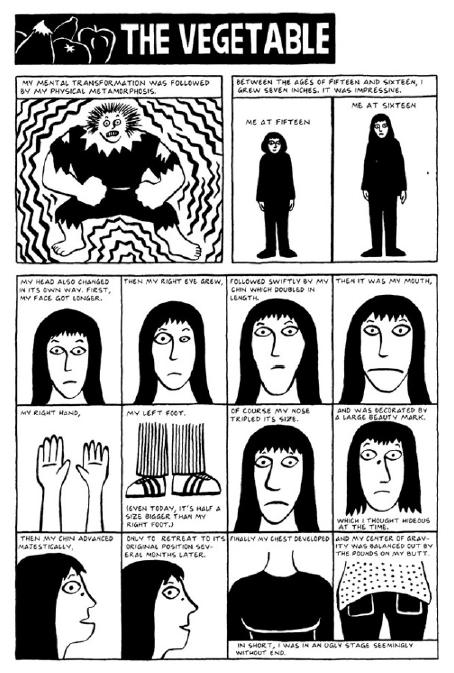
Evolution in Marjane Satrapi’s ‘Persepolis’ and ‘Chicken With Plums’

In a similar way to Marji (‘Persepolis’), Nasser (‘Chicken with Plums’) must be sent far away to have his journey of becoming. There is something in him — talent — that requires he must go beyond his home. But whereas in Marji’s case she must go away to protect herself, Nasser must go away so he can grow, get bigger and fuller and richer.

Persepolis

Written by Colleen Clemens as part of our theme week on Women Directors.


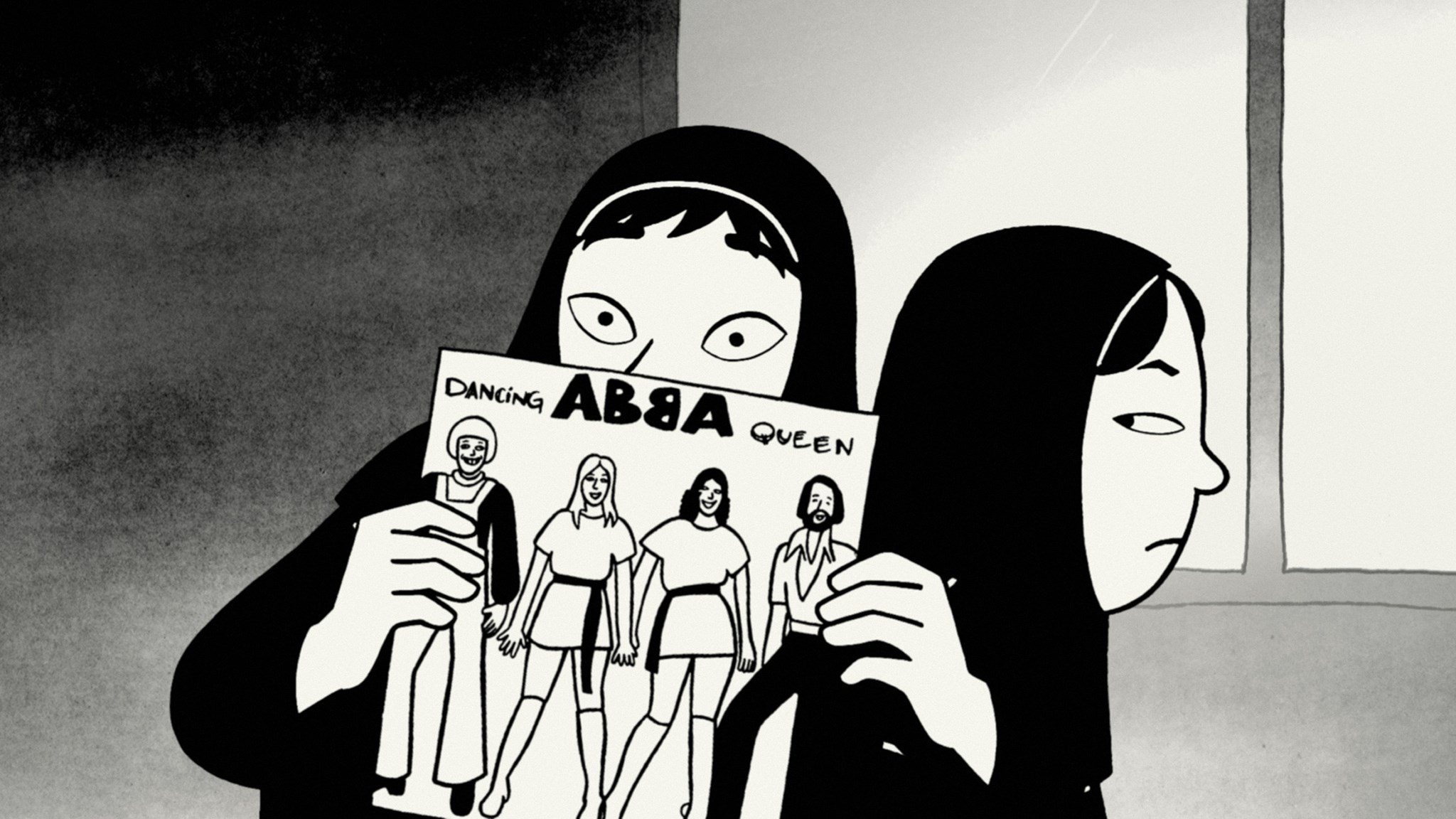
I have been teaching Marjane Satrapi’s graphic novel and film Persepolis for years. I love introducing the young Marji to my students and giving them the opportunity to think about how growing up in Iran may actually share many elements of growing up in the U.S.: jeans, boy troubles, music your parents cannot stand, coming to terms with one’s body.

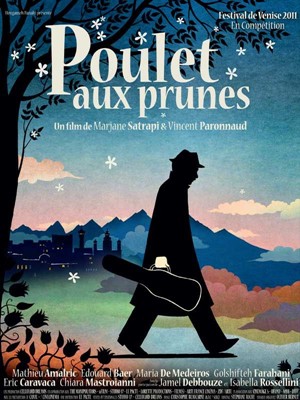
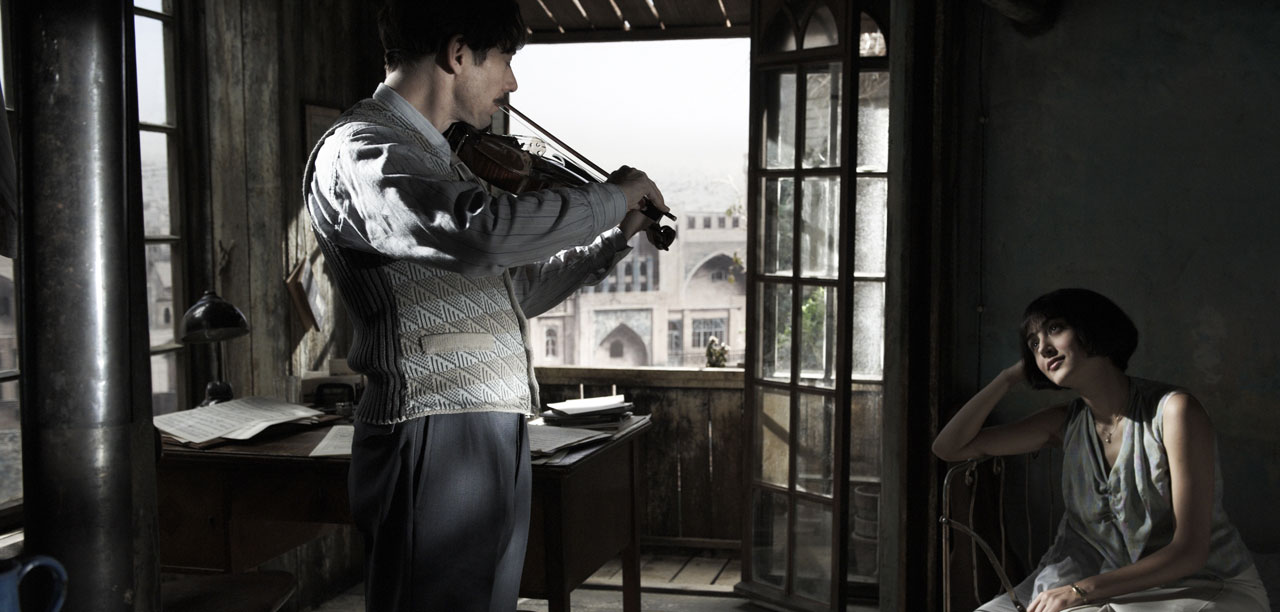
I was eager to see Satrapi’s second film (co-directed with Vincent Paronnaud): a non-animated work, Chicken with Plums, also based on a graphic novel. In the film, the main character, Nasser Ali, is dying. The film counts down the last days of his life and relies on flashbacks to help the viewer understand why Ali is choosing to starve himself to death.

I sat in the dark theater on the last night of the week’s run at the local art house cinema and took notes. But I didn’t leave feeling like I had connected with the film; I didn’t feel like the film offered as much to think about as I had first thought.

And then I realized why I had felt funny about the second film: that in it, he is becoming something — an artist — while the first film deals only with becoming a woman.

There are several reasons why I think it is fair to compare the films even though they look so different. Satrapi wrote both screenplays both based on her graphic novels. Both films deal with a protagonist who is fighting for survival — in the case of Persepolis, how to survive as a woman in an autocratic theocracy and coming of age in a country not of one’s origin and away from one’s family — and the story of Nasser Ali who is spending the entire film dying because he has lost his art because his jealous wife destroyed his violin, the one given to him by his master, whom we will meet later.

In an interview with Mother Jones, Satrapi was asked how she relates to this male protagonist. She replied:

“As soon as I draw a female, I know everybody is going to relate it to me. So even unconsciously there are things that I won’t say. When I create a male character, they wouldn’t know it’s me, so I could just say much more.”

I am interested in the fact that Satrapi finds the freedom to use a male character to investigate becoming something, in this case an artist, a freedom she does not feel when writing a female character that will be conflated with her own self. To summarize this ease, Satrapi told French Culture:

“I said that his hurt musician was the character who was closest to me; because, as he’s a man, I can hide behind me much more easily.”

In an effort to investigate these two main characters, both of which Satrapi admits are autobiographical, we can look more closely at the scenes that deal directly with the main characters coming of age with the guidance of a mentor, in the case of Marji her grandmother, and Nasser Ali, his mentor Agha Mozaffar.

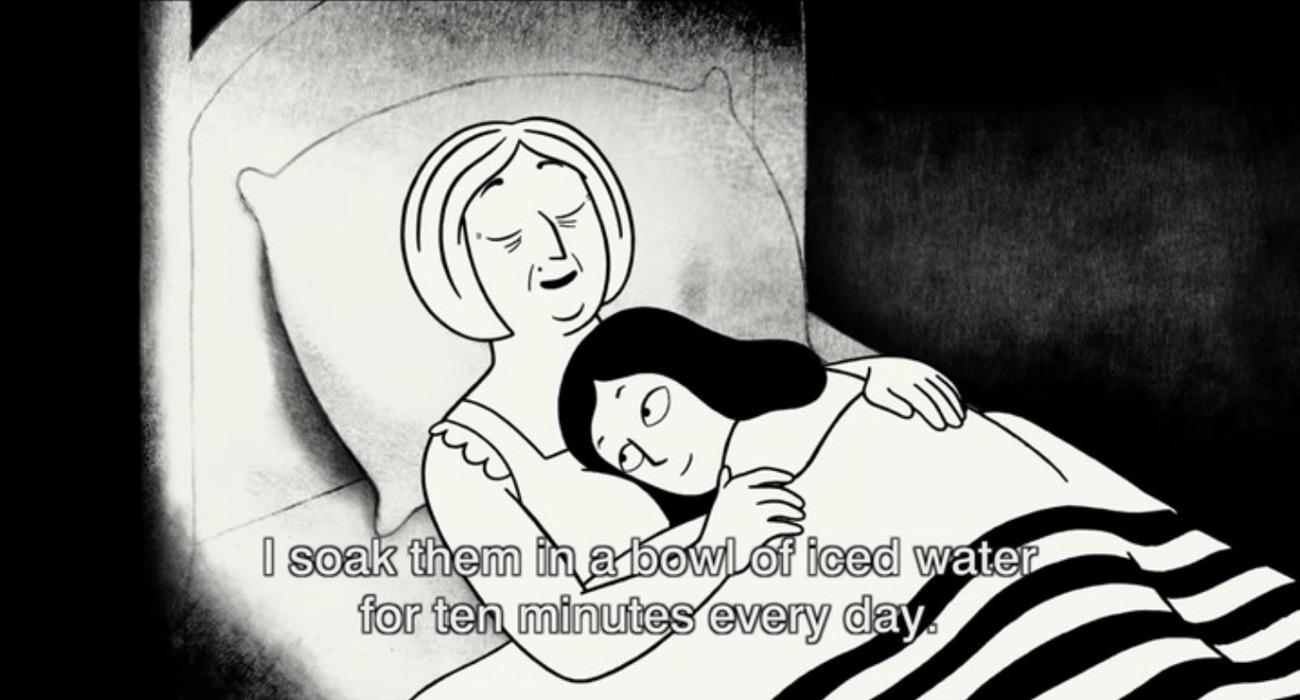
Marji has a close bond with her grandmother, a woman whom has seen her share of revolutions and pain, as members of her family were jailed and killed. She is a tough character who laughs when Marji announces later in the film that she will be getting a divorce and who scolds Marji for using her gender as protection and selling out an innocent man. The two key scenes with the grandmother come at moments where Marji is on the cusp of change. The first is the night Marji is about to leave. A young girl about to go through puberty, Marji is sent to Europe by her parents out of fear for their bright and resistant daughter. In this scene, Marji is spending her last night in Iran with her grandmother.

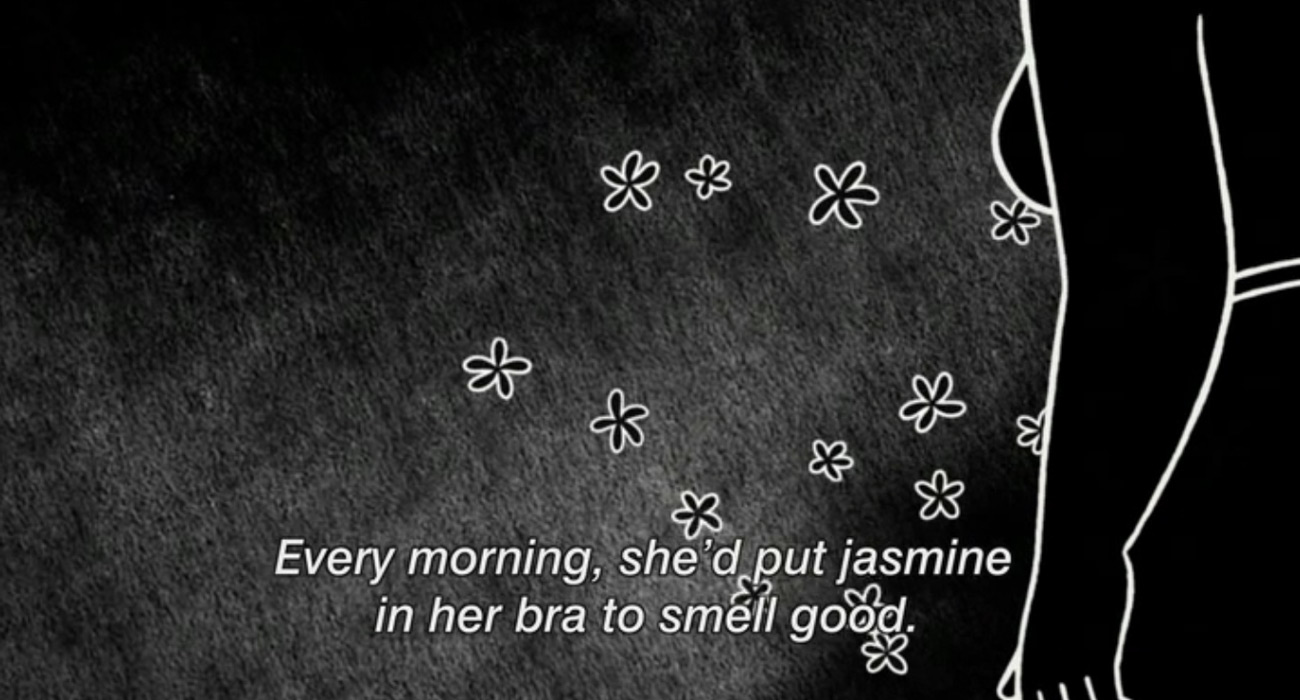
persepolis-jasmine-bra

She has to leave Iran to learn what she is to learn in the film: how to become a woman. Marji’s lesson is focused on maintaining her breasts, a signifier of her femininity. Most of what Marji is to learn in this film deals with her gender and her body’s relation to her gender.

The second scene is when the film is ending. Marji has left Iran for good. She is never to return upon her mother’s orders. The last scene hearkens back to the first scene I showed in which Marji learns about her grandmother’s trick to preserve her breasts. We know that the grandmother has died, that she will no longer be there to teach Marji more lessons about being a woman.  The film ends with the same flowers drifting imagery, closing the film with a reminder of the grandmother’s femininity.

The grandmother character is used to usher Marji into womanhood. There is no mention of what Marji will do when she is older, just that she will be a woman. Here are several lessons that Marji learns about being a woman: through the story of Nilofaur, Marji learns about sexual violence; through two boyfriends, she learns about sexuality; and through her mother, Marji learns that in order to find freedom as a woman, she cannot stay in Iran. The film spends a great deal of its energy showing how challenging it is for Marji to become a woman, be that an independent woman, but still we don’t see Marji creating anything or doing anything in this bildungsroman.

In contrast we have Nasser Ali, whose gender is also an impediment, but only in that women try to get in the way of him being what he is meant to be: an artist. His mother wants him to settle down and his wife destroys his violin. This film also features a mentorship relationship: that of Nasser with Agha.

In a similar way to Marji, Nasser must be sent far away to have his journey of becoming. There is something in him — talent — that requires he must go beyond his home. But whereas in Marji’s case she must go away to protect herself, Nasser must go away so he can grow, get bigger and fuller and richer.

In the first scene, Nasser meets withs Agha Mozaffa in the faraway place that one must have to work to get to. Even the depiction of this place is mystical, magical, not for everyone. As a young man — and one who’s becoming a man is not a focus of the film — he goes to come of age by learning about love and art.

In the final scene, Nasser comes of age as an artist because he had learned about losing love. In this scene, he will get the tool that he will use to be an artist, just as Marji was given the flower trick by her grandmother, the image that ends the film. Again, the mentor is no longer of use to the student: the lesson is complete and now the character can go out into the world.

But there’s a difference between the world Marji enters and the world Nasser enters: the latter is off to jetset as an acclaimed artist. Marji is in the confines of a cab in the place she doesn’t want to be. She does claim to be from Iran at the end, which in a film about conflicts about identity matters greatly, but she is Iranian and a woman. She is not an artist (though we know that she does become a great one).

I love both of these films for different reasons, but I am concerned that in looking at them as major elements of Satrapi’s body of film work that they mirror the idea Kingsley Browne on The Daily Show stated: “Girls become women by getting older, boys become men by accomplishing something.” Watching Nasser become an artist is satisfying in a way that I don’t necessarily feel when watching Persepolis, even if I do love the work that film does to show the difficulty of forming one’s gender and national identity.


Colleen Clemens is a Bitch Flicks staff writer and assistant professor of non-Western literatures at Kutztown University. She blogs about gender issues and postcolonial theory and literature at http://kupoco.wordpress.com/. When she isn’t reading, writing, or grading, she is wrangling her two-year old daughter, two dogs, and on occasion her partner.

21 Short Films by Women Directors

For Women’s History Month, we’ve put together a playlist of 21 of those films for your viewing pleasure. As you’ll see, no two of these shorts are alike. They deal with topics like autism, racism, sexism, losing a loved one and trying to fit in and find yourself at any age.

First Match via Film School Shorts

This guest post written by Film School Shorts appears as part of our theme week on Women Directors.


Hopefully you’ve caught Film School Shorts on a PBS station near you. We’re a national half-hour weekly series that showcases short student films from across the country, and fortunately for us, the gender makeup of film schools is very different than that of Hollywood proper. Programs at AFI, Columbia, UCLA, NYU, and CalArts are full of women learning how to direct, write, produce, and animate their own films. Which means that when it comes time for us to pick shorts for our show, we have a lot of women-led films to choose from.

For Women’s History Month, we’ve put together a playlist of 21 of those films for your viewing pleasure. As you’ll see, no two of these shorts are alike. They deal with topics like autism, racism, sexism, losing a loved one and trying to fit in and find yourself at any age. And the women who’ve made them have gone on to do great things: Jules Nurrish, director of Kiss Me, was recently named a Film Independent Directing Lab Fellow. And you’ve probably heard of Ana Lily Amirpour, of A Girl Walks Home Alone at Night fame; she also wrote I Feel Stupid, which was featured in our first season.

Our show gives us the opportunity to raise the profile of women-produced student work, and as Hollywood’s gender gap hopefully starts to shrink in the coming years, we expect to see our directors land bigger and bigger projects.


Check out all of the films in the playlist here: #ILookLikeAFilmDirector: 21 Shorts for Women’s History Month.


Film School Shorts is a national half-hour weekly series that showcases short student films from across the country. From quirky comedies to slice-of-life dramas to hard-hitting thrillers, emerging filmmakers offer new perspectives from a new generation.

Seed & Spark: Replacing Shame with Truth and Community

After all, the goal of ‘Don’t Talk About the Baby’ is social change, accomplished by empowering couples to start telling their stories in their communities. … My vision for this film is to examine every thread of shame that permeates pregnancy loss and infertility and reconnect it to support, openness and understanding.

Don't Talk About the Baby

This is a guest post written by Ann Zamudio. Her film Don’t Talk About the Baby is currently crowdfunding via Seed & Spark.

[Trigger warning: discussion of infertility, miscarriage, and infant loss.]


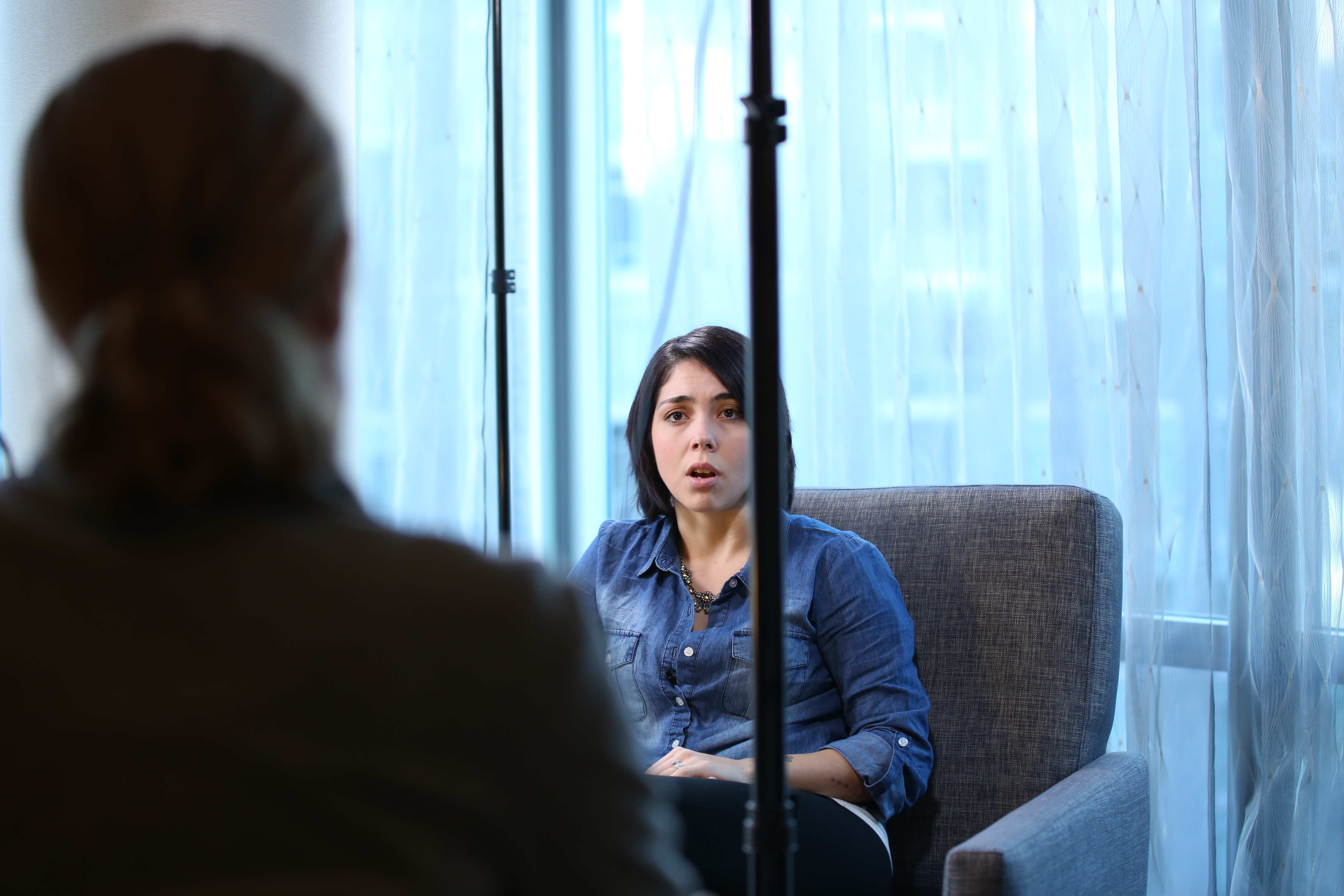
When making a documentary about miscarriage, stillbirth and infertility, it can be easy to get lost in the stories. After all, the goal of Don’t Talk About the Baby is social change, accomplished by empowering couples to start telling their stories in their communities.

The stories are raw and powerful and they’re leading a movement of change which cries out that loss and infertility are nothing to be ashamed of. They’re compelling voices, and they’re easy to get caught up in. As the director, my job is to make sure that doesn’t happen. It sounds counter-intuitive, since we’re asking people to tell their stories, but when it comes to the actual film, I always keep a balance at the forefront of my mind: the balance between the heartbreaking stories, and the fascinating expert interviews that explain the emotions behind them.

Pregnancy loss and infertility are plagued by silence and stigma. It’s my passionate belief that the only way out of the shadows is to thoroughly explore how and why we got there in the first place. It’s harder for a woman to feel like a failure when she knows, scientifically and without a doubt, that she didn’t cause her miscarriage. It’s less likely for a mother to mourn in silence when she knows the words to use to ask for understanding. It’s less likely that a community will forget a family’s loss, when a film tells them the power of remembering and saying that baby’s name.

My vision for this film is to examine every thread of shame that permeates pregnancy loss and infertility and reconnect it to support, openness and understanding.

The experts are key to this documentary, and I chose them by investigating my own experiences after my early miscarriage. What did I do? The woman most likely to watch this film is a woman fresh from a loss, and it’s important to me that the themes we explore are relevant to the journey she’s starting.

I felt silenced when I tried to talk about it. I felt pressured to move on. I felt disconnected from my husband. I went online and sought support from strangers. I found power in sharing my story with them.

So we found an expert scholar who spoke about the value in letting a woman tell her story. She talked about losing trust in your own body, and learning to navigate in a world that places a woman’s worth in motherhood. We found a professor who studied how women share their stories online, and how that’s changed over the last ten years. The revolution we’re in the midst of, with parents dedicated to sharing their stories, is largely due to the rise of social media. I wanted someone to explain the support networks we build online, and how that translates to our real lives. We also have therapists talking about how men and women grieve differently, and giving advice on bridging the gap that grows after a loss. They give the audience tools for starting conversations, overcoming emotional roadblocks, and learning to deal with the shitty hand they’ve been dealt.

Then we follow the real world experiences of couples during and after miscarriage, infertility and stillbirth. We hear their cries and see their tears. They let us into their lives in the most humbling way. And so we strike a balance. When filming these interviews, I always keep in mind the overall goals of this documentary — empowerment, support, and communication. Every interview is geared towards answering one question: How do we learn to heal?

Free from shame, from stigma and oppressive silence. That’s the goal of this documentary, and what I remember at each step in making this film.

The process of making this film has been eye opening and rewarding. Please consider joining our efforts to shatter the stigma, and pledging your support to our Seed & Spark campaign to finish the film.


DTATB Author Pic

Ann Zamudio is a mother, filmmaker and writer based in the Washington, DC area. She’s currently directing Don’t Talk About the Baby, a documentary aiming to shatter the stigma surrounding pregnancy loss and infertility. Her writing has appeared in Scary Mommy, PALS, and The Huffington Post. Follow the documentary on Facebook and Twitter.

‘Bleeding Heart’ and All the Times It’s Probably Okay to Shoot Someone

Written and directed by Diane Bell, ‘Bleeding Heart’ is about class privilege, moral hypocrisy, and the arrogance of preaching nonviolence to people about to be killed. Mostly, though, it’s a chance to watch Zosia Mamet play someone other than Shoshanna and drink in a dark but gorgeous colour palette.

Bleeding Heart

Written by Katherine Murray.


Written and directed by Diane Bell, Bleeding Heart is about class privilege, moral hypocrisy, and the arrogance of preaching nonviolence to people about to be killed. Mostly, though, it’s a chance to watch Zosia Mamet play someone other than Shoshanna and drink in a dark but gorgeous color palette.

Having premiered at the Tribeca Film Festival in 2015, Bleeding Heart tells the story of an ashtanga yoga teacher named May (Jessica Biel), who makes contact with a half-sister she’s never known (Zosia Mamet), and quickly has a crisis of conscience over how she should behave.

May’s sister, Shiva, is in a much different financial position and living with a boyfriend who treats her badly. As May gets to know Shiva better, she finds out that this boyfriend, Cody, is also Shiva’s pimp, and doesn’t seem to care very much for her safety. May feels the need to get involved, and tries to help by giving Shiva money, giving her a place to stay when she can’t go home to Cody. She tries to convince her to leave him for good but, the longer the situation goes on, the less it looks like there’s going to be a peaceful solution.

May’s interaction with Shiva is complicated by the fact that her business and romantic partner, Dex, doesn’t think they should get involved in the drama unfolding between two people they don’t really know, as well as by the fact that Shiva doesn’t always tell the truth. In the end, though, May has to decide whether she really believes in ahimsa – the principles of nonviolence at the core of her spiritual beliefs and practice – to the point of letting someone else get killed.

Spoilers, but the final act involves a lot more guns.

Bleeding Heart

I get what Bleeding Heart’s trying to do, and I think it’s really interesting, even if I don’t always buy the execution.

At its core, the story is about a really specific, new age hypocrisy in which we claim to heal ourselves and the world by ignoring the harsh realities and difficult choices less fortunate people face. The key conflict in Bleeding Heart isn’t between Shiva and Cody or May and Cody or Shiva and May – it’s between May and Dex. May wants to help Shiva even though she doesn’t know her very well, even though it makes her life difficult, and even though Shiva might not even be her sister – Dex wants Shiva to go away and stop disrupting his positive energy. He’d rather use his and May’s money to build a new yoga studio than help Shiva pay her rent, and the point he brings up, over and over again, is, “This doesn’t have to be our problem.”

Bleeding Heart plays May and Dex against each other to show us how May’s choices reflect a conscious move away from the beliefs she held at the start of the film – a move toward an understanding that there’s a kind of arrogance in preaching nonviolence to people who live in real physical danger. She’s struggling with the idea of what it really means to help someone, and whether it’s enough to say that she helps people by teaching yoga practice. Ultimately, she finds that the only way to make a difference in the world is to do things she never thought she would do – she finds that there are some situations where nonviolence just isn’t an option.

May’s personal journey comes across really well in the film, so I was disappointed that the other characters seemed a lot less rounded in comparison. Dex is so self-centered that he can’t even process the concept that May might care about something else in addition to the yoga studio. When May tells him that she wants to take a day off work to meet Shiva for the first time – having hired private detectives to search for her for months or years – he tells her that meeting Shiva will probably be emotional for her and distract her from the business for more than a day, so she shouldn’t go yet. Even taking into account that he’s supposed to be a hypocrite, I find it hard to believe that he would just casually tell his partner to blow off meeting a long-lost, long-sought relative to focus on building a new yoga studio. Just like I find it hard to believe later on that he completely doesn’t care that Shiva’s boyfriend is abusive, even if he doesn’t want to be involved.

It’s part of a larger pattern in the film where the details of the characters’ motivations don’t ring true and drain some of the power from the story. It often feels like Dex, Cody, and Shiva make their choices based on what the plot demands of them, so that May can learn something new and grow as a person.

Aside from that, the cinematography is gorgeous and Mamet and Biel are both stretching themselves as actors, which is fun to watch. I especially gained a new appreciation for Mamet – she’s so good at making her lines sound like something she just came up with that it’s easy to forget how much skill that really takes. There are times in Bleeding Heart when she doesn’t have a lot to work with but definitely makes the most of it.


You can find Bleeding Heart on DVD and VOD in North America and the UK, where it goes by the name Bound by Blood.

Also on Bitch Flicks: Paula Schwartz interviews director Diane Bell about Bleeding Heart


Katherine Murray is a Toronto-based writer who yells about movies, TV and video games on her blog.

Seed & Spark: To Web Series Or…

There’s a certain kind of freedom in the web series form; there are fewer constraints and not as many rules as there appear to be in television or film. I was incredibly inspired by so many shows I saw all over the web that bucked the norm in terms of how they told stories and who they portrayed on camera.

Things I Hate

This is a guest post written by Molly Anne Coogan. Her webseries Things I Hate is currently crowdfunding via Seed & Spark.


I often get asked why I wanted to make a web series. Why not make a short film or put all those pages of a season together and make a feature? For starters, the show didn’t come into my head as a feature or as a short film. When I started writing, they came out as episodes and what I saw in my head was a show instead of a movie or a short; I wasn’t interested in squishing something into a box and I wanted to make what was in my brain.

As I mentioned in a previous post, I wrote this show when I was overcoming some big health issues and I was ready to get my hands dirty and make something — I wanted some immediate gratification. There’s no middleman with a web series, no distribution deal to negotiate, no hurdle to getting it out into the world. You create an account, design a page, and upload. Clearly the process is not as simple as that, but you’re catching what I’m throwing, yeah?

There’s a certain kind of freedom in the web series form; there are fewer constraints and not as many rules as there appear to be in television or film. I was incredibly inspired by so many shows I saw all over the web that bucked the norm in terms of how they told stories and who they portrayed on camera. I loved how F to the 7th challenged conceptions about sexuality and what it means to be a woman; how Broad City basically owned the shit out of everything and unabashedly showed women doing what they wanted without apologizing while having a blast doing it; and how High Maintenance allowed each episode to be its own contained world and didn’t feel the need for a continuous plotline. All these shows have incredibly unique voices, vibes, and tones and each is stellar in their own way. Their uniqueness got my creative juices flowing.

[youtube_sc url=”https://www.youtube.com/watch?v=42W_UWQPXok”]

The other benefit to a web series is the simple power of the Internet. You’re able to grow your audience, quickly connect, and find your people, whereas it’s much harder to do with other forms that have bigger machines involved. I had experience with the rapid-fire reach of the Internet when my sketch video “Nickelblock” from my comedy duo Moll & Rell went viral. We woke up one morning to the video having hundreds of thousands of views and being all over the front pages of The Huffington Post, Buzzfeed, Bustle, E!, and more. It was being talked about on the radio; I had friends from abroad telling me they saw it on publications overseas. It was wild and zany and so much fun, but also a totally different thing from a web series. It was a short, comedic tidbit as opposed to a show that you really have to sit and watch. “Nickelblock” was like a handful of candy whereas Things I Hate is more like a rich chocolate torte that you’ve got to take your time enjoying. Now I just want dessert…

I do feel is important to point out is that the line of what is “TV” and what is a “web series” is blurring with each passing day. I don’t own a television, but I “watch TV” because I own a computer. You can stream everything. In essence you could say that all television shows are web series because they’re streamed online. Perhaps they’re not made for the web at the start, but that’s where they’re ending up.

We have only two weeks left in our Things I Hate Seed & Spark campaign. If you’re a fan of ambitious, hilarious web series made by filmmakers easily distracted by sweets, join our team, and spread the word.


Molly Anne Coogan

Molly Anne Coogan is a maker of all things. As an actor she’s worked with Ars Nova, The Metropolitan Museum of Art, The O’Neill Theatre Center, The Civilians, TheatreWorks California, CBS, TBS, and more. She is one half of the comedy duo Moll & Rell known for their viral video “Nickelblock,” which Molly directed and co-wrote with her comedy partner Arielle Siegel. As a writer her work has been produced or developed by The Williamstown Theatre Festival, Ars Nova, SPACE on Ryder Farm and The 52nd Street Project. Her web series, Things I Hate, which she created, wrote, produced, and stars in premiered February 2016 on The A.V. Cluband features actors from The Knick, Girls, and Orange Is the New Black. She loves photo booths and the word “burgled.” She refuses to pass a lemonade stand without buying a glass. She lives in Brooklyn with her husband, Jonathan Anderson.

‘Anomalisa’ and the (Fe)Male Gaze

Charlie Kaufman draws on an emotional darkness that is deeply human – something that every person can relate to in some way, big or small, regardless of gender or age. Which is why it’s frustrating to see in ‘Anomalisa’­ – like in so many movies before it – the sense of hope come in the form of a woman, an object of romance for a man. … To put it bluntly, I’m sick of movies in which sad men think they can be saved by their idea of a woman.

Anomalisa

This guest post written by Sarah Halle Corey previously appeared at REELYDOPE and is cross-posted with permission.


I watched Anomalisa in a room filled with middle-aged men. It was not a movie meant for me, and I knew that going in.

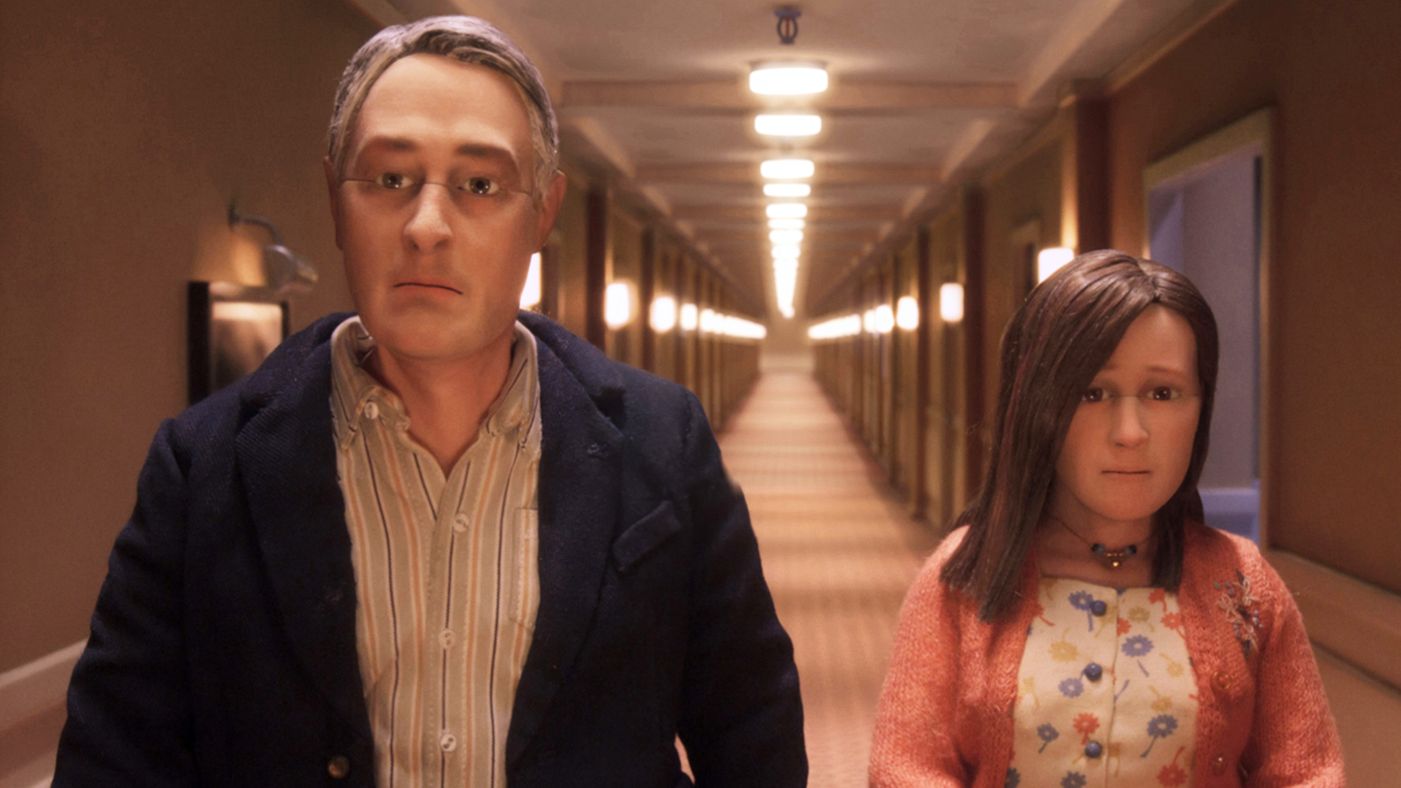
Charlie Kaufman, the writer and co-director of the film, is the king of emotionally damaged men in indie film, from lovesick Joel in Eternal Sunshine of the Spotless Mind to self-loathing (and semi-autobiographical) Charlie in Adaptation. He creates brooding, self-centered white men who struggle to find meaning in their existences. Michael, the main character of Anomalisa, is no different. He’s a self-help author who doesn’t know how to help himself. Everyone in his world looks and sounds exactly the same, and so he doesn’t know how to connect to other people or to any sense of meaning in his life. He’s trapped by his own weaknesses, especially his own depression and disillusionment. And he’s a middle-aged white man.

The middle-aged men in my movie theater audience ate it all up.

But the thing is, I did too… at least a little. If I didn’t fully eat it up, I took some pretty hefty bites. I, a 22-year-old woman with a big, bubbly smile relate to Anomalisa. What does that say about me? What does it say about the movie?

Roger Ebert famously said, “The movies are like a machine that generates empathy.” Kaufman and co-director Duke Johnson pretty brilliantly demonstrate Ebert’s idea by fully immersing the audience in Michael’s world. We see the same identically blank faces as Michael, and we hear the same single one-tone voice. The drab colors and claustrophobic hotel setting contribute to Michael’s and the audience’s sense that the world is a mind-numbing place. Oh, and did I mention the whole thing is made with stop-motion animation? So each and every movement on screen is slightly stilted, slightly inhuman. The use of stop-motion to create a sense of detachment is the cherry on top of a disillusionment sundae.

The audience is so expertly placed in Michael’s perspective, that we can’t help but feel the fear and tedium and longing that he does. As we watch the movie, we tap into something in ourselves; our own personal feelings rise up and help us to relate to the story being told. Beneath the surface of my bubbly smile, there is some fear and some longing, and maybe even a little tedium every now and then. Kaufman helps us to dig into what might be happening beyond the surface of reality. He draws on an emotional darkness that is deeply human – something that every person can relate to in some way, big or small, regardless of gender or age.

Which is why it’s frustrating to see in Anomalisa­ – like in so many movies before it – the sense of hope come in the form of a woman, an object of romance for a man. Michael, and thus the audience, feel disillusioned until Lisa enters the story. With a detailed face and a unique voice crackling with warmth, Lisa offers a beacon of connection and possible peace of mind. She is in the movie to serve only one purpose: to be Michael’s vision of salvation who he hopes will save him.

We’ve seen it countless times before with the Manic Pixie Dream Girl: the cinematic trope of quirky women who are endlessly available to better the lives of male leads. Lisa doesn’t exactly fit the type; while the Manic Pixie Dream Girl stands out as eccentric, Lisa is completely and utterly ordinary. And, (spoiler alert) Michael’s hopes for salvation through her don’t come to fruition. Nevertheless, even as the antithetical Manic Pixie Dream Girl, Lisa’s only role in the film is to be a projection of Michael’s emotions and issues.

As I sat watching Anomalisa, which had expertly wrapped me up in Michael’s world, I couldn’t help thinking where his fixation on Lisa left me as an audience member. I was there for the ride, there to be swept up into my main character’s point of view. And yet, his point of view is the male gaze, of which I, as a young woman, would theoretically be the object. So then what is my place in watching Anomalisa?

To put it bluntly, I’m sick of movies in which sad men think they can be saved by their idea of a woman. Existential dread and emotional depth belong to us all, not just middle-aged men. Perhaps the male gaze in film is something that women can claim for ourselves, reminding the world that these feelings are universal ones. When we’re not fighting the patriarchy, women also get sad over the meaning of life. Perhaps instead of defaulting to male protagonists, we can see more complex women who are saved by their Manic Pixie Dream Guys, or saved by something else entirely.

It’s true that movies are empathy machines, making the audience feel what the characters feel, and Kaufman excels at that. But, it would be even better if we could get to empathize with a broader range of characters. I liked Anomalisa, but I would have loved a movie with Lisa as the subject, not the object.


Sarah Halle Corey is a writer, filmmaker, and digital content creator who produces work about pop culture, feminism, feelings, and everything in between. You can find her work at sarahhallecorey.com. Sarah is usually drinking way too much coffee and/or tweeting @SarahHalleCorey.

Jake Hoffman’s ‘Asthma’ Is Sick of Its Own Shit

The amount of negative reviews of Jake Hoffman’s film ‘Asthma’ shows us how much we are over toxic “lost soul” white male protagonists bent on self-destruction. … Whether Hoffman intended it or not, there’s a sharp critique of rich white male tears in this film.

Asthma film

This guest post written by Marlana Eck previously appeared at Awaiting Moderation and is cross-posted with permission.

[Trigger warning: Discussion of suicide]


The amount of negative reviews of Jake Hoffman’s film Asthma shows us how much we are over toxic “lost soul” white male protagonists bent on self-destruction.

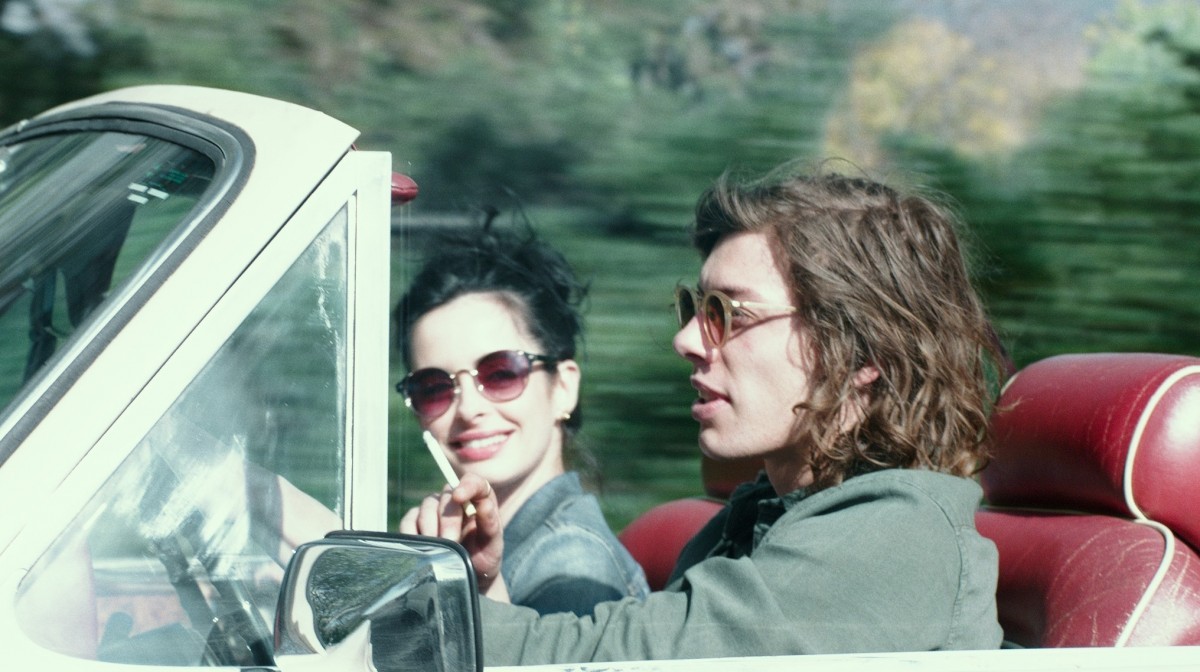
Here’s our archetype: recklessly bored and trigger-shy-suicidal Gus, played by Benedict Samuel, who looks strikingly like Mick Jagger (or any desirable indie rock crooner), is a “disaffected youth” (as other reviewers are quick to spot). The pastiching of Jim Morrison and Charles Bukowski-esque male figures has more to show us than youthful folly.

Gus is first introduced to us re-painting a white wall with a co-worker. He wonders why they have to paint it white. “It’s already white,” he says. His co-worker responds with “because they’re paying us to paint it again.” This isn’t enough clarification for Gus, so after he fails to turn the work dynamic into goofing off, he gives up resisting and the next thing we see is him wandering the streets, dopey, smoking a cigarette, eventually making his way back to his apartment. When he gets there, the white paint resurfaces and he gives a brief monologue about being “born in the wrong time” before he defaces his prominent Jim Morrison poster along with everything else in the apartment. A shot cuts to his room completely whited out, and next thing we know he’s standing on a chair in his underwear and hipster boots pouring white paint all over his head with a noose around his neck.

Artistically, Hoffman’s commentary, in this scene in particular, speaks to a post-progress aesthetic reaching the ultimate conclusion of nothingness.

Since this is only in the film’s first 10 minutes, it’s not surprising that Gus is not suicided. Instead he hacks loud and hard (hence Asthma) for an agonizingly long amount of screen time and then returns to his wandering, sporting his, now, super rad post-suicide shoes splattered with white paint.

The film’s mantra, which is stated in the very beginning, seems to be this:

“I miss the old New York in like the ’70s and ’80s: CBGBs, The Ramones, Mean Streets, SAMO doing graffiti and Andy [Warhol] going to parties, the birth of hip hop. Just look at Times Square. It used to be cool…all cracked up. And now it’s like fuckin’ Disneyland. The fuck happened here. Shit.”

The New York Gus misses was at the dawn of neoliberalism. He somehow misses the confusion at the precipice of our current social relations. He’s not dissimilar from figures his character would have grown up with like Kurt Cobain who rallied against the “machine” as much as they were a part of its conservation.

At the start, Hoffman places us in late capitalism’s concourse: our postmodern New York City. If it weren’t for this short monologue, I may have hated the rest of the film. Instead I became more engaged with Hoffman’s thesis, which was partially the disorientation Frederic Jameson describes in “Future City”:

It is the old world that deserves the bile and the satire, this new one is merely its own self-effacement, and its slippage into what Dick called kipple or gubble, what LeGuin once described as the buildings ‘melting. They were getting soggy and shaky, like jello left out in the sun. The corners had already run down the sides, leaving great creamy smears.’ Someone once said that it is easier to imagine the end of the world than to imagine the end of capitalism.

Gus sees life as a mixture of “hey rad bro” highs and self-aggrandized lows. He says he has nothing to lose, steals a car and starts to cruise the city, first stopping off at his drug dealer’s place seeking a heroin fix.

Gus develops a love interest, Ruby.

Asthma film

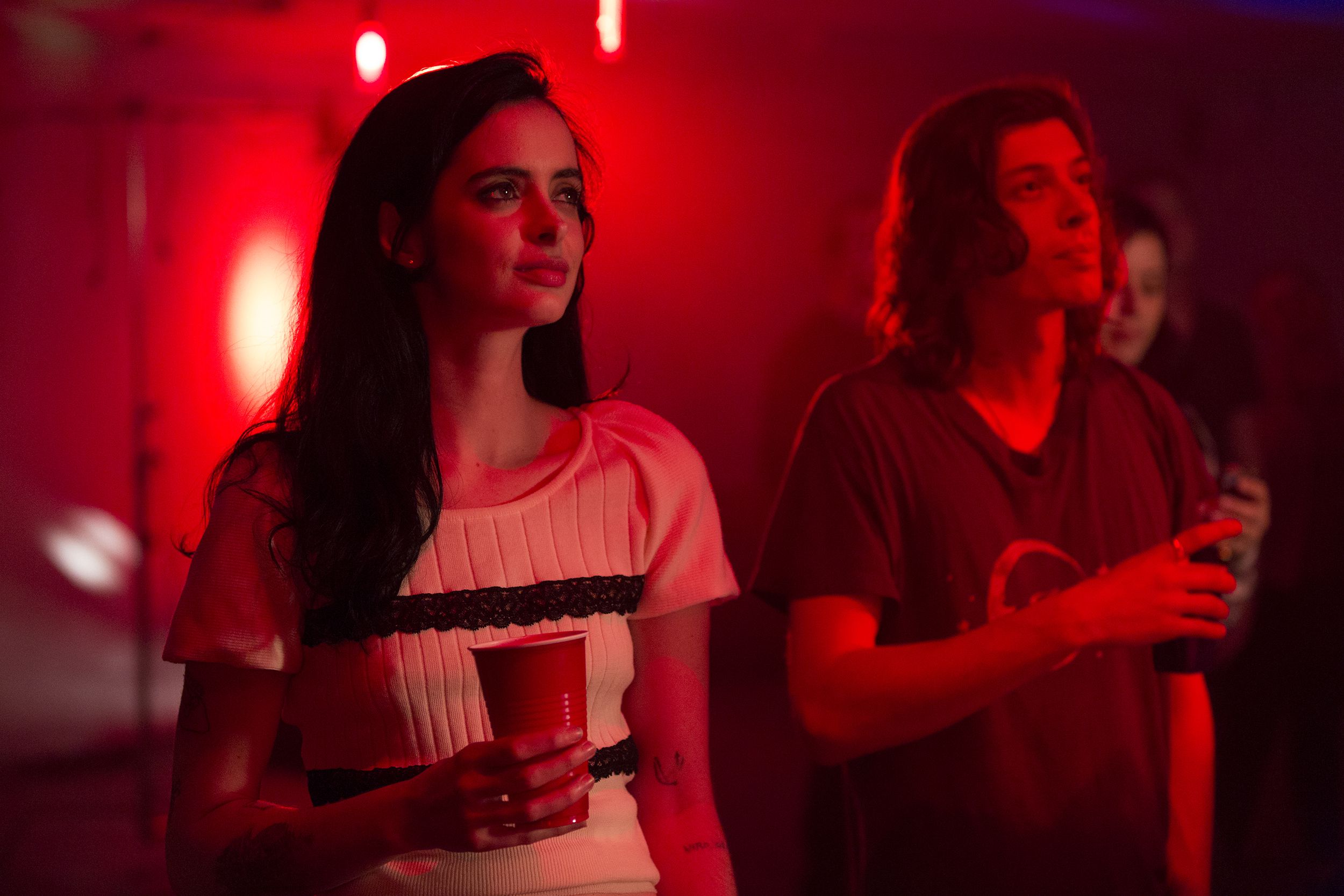
Some of the funniest scenes in the film are when Gus comes at Ruby (Krysten Ritter) with dialogue that screams a common sentiment of, “Fuck me, I’m a NICE GUY, YOU BITCH!” Because all women are supposed to get aroused by a man who shoots up to experience an infantile state as a nod to all his favorite art gods (who he doesn’t realize were also deeply disturbed by patriarchy). Ruby is hopelessly seen through a male lens with scarcely much depth.

As they drive to Connecticut in the stolen Rolls Royce, they come across a dead deer. Entertained, they pull off to the side with an, “Aw.” Ruby gets out her hip vintage camera and says “Is this disrespectful?” Without skipping a beat she takes the picture anyway as Gus puts deer blood on his fingers and puts it on as eye black (allegedly an homage to Jim Jarmusch’s Dead Man).

There’s a scene where she first catches Gus shooting up (we know it’s the first time because she says “Are you shooting up heroin?!” ). She is initially repulsed, quickly turns maternal, then, in a mystical foggy upshot, she is a seductress. She’s so devilishly seductive, when she asks if Gus if he has a condom, he says “like I knew this would happen.” (Because, Gus, you didn’t just spend half the film telling Ruby she was beautiful, that you wanted her, you’d win her, and take her to Connecticut, but you couldn’t have planned for a condom. Had nothing to do with you being lazy or anything.) So in the steamy heat of the moment Ruby does what she’s “supposed to,” which translates to her being all like “OKAY!” and doing whatever Gus wants.

She is a tattoo artist with many tattoos of her own, but when Gus asks what her tattoo means she says, “I don’t like talking about the meaning or whatever,” then saying it’s, “like a guard dog or whatever.” This matches some of the films aesthetic and philosophical indifference.

When they end up at their destination they come upon a commune-style mansion belonging to a semi-famous musician-friend of Ruby. The behaviors of the people at the commune (psychedelics, pot, yoga, qigong) speak to the overall depthlessness; there is a lack of authenticity and a superficial searching behavior.

Ruby does eventually abscond, but stays true to her one-dimensional portrayal. Her depthlessness borders on the kitsch as she tells Gus he has no aspirations, holding the same amount of vagueness as the film’s premise. We also learn Gus is a trust fund kid, adding even more “well what the hell” to the narrative.

At the film’s ending, Ruby tells Gus she has to stop getting hung up on these immature losers and get herself a real job (Gotta LEAN IN!).

Whether Hoffman intended it or not, there’s a sharp critique of rich white male tears in this film. Gus is ultimately sad nobody finds his aimless whining cute. Yet his grumbling seems to even annoy him at the end. In the final scene when Gus walks down the dark alley, I feel like he is sick of his own shit.

Throughout, Hoffman employs his irreproachable taste in music with the panache of Sofia Coppola. Also characteristic of some heirs of Hollywood film, despite his good taste, there seems to be a “why” lacking in this film. Perhaps for Hoffman that serves to underscore an ill of our time, or, maybe (more likely), the film is simply a product of it.

Asthma had the potential to explode some of the Bukowskian phantasmagoria perpetuated by narcissistic youth who are increasingly plagued with the possibilities of recognition or celebrity. Instead, it leaves us unfulfilled and struggling to understand the existing power structures which produce the depthlessness many claim to loathe. Much like the lives of the trumped up, romanticized nihilists Gus idolizes, he is an anomie positioned to inherit the same ends.


Marlana Eck is a scholar, writer, and educator from Easton, Pennsylvania. Her writing has appeared in The Chronicle of Higher Education, Raging Chicken Press, Hybrid Pedagogy, San Diego Free Press, Cultured Vultures, Lehigh Valley Vanguard, and Rag Queen Periodical. At the latter two publications she serves as director. In her free time she enjoys horticulture and overestimating the efficacy of her dance moves in the living room mirror. Follow her on Twitter at @marlanaesquire.

Call For Writers: Women Directors

Our theme week for March 2016 will be Women Directors. The gender gap in the entertainment industry has risen to the level of popular consciousness, such that prominent public figures are frequently commenting on it and demanding change, but while awareness of the under-representation and misrepresentation of women in film and television has grown, is there much being done to combat it?

Call-for-Writers-e13859437405011

Our theme week for March 2016 will be Women Directors.

The gender gap in the entertainment industry has risen to the level of popular consciousness, such that prominent public figures are frequently commenting on it and demanding change, but while awareness of the under-representation and misrepresentation of women in film and television has grown, is there much being done to combat it?

Women directors face myriad obstacles: despite there being an abundance of talented female directors struggling to produce work, many companies refuse to give them projects (only 3.4% of all film directors are female and only 9% of the top 250 movies in 2015 were directed by women), they are not paid as much as their male counterparts, there’s an expectation that their work be stereotypically female (i.e. chick flicks), and their work is rarely appreciated with the same level of acclaim (only 4 women have ever been nominated for a Best Director Academy Award). Despite all these obstacles and hardships, there are a growing number of women making amazing work with wide range of genres and topics: romantic, thought-provoking, innovative, hilarious, or even terrifying. In 2009, Kathryn Bigelow broke barriers with The Hurt Locker, a film about soldiers and war, when she took home Academy Awards for both Best Picture and Best Director. She was the first woman ever to receive an Oscar for Best Director. In 2014, Ava DuVernay’s depiction of the civil rights movement Selma won an Academy Award for Best Song and garnered nominations for Best Picture. But DuVernay didn’t receive an Oscar nomination, an unfortunate snub as she would have been the first Black woman to ever receive a nomination for Best Director.

However, the Oscars are typically white and male-dominated and are increasingly being disregarded as an antiquated, patriarchal, elitist group who should no longer be regarded as the gatekeepers of important cinema, and women are increasingly working in the independent film scene. Despite the somewhat encouraging rise of women directors, white women tend to dominate the field, receiving accolades and projects with far greater frequency than women directors of color, which is a microcosm reflective of the stratification of the feminist movement itself.

The examples below are the names of women directors alongside an example of one of their most acclaimed works. Feel free to use those examples to inspire your writing on this subject, or choose your own source material.

We’d like to avoid as much overlap as possible for this theme, so get your proposals in early if you know which film you’d like to write about. We accept both original pieces and cross-posts, and we respond to queries within a week.

Most of our pieces are between 1,000 and 2,000 words, and include links and images. Please send your piece as a Microsoft Word document to btchflcks[at]gmail[dot]com, including links to all images, and include a 2- to 3-sentence bio.

If you have written for us before, please indicate that in your proposal, and if not, send a writing sample if possible.

Please be familiar with our publication and look over recent and popular posts to get an idea of Bitch Flicks’ style and purpose. We encourage writers to use our search function to see if your topic has been written about before, and link when appropriate (hyperlinks to sources are welcome, as well).

The final due date for these submissions is Saturday, March 26, 2016 by midnight Eastern Time.

Ava DuVernay (Selma)

Sofia Coppola (Lost in Translation)

Haifaa al-Mansour (Wadjda)

Jane Campion (The Piano)

Kathryn Bigelow (The Hurt Locker)

Amma Asante (Belle)

Lena Dunham (Girls)

Julie Delpy (2 Days in Paris)

Mary Harron (American Psycho)

Mary Lambert (Pet Sematary)

Meera Menon (Farah Goes Bang)

Julie Dash (Daughters of the Dust)

Nora Ephron (Sleepless in Seattle)

Penny Marshall (Big)

Lisa Cholodenko (The Kids Are All Right)

Emily Ting (It’s Already Tomorrow in Hong Kong)

Debra Granik (Winter’s Bone)

Dee Rees (Bessie)

Randa Haines (Children of a Lesser God)

Barbra Streisand (The Prince of Tides)

Jodie Foster (Orange is the New Black)

Seed & Spark: Being a Lady Boss: Producer Molly Coogan Hires Ladies and Celebrates a Lady Named Coco

I get asked a lot as a lady boss if I try extra hard to hire women. I truly believe in hiring the person who is best for the job, which means you have to look at a pool that reflects all the best potential hires. However, most hiring pools do not reflect that at all.

Things I Hate

This is a guest post written by Molly Anne Coogan. Her webseries Things I Hate is currently crowdfunding via Seed & Spark.


Once I got over the fear of putting my show, Things I Hate, out into the world, I then had to… put it out into the world and actually make it. Early on in the process, I committed to being the producer. This was important to me for several reasons: I wanted a hand in who was being brought onto the project, as well as the final stamp on what I was putting out into the world. This does not mean that I was not open to collaborating, or that I only wanted to do it my way, or that I wanted all the power. What it means is that since these were my words and my point of view, it was important to me at the end of the day to feel that I had seen the show through from start to finish in order to honor the creative vision I had set out to realize. Of utmost importance to me was finding a team who understood the tone and humor; in order for it to be successful, I knew everyone had to be in the same figurative family. Also, I really like producing! I like sourcing and finding people, bringing folks on board, organizing things, and working like a fiend. It checks a lot of my boxes.

I get asked a lot as a lady boss if I try extra hard to hire women. I truly believe in hiring the person who is best for the job, which means you have to look at a pool that reflects all the best potential hires. However, most hiring pools do not reflect that at all. Sometimes the people who have the longest, shiniest resume aren’t going to be the best fit for your project. And while it can be enticing to hire someone who has worked on TV shows you love, if they don’t understand what you’re trying to make it won’t work out in the end. I didn’t want to exclusively hire women for the sake of hiring women; I wanted to be mindful that we were looking at all of our options instead of just what people were giving us (which was names for a lot of dudes). My co-producer Liam Brady, a super dude in his own right, was right there with me.

For example, one of the jobs that felt very important for us to nail was the Director of Photography. I met with several incredibly qualified people, but when I met with Edna Biesold I knew I found the person who understood it all. This show is told and seen from inside the mind of a woman. The questions she asked, the ideas she had, and her point of view all jived. She also made me consider and see things from angles I hadn’t thought of before. As a result, I ended up being blown away by the two episodes we made together (which can be seen here via The A.V. Club.)

Things I Hate

I’d be lying if I didn’t say I am proud that the roles of Director of Photography, 1st AC, 1st AD, Production Design, Costume Design, Hair and Make-up, and Production Assistant were all filled by women. But I did not hire them because they were women; I hired them because they were the best people for the job.

One of the other aspects of producing is you have to be tenacious. There is another woman I haven’t mentioned yet who came on board and elevated the level of the production for Things I Hate. We really wanted the locations to be authentic and knew we wanted to shoot in a real salon for the episode called “Lady Grooming.” We were shooting in a brownstone in Bedstuy, NY for another episode, entitled “Weed,” so we wanted to keep things in that neighborhood to ease gear schlepping, especially since we were shooting both episodes in 3 days, a ridiculously fast shoot. But I hadn’t found that salon yet.

It was hot as balls one day, especially for the end of September, and I was determined to find that salon to shoot in. I biked for 4 hours straight around the neighborhood going into every single salon, asking if we could shoot there. I can’t tell you how many places I went into. I was so hot that sunscreen dripped down my pale little body. I had sweat literally everywhere, my clothes were drenched, and I looked like a drowned rat. Perhaps that is why every single salon turned me down. By the time I got on my bike to go home, I was certain my shoot was screwed.

Moments later, I was waiting at a stoplight, and for some reason (perhaps to create some sort of cooling wind), I turned my head and saw this little tiny salon on the corner. I full on whipped my bike across traffic and walked in with my helmet still on my head. Four women who were getting their hair braided turned to look at me like I was an alien. The owner, Coco, was there, cool as a cucumber, and as soon as I asked her if I could shoot in her salon she said,”Count me in!” Coco, you saved my series. Everyone else, go to Honeycomb Hair Studio, and give Coco all your business! Right after you follow and fund Things I Hate on Seed&Spark.


Molly Anne Coogan

Molly Anne Coogan is a maker of all things. As an actor she’s worked with Ars Nova, The Metropolitan Museum of Art, The O’Neill Theatre Center, The Civilians, TheatreWorks California, CBS, TBS, and more. She is one half of the comedy duo Moll & Rell known for their viral video “Nickelblock,” which Molly directed and co-wrote with her comedy partner Arielle Siegel. As a writer her work has been produced or developed by The Williamstown Theatre Festival, Ars Nova, SPACE on Ryder Farm and The 52nd Street Project. Her web series, Things I Hate, which she created, wrote, produced, and stars in premiered February 2016 on The A.V. Club and features actors from The Knick, Girls, and Orange Is the New Black. She loves photo booths and the word “burgled.” She refuses to pass a lemonade stand without buying a glass. She lives in Brooklyn with her husband, Jonathan Anderson.

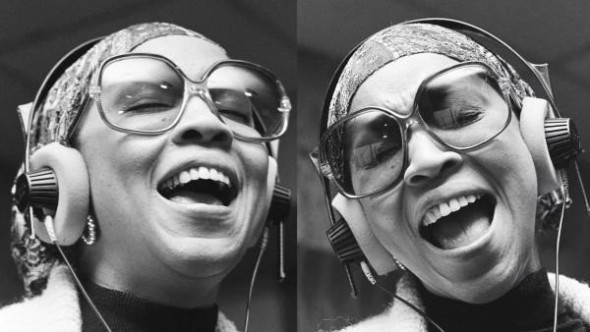
A Joyful ‘Mavis!’ Plus Q & A with Director Jessica Edwards

Director Jessica Edwards includes plenty of the Staples’ less familiar music (which still sounds fresh and striking: I predict most people who see this documentary will quickly add a Staples Singer channel to their Spotify and Pandora selections) as well as photos and TV clips from their appearances stretching back to the 1950s. Although Pops had a smooth, clear voice, Mavis usually had the lead vocal even at the beginning. Like Amy Winehouse her style and virtuosity were already an adult’s when she was still a young teen.

Mavis Staples documentary

Written by Ren Jender.


At one point during Mavis!, the new documentary about legendary soul singer Mavis Staples that is airing on HBO this month, we see an old clip of Staples’ father, Roebuck “Pops” Staples who founded The Staples Singers, the family group that brought fame to all of them. A host of a TV music show asks the tired question: how does he feel about performing secular music after years of performing at churches as a gospel group? With no malice or a second’s hesitation Pops answers that he thinks of the “freedom songs” they sing as exactly the same as gospel: simply “the truth.”

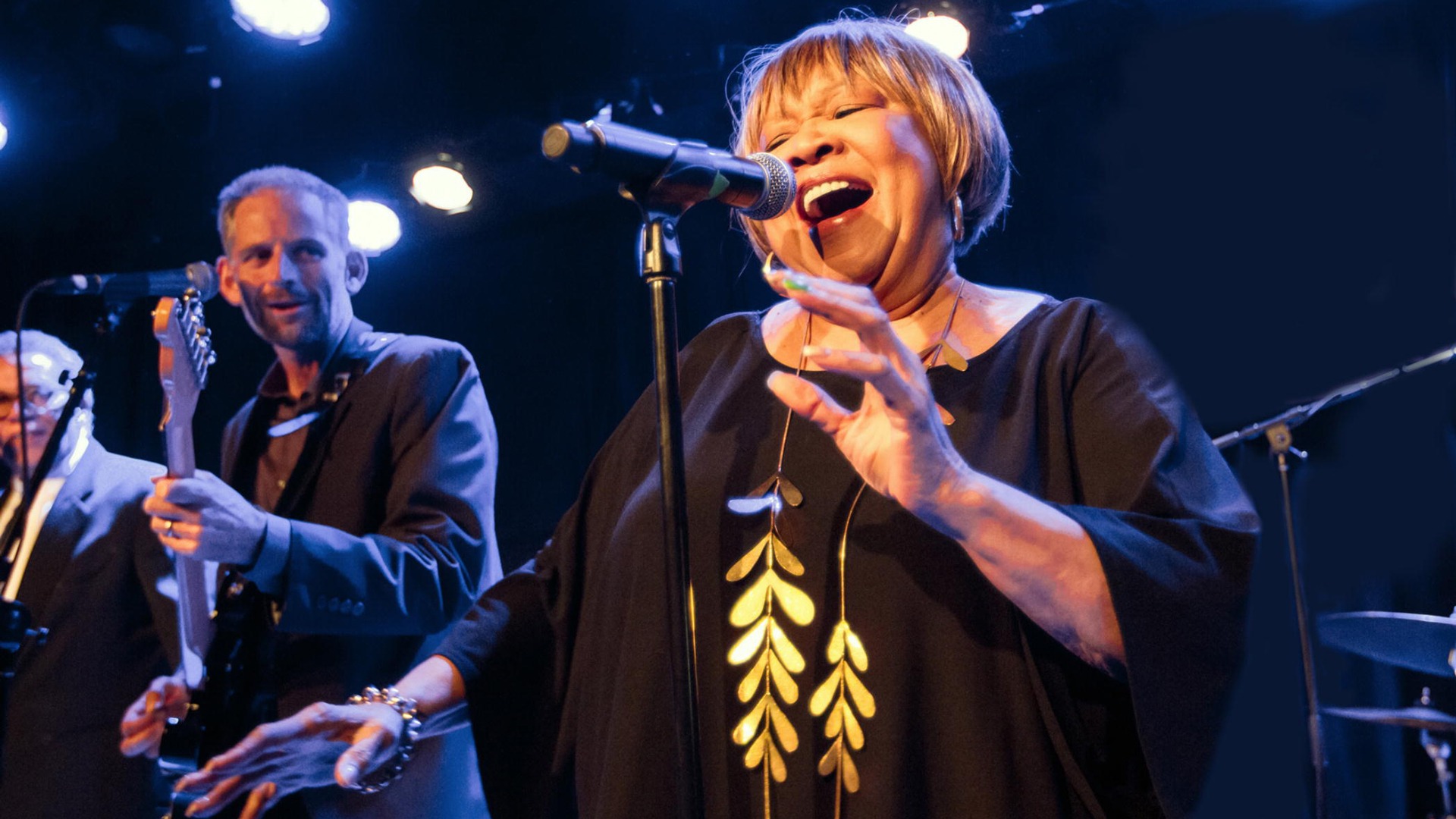
Watching Mavis Staples in the film, still touring at 75, after more than 60 years on the road (she remarks about one of their early records that no one could believe a petite 13-year-old girl was the lead singer: they thought her strong, low voice was a man’s) we can’t help noticing she seems to have inherited both Pops’ good nature (though band members tell us she lets them know when she finds their performances lacking) and his certainty. Her band, now made up of white musicians decades younger than she is, her older sister, Yvonne, and a woman in her late thirties/early forties with a nose ring in a T-shirt that reads “Black Weirdo,” still performs an a cappella gospel song to warm up before going onstage.

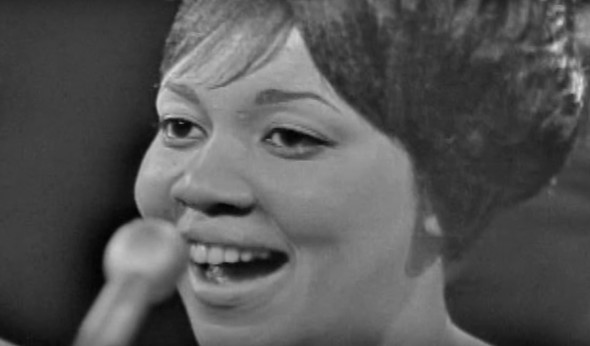
Director Jessica Edwards includes plenty of the Staples’ less familiar music — which still sounds fresh and striking: I predict most people who see this documentary will quickly add the Staples Singers to their music selections — as well as photos and TV clips from their appearances stretching back to the 1950s. Pops had a smooth, clear voice, but Mavis usually had the lead vocal even at the beginning. Like Amy Winehouse, her style and virtuosity were already an adult’s when she was a young teen.

YoungMavis

Although the Staples family was based in Chicago, Pops had been part of the Great Migration from the South. He grew up in the same part of Mississippi as some of the great blues legends who influenced his own style of guitar playing, making it distinct from other gospel musicians. In the 1950s and 1960s, rock and roll radio stations played gospel music after midnight, which Bob Dylan explains, is how he discovered the Staples Singers, as did other white musicians of the era. Some of the songs we hear with Pops on lead have more than a passing resemblance to more familiar radio hits from white rock and roll bands in the 1960s. Levon Helm, of The Band, tells us their own harmonies were directly influenced by The Staples Singers.

When the Staples and Dylan appeared on the same stages (including on an early TV musical omnibus) Mavis and Dylan had a puppy-love romance — and Pops expanded their repertoire. After first hearing “Blowin’ in the Wind” he told Mavis and the rest of the family, “We can sing that song.” He was particularly struck by the lyric, “How many roads must a man walk down/ Before you can call him a man?” When Pops, a man who had fled the Jim Crow South when Black men were still called “boy” sang those words, they were especially poignant.

Pops also attached the group early on with the Civil Rights Movement, becoming an acolyte of Martin Luther King in 1955, at a time when one of the white experts interviewed tells us, “Very few gospel singers took an interest in Civil Rights.” Pops began to write songs inspired by the movement including “Why Am I Treated So Bad?” one of Dr. King’s favorites.

70sMavis

Like a lot of other performers with a similar background, Mavis traded an audience that was once nearly entirely Black (as in a terrific clip we see of the Staples Singers live performance in Watts Stax, a filmed all-star concert and fundraiser for the pre-gentrified Oakland of the early 1970s) to one that is now, we see at appearances like the Newport Folk Festival, nearly entirely white. Mavis still mentions Dr. King to them and seems to see her continued performing as a way of elevating those who hear her music. She tells them and us, “I’ve weathered the storms. I’ve fallen down and I’ve gotten back up.”

[youtube_sc url=”https://www.youtube.com/watch?v=-orbaWz5yRQ” iv_load_policy=”3″]


When Mavis! was shown as part of the Athena Film Festival, the director of the film, Jessica Edwards, fielded questions from the audience. The following is a transcript of that Q and A, edited for concision and clarity.

What was it about this story that made you want to make this film?

Jessica Edwards: It was really Mavis that made me want to see this movie and therefore make this movie. I had seen her perform in Brooklyn, in Prospect Park a couple of years ago and I had known a little about this soul-era Stax stuff, but I went to the show that night and I left feeling rejuvenated. When I went home to watch the documentary, so I could learn more about her, there wasn’t one.

Can you tell us more about what you learned about her as you were making the movie? 

JE: The incredible thing that I found about her was that her and her family really touched on almost every genre in the history of American music: anything that influenced the way that music is made now. She influenced all these makers that then became paramount in terms of what American music became, like Bob Dylan. And Dylan himself has influenced so many people. You think about him listening to the family late at night and then what he became, the idea that she was so part of this fabric of music in this country.

One of the things that impressed me is that you portrayed her and her music and kind of the intersection of music, culture and politics. Was that a conscious decision on your part or was it just an outgrowth of who Mavis was? 

JE: You know the Civil Rights Movement didn’t end for Mavis in 1968. For her, the Civil Rights Movement is now. For me music is culture. I’m not a very religious person, but music is a spiritual experience for me and always has been. The idea that music can facilitate change in a way that some other things can’t, that was really solidified for me. The message of Dr. King was not completely mainstream in the mid-fifties and Mavis and her family were instrumental in terms of this grass-roots movement of going from church to church to church in the South and bringing these messages of equality.

How much was Mavis involved the making of this film?

JE: Mavis didn’t see the film until it was finished. In fact, it took her a while to get on board. She was like, “I’ve been talking to the press forever. I don’t need to do this. Like, nobody wants to hear about me.” But when we started to talk to her about the kind of film we wanted to make and how it really was not only her legacy, but the legacy of her family and the legacy of their music, she came around. She trusted us. I offered to come to Chicago and screen it for her before it was screened publicly. And she said, “Nah, I’m gonna watch it with the people.” Then she sat in the theater with a thousand people and watched it for the first time. That was a little nerve-wracking for some of us. But she loved it. The first time she watched it, she doesn’t really remember what it was. All these memories just kept flooding back. I sat directly behind her, and the first time Bob Dylan comes on the screen and he says all these wonderful things about the family, she just started giggling like she was 15 years old. She watched it more recently. We screened it in Chicago a week or so ago and she came up to me after and she was like, “I finally saw the movie, this time. It was really good!”

I have a question about process from the inspiration to okay, now how do I get this to really happen?

JE: This movie took about two and a half  years to make which in documentary-land is incredibly fast. It’s like a snap of the fingers. And basically, once she agreed I went and visited her and we would drop in on her on the road. We would film the show. We would spend some time backstage. And then we would go back to Chicago when she was home. The way I structured the shooting was, we did it for her 75th year. Otherwise I would still be shooting. The woman is touring all the time and I’d never end the movie. The movie is also self-financed. Luckily, we have HBO as a broadcast partner. They’re like a fairy godmother of documentary films.

 I almost like cried at the moment where Mavis is listening to the song Pops played and she’s getting choked up. How are you able to get such intimate, candid moments without feeling like you’re getting in the way?

JE: I think people who’ve made a hundred films will have the same question. This is my first feature length film and I always feel nervous in those situations, but my DP, he was, like, ruthless, so, as nervous as I was, he’d be like, “Just keep filming.” I hired people who have done this way more than I have, so I could learn so much. So the next time I do this, I won’t ever cut either. Whether you’re filming something that’s too intimate or not, ultimately you can make the decision of whether you’re going to use it later. It’s much better to have it, because you don’t know whether you’re going to need it. In that particular scene, I was sitting underneath the soundboard. I wanted them to talk to each other, not talk to me. I knew that I’d have to ask them questions at the same time to get them talking. I was crying my eyes out, bawling under the sound board like a baby. And as soon as we got that scene, I knew that we had a movie.

I just wondered if you could speak to the finances of the movie, how did it work out for you? And what’s next for you?

JE: I have a production company and the executive producer of this film is my partner, like my baby-daddy partner. We work together on a lot of stuff, so he raised a lot of money through commercial work basically while I was shooting. So he would work on commercial jobs which would pay for this film. It opens the question of sustainability especially if you live someplace expensive like Brooklyn. But I knew, if we felt this passionate about Mavis and because she has so many fans, people would want to see the movie. We’ve had such a wonderful response. I feel like we made the right decision to be late on our rent a couple of months. Now I’m doing a lot of work with 360 Video. I really am enjoying the challenge of making something really short and non-linear. There are a couple of documentaries in the pipe, but for every one you make you have to pitch ten, so I think I’m, like, at six. It’ll hit any minute.


Ren Jender is a queer writer-performer/producer putting a film together. Her writing, besides appearing every week on Bitch Flicks, has also been published inThe Toast, RH Reality Check, xoJane and the Feminist Wire. You can follow her on Twitter @renjender.

‘Black Mirror’ is No More Universal Than ‘Girls,’ You Guys

The first season of the British sci-fi show ‘Black Mirror’ frames its stories through an unintentionally narrow and myopic point of view, just like the first season of HBO’s ‘Girls.’ For some reason, though, ‘Black Mirror’s extremely specific point of view is mistaken as being universal, while the extremely specific point of view offered by ‘Girls’ is not.

Black Mirror TV show

Written by Katherine Murray. Spoilers ahead. 

[Trigger warning: discussion of bestiality and sexual assault]


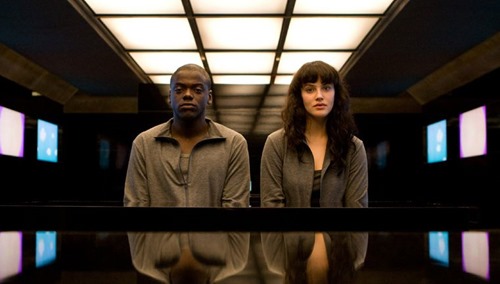
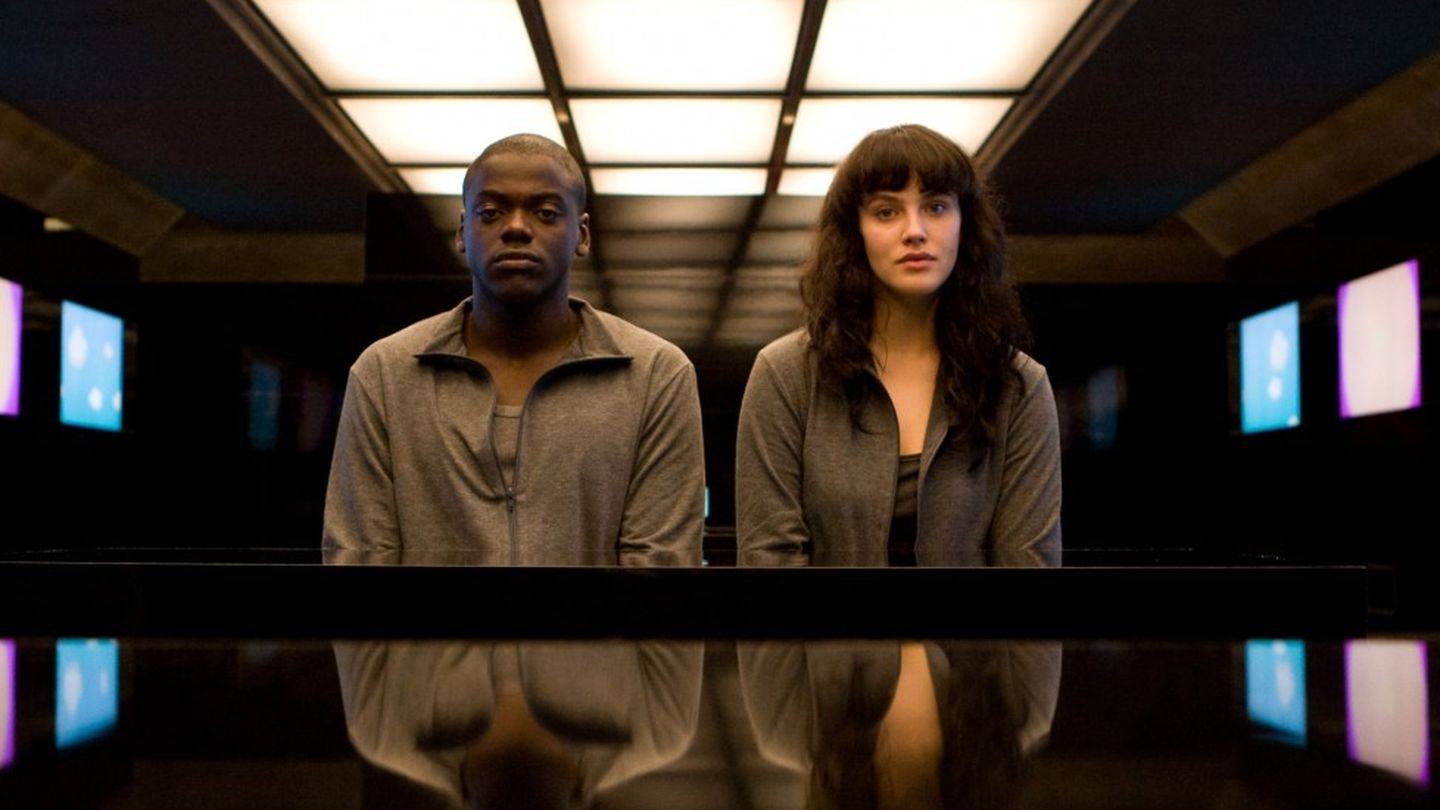
The first season of the British sci-fi show Black Mirror frames its stories through an unintentionally narrow and myopic point of view, just like the first season of HBO’s Girls. For some reason, though, Black Mirror’s extremely specific point of view is mistaken as being universal, while the extremely specific point of view offered by Girls is not.

Black Mirror is sort of a cult-hit TV show, so far consisting of two seasons with three episodes each, and a Christmas special starring Jon Hamm. The series first aired in the UK in 2011, but only made its way to North America and Netflix more recently. Much like The Twilight Zone, each episode tells a stand-alone story about a world slightly different from our own, where something creepy and terrible happens. Specifically, Black Mirror is focussed on technology and how inventions like social media, robots, virtual currency, and computer animation can be put to destructive use. The three episodes that make up the first season are “The National Anthem,” “Fifteen Million Merits,” and “The Entire History of You” – each of which follows the same broad pattern: the first twenty minutes are fascinating and unsettling, and then you realize that this entire fabricated universe exists to screw up some guy’s sex life.

Let me break it down:

  • In “The National Anthem,” the Prime Minister awakens to discover that someone has kidnapped the princess and posted a ransom video on YouTube. The terrorists are threatening to kill her unless he gives into their ridiculous demands and has sex with a pig on national television. This is an extreme situation that touches on a very serious question, about which there is much debate in real life: how do you deal with terrorist demands? There’s a very solid school of thought that says you should never give in to terrorist demands because that makes terrorism seem like a good way to get what you want, and another very solid school of thought that says that, if giving in to small demands could save a person’s life, you have a duty to – wait, that’s not what this story’s about. After about twenty minutes, questions of terrorism are completely pushed aside and the story becomes 100% about whether this one particular guy gets pressured into bestiality and whether his wife will forgive him.
  • In “Fifteen Million Merits” – which, in fairness, has important things to say about class stratification – working class people peddle bikes all day to supply power to the one percent. Their only hope of escape is to compete on an X-Factor-like TV show, which they have been convinced will allow the most talented among them to become celebrities. A working class guy falls in love with a working class girl who has a beautiful singing voice, and he uses all the credits he’s earned from peddling the bike to pay the super expensive contest entry fee so that she can compete and maybe have a better life. When she competes, the judges tell her that they already have enough singers, but she’d make a really good porn star, and she’s pressured into accepting their offer because she knows this is her only chance to not peddle the bikes. Her life becomes a hellish nightmare of drugs and X-rated encounters with strangers and everyone tells her that she should be grateful – but, wait, this episode isn’t about that. This episode is about how the X-Factor-like TV show robbed the working class man of the one thing that was good and pure in his life and perverted it by making it dirty and a porn star. The whole thing builds to a big, dramatic speech where he complains about everything they took from him, because that’s the most important part of what happened.
  • In “The Entire History of You,” people have chips in their brains that make objective recordings of everything they see, allowing them to play their conversations and experiences back later, looking for the truth. Imagine all the ways that that technology would change the world! What would become of law, education, history, and politics? What would happen if someone could hack your objective memories? What about the people who decide to forego the implant or have it removed? What an interesting cultural divide – but, wait. This story is actually about how some particular guy gets ridiculously jealous after realizing that his wife’s ex-boyfriend plays back recordings of what it was like to have sex with her when he jerks off. Because, apparently, remembering past sexual encounters when you masturbate is a new technology requiring a brain implant.

All of these stories are told from the really particular point of view of a heterosexual man who’s a little bit weird and anxious about sex, and all larger societal concerns and conflicts are pushed aside in favour of focussing on how world events and technologies will affect whether or not he can be with the woman he wants. “The National Anthem,” particularly, is an unintentionally rich vein of data for psychoanalysis – personally, I’m fascinated by the mind that thought, “My greatest fear about the internet is that terrorists will publically pressure me to engage in bestiality. What do you do in that situation? You basically have no choice!” But the point is that it’s really specific. It’s not actually a representation of universal thoughts and fears and experiences that everybody thinks and feels. And yet, the critical appraisal of Black Mirror would lead you to believe that it’s somehow more reflective of our shared humanity than Girls.

girls title card

I’m sure I don’t need to spend five paragraphs explaining what Girls is, but, when it premiered, it was a highly anticipated series that met with a lot of backlash. The backlash was mostly because the series was framed – through advertising and pre-premiere interviews – as a story that was broadly about women in generation Y, when the content was actually a very specific, idiosyncratic story about what the show-runner’s life had been like in young adulthood. Like, she even cast her real-life friends in those roles.

While I’ve grown to like Girls a lot in the years since it premiered, I’ll admit that I was one of the people put-off by the opening episodes. There’s one early review that describes the characters as working class, because one of them has an unpaid internship, and that makes me laugh out loud, because working for free is a bourgeois luxury. It’s not something that working class people can do. And, the off-putting thing about Girls, at least in its first season, was that it took very specific experiences like that – experiences that only people with a certain amount of wealth and privilege ever have – and behaved as though they were universal coming-of-age rituals. The scene that really got me was the one in the first episode, where  the main character casually asks her parents to pay for her apartment, like that’s a normal thing that happens.

Both Girls and Black Mirror improve after the first season – and Girls is now one of the shows I look forward to most every year – but my visceral reaction to the opening episodes was the same in both cases. I felt like I was being excluded from something I was supposed to belong to, and told that a group loosely defined as “Everyone” did not include people like me.

I know that lots of viewers had a similar reaction to Girls, not only for reasons of class, but also because it’s strange that the characters live in a diverse, densely-populated city like New York and only ever socialize with white people. But, reviews of Black Mirror usually don’t mention anything about the point of view. That’s partly because Girls is called Girls and Black Mirror is called Black Mirror. It’s also partly because both seasons of Black Mirror dropped in North America around the same time, so viewers had a chance to appreciate how the series grew in its second season. But, let’s be real – it’s also because stories about men are routinely accepted as being stories about human beings in general, while stories about women are immediately seen as more particular.

A few weeks ago, Linda Holmes said this great thing on Pop Culture Happy Hour about how one of the narrative devices in The Big Short that was specifically intended to draw in the viewer and make the story more relatable for him backfired and made her feel alienated because it became clear that the filmmakers thought “viewer” was the same as “heterosexual man.” While there are some people who felt alienated from Girls the moment they heard the word “girls,” there are other people, like me, who only felt alienated once it turned out that “girls” meant “heterosexual WASP/white Jewish middleclass women,” at which point it felt like a bait-and-switch. In the case of Black Mirror, my suspicion is that the focus on the sex life of Some Particular Straight Dude is supposed to be a way to draw the viewer into the story, and make the stakes and circumstances of the Big Ephemeral Sci-Fi Ideas concrete, and I think the reason that alienates me is that it reveals an assumption that the viewer is also Some Particular Straight Dude and will be able to relate.

The second season of Black Mirror does expand its focus and tell two of its three stories from the point of view of Some Particular Straight Woman – the first of whom is also a little bit weird about sex and the second of whom is part of the show’s most controversial episode, “White Bear.” Without getting into a lot of spoilers for “White Bear,” I’ll confess that, even though I think it’s a good script, I had a hard time going along with it, because the series had failed to build any trust with me before it took these risks. Because I felt alienated by the first season, I went into the second season full of suspicion, and it was hard for me to figure out whether “White Bear” was a story about the horrific corruption of the justice system or about how creepy-cool it is to watch some woman get tortured for hours and hours.

I don’t think there’s anything inherently wrong with making a show that’s just about hamsters chasing themselves through some particular writer’s mind, but I find it a little bit annoying that the hamsters in Charlie Broker’s mind are supposedly more reflective of our shared humanity than the hamsters in Lena Dunham’s mind, when they both look equally foreign to me. There are a few experiences that are truly universal – we all love, we all die, we all face up to certain harsh realities of life – but, in an increasingly global community, and in a world where we are more and more aware of others’ voices, it doesn’t make sense to keep pretending that stories about what it’s like to belong to any specific race or class or gender or sexual orientation are stories that cover the whole territory of what it’s like to be a person. My issue isn’t that Black Mirror and Girls shouldn’t exist – it’s that, when we talk about them, we should recognize that they both have a really particular point of view that includes the experience of some people while excluding the experience of others.

The holy grail of writing a story that speaks to universal themes is still a goal that we can all shoot for, but we have to really scale back on our idea of what’s “universal.”


Katherine Murray is a Toronto-based writer who yells about movies, TV and video games on her blog.