‘Fuller House’ and the Shocking, Heart-Squeezing Power of Time

I don’t remember thinking that the premiere episode of ‘Fuller House’ was very good, and I don’t remember paying attention to anything that happened in the plot. What I do remember is crying because it has been 20 years, and I can almost imagine how strange it feels for all of these people to be in the same room again.

Written by Katherine Murray.

I don’t remember thinking that the premiere episode of Fuller House was very good, and I don’t remember paying attention to anything that happened in the plot. What I do remember is crying because it has been 20 years, and I can almost imagine how strange it feels for all of these people to be in the same room again.

fuller house 2

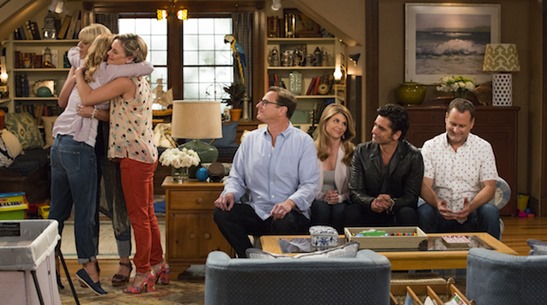
If you’re either nostalgic for 90s-era sitcoms or bummed that the Full House Reviewed blog had to end, Netflix just did you a solid by creating a Full House spin-off that features some of the original cast. The premise is that three of the grown-up kids from Full House – sisters DJ and Stephanie, played by Candance Cameron-Bure and Jodie Sweetin, plus annoying neighbour Kimmy Gibbler, played by Andrea Barber – return to their suspiciously spacious childhood home to raise DJ and Kimmy’s children after DJ’s husband dies. Other former cast members make guest appearances after that, but the premiere episode is the one that brings almost everyone from the original series back together, just long enough for each of them to say their catchphrases and leave. And, somehow, rather than being annoying, that’s one of the most touching things I’ve ever seen.

It’s not touching because it’s well-written or because Fuller House is a very good show – both the writing and the show are as blunt and dull as you’d expect. It’s touching because we’re all twenty years older, and “Our Very First Episode, Again” is a living, breathing snapshot of what it means to move through time.

I’ll confess that, while I was watching “Our Very First Episode, Again,” I wasn’t thinking about seeing DJ or Stephanie or Uncle So-and-So again. I also wasn’t thinking about the premiere episode of Full House and how much I loved watching it. I was thinking about a group of actors who used to see each other every day – people who grew up together, who watched each other grow up, who had a near-miss romance between them, who – whether or not they like it or want it to be true – will always be partly defined by Full House. People who had no way of knowing, when they shot the first episode, that they would always be loved and hated and judged and remembered for this weird, dumb show.

I was thinking about how they’d all had to make peace with that, in different ways, for twenty years. How some of them had even stopped acting during that time and moved on with their lives. And here they were, together again, on a set that looks like that set, calling each other by the names they had in that script, listening to people cheer for them for doing these weird, dumb, familiar things. They looked pleased and embarrassed and nervous and amused and the very best part of the episode was watching the faces of the other actors in the same shot when one of them barked out a catchphrase.

fuller house

Netflix didn’t make Fuller House to be good. There are some self-deprecating jokes, but it’s not, like, a cool, hip reboot of the original series. It’s also not designed to introduce a new generation to TGIF. Fuller House exists to be a freaky time capsule that shows us all how much we’ve aged, how we can’t always choose what defines us, and how we make peace with legacies we have mixed feelings about.

I’m about the same age as Jodie Sweetin, and, when the super-nostalgic credit sequence fires up and shows us footage of her as a little girl, I am terrified and astounded by how old that makes me feel. It immediately reminds me of all the things I’ve experienced since I was that young, and it makes me a tiny bit invested in her character, in ways I never was when we were children. Similarly, there’s a scene where Candace Cameron-Bure’s character, DJ, starts crying because she’s all on her own, parenting, adulting, and not sure if she’s going to succeed, and, god dammit, that feels much more real to me now than it did when Jesse and Joey were messing up school trips and getting into fights with little kids. I feel a sense of solidarity with DJ that comes from nothing but the passage of time.

Fuller House is annoying in all the ways you’d expect – the jokes are lame; there are awkward musical guests; it’s weirdly heterosexist without being exactly homophobic; DJ’s kids are super loud – but that’s also part of the point. Everything is the same as it was in Full House – even, literally, the jacket John Stamos is wearing. The only thing that’s changed is that we all got older. And knowing that that’s all that changed makes the series a mirror, not to culture or society or anything we usually say that TV is a mirror to – it’s just a mirror to age.

It’s not exactly the same thing as cashing in on nostalgia – again, I don’t think anyone sat around missing Full House. It’s more like cashing in on narcissism – and I freely include myself as one of the narcissists, here. The draw of Fuller House is that it’s familiar and different at the same time – it sits somewhere next to the uncanny valley and Tír na nÓg, in a land that can only be accessed by people who were alive to see the original when it first aired, and where they can’t ever suspend disbelief for what they’re seeing. The episodes, for me, are not about the Tanner/Fuller/Gibbler family. They’re about how much these people’s lives have changed and not changed in 20 years, which makes me think about how much my life has changed and not changed in 20 years, and in what ways, and how I feel about that, and whether it’s good or bad. I mean, I think there’s Mexican wrestling or something in one episode, but that was really not the focus of my thoughts.

None of the episodes after the premiere hit me as hard, and most of them didn’t hit me at all, but I have to admit that, against anything I would have predicted, there really is something astounding about bringing this show back to life – even for only one episode. And, it’s something that only seems possible thanks to the Netflix model, where no one has to bank on this becoming appointment television. It’s something that seems specifically engineered for an age where all you have to bank on is that a few people will be in a weird mood one day and want to watch it.

So, if you’re in a weird mood one day, check it out. You will not be entertained but, if you’ve seen Full House before, you will also not be disappointed.


Katherine Murray is a Toronto-based writer who yells about movies, TV and video games on her blog.

#OscarsSoWhite: The Fight for Representation at the Academy Awards

But beyond academy membership, changes need to be implemented on every level, from writing to directing to acting. Speaking in a roundtable on Oscar Diversity, Lara Brown notes that in order to diversify the entertainment industry, women ought be present in a variety of roles. Brown, who directs the Political Management Program at George Washington University believes that women ought to be present in every aspect of the filmmaking process.

The 85th Academy Awards® will air live on Oscar® Sunday, February 24, 2013.

This guest post is written by Danika Kimball


In recent years, moviegoers, critics, and activists have been increasingly outspoken about Hollywood’s apparent diversity problem. Most recently, the battle over identity and inclusion came to a head with the January unveiling of Oscar nominees, where for the second year in a row, all 20 of the acting nominees were revealed to be white — a point which was not glossed over at the 88th Academy Awards.

During last year’s academy awards, April Reign, an attorney who manages BroadwayBlack.com, began using the hashtag #OscarsSoWhite in an attempt to express her frustration at the state of diversity in Hollywood. The hashtag has since gone viral and catalyzed a vital conversation. Reign explained to the Los Angeles Times:

“It happened because I was disappointed once again in the lack of diversity and inclusion with respect to the nominees. … And we see, despite all of the talk since last year, nothing has changed and it looks even worse this year.”

The lack of diversity and inclusion at this year’s academy awards was not glossed over, as Chris Rock opened the program with an biting monologue highlighting the academy’s representation issues — renaming the Oscars the “White People’s Choice Awards.”

“If they nominated hosts, I wouldn’t even get this job,” he added later, “Y’all would be watching Neil Patrick Harris right now.”

The Academy Awards are just the most recent of many instances that show if you’re looking for an accurate depiction of ethnic and gender diversity in the American workforce, Hollywood is the last place you should be looking.

Recent studies by USC Annenberg’s Media, Diversity, & Social Change Initiative recently released a brand new study, which offers an unflattering overview revealing the true extent of the ways in which Hollywood is failing diversity practices. Dr. Stacy Smith, who led the team responsible for these findings, said in a recent interview, “The prequel to OscarsSoWhite is HollywoodSoWhite. … We don’t have a diversity problem. We have an inclusion crisis.”

Their report evaluated every speaking character across 414 films, television, and digital stories released in 2014-2015, covering 11,000 speaking characters who were then analyzed on the basis of gender, racial/ethnic representation, and LGBT status. Researchers also analyzed 10,000 directors, writers, and show creators on the basis of gender and race, and 1,500 executives at different media companies.

Their analysis? “The film industry still functions as a straight, white, boy’s club.”

Other studies performed this year have had similar findings. As reported by NPR, a 2015 UCLA study of Diversity in Hollywood confirms the gender and racial imbalances in film and television, behind the scenes and in front of the camera, which compares minority representation to their proportion of the population.

Darnell Hunt, who co-authored the UCLA study, notes that at every level in Hollywood, women and people of color are underrepresented, although people of color have made slight gains in employment arenas since the last time the study was performed.

Despite the fact that ethnic minorities “make up nearly 40 percent of the U.S. population,” they are represented in leading Hollywood roles a mere 17 percent of the time. And as far as Hollywood executives are concerned, the UCLA study notes that “the corps of CEOS and/or chairs running the 18 studios examined was 94 percent white and 100 percent male.” The study also notes that behind the scenes, directing and writing positions still remain largely white and largely male.

Ana-Christina Ramón, who co-authored the findings notes that the findings are not surprising by any means, but the statistics carry an important message to studios about the profitability of diversity. She tells NPR:

“We continue to see that diversity sells. … And that’s a big point that needs to be then relayed to the studios and the networks.”

She’s not wrong, as her studies prove, films with diverse casts enjoy huge profit margins in the box office, the same for which can be said with television. But it seems as though, despite these statistics, gatekeepers in the entertainment industry (who are white men by and large) believe that the best way to keep their jobs is to surround themselves with people who look like them.

The study also notes that diversity has won out in television, as shows like How To Get Away With Murder, Grey’s Anatomy, Empire, Fresh Off the Boat, and Master of None have proven to draw in high amounts of viewers. The reason? Author Darnell Hunt argues that the answer to that question lies in the general amount of risk associated with each genre.

Television shows are produced in relatively high numbers each year, and budgets operate on a fairly small scale, but for studios produce relatively few films each year and budgets for those can cost upwards of hundreds of millions of dollars — making it imperative to higher ups that these films are successful.

Social media has also changed the landscape of television, as viewers now have social capital to effect change. Ramón tells NPR, “Every viewer has really the power to influence the network directly, especially through Twitter.” To show the power of social media in television, she sites the ABC show Scandal, where viewer opinion changed the arc for a show which was on it’s way to being canceled.

Scandal’s success has prompted even more diverse programming to appear on television, with another Shondaland series How to Get Away With Murder making its television debut just two years later. Television executives are beginning to recognize that shows with a Black female lead are profitable.

For television and film alike, the statistics are sobering, and change ought to be enacted quickly in order to bridge the gross lack of diversity present in all forms of entertainment media. But it looks as though change is in the making. Following this due criticism, it appears as though the academy is increasing measures to diversify their membership. Earlier this year, the academy’s board of governors unanimously voted to double the number of women and people of color in its roster by 2020.

But beyond academy membership, changes need to be implemented on every level, from writing to directing to acting. Speaking in a roundtable on Oscar Diversity, Lara Brown notes that in order to diversify the entertainment industry, women ought be present in a variety of roles. Brown, who directs the Political Management Program at George Washington University believes that women ought to be present in every aspect of the filmmaking process:

“I think the way [diversity increases] is to have more women in those behind-the scenes in writing, directing, and studio executive roles, because you have to make women more integral to the story, not just the side arm candy to the man’s story.”

In February, the New York Times published, “What It’s Really Like to Work in Hollywood (*If You’re Not A Straight White Man),” which featured interviews with 27 women, people of color, and LGBTQ people in the entertainment industry, highlighting their “personal experiences of not being seen, heard, or accepted.”

Actress, director, and producer Eva Longoria shared:

“I didn’t speak Spanish [growing up]. I’m ninth generation. I mean, I’m as American as apple pie. I’m very proud of my heritage. But I remember moving to L.A. and auditioning and not being Latin enough for certain roles. Some white male casting director was dictating what it meant to be Latin. He decided I needed an accent. He decided I should [have] darker-colored skin. The gatekeepers are not usually people of color, so they don’t understand you should be looking for way more colors of the rainbow within that one ethnicity.”

Wendell Pierce added his experience while in the casting office of a major studio:

“The head of casting said, ‘I couldn’t put you in a Shakespeare movie, because they didn’t have black people then.’ He literally said that. I told that casting director: ‘You ever heard of Othello? Shakespeare couldn’t just make up black people. He saw them.’”

In a similar fashion, Emmy winner Viola Davis mentioned the importance of creating unique roles for women and people of color, as expressed in her acceptance speech earlier this year:

“The only thing that separates women of color from anyone else is opportunity. … I always say that Meryl Streep would not be Meryl Streep without Sophie’s Choice, without Kramer vs. Kramer, without Devil Wears Prada. You can’t be Meryl Streep if you’re the third girl from the left in the narrative with two scenes.”


Danika Kimball is a musician from the Northwest who sometimes takes a 30-minute break from feminism to enjoy a TV show. You can follow her on twitter @sadwhitegrrl or on Instagram @drunkfeminist.

Directing One’s Own Life (and Sexuality) in ‘Appropriate Behavior’

‘Appropriate Behavior’ is thus a product and a triumph of female authorship and agency in the male-dominated film and entertainment industry. … Just as Desiree Akhavan went to lengths to ensure her agency and authorship as a filmmaker, Shirin engages with her bisexuality frankly and honestly…

Appropriate Behavior

This guest post written by Deborah Krieger is an edited version that originally appeared at I on the Arts. It is cross-posted with permission.


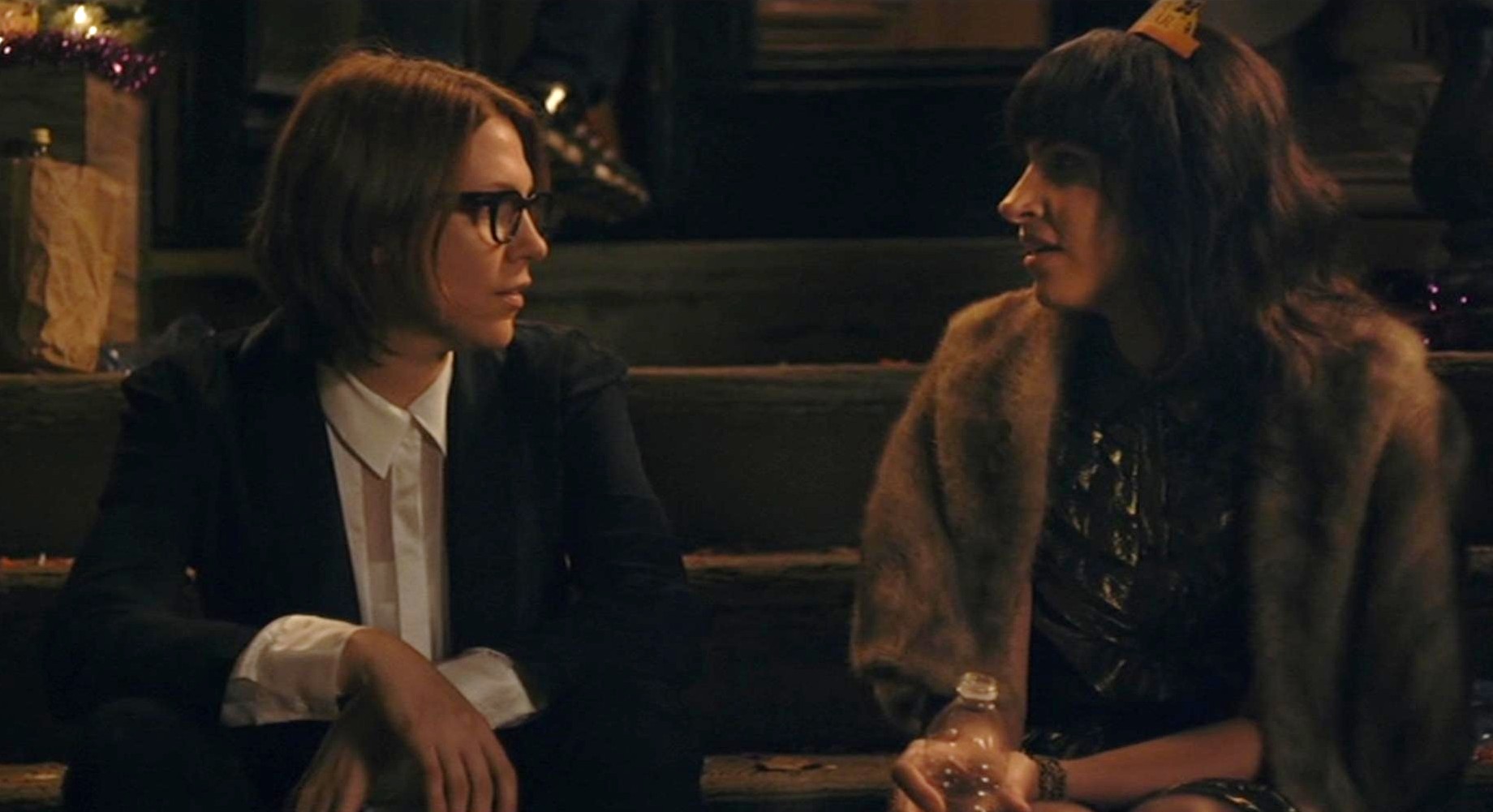
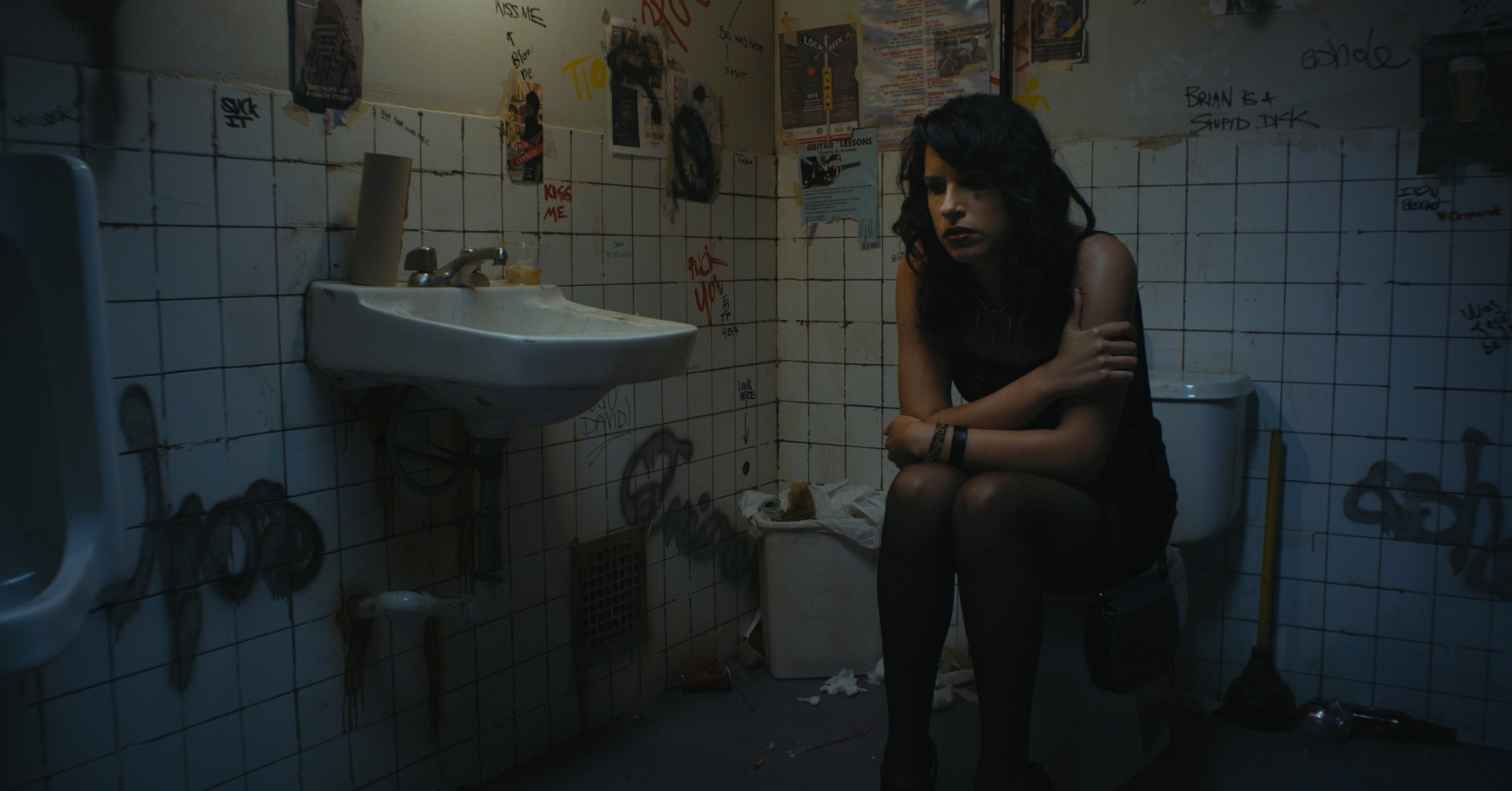
In Desiree Akhavan’s 2014 film Appropriate Behavior, Shirin (Akhavan), the protagonist, struggles to find her place in both her traditional Iranian family and as a newly-single bisexual woman in New York City. In addition to starring as the protagonist, Akhavan also wrote and directed this offbeat, independent drama-comedy film, basing several of the elements of the film on her own life and experiences, although the plot is fictional. The film premiered at Sundance, where it was perceived as a “breakout,” received a limited theatrical release, and is currently available through various online streaming sources, including iTunes and Amazon Prime. While the film was not a financial success, grossing only $46,000, it put Akhavan on the map, earning her comparisons to Lena Dunham, a writer/director/actor of similar comedic material, and earned her a guest role on Dunham’s HBO show Girls, although Akhavan shrugs off the comparison.

Appropriate Behavior features not only a female creator, star, and director, but also a female executive producer (Katie Mustard), producer (Cecelia Frugiuele) — indeed, women make up at least half of the crew of the film. It is thus fair to say that Appropriate Behavior is a classic example of women’s cinema, which refers to films that have women in positions of creative control, as well as films that are geared towards a female audience. In an industry where women comprise only 9 percent of film directors, 11 percent of writers and 20 percent of executive producers in the top 250 filmsAppropriate Behavior’s crew is quite impressive in terms of giving women control over the production of the film.

Appropriate Behavior is thus a product and a triumph of female authorship and agency in the male-dominated film and entertainment industry. Essentially, Appropriate Behavior addresses female production and agency not only in the background processes of the film, but also in content, as exemplified through Shirin’s trials and travails over the course of the film. Shirin aims to take control of her life post-breakup and establish her identity in relationship to the world around her. She gets a new job teaching filmmaking to five year-olds, moves into a new apartment, and, most importantly, tries to get over her ex-girlfriend Maxine by seeking out and engaging sexually with partners both male and female, including a leader of a feminist discussion group and a hip swinging young couple. In short, Shirin’s desire to create her own new life post-Maxine is analogous to the process of Akhavan’s making her film independently, serving as writer, director, and star, and exemplifies Shirin’s own sexual and personal agency as an active female character. Both Shirin and the film Appropriate Behavior exist outside of the mainstream: Shirin is a bisexual woman of color in an industry where films are usually made about straight white men (whites making up 70 percent of the protagonists in 2014 Hollywood films, men 88 percent, with LGBT characters only accounting for 17.5 percent of all characters), and Appropriate Behavior is an independently financed and distributed film not made to satisfy commercial needs or beckon broad appeal. At the beginning of the film Shirin starts with nothing — she is unhappily single, in need of a home, and looking for a new job — and must start from scratch, just as Akhavan conceived of the fictional story of the film, beginning, one assumes, with a white blank page. Indeed, when it comes to its depiction of sexuality, Appropriate Behavior through its form and content, center the idea of female agency and authorship, whether behind or in front of the camera.

Appropriate Behavior reflects the choices made by Desiree Akhavan throughout her burgeoning career as a filmmaker to maintain her independence, control and agency over her projects. Filmmaker Michelle Citron, in her essay “Women’s Film Production: Going Mainstream,”[1] creates a divide between usage of the terms “film-maker” [sic] versus “director,” arguing that a filmmaker exercises more “control” over her product than does a director, who trades control for increased “power” within the mainstream Hollywood production structure and, one assumes, the ability to direct projects with larger and larger budgets and commercial appeal further down the line. In the interview with Professor Patricia White preceding the screening of Appropriate Behavior at the Penn Humanities Forum at the University of Pennsylvania, Akhavan spoke about the difficulty of getting Appropriate Behavior financed, since, as both she and Citron point out, the kind of projects Hollywood supports are the kind that have been proven to be revenue-generating in the past.[2] Akhavan noted that even within the niche of more mainstream LGBT films she had little luck, since her film was a comedy, not a drama (in the vein of, perhaps, Brokeback Mountain), and thus did not receive any grants, and because her film centers on a bisexual woman of color and not white gay men, it was harder to find support.

Appropriate Behavior 4

Additionally, while Akhavan did not explicitly reference Citron’s filmmaker versus director argument, she did point out that as a woman behind the camera, she had been offered to direct mainstream comedies — for example, something starring Zac Efron — but that she turned those offers down because she wanted to direct her own her projects, even though by this token she was trading a chance at power within the Hollywood mainstream for control over a much smaller film, as per the Citron model.

In terms of the film’s content, the depiction of Shirin’s sexuality also emphasizes her choices and agency in her (attempted) sexual encounters with both men and women. Just as Akhavan went to lengths to ensure her agency and authorship as a filmmaker, Shirin engages with her bisexuality frankly and honestly, seeking out partners whom she believes will make her happy (or at least satisfied), regardless of how society views her sexual orientation. She pursues a male partner for a one-night stand over OkCupid, a female feminist group discussion leader, and a couple, who invites her into their home for a threesome. In one key scene in the film, Shirin attempts to revive her existence as a sexual single woman by going to a lingerie shop and hesitantly requesting to be shown “underwear of a woman in charge of her sexuality and not afraid of change.”

Despite her attempts to prove otherwise to herself, Shirin’s sexual identity and agency is anything but assured, as the audience learns over the course of the film, and is a source of both happiness and pain for her. In her article “Pleasure and Danger: Towards a Politics of Sexuality,” which addresses conceptions of female sexuality through a feminist lens, Carole S. Vance cites a “powerful tension”[3] between pleasure and danger. While Appropriate Behavior does not explicitly define itself as feminist or anti-feminist, its take on female sexuality, especially Shirin’s bisexuality, is indicative of the divide between pleasure and danger that Vance addresses. In the film, Shirin’s bisexuality within both straight and lesbian contexts is treated as dangerous and “other”; her straight brother doubts that bisexuality is real and calls her “sexually confused,” while her ex-girlfriend Maxine, in a particularly harsh moment, wonders aloud if their relationship was just a “phase” for Shirin — particularly damning for a bisexual woman, since they are often perceived as experimenting or, indeed, “confused.” Additionally, Shirin’s sexuality is a source of stress — and, indeed, danger — in the film, because Shirin worries about alienating her traditional Persian family if she comes out to them, which is one of the causes of the breakdown of Shirin’s and Maxine’s relationship.

Appropriate Behavior

Furthermore, during the discussion with Akhavan, when the topic of filming sex scenes came up, she spoke of her enthusiasm for participating and directing these kinds of scenes, adding that she felt “empowered” by this type of material. However, what was interesting in the interview, vis-à-vis Vance’s discussion of pornography being demonized by certain feminists, is that one of the sex scenes (likely the threesome) worried Akhavan because she thought it was too close to pornography, rather than an honest depiction of sex, and had to be reassured by her producer that it would turn out to be acceptable. In the scene in question, Shirin engages sexually with the couple, then watches awkwardly as they engage with one another, leaving her out. Where the scene becomes “dangerous,” in a sense, for Shirin is the strange connection she makes with the female half of the couple — a connection that so unnerves as disturbs her that she feels obligated to leave the couple’s apartment. Through Akhavan’s intervention, a scene that could have been aimed at the male gaze and meant to titillate like pornography becomes more emotional and meaningful, with the nudity serving to advance the sentiment of the scene as well as the plot of the film. What is emphasized both in the film and in Akhavan’s commentary is the sense of female power and agency in that both Shirin and Akhavan have, and had, the opportunity and luxury of pursuing and expressing their sexuality in or through the making of the film, even if the outcome for Shirin is not what she expected.

Thus, with regards to both the behind-the-scenes processes as well as the narrative of the film, Appropriate Behavior exemplifies and addresses issues of female authorship and agency. Desiree Akhavan asserted herself not only by writing, directing, and starring in her own film, as well as hiring many women to serve on the production team, but also refusing to take on projects that would diminish her agency and control over the process and end result, preferring to be an author and filmmaker rather than a director-for-hire. Similarly, Shirin alternately asserts (and questions) her identity over the course of the film through her displays of sexuality and the choices she makes, ultimately reaching a place where she is feeling hopeful about her own life and ready to move forward, as emphasized by her finally throwing away the strap-on Maxine insisted Shirin take as part of their break-up. In Akhavan’s career as well as the content she creates, it would seem, women’s ability and agency to be sexual, to be oneself and make one’s own choices, to direct one’s own life, as it were, are paramount. Ultimately, Appropriate Behavior succeeds as a feminist film, in my view, insomuch as we can tie female agency and authorship to feminism, because it keenly addresses these concepts both behind and in front of the camera.


See also: In ‘Appropriate Behavior’: What Does It Take for a Woman to Author Herself?


Notes: 

[1]: Michelle Citron, “Women’s Film Production: Going Mainstream,” in The Gender and Media Reader, ed. Mary Celeste Kearney (New York: Routledge, 2012), 177.

[2]: Desiree Akhavan, interview by Patricia White at the Penn Humanities Forum, September 25, 2015.

[3]: Carole S. Vance, “Pleasure and Danger: Towards a Politics of Sexuality,” in Pleasure and Danger: Exploring Female Sexuality, ed. Carole S. Vance (Boston: Routledge, 1984), 1.


Deborah Krieger is a senior at Swarthmore College, studying art history, film and media studies, and German. She has written for Hyperallergic, Hooligan Magazine, the Northwestern Art Review, The Stake, and Title Magazine. She also runs her own art blog, I On the Arts, and curates her life in pictures @Debonthearts on Instagram.

‘The Witch’ and Female Adolescence in Film

This blame, fear and guilt are heaped upon Thomasin right as she starts to blossom into womanhood… This may be why ‘The Witch’ so strongly resonates.

The Witch movie

This guest post written by Maria Ramos. Spoilers ahead. 


One of the most chillingly spooky suspense films released this year, The Witch uses ancient superstitions and fears within a feminist critique that rings as true today as in the pre-Salem time period in which the film is set. The parents in the film utterly fail to protect their children from the wicked witch in the woods, especially the obstinately pious patriarch, while turning the blame on their teenage daughter. Religion warps into destructive superstition as the family tries to root out the cause of their ill fortune.

Though the trouble really starts when the male head of the family (Ralph Ineson) gets them expelled from the safety of town, it isn’t until the youngest child is kidnapped that the family really starts to break down. The fact that this happens while the baby is under the care of big sister Thomasin (Anya Taylor-Joy), immediately turns the spotlight onto her. Her age and intelligence only makes her more of a target. Mothers — and babysitters by extension — are expected to keep children safe, so the disappearance of a child is not only a tragedy in itself, but represents a failure at motherhood. Losing a child paints Thomasin as unfit to mother, in a certain way, and therefore also unfeminine by the mores of the time.

This blame, fear and guilt are heaped upon Thomasin right as she starts to blossom into womanhood, something director Robert Eggers plays upon skillfully. Failing crops, illness, animals who behave strangely, and, worst of all, a missing baby — the parents interpret all of these signs as supernatural and ungodly. Who’s to blame, though? This is a time when society views women, as the descendants of Eve, as inherently sinful at the best of times. The label of suspected witch was quickly earned but hard to shed. Therefore, it is easy to believe when the misfortunes the family faces are placed at Thomasin’s feet. Intelligent and sometimes too quick to speak, she is a natural target.

Nor are we so far past that time today. Young women are still expected to behave and conform to social norms more than young men. In a world where “boys will be boys,” girls who step out of line are often said to be asking for trouble. When a young woman survives rape or assault, her outfit, behavior, and sobriety are questioned far quicker than those of her assailant, due to rape culture. We may not call girls witches today, but there are a long list of other names almost every teen girl has been called at one point or another. This may be why The Witch so strongly resonates. Adolescence is hard at the best of times, whether a girl fears being being called a slut or a witch. If the wardrobe was updated and the religiosity toned down, it would be easy to set it in today’s world. The film, produced by A24 Films and DirecTV, draws clear parallels between the victim-blaming of today and the more extreme version endured by Thomasin.

Not that Thomasin is the only character who shines in the movie. Harvey Scrimshaw plays the second oldest child, Caleb, and excels in his role. He also becomes the catalyst for the accusations of witchcraft. Close to his sister and, as a preteen himself, Caleb is also intrigued by Thomasin’s recent transition away from childhood. When he also disappears, and then returns seemingly raving and possessed, the two youngest children are quick to point the finger at their elder sister, even manufacturing some additional evidence of their own. Scrimshaw dominates this scene and hypnotizes the audience with his performance, one in which the suffering Caleb unwittingly puts the final nail into his sister’s coffin.

Eggers wrote and directed a supernatural horror film set hundreds of years ago, yet the themes translate clearly to today’s society. Though the father causes the family thrown out from the safety of the town, and the parents together failed to keep their children safe once in the wilderness, the blame in the end falls squarely onto Thomasin. A scapegoat was needed and she was both vulnerable and, as a girl, the most expendable. Though the film’s creepiness builds upon the horror the family endures, perhaps what remains the most frightening element is how closely the characters’ behaviors mirror reality.


Maria Ramos is a writer interested in comic books, cycling, and horror films. Her hobbies include cooking, doodling, and finding local shops around the city. She currently lives in Chicago with her two pet turtles, Franklin and Roy. You can follow her on Twitter @MariaRamos1889.