![]() |
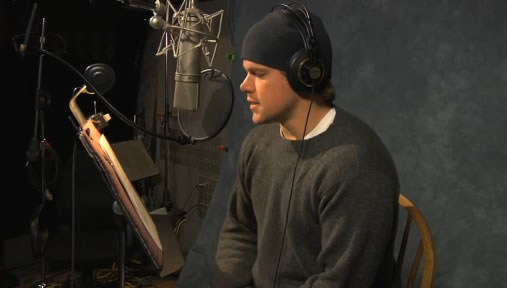
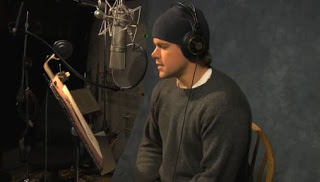
| Matt Damon narrating Women, War, and Peace |
The radical notion that women like good movies
![]() |
| Matt Damon narrating Women, War, and Peace |
This post by Stephanie Rogers first appeared at Bitch Flicks in March 2009.
Rule #1Sharing fun, challenging and intellectually engaging activities can strengthen friendships.
The point is: Male friendships need not solely revolve around sports and beer. In fact, in today’s movie world, those guys are the losers to be mocked and avoided.
Rule #2Friends are optimists, not naysayers.
The point is: No one likes to be around negative energy. If the dude doesn’t like Bob Marley, tell him “peace out” and move on.
Rule #3Friends carry each other.
Rule #4Friends accept friends for how they are. Even when alerting the authorities might be the more prudent call.
The point is: If your friends are 40 years old and still living at home (Step Brothers), don’t try to change them. Buy them a case of Fruit Roll-Ups instead. If your buddy is a heavily medicated mall cop looking to join the police force (Seth Rogen’s upcoming Observe and Report), you pat him on the head and hand him some pepper spray. And if your wingman gets a fake ID with the name McLovin on it — well, you can tell him he’s an idiot — but then you ask him to go score some beer.
Rule #5Friends make an effort to stay in touch.
The point is: … You don’t wait for buddies to call you. You pick up the phone. Or better: Just show up on their doorstep.
Rule #6Friends remain equally loyal in good times and bad.
Rule #7Friends know it’s OK to say, “I love you.” But they don’t have to, you know, talk about it at length.
The point is: These days in movies, male friendship means never having to say anything more than “I love you, man.”
“If you look at the front line discussion of wars, and this is what newspapers report on – the fighting tactics, the troops, the politics, the borders, the weapons, the armies, all of these things – that is a men’s story. The back line discussion of the story is how you actually exist and live and continue on living in war. That’s a women’s story. And that story has never been told.”
“I think it’s way past time that we redefine what we mean by war because there are no front lines in the wars in today’s world…The primary victims in today’s wars are women and children.”
“875 million small arms and light weapons in circulation today. About 650 million are in the hands of civilians. About 8 million weapons are produced newly every single year. About 10-14 million rounds of ammunition are produced every year. That’s enough weapons to arm 1 in every 8 people and enough ammunition to shoot everyone in the world twice.
“When you start thinking about women and war, you really change your idea about what security is. Security becomes, is there water out of the tap? Or, is the well polluted? You begin thinking about electricity or what happens to women’s security when electricity fails. How do they make a living in the middle of war?”
“Refugee life, displaced life, is one of the most undignified ways of life. It’s horrible. You don’t have a comfortable bed. You don’t have a comfortable place to sleep. Sometimes medical aid is non-existent. You rarely find food to eat. You become frozen in that moment when you left. So wherever you find yourself, your whole mind about your community is about when you left.”
“It has probably become more dangerous to be a woman than a soldier in an armed conflict.”
“Any armed group that is using rape as a weapon and a tactic of war is destroying the community. The women are booted out of the community. Husbands are divorcing their wives. They are mentally broken and therefore it is such an effective weapon. You demoralize, you humiliate those people and destroy the fabric of society.”
“You can’t sit and say this is one country’s issue when you are a woman and all of the wars in our region now our fought on the bodies of women. These are things that have really made it important for us as West African women to rise up and speak.”
“One African woman cries, we cry all over…We are all speaking with one voice.”
Megan Kearns is a feminist vegan blogger, freelance writer and activist. She blogs at The Opinioness of the World, where she shares her opinions on gender equality, living cruelty-free, Ellen Ripley and delish vegan cupcakes. Her work has also appeared at Arts & Opinion, Fem2pt0, Italianieuropei, Open Letters Monthly, and A Safe World for Women. She earned a B.A. in Anthropology and Sociology and a Graduate Certificate in Women and Politics and Public Policy. Megan lives in Boston with more books than she will probably ever read in her lifetime. She is a Monthly Guest Contributor to Bitch Flicks.
Best Motion Picture — Drama
“The Descendants”
“The Help”
“Hugo”
“The Ides of March”
“Moneyball”
“War Horse”
Best Performance by an Actress in a Motion Picture — Drama
Glenn Close, “Albert Nobbs”
Viola Davis, “The Help”
Rooney Mara, “The Girl With the Dragon Tattoo”
Meryl Streep, “The Iron Lady”
Tilda Swinton, “We Need to Talk About Kevin”
Best Performance by an Actor in a Motion Picture — Drama
George Clooney, “The Descendants”
Leonardo DiCaprio, “J. Edgar”
Michael Fassbender, “Shame”
Ryan Gosling, “The Ides of March”
Brad Pitt, “Moneyball”
Best Motion Picture — Comedy or Musical
“50/50″
“The Artist”
“Bridesmaids”
“Midnight in Paris”
“My Week With Marilyn”
Best Performance by an Actress in a Motion Picture — Comedy or Musical
Jodie Foster, “Carnage”
Charlize Theron, “Young Adult”
Kristen Wiig, “Bridesmaids”
Michelle Williams, “My Week With Marilyn”
Kate Winslet, “Carnage”
Best Performance by an Actor in a Motion Picture — Comedy or Musical
Jean Dujardin, “The Artist”
Brendan Gleeson, “The Guard”
Joseph Gordon-Levitt, “50/50”
Ryan Gosling, “Crazy, Stupid, Love”
Owen Wilson, “Midnight in Paris”
Best Animated Feature Film
“The Adventures of Tintin”
“Arthur Christmas”
“Cars 2”
“Puss in Boots”
“Rango”
Best Foreign Language Film
“The Flowers of War” (China)
“In the Land of Blood and Honey” (USA)
“The Kid With a Bike” (Belgium)
“A Separation” (Iran)
“The Skin I Live In” (Spain)
Best Performance by an Actress in a Supporting Role in a Motion Picture
Berenice Bejo, “The Artist”
Jessica Chastain, “The Help”
Janet McTeer, “Albert Nobbs”
Octavia Spencer, “The Help”
Shailene Woodley, “The Descendants”
Best Performance by an Actor in a Supporting Role in a Motion Picture
Kenneth Branagh, “My Week With Marilyn”
Albert Brooks, “Drive”
Jonah Hill, “Moneyball”
Viggo Mortensen, “A Dangerous Method”
Christopher Plummer, “Beginners”
Best Director — Motion Picture
Woody Allen, “Midnight in Paris”
George Clooney, “The Ides of March”
Michel Hazanavicius, “The Artist”
Alexander Payne, “The Descendants”
Martin Scorsese, “Hugo”
Best Screenplay — Motion Picture
Woody Allen, “Midnight in Paris”
George Clooney, Grant Heslov, Beau Willimon – “The Ides of March”
Michel Hazanavicius – “The Artist”
Alexander Payne, Nat Faxon, Jim Rash – “The Descendants”
Steven Zaillian, Aaron Sorkin – “Moneyball”
Best Television Series — Drama
“American Horror Story”
“Boardwalk Empire”
“Boss”
“Game of Thrones”
“Homeland”
Best Performance by an Actress in a Television Series — Drama
Claire Danes, “Homeland”
Mireille Enos, “The Killing”
Julianna Margulies, “The Good Wife”
Madeleine Stowe, “Revenge”
Callie Thorne, “Necessary Roughness”
Best Performance by an Actor in a Television Series — Drama
Steve Buscemi, “Boardwalk Empire”
Bryan Cranston, “Breaking Bad”
Kelsey Grammer, “Boss”
Jeremy Irons, “The Borgias”
Damian Lewis, “Homeland”
Best Television Series — Comedy or Musical
“Enlightened”
“Episodes”
“Glee”
“Modern Family”
“New Girl”
Best Performance by an Actress in a Television Series — Comedy or Musical
Laura Dern, “Enlightened”
Zooey Deschanel, “New Girl”
Tina Fey, “30 Rock”
Laura Linney, “The Big C”
Amy Poehler, “Parks and Recreation”
Best Performance by an Actor in a Television Series — Comedy or Musical
Alec Baldwin, “30 Rock”
David Duchovny, “Californication”
Johnny Galecki, “The Big Bang Theory”
Thomas Jane, “Hung”
Matt LeBlanc, “Episodes”
Best Mini-Series or Motion Picture Made for Television
“Cinema Verite”
“Downton Abbey”
“The Hour”
“Mildred Pierce”
“Too Big to Fail”
Best Performance by an Actress in a Mini-Series or Motion Picture Made for Television
Romola Garai, “The Hour”
Diane Lane, “Cinema Verite”
Elizabeth McGovern, “Downton Abbey” (Masterpiece)
Emily Watson, “Appropriate Adult”
Kate Winslet, “Mildred Pierce”
Best Performance by an Actor in a Mini-Series or Motion Picture Made for Television
Hugh Bonneville, “Downtown Abbey” (Masterpiece)
Idris Elba, “Luther”
William Hurt, “Too Big to Fail”
Bill Nighy, “Page Eight” (Masterpiece)
Dominic West, “The Hour”
Best Performance by an Actress in a Supporting Role in a Series, Mini-Series or Motion Picture Made for Television
Jessica Lange, “American Horror Story”
Kelly MacDonald, “Boardwalk Empire”
Maggie Smith, “Downtown Abbey” (Masterpiece)
Sofia Vergara, “Modern Family”
Evan Rachel Wood, “Mildred Pierce”
Best Performance by an Actor in a Supporting Role in a Series, Mini-Series or Motion Picture Made for Television
Peter Dinklage, “Game of Thrones”
Paul Giamatti, “Too Big to Fail”
Guy Pearce, “Mildred Pierce”
Tim Robbins, “Cinema Verite”
Eric Stonestreet, “Modern Family”
Male Voiceover: Just because you have a teenage daughter doesn’t mean you’re not all that.
Blond White Woman working behind counter at cafe, to Conventionally Attractive White Man: I am definitely a cool parent. I’m always online, networking socially. [canned laughter]
Auburn-Haired White Female Friend, leaning against counter: I’m a cool mom, too. LOL. Whatevs. Justin Bieber. [canned laughter]
Male Voiceover: I Hate My Teenage Daughter. Wednesday, November 30th, on Fox!
—–
This post is dedicated to my sister, Heather, who needs to understand that the Twilight Saga is kind of bullshit. I included a transcript in case the video doesn’t play. Enjoy!
Dr. Wilson: Right. Well, in terms of gender, I would say it’s rather regressive, very traditional roles of gender. For females, you’re supposed to first fall in love, then you’re supposed to get married—no sex before marriage—and as soon as you get married, you should have a child. And you should also give up college because you know, you can’t go to college and be a mother; that would be impossible. So, very sort of regressive ideas in terms of femininity and the female role, really marriage and motherhood. And then in terms of masculinity, the males that are held up in the series as the desirable males are very controlling, almost hypermasculine, very strong, very muscular, very domineering, and very possessive and controlling and even violent toward the females in the series.
Dr. Jenn: And that’s what I was going to ask. I know there seems to be a connection between violence and sexuality, so what have you found around that?
Dr. Wilson: In terms of sexuality, the series is often called “abstinence porn.” It kind of drips with sex, but no sex ever really happens, so there’s desire around sex, but you’re not supposed to have sex before marriage, so there’s a definite abstinence message. And in particular, the female of the series, Bella, is held up as the one that’s responsible for not getting the males too excited, and she’s sort of the policer of chastity.
Dr. Jenn: So the responsibility is put on her.
Dr. Wilson: Yes, the responsibility is put on her. The other thing is that there’s this equation with sex and death—because she’s attracted to a vampire and a werewolf, both of who are supernaturally strong, and could kill her very easily. So the idea is if you turn them on, or you get too involved, your life is at risk. So there’s this equation with sex equaling death for females.
Dr. Jenn: Yikes. What about in terms of, like, the importance of how these messages are showing up … because I know if you look at our rates of STDs and pregnancy compared to other countries, there’s a big difference. Can you speak to that?
Dr. Wilson: Yeah. I think one of the things that happens with sexuality in the novel is there’s lots of desire, but there’s no serious conversations around sex. And there’s, you know, “you will be damned if you have sex” or “you will die,” but there’s nothing about contraception or sexual health or what a healthy relationship is; in fact, Edward is quite abusive. On their first night, their first honeymoon night, Bella ends up black and blue the morning after because he’s so strong, and he’s holding onto her so tightly. And this is framed as very hot and exciting rather than as some sort of sexual violence.
Dr. Jenn: And didn’t one of them black out … is that right? … Or didn’t have memories of that?
Dr. Wilson: Right. She wakes up, and she’s in this post-coital euphoria; meanwhile, she’s completely black and blue and supposedly doesn’t realize that she’s black and blue until she looks in the mirror. And then when she looks in the mirror, she calls the bruises decorations, and that they are, you know, him decorating her with his love. So this sort of blurring of sexuality and violence and sex being dangerous … and then what you were saying about STIs and teen pregnancies: it is a series that’s hugely popular with teens and young people, and there’s no emphasis on, you know, that these types of violent relationships are unhealthy. In fact, they’re held up as desirable. There’s never a discussion of contraception. And she does end up pregnant, of course, the night of the honeymoon.
Dr. Jenn: Her first time?
Dr. Wilson: Yeah, her first time. And then that is framed as, you know, the happy ending. Like, the marriage and her becoming a mother are framed as the happy ending.
Dr. Jenn: You’ve said a lot already that’s very impactful. Anything else that you can speak to … what you think … how this impacts the teenagers that are fans of this?
Dr. Wilson: I think an important thing to point out is that it’s had a huge cross-generational impact, so even though teens are a huge part of the fandom, it’s also very popular among twenty and thirty year olds. And there’s the Twilight moms, so it’s really had a pretty big cultural impact. One of the things you might’ve heard of is the tendency to have a team, like, you’re Team Edward or you’re Team Jacob. And that has sort of spilled out into other … I mean, vampire shows, but also other shows as well–like True Blood, there’s Team Eric or Team Bill. And if you notice, all the teams are male. So it’s this very old idea of male as the sexual aggressor; they’re the one who’s in competition for women—very hypermasculine—and then women are held up as, you know, they can be the fans, or they’re literally sort of the objects that the men are fighting over. So it seems to me in terms of it spreading out into popular culture, it’s going backwards and sort of regressing to older ideas about sexuality where the male was supposed to be the aggressor and the female was supposed to be the passive, you know … And of course, very heteronormative, and very … married, monogamous sex is the only type that’s allowed. And there’s this sort of hypermasculine … the bodies of the males in the films as well as in the books–super muscular, super strong. So those are bodies that are often associated with being violent, and in the saga, they are violent; but it’s held up as, “he just couldn’t help himself,” either he was so turned on that he couldn’t help hurting me, or he loves me so much that he became violent and became jealous. And with the rates of, you mentioned, STIs and teen pregnancy, the United States also has the highest rates of teen sexual violence. So it’s kind of saying that teen sexual violence, “it’s just because he loves me so much” or that it’s actually romantic rather than problematic.
Dr. Jenn: Oh my gosh. Thank you. That was a ton of information. Give a hand here for Natalie Wilson. Wow. And if you want to find Natalie online, you can visit Seduced by Twilight.
| Uma Thurman in The Adventures of Baron Munchenhausen |
![]() |
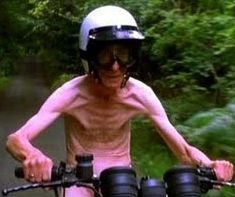
| David Kelly in Waking Ned Devine |
![]() |
| Matt Damon narrating Women, War & Peace |
![]() |
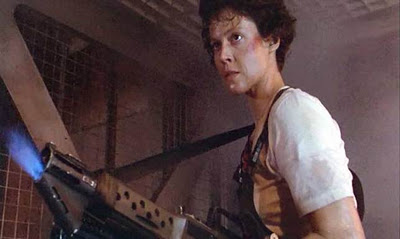
| Sigourney Weaver as Ellen Ripley |
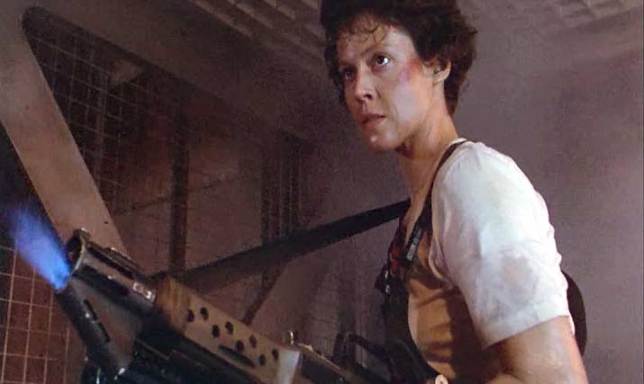
When I was 10 years old, the scariest movie I ever saw was Aliens. I remember the first time I saw it like it was yesterday. Late one night, plagued with insomnia (perhaps a product of my tumultuous childhood), I heard the TV on in my mother’s bedroom. Sitting down next to her, I began watching too. My mom was watching Aliens. It was the scene where Ellen Ripley goes down the elevator, guns strapped to her, to rescue Newt. Entranced, I watched as encased in a forklift, she clashed with the Alien Queen.
But it wasn’t the gore or even the alien that mesmerized me. It was Ripley. Seeing a strong badass woman on-screen left in an indelible impression on me.
With its tense, gritty, noir atmosphere, Alien broke ground spawning numerous imitations in the horror and sci-fi genres. Set in the year 2122, crew of the freighter spaceship Nostromo answer a beacon on the planet LV-426 and encounter a terrifying and insidious creature that attempts to wipe out the crew. Eschewing some of its horror roots in favor of an action-packed bonanza, the sequel Aliens features Lt. Ellen Ripley (the superb Sigourney Weaver), the Nostromo’s sole survivor (along with Jones the cat), warning and advising a group of Marines going to LV-426 to investigate after Earth lost contact with the planet’s colonists.
For me, I can’t separate Alien and Aliens (although I pretend the 3rd and 4th don’t exist…ugh). Both amazing films possess pulse-pounding intensity, a struggle for survival, and most importantly for me, a feminist protagonist. Radiating confidence and strength, Ripley remains my favorite female film character. A resourceful survivor wielding weapons and ingenuity, she embodies empowerment. Bearing no mystical superpowers, she’s a regular woman taking charge in a crisis. Weaver, who imbued her character with intelligence and a steely drive, was inspired to “play Ripley like Henry V and women warriors of classic Chinese literature.”
Sigourney Weaver’s role as Ripley catapulted her to stardom, making her one of the first female action heroes. Preceded by Pam Grier in Coffy and Dianna Rigg as Emma Peel in The Avengers, she helped pave the way for Linda Hamilton’s badassery in T2, Uma Thurman in Kill Bill, Carrie-Anne Moss in The Matrix, Lucy Lawless as Xena, Sarah Michelle Gellar as Buffy, and Angelina Jolie in Tomb Raider and Salt. But Ripley, a female film icon, wasn’t even initially conceived as a woman.
Dan O’Bannon and Ronald Shusett, Alien’s screenwriters, wrote into the original script that all of the characters, while written as men (including “Ripley” who was originally written as “Roby”), were in fact unisex and could be cast as either women or men. While they never actually pictured Roby/Ripley as a woman, when producers Walter Hill and David Giler rewrote the final draft of the script, Ripley was indeed a woman…huzzah!
While the original and final scripts differ, particularly in that android Ash isn’t in the original, Roby and Ripley are surprisingly similar, sharing similar dialogue and eventually asserting their authority through decisive actions. Neither character wants to let the injured crewmember (Standard the Captain in the original script / Kane the Ex. O in the final draft) onto the ship as they might be infected. Although interestingly, Ripley stands her ground and doesn’t let him in while Roby caves. Also, both remain the sole survivors of the crew.
While both Alien and Aliens straddle the sci-fi/horror divide, one of the horror elements apparent in Alien is Carol Clover’s notion of the “final girl.” In numerous horror films (Nightmare on Elm Street, Halloween, The Descent), the resourceful woman remains the sole survivor, the audience intended to identify and sympathize with her. Oftentimes sexual overtones exist with the promiscuous victims and the virginal survivor. While Alien and Aliens display sexual themes (we’ll get to those in a moment), Ripley isn’t sexualized but remains the sole survivor in the first film. She’s also never masculinized as Clover suggests happens to final girls in order to survive.
So remember those sexual themes I just mentioned…well just because Ripley isn’t sexualized, doesn’t mean sexuality doesn’t play a pivotal role in Alien. Swiss artist H.R. Giger designed the alien as well as some sets for the first film with pervasive phallic and vaginal imagery (don’t believe me…take a look; you won’t be able to not see it). Alien took the horror of rape comingled with the “male fear of female reproduction” and put it in space. Rather than maniacal villains attacking women and glorifying femicide, as many horror films do, Alien showed a creature attacking men (and eventually women too). While dangerous sexual elements abound, women weren’t punished for their sexuality.
Ripley never becomes an object merely for the male gaze. In Alien, she strips down to a tank top and underwear before she enters the cryogenic chamber. But rather than objectifying, to me it seemed to symbolize her vulnerability. The alien stows away in her escape pod yet she doesn’t hesitate, immediately slipping into a spacesuit to battle the alien. The script initially intended for Ripley to sleep with Dallas the Captain. Thank god that was never filmed! We need more movies where a woman is not reduced to a sex object. Ultimately, Ripley is not defined by her relationship with a man; she defines herself.
Films rarely feature multiple women; even rarer is it to see various depictions of women. In Alien, Ripley is juxtaposed with Lambert (Veronica Cartwright). While Ripley remains calm and collected, Lambert is an emotional hot mess, unhinged by fear. Time after time, the media pits women against one another. But after initial reluctance, Ripley and Lambert in Alien and Ripley and Vasquez (fiercely played by Jeanette Goldstein) in Aliens, work cooperatively together.
Motherhood exists as a reoccurring theme in Alien and Aliens. A pivotal scene cut from Aliens reveals that Ripley had a daughter. When she returns to Earth, after being stranded in space for 57 years on the Nostromo’s escape pod, Ripley discovers her daughter recently died at the age of 66. She survives to ultimately lose her daughter. Her grief catalyses her connection with the young girl Newt (Carrie Henn). Ripley risks her life to save and protect this little girl, perhaps in an attempt to reconcile her feelings of loss. At the end of the film, Newt hugs Ripley, calling her “Mommy;” she becomes a mother again. Even in Alien, Ripley smashes the computer called “Mother” onboard the Nostromo. Interestingly in Aliens, Ripley isn’t fighting a male villain; she combats a female: the Alien Queen. While the Alien Queen doesn’t equal a human woman, it’s hard to ignore that the film portrays one mother warring against another, both protecting their children.
Of the few truly empowered female film characters, most are lioness mothers: Ripley protecting Newt, Sarah Connor fiercely protecting her son and all of humanity in Terminator and T2, The Bride/Beatrix Kiddo a vengeful mother in Kill Bill. Despite the frequent comparisons made between the two badass women warriors, there’s a crucial difference between Ellen Ripley and Sarah Connor. Connor exists solely to protect her male son from assassination or humanity will be wiped out; she possesses no other identity. While Ripley becomes a surrogate mother to Newt, her identity still remains her own, not solely contingent on another.
A feminist commentary regarding female voice confronted by sexism in society emerges in both Alien and Aliens. In Alien, Ash undermines Ripley’s authority as Warrant Officer as he lets Kane onboard, disobeying Ripley’s decision to follow protocol and quarantine him. Dallas the Captain disregards Ripley’s concerns about not trusting Ash. After Ripley uncovers Ash’s treacherous plot, he stuffs a porn magazine in her mouth, “the film’s most explicit equation of male violence with the desire to annihilate the female voice.”
In Aliens, Ripley tries to warn the Weyland-Yutani Corporation about the danger of the alien and the LV-426 colonists’ impending doom. When she travels with the Marines, they initially discount her testimony. Only when the shit seriously hits the fan do they listen, looking to her as a tactical leader to survive. A futuristic Cassandra, prophesying destruction yet no one heeds Ripley’s warning. Is it because she’s a woman? That seems to be the message. Society continually devalues women, silencing their voices.
The media inundates us with images of male protagonists so it’s refreshing to see women lead…and of course kicking ass! Living in a world dominated by patriarchy, women receive societal cues telling them explicitly and implicitly how to behave, look and speak. Social norms dictate that women should be gentle, nurturing, and caring. Subtly implied lies the assertion that women should support the men in their life, that they should not be too outspoken or too unruly.
In theory, women action heroes break that mold. But in reality, most female film characters don’t shatter gender stereotypes. They rarely lead as heroes, usually serving as props to the male protagonists, and serving as love interests. Rather than showcasing empowerment, researcher Katy Gilpatric found that women in action films ultimately succumb to stereotypical gender roles.
Under the guise of empowerment, most female film characters still play out gender norms where women serve men and stay out of the limelight. That’s what makes Ripley so unique. She subverts traditional gender roles while retaining her female identity.
In an interview in Time Magazine, Weaver talked about Ripley and film roles for women:
“Usually women in films have had to carry the burden of sympathy, only coming to life when a man enters. Doesn’t everyone know that women are incredibly strong?”
Growing up, Ellen Ripley was my role model, a fierce feminist. Alien and Aliens taught me an invaluable lesson. They showed me a woman doesn’t need a man to solve a problem or fight their battles. After recently watching the documentary Miss Representation, which exposes the ways the media objectifies and attempts to strip women and girls of their power, I realize the gravity of seeing strong, confident women on-screen who aren’t valued merely for their appearance. And therein lies the power of Ripley.
While sexist studio execs might not want a 60-year-old Sigourney Weaver to reprise her iconic role, we need more Ripleys on-screen. Weaver said that all women possess “a secret action heroine” inside them. Women don’t always know their own strength. We don’t need to be rescued or saved; we can do that on our own.
We may not live in a world with chest-bursting aliens bleeding acid for blood. But anyone can aspire to be Ellen Ripley.
…
Megan contributed reviews of The Girl with the Dragon Tattoo, The Girl Who Played with Fire, The Girl Who Kicked the Hornet’s Nest, Something Borrowed, !Women Art Revolution, The Kids Are All Right (for 2011 Best Picture Nominee Review Series), The Reader (for 2009 Best Picture Nominee Review Series), Game of Thrones and The Killing (for Emmy Week 2011), and Women, War and Peace’s I Came to Testify. She was the first writer featured as a Monthly Guest Contributor.