Motherhood in Film & Television: The Evolution of Margaret White

Piper Laurie and Sissy Spacek (1976 film)

This piece is from Monthly Contributor Carrie Nelson.

(Warning: Contains spoilers about Stephen King’s Carrie and its film and stage adaptations.) 
I love Stephen King’s Carrie, and not just because we share the same name. More than anything, I love the way that Carrie honestly explores the tensions and horrors of being a teenage girl. The details of the story aren’t terribly realistic – not many teenage outcasts have telekinetic powers, and few high school send-offs involve murdering everyone at the prom. But the anxiety around getting your first period, the fear that the boy asking you on a date is only doing it as a prank, the compulsion to make fun of others even though you know it’s wrong – these are normal parts of being a teenager. King’s book taps into those experiences incredibly well, which is why the story has resulted in numerous artistic adaptations. 
Carrie was first made into a film in 1976. Since then, it has become a stage musical, a made-for-TV movie, and it will soon be made into a new film, directed by Kimberly Peirce and starring Chloë Moretz in the title role. Every adaptation of Carrie contains similar elements (notably the torturous shower scene in the beginning and the fatal prom toward the end), but other aspects of the story change slightly in each incarnation. What I want to talk about today are the ways in which the character of Margaret White, Carrie’s religious fundamentalist mother, has evolved over the years. Margaret is arguably the most frightening character in Carrie, and I believe that she has only become more disturbing in each new incarnation, but for a different reason than one might suspect. 
In the 1976 Brian De Palma adaptation, Piper Laurie plays Margaret. Laurie’s interpretation of the role is iconic, but something about the performance has always rung false to me. Laurie’s Margaret is loud and bombastic and evil, to a degree that’s almost campy. In particular, the scene in which Margaret dies is significantly different from King’s novel. In the book, Carrie uses her telekinetic powers to stop Margaret’s heart, but in the De Palma film, Carrie uses her powers to send knives flying at Margaret, crucifying her and mimicking the imagery of Saint Sebastian that torments Carrie throughout the film. It’s an unforgettable image, and given the visual nature of cinema, it makes sense that this particular detail would be modified from the book. (It’s important to note, however, that the De Palma adaptation is the only version with this ending – all others I’ve seen remain true to King’s original ending.) However, the excessive spectacle of the scene (and the film as a whole) lessens the emotional impact. Laurie’s Margaret is shocking and disturbing, but there’s an emotional element missing from the performance, which has always bothered me. 
Marin Mazzie and Molly Ranson (2012 musical revival)
I saw the 1976 version of Carrie for the first time nearly five years ago, and it wasn’t until recently that I realized what doesn’t work for me about Laurie’s performance – it’s entirely one-dimensional. It’s cartoonish, even. It’s hard to be frightened by Laurie’s Margaret when she seems so unlike any mother who could realistically exist. But that isn’t how the character has to be. I thought about this in March, when I saw the MCC Theater’s Off-Broadway revival of the Carrie musical. Now, I did not see the original version of the musical, which opened on Broadway in 1988 and closed after only five performances, making it one of the biggest Broadway flops of all time. I cannot speak to that version, but I can speak to the heavily revised revival, in which Marin Mazzie played an unnervingly sympathetic version of Margaret. Though the story is the same, and Margaret is still deeply disturbed and abusive, there is a greater emphasis on Margaret’s inner struggle and the reality that she truly wants to help her daughter. In the second act, Margaret sings, “When There’s No One,” a moving ballad that reveals her intention to murder her daughter and the despair she feels about that decision. Rather than solely seeing Margaret’s evil and rage, in this version we see her rationalization. We see a fully developed character, a person who truly believes she is making the right decision, which makes the decision even more horrifying. There is nothing cartoonish about Mazzie’s Margaret, which made her far more terrifying than Laurie’s Margaret ever could be. 
Patricia Clarkson (2002 made-for-TV movie)
I feel similarly about Patricia Clarkson’s interpretation of Margaret in the 2002 made-for-TV movie version. In a dramatic shift from Laurie’s excitable reading, Clarkson nearly whispers all of her dialogue. Clarkson’s Margaret is completely understated, so much so that you almost believe she might come around and change her mind about her daughter. Of course, she doesn’t, and the scene in which Margaret tries to kill Carrie is shocking not because of the spectacle but because it catches you off-guard. This isn’t to say that the 2002 Carrie isn’t filled with spectacle – it is, sometimes to a distracting degree. But Clarkson’s performance as Margaret remains the calm, quiet element of the film, making her ultimate act of violence against her daughter all the more frightening. 
Kimberly Peirce’s highly anticipated remake of Carrie will be released in 2013. Little has been revealed about Peirce’s plans and vision, but Chloë Moretz promises the film “really looks into the relationship of Margaret and Carrie.” Julianne Moore recently signed on to play Margaret, a decision that makes me incredibly excited and anxious to see the film. I believe Moore will be able to add subtlety and nuance to the role, adding layers to Margaret’s character that have never been present before. I look forward to reading more about the film and Moore’s work on it as it enters production. 
I recently spoke with a friend who said that she didn’t think Carrie should be remade. She said the original is good enough as it is, so why change it? While I agree that the 1976 version is a classic, and nothing will ever replace it in cinematic history, I do think that much more can be done with the story. Particularly, I believe Margaret has much more room to grow as a character, and if the 2002 television film and the 2012 stage adaptation tell us anything, it’s that Margaret’s horror doesn’t come from her anger and violence – it comes from the completely calm way in which she rationalizes her beliefs and her actions. I hope to see Peirce’s version take Margaret even further as a character. I don’t know what that will look like, but I am anxious to find out.
Fan-designed poster for upcoming remake


Carrie Nelson is a Bitch Flicks monthly contributor. She was a Staff Writer for Gender Across Borders, an international feminist community and blog that she co-founded in 2009. She works as a grant writer for an LGBT nonprofit, and she is currently pursuing an MA in Media Studies at The New School.


Motherhood in Film & Television: ‘Rosemary’s Baby’

This is a guest post from Erin Fenner.
Rosemary’s Baby, the Roman Polanski 1968 adaptation of the novel with the same name, uses minimal effects. While it is a horror story about the mother of Satan’s child, we only briefly glimpse the arm and eyes of the feature’s supposed monster. And, while the plot against Rosemary is conceived by a coven of witches, we don’t see bubbling potions. That is because Rosemary’s Baby is not a horror story about Satan or witchcraft.
Rosemary’s Baby is a horror story about being a woman.
Watch the trailer:
Rosemary, played by the waifish Mia Farrow, is a young woman excited for her role as wife and soon-to-be mother. But, even in her acceptance and celebration of traditional gender roles she is exploited, robbed of autonomy, discounted as hysterical and ultimately must give up all control of herself and her body.
Sound familiar? That’s because her terrors are real ones with just a dash of supernatural motivations.
We meet Rosemary when she and her husband, Guy, played by John Cassavetes, decide to move into a new apartment house. She is the picture of a cheerful stay-at-home wife – taking pleasure in decorating the house, filled with bubbling optimism and one who enjoys pleasing her husband. All she wants beyond her currently cozy situation is to become a mother.
She gets her wish when Guy, an ambitious actor, declares he’s ready to be a dad. The audience learns quickly that his motivations aren’t rooted in a comparable desire for fatherhood, but because he’s made a pact with peculiar neighbors we later discover are witches. He gets a shot at success if he delivers them a baby.
While the viewer can deduce this easily, we never see the world from anyone’s perspective but Rosemary’s. We spend most of the film cooped up with her, claustrophobic and powerless, in the apartment house.
The conception of Rosemary’s baby happens in a particularly brutal way – through rape. Guy drugs his wife and takes her to a ritual to be impregnated by Satan. Rosemary is semi-conscious and cries out, “This is no dream – this is really happening!” And, when she wakes up the next morning, Guy casually mentions that he had sex with her while she was sleeping. So, even though upon waking she concludes the rape was a dream, she still considers the conception of her baby as one derived through non-consensual sex. Her first step toward motherhood is one where she is deprived the right to control her own body.
Her journey into motherhood is further hijacked by Guy and her witch-neighbors who insist on her going to a different doctor – one we learn is part of the Satanist coven. Her new doctor, Dr. Sapirstein, played by Ralph Bellamy, demands she ignores the advice of her friends and books, and only listen to his instructions. Whenever she expresses concern about her pregnancy, he shoots her perspective down and shames her for self-education.
Rosemary (Mia Farrow)
We see the already thin Rosemary develop pronounced dark shadows under her eyes and become emaciated. She says she’s in a constant state of pain. It’s only when, during a party with her peers, that she is validated by other women. One of her friends even pushes Guy out of the room so that they can express their support and concern. It’s from this very brief exchange with her friends, where they insist her pain is abnormal, that Rosemary is empowered and encouraged to change doctors and take charge of her own health.
This empowerment is short-lived, because she gives up after a fight with Guy and her pain eases up. She relinquishes to her husband and her body.
Her small rebellions against others’ attempts to control her body – like not drinking the drink her witch-neighbors prepare for her – cease. She falls easily into passivity until she reads a book left to her by an old friend who we can presume was murdered by the coven next door.
The book details the history of the coven that had lived in her apartment house generations before, and helps her conclude that her pregnancy is central to a plot devised by her neighbors, husband and doctor.
With this new realization Rosemary rushes to her old obstetrician, Dr. Hill, played by Charles Grodin, to seek help. After pleading with him for assistance, Dr. Hill brings her into a room for rest, but then returns with Guy and Dr. Sapirstein to sedate her and take her away. She is dismissed as being a hysterical woman: pre-partum.
The next scenes are delirious. Rosemary is sedated, and when awake she attempts to make demands, but is denied. And, when she gives birth, she is not allowed to see her baby and is deceived about its condition.
Rosemary’s only motivation now is centered on her motherhood. It’s the only power she can claim. So, after recovering from giving birth, she sneaks around her apartment house, and finds a hidden passage to the witch-neighbors. There she finds the coven surrounding a satanic crib.
The scene is almost anti-climactic. There is no struggle and no high drama speeches. Rosemary discovers her baby is a monster – the son of Satan. She learns the truth – her husband and neighbors were plotting against her. And then, she resigns herself. She has already lost control of her body long ago and has nothing left but her role as a mother.
Rosemary lives up perfectly to the norm of womanhood. Unlike the women who we begrudgingly expect to be punished in films because they are promiscuous, independent, “bitchy” or uninterested in family life – we would expect Rosemary’s story to pan out positively because she adheres to gendered expectations.
But, Rosemary’s Baby is not a film meant to encourage a fearful narrative about the value of following prescribed roles – instead it is about a woman who is victimized by the very gender roles she had enthusiastically accepted. Rosemary accepts her societal role as a woman. Still, she is punished and suffers. And, because it is so close to reality, it is horrifying. 


Erin Fenner is a legislative intern and blogger for Trust Women: advocating for the reproductive rights of women in conservative Midwestern states. She also writes for the Trust Women blog and manages their social media networks. She graduated from the University of Idaho with a B.S. in Journalism.

Motherhood in Film & Television: Three Generations of Mothering on ‘The Gilmore Girls’

Lorelai Gilmore (Lauren Graham)
This is a guest post from Megan Ryland.
For me, no television mother springs to mind faster than Lorelai Gilmore of the long running show The Gilmore Girls. In fact, what is arguably so special about the show is that it offers a popular mainstream venue to focus on mothering, and especially the challenges of mother/daughter relationships. Of course mothers are a constant feature in the media (how else would mothers know how to behave!?) but teenagers are rarely depicted as having a positive relationship with their mother. Rory and Lorelai have a tight bond that remains the central focus of the show despite relationship drama for both mother and daughter. They also bring in the dual roles of mother and daughter when Lorelai interacts with her own mother, Emily.
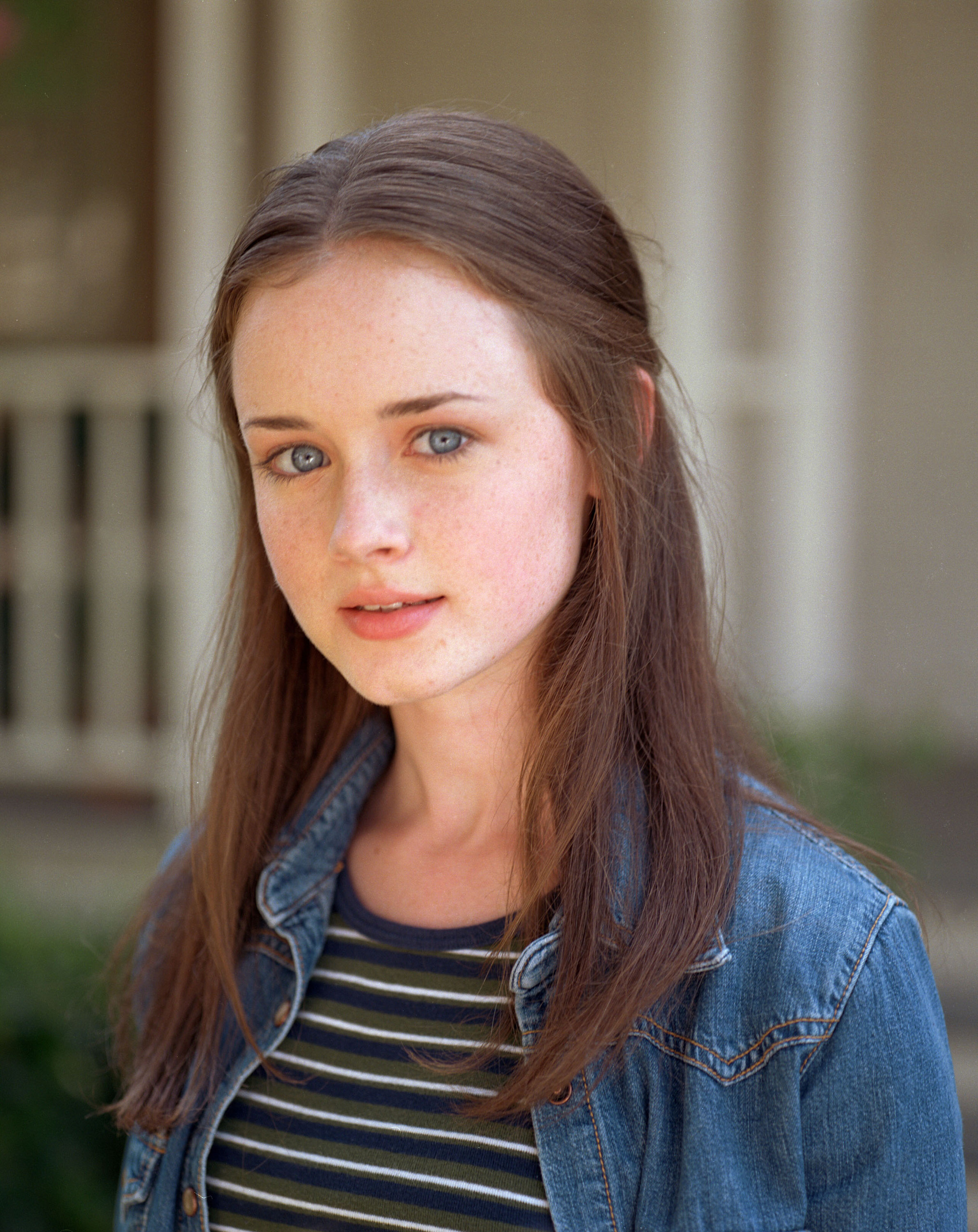
Rory Gilmore (Alexis Bledel)
Lauren Graham plays Lorelai, an over-caffeinated, high energy manager of a successful inn. As her daughter Rory, Alexis Bledel is a teenager striving more for a Harvard acceptance letter than a date, who has inside jokes with her mother, and clearly thrives in this single mother household. Lorelai’s status as a single mother is important because we are reminded time and time again that Lorelai has created a life that she (and her daughter, and the rest of the townsfolk) finds satisfying and valuable. This is a very different portrayal of the consequences of teenage motherhood. 
Although coming from money and privilege, Lorelai left behind the trust fund life when she had Rory at 16. She rejected her parent’s assistance, refused to marry Rory’s dad, and struck out on her own. This further soured Lorelai’s already poor relationship with her own mother, Emily Gilmore, but has not led to Lorelai being a “Bad Mother.” There are many factors that allow for this, including racial, geographic, cultural, class, etc. For example, as a young white woman with the cultural capital of high class status, Lorelai is able to dodge stereotypes and the accompanying discrimination that a young woman of colour and/or low socioeconomic standing might face. This is an unspoken advantage that may allow viewers to accept Lorelai as a successful single mother. However, I still believe that the representation of Lorelai as a mother who has done a great job raising a child without the aid of huge financial resources or a masculine figure is a major plus for the show. And of course her position as a single mother remains difficult. In fact, the impetus of the show is that the lack of financial resources for Rory’s schooling brings all three generations of Gilmores back together, because Lorelai asks her parents to help pay for Rory’s elite education and in exchange her parents re-enter her life. 
Movie night with the Gilmore Girls
Rory and Lorelai have a very complex relationship. Rory is occasionally mothering Lorelai, but it is never a permanent role. Superior experience is always on Lorelai’s side and she is able to act as mentor to Rory as she grows up. Lorelai doesn’t always advise her in the most conventional ways, but I would argue that she rarely verges into juvenile territory while parenting. Her temperament is youthful, while Rory’s is much more mature for her age, but they remain a mother/daughter team, and a best friendship. Again, this sort of bond is rare. I think that it’s valuable for a show on a network aimed at young people (WB and then CW) to contain positive relationships between parent and child. 
In the first season, they deal with questions of how Lorelai can date as a mother, and how she can share the space that she has carved out for herself and Rory with a romantic partner. This is an important question, and one that is realistically complicated (of course, it’s also made unreasonably complicated by the necessary hijinks of television). Lorelai and Rory are given scenes where they discuss their needs, desires and challenges. Furthermore, Lorelai is accepted as a sexual being who can also be a good mother. I would call that a win. 
What is arguably more common on television is the relationship between Lorelai and her mother, Emily Gilmore. Many rants and screaming matches are conducted between them, as their relationship appears based in constant misunderstandings. However, despite estrangement and resentment, the relationship between Emily and Lorelai is arguably never unsalvageable. No one can really write off this bond, because Emily and/or Lorelai occasionally show that they do indeed care for and value one another. 
Emily Gilmore (Kelly Bishop)
Emily is first seen as a stereotypical suffocating, judgmental, harpy of an older mother, except when she becomes vulnerable and shows that she works hard to keep up appearances. She is bedridden when Lorelai runs away, she attends her granddaughter’s 16th birthday despite hurt feelings, and most of all, she is concerned that she might lose her family. She is far more complex than the typical older woman caricature and Kelly Bishop does a fantastic job with the role. Viewers can potentially sympathize with Emily’s ideals (often a product of her time and upbringing) and her feelings of exclusion from her daughter and granddaughter’s lives, even if they can’t identify with her strategies for keeping them close. At the same time, fans can also understand why Lorelai ran from the privileged life that she had grown up with, as well as the difficulties that accompanied that choice. 
Arguably Emily was a type of lone parent, as Lorelai’s father was a typical career man who barely had time to put down the paper or end the conference call for meals. Although Emily was privileged to have a number of servants and nannies at her disposal, the fathering provided by Mr. Gilmore appears to have been very limited. As the most involved parent by far, Emily’s mothering has not fostered an obvious bond, showing that this connection is not inevitable. What Rory and Lorelai have takes work and is very special. It’s not a natural given.
The show allows for an exploration of motherhood from a variety of angles. An important aspect is the interplay between the daughter and mother roles. Throughout its many seasons, all three Gilmore women are placed in daughter and mothering roles. For example, in one scene in the first season, Rory is missing after a dance and Emily accuses Lorelai of raising a child as wild and irresponsible as herself. Lorelai defends Rory and says that she trusts her daughter, acting as a daughter herself in a situation with her mother. However, when Emily leaves and a contrite Rory appears, Lorelai acts as the mother terrified for her missing child and admonishes Rory. The transition between daughter and mother happens in a few minutes and it’s not only beautifully acted, but also representative of the dual(+) roles that many mothers play. You are never just a mother. You are also a daughter, whether or not your mother is always present. You parent with a history as a child. It’s a fantastic scene and shows part of the complexity of a mother’s role.
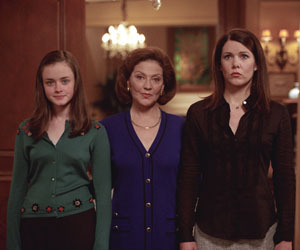
Three generations of Gilmore Girls
The interactions between Emily, Lorelai and Rory Gilmore make the show Gilmore Girls a unique offering. Rarely do popular shows for young people focus on the relationships between generations of women, or the role (and challenges) of contemporary mothering. Race and class issues abound in the show, which should be unpacked, but as a forum for understanding some aspects of mothering and honouring mother/daughter bonds, Gilmore Girls is fantastic. 


Megan Ryland is currently completing her BA, focusing on politics, women and gender. She writes about feminism, body image, and media analysis on her blog, http://beautyvsbeast.wordpress.com. She also releases the weekly show Hello City! Culture Cast, a Vancouver-based podcast that reviews movies, theatre, concerts and more.

Motherhood in Film & Television: ‘Carrie’

Jamie Lynne Grumet on Time
Recently there’s been major hullabaloo about Jamie Lynne Grumet, the 26-year-old California mom who proudly posed on the cover of Time magazine breastfeeding her 3-year-old son. Ridiculed, condemned and completely unorthodox, this shocking image continues to reverberate across the globe.
A similar effigy from the 1976 film Carrie has lingered in our minds for more than three decades. It’s near the end of the movie, when religious momster Margaret White (Piper Laurie) is at the end of her rope trying to jam some fundamentalist sense in her terribly feeble-minded teenage daughter, Carrie (Sissy Spacek).
For several minutes she’s imploring one strict value after the next on Carrie, desperately teaching her to repent for the sin she has committed. But when her daughter needs her the most, she is knee-deep in a sermon trying to shelter her from all the evil in the world. In a fit of rage, her telekinetic daughter mind-hurls several knives at her, stapling her to the wall in a perfect crucifixion. Her head tilted to her right in blissful silence.

“I should’ve killed myself when he put it in me…. I should’ve given you to God when you were born, but I was weak and backsliding, and now the devil has come home.”

A crucified Mrs. White
One could discern that Mrs. White was taken out of her misery, which enveloped her throughout her adult life and suffocated her maternal instincts. Or did it?
Often times we are quick to judge parents—especially mothers—whose values and beliefs differ from our own. We deify figures like Angelina Jolie as Mother Theresa or sacrifice them as we do both Jamie and Margaret. But both sides have their own story, and they both think they’re right.
On the surface, it’s so easy to criticize Margaret. But there is something so inherently evil yet desperately loving about Laurie’s pitch-perfect performance of the religion-stricken single mother. You know she wants what she thinks is best for her child, like all great mothers do. But she’s too terrified—or terrifying?—to really consider what she’s saying. She wanted Carrie to be God-fearing, like herself. She wanted her to not suffer the tainted feeling of self-disgust with which she was burdened every day. In essence, she wanted her daughter’s life to be better than her own, by not making the same mistakes she did.
But when Mrs. White saw her daughter developing breasts and getting her period, and even receiving interest to attend the prom, her maternal preference overwhelmed her. She had to intervene before her Carrie ended up shameful, deflowered and ungodly like she had become. It was imperative.
Sissy Spacek and Piper Laurie in Carrie
However, she could never really convey her true intentions to Carrie. It was always about what Carrie shouldn’t be doing, even when Carrie herself couldn’t fully comprehend the course her life was taking. It was always about repenting, while never examining what the repenting was for.
Meanwhile, Carrie is relentlessly teased in her school for her extraordinary innocence, and became the object of a vicious stunt that escalated beyond both her and the perpetrators’ most barbaric imaginations. Her fate at school is exacerbated when news gets around about what her mother is like. While her mother’s behavior minimally explains the way Carrie is, it doesn’t end antagonistic remarks of her peers. They don’t understand why neither Carrie nor her mother are the way they are, but they do know that they must be against it.
It’s not until Carrie realizes that there’s something gravely askew about her mother’s parental guidance—really on account of her peers’ reaction to her mien—when the position of her mother’s stance becomes horribly acute. Margaret’s unusual parenting style made sense for a long while, before it was held under the light and scrutinized by those on the outside, and before Carrie knew well enough to attempt to break away from it. That was the precise time when Margaret discovered that her daughter had become the person she tried to prevent all these years, and that her long-time fear had finally come to fruition.

“All the kids think I’m funny, and I don’t wanna be. I wanna be normal…. a whole person, before it’s too late for me to –“ [Margaret throws tea on her face, Carrie wipes it off].

Piper Laurie as Margaret White
Laurie’s perfect portrayal of a mother obsessed with her own ideals is mesmerizing to watch unfold. She’s like a pressure-cooker that slowly percolates until she eventually boils over and quietly explodes by the end of the movie. But she never loses her cool; she barely offers any inflection in her voice. She’s calm but deliberate. It’s the very thing which unsettles you when you watch her onscreen. You know her heart is in the right place, and that she—like most good mothers—just want her daughter to grow up better than how she saw the rest of the world.
But once her fear overpowered her rationale, once her masked hysteria was put on full blast through the halls of her daughter’s high school, she became victimized by her own steeple of values. She became the monster that you delighted in only when she was sacrificed for the greater good.
Clearly Margaret is not without her faults. As stated before, she wouldn’t impose these atypical morals on her daughter if she didn’t truly believe them to be right. That’s why we see her preaching the message around the neighborhood, to even parents of Carrie’s peers—she sees nothing wrong in what she does, but everything amoral about what everyone else does, which ultimately makes her out to be a frightening proselytizer when all she wants to do is protect them. When she can’t convince others to see her view, she is comfortable knowing that her daughter will at least be saved from the fires of hell. 
But by then it’s too late. Her daughter had been influenced by the kids at school, who nominated themselves as judge and jury in the case of Margaret White versus everyone else.
Whatever you think about the way in which other mothers choose to parent their children—and Lord knows some of them are real head-scratchers—is it ever okay for us to impart our notion of right and wrong on them? I wonder how Margaret would have fared if she was on the cover of Time with the cover line, Pimples are the Lord’s way of chastising you. 
Candice Frederick is an NABJ award-winning journalist and film blogger for Reel Talk. She’s also written for Essence Magazine and The Urban Daily. Follow her on twitter.

Motherhood in Film and Television: Mothers of Anarchy: Power and Control in the Feminine Sphere

This is a guest review by Leigh Kolb.

The ancient idea that men and women inhabit different spheres based on their biological makeup is rooted deeply in Western culture. In the Nineteenth Century, however, when the Victorian era dictated behavior and the Industrial Revolution changed work, scientists and civilians defined and embraced this idea of True Womanhood. Men’s and women’s spheres were separate—his was public and political, hers was inside the home and maternal. This is certainly not an argument that has died, and one would be hard-pressed not to find the same rhetoric at houses of worship and houses of legislation today. Many representations of women in media reiterate this ideology.

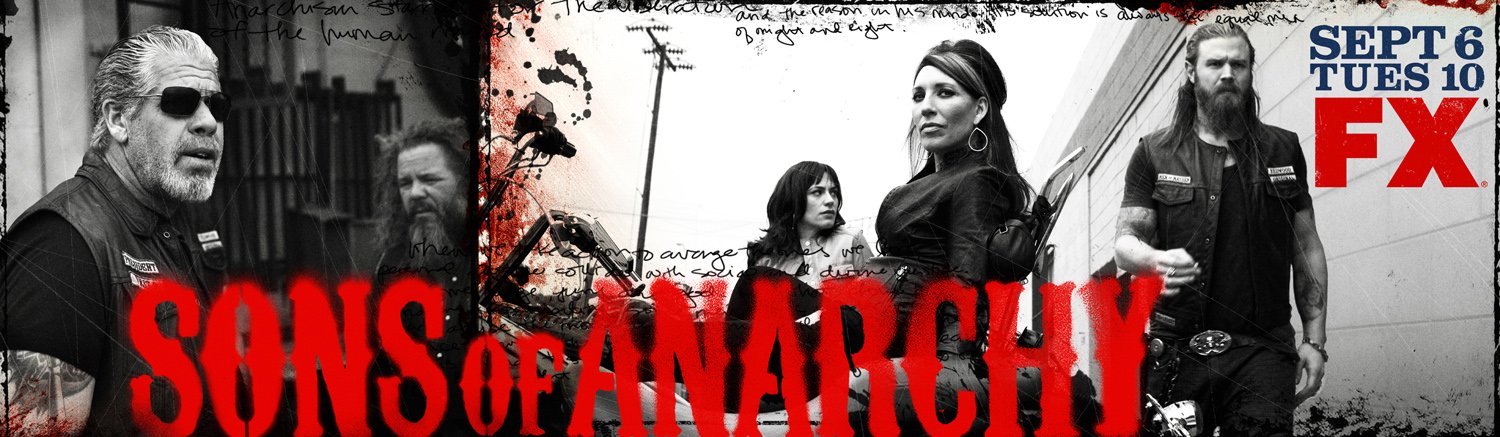
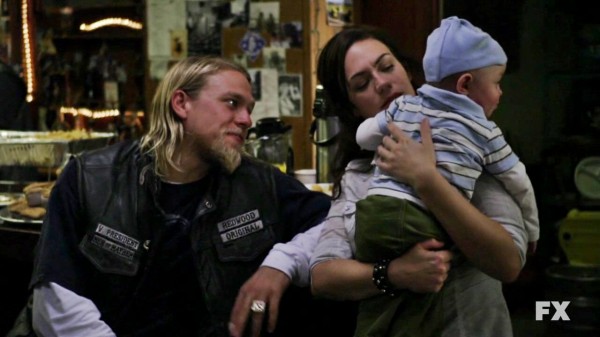
Motherhood is firmly rooted in the feminine sphere—inside the womb to inside the nursery. In the critically acclaimed television drama Sons of Anarchy, the gendered spheres are clear and present. Sons of Anarchy is oftentimes dubbed “Hamlet on motorcycles” since the plot line bears a strong resemblance to Shakespeare’s Hamlet (which is an important note for feminist analysis, considering Shakespeare’s own subversive feminism). As in Hamlet, Sons of Anarchy’s audiences and critics often focus on the protagonist, the “ghost” of his father, his nefarious stepfather, and the men who surround him. The excitement of politics, public tension, violence, and man’s inner struggle always trumps the inner-workings of the home and child-rearing. The power is in the public sphere.

Gemma threatens Wendy. She makes it clear that no one will hurt her son or grandson.

The Mothers of Anarchy, on the surface, have no control. In reality, they have all of the control.

The matriarch “old lady” (the endearing term club members give to their partners) of the California motorcycle club is Gemma (Katey Sagal). She is the Gertrude-inspired character who has married one of the original members of the club, after her husband was killed. Her first husband helped found the Sons of Anarchy motorcycle club after Gemma became pregnant with their son and wanted to settle in Charming, where her parents were from. She may not ride, but her instincts and desires steered the club from its inception. The town’s police chief refers to Gemma as “leaving Charming when she was sixteen and showing up 10 years later with a baby and a biker gang.”

This original group, which spawned numerous Sons of Anarchy chapters after its founding, is referred to as Sons of Anarchy Motorcycle Club Redwood Originals (SAMCRO).
Tara and Gemma together saved baby Abel’s life, and Jax, his father, holds him.
In the pilot episode, there are explosions, murders, gun runs, back room decisions, and motorcycles tearing up the streets. Of course, one doesn’t need to analyze too much to see the clearly phallic representations of masculinity in motorcycles and firearms. It is also clear that the women in the episode are revolving around the hallmark of True Womanhood—motherhood.

Gemma’s son Jax (Charlie Hunnam) has a pregnant ex-wife, Wendy (Drea de Matteo). As Gemma is driving to check on her, Wendy is in the kitchen injecting herself with a syringe-full of meth. The camera pans out to a very pregnant Wendy with her hand on her belly, relaxed. This is a fallen mother. Gemma finds her in a pool of blood, curses at her, and rushes her to the hospital. At the hospital, Tara (Maggie Siff), a surgeon and Jax’s ex-girlfriend, is tending to Wendy and Abel, who was delivered via emergency c-section ten weeks premature. Immediately the audience is presented with the powerful mother and matriarch, the bad mother (and few things are worse in our society than a bad mother), and the professional mother, who is responsible for keeping Abel alive since his biological mother could not.

Gemma’s maternal instincts are fierce and stinging.
These three pivotal female characters revolve around a baby, and they are portrayed inside—literally and figuratively. The women are inside when introduced to the audience—Gemma is in her car, Wendy is in her kitchen, and Tara is in the hospital. When Gemma wields her knowledge of and power over the club to Clay, they are in the bedroom. The male characters are largely outside—riding their bikes, working on cars, and scoping out new property.

Toward the end of the episode, the men of Sons of Anarchy are engaged in club warfare, and commit brutally violent crimes (involving guns, explosives, and vehicles) as they navigate the changing waters of their club’s purpose and see their territory shifting to guns and drugs.

Tara and Jax have a son, Thomas, and they together raise him and Abel.
Spliced into this plotline are the scenes from the hospital. Gemma has slipped Wendy a syringe with an order to commit suicide (she puts the syringe in a Bible after they pray—religion and piety is also in the feminine sphere). Tara is operating on Abel, inside of him, and starts his heart after it stops.

The masculine sphere is powerful, aggressive, and largely superficial. The feminine sphere, while perceived as less important and less powerful, deals in matters much closer: giving life, manipulating life, and sustaining life. When Jax comes to the hospital to visit his son, he is beat up and bloodied from his duties outside. Tara tells him to clean himself up, and then he can see his son. Tara—who gave Abel his heartbeat, not Wendy—is in control. It’s simply a matter of time before she and Jax are in a relationship and she is clearly an old lady in training.

Gemma looks at an old photo of her and John, Jax’s father and the co-founder of SAMCRO.
While the pilot episode can be examined by itself through a feminist lens, the entire series follows its women with the same watchful eye. What may sound like one-dimensional stereotypes in simple plot descriptions are actually nuanced female characters and plot lines.

Possibly the most obvious mother archetype in Western culture is the Virgin Mary. Sons of Anarchy does a commendable job of avoiding the virgin-whore dichotomy so prevalent in matters of femininity and motherhood. Gemma is a sexual creature and desires sex (one episode even deals with her battling vaginal dryness after menopause), but that isn’t problematic. The show manages to avoid the all-too-often inferred Oedipal nature of Hamlet and Gertrude in the Shakespeare original, showing that a woman can be sexual, and be a mother, and that’s OK.

In season two, Gemma is brutally raped by enemies of the club to divide and destroy SAMCRO. She is lured into the enemy’s hands when a young woman stops her on the road and begs her to check on her baby, who’s not breathing. Lured by her maternal instincts, Gemma rushes out of her car and into the woman’s van where there’s just a baby doll, and she’s knocked unconscious and taken to a warehouse where she’s assaulted. The way that she deals with the assault—secretive and ashamed, yet helped by Tara medically and emotionally—is painful and realistic. Tara was a victim of domestic violence, and the two come together not as victims, but as allies and survivors. When Gemma finally tells her family about the rape, they come together and are more united, not divided. As she explains the assault to Clay and Jax at the family dining table, Patty Griffin’s “Mary” plays softly in the background, conjuring the image of that original suffering mother; however, she is not the pure and perfect image of virginity; she is real, damaged, and whole. This is the True Womanhood, not that of silence and submissiveness. In this depiction, it’s clear that Gemma gains and keeps control and is not the one being controlled.

In an excellent piece at Yes Means Yes, a feminist blogger notes that “The strong women characters are not terminators with breasts, they’re real humans with full inner lives and complicated problems. The plots often explore women’s lives in ways that mainstream shows overlook. And the show humanizes women, like sex workers, who are too often presented as one dimensional.” Indeed, even the porn stars are human in Sons of Anarchy—not just human, but capable of mothering, and mothering well.

SAMCRO becomes affiliated with a porn production company, and club member Opie’s girlfriend (and eventual second wife) is one of its stars. Lyla has a son, and is compassionate in her role as step-mother to Opie’s children. Lyla is a caring mother, and also serves as a catalyst for conversations surrounding the topics of abortion and birth control. For motherhood shouldn’t just be about mothering children, but also about making choices about what’s best for the entire family (which sometimes means not having more children).

In season three, Lyla becomes pregnant and does not want to be (her relationship with Opie is not solid, and pregnancy would end her career in the porn industry, and she wants to work a few more years). Tara offers to take her, and she also is pregnant and decides she wants to schedule an abortion. The entire scene is without judgment or negativity—it’s a clean clinic, and a simple procedure. Tara references having an abortion at six weeks in her previous abusive relationship and that it was “not a baby” at that point. Rarely is abortion presented as realistic in popular culture. Feministing says of the episode, “Most TV shows won’t even present abortion as a viable option and if they do, it’s usually stigmatized and quickly discarded in favor of adoption or keeping the unintended pregnancy.” Later, when Opie discovers Lyla had an abortion and is taking birth control pills even though getting pregnant is her only way “out” of porn, he is angry. But it’s clear that the audience isn’t supposed to be.

Tara ends up not having an abortion, but not because of a moral awakening. She is abducted and almost killed by SAMCRO enemies, and is able to escape by telling the abductors she’s pregnant. After the ordeal, she and Jax see the unharmed baby on an ultrasound, and reconcile. At first, Tara appears to be more submissive after being held captive and choosing to have the baby. As the series progresses, however, viewers see her coming to power in the club by her own choosing. She will mother SAMCRO sons—adopting Abel and giving birth to Thomas—and she will become the matriarch.

Tara is poised to take over Gemma’s position as matriarch.

As central as motherhood is to the various story arcs of Sons of Anarchy, one can’t help but notice that these strong female characters lack mother figures themselves. While Gemma had a mother growing up, she died from the family’s “fatal flaw” (a genetic heart condition). Tara’s mother died when she was young, and she inherited her father’s house and car. Father-son relationships are central to many of the storylines (certainly the relationship between Jax and his father’s letters, a.k.a. his “ghost,” and his relationship with his stepfather Clay; Opie’s relationship with his father, SAMCRO’s other founder; and Jax’s relationships with his young sons). In fiction, male protagonists are often driven by their relationships with their fathers—away from them or toward reconciliation. However, while audiences continue to see more female protagonists, those characters often have no mothers or are more influenced by their fathers or male mentors (The Killing and Homeland on television, for example, or Twilight and The Hunger Games in text and on film).

Of course this is not a new phenomenon. In Shakespeare’s works, “Fatherhood appears in full gamut, but motherhood, especially in the relationship of mother and daughter, is almost, though by no means quite, absent.” Hamlet’s Ophelia just had a father and brother to guide her (tragically), and no mother. Strong women are often portrayed as being on their own.

These reminders of the gendered spheres—men are in public, in politics, connected to their ancestors and to the world around them while women are inside, working in the home and raising another generation to fulfill these same gendered roles—continually romanticize the role of father and downplay the role of mother. So when modern women emerge on screen, even the most complex and nuanced characters such as those in Sons of Anarchy, there’s still the trouble of True Womanhood, at its core, not being rooted to power in connection. Instead, these women are lone wolves, seeking power where they can and how they can, because their mothers could not or chose not to—or perhaps because it’s simply not a narrative that’s at all woven into our culture.

In an interview, Sagal said of Gemma, ”At the core of her, she is a mother to all of these men. As tough and dark as she is – and she will slit your throat for the right reasons – she is big-hearted.” The undertone of this quote is that Gemma cooks big meals, cleans up, and protects her “men.” Tara also grows into the role, serving as an on-call doctor for the club, bringing men back to life who would have otherwise died or been arrested. They are biological mothers to their sons, and mothers to the Sons. While the spheres are in place, the reality of the series is that these mothers may be perceived as being without power behind closed doors while the boys are killing, being killed, and making business decisions, but the power the mothers yield is monumental. Gemma has orchestrated the club from its beginning, and the fourth season ends with Tara standing over Jax at the head of the SAMCRO table. The audience knows the mothers’ roles, but the men often seem oblivious. The same can be said for Shakespeare’s mothers (it’s widely believed that Gertrude had a part in King Hamlet’s death plot). The audience will have to wait, however, to see if Western culture ever gets it right and removes the spheres that give the perception that motherhood lacks the power and strength of a twin-cam Harley.

———-
Leigh Kolb is an English and journalism instructor at a community college in rural Missouri, and has an MFA in creative nonfiction writing. She lives on a small farm with her husband, dogs, chickens, and garden, and makes a terrible dinner party guest because all she wants to talk about is feminism and reproductive rights.

Motherhood in Film and Television: Nine Months Forward, Three Centuries Back

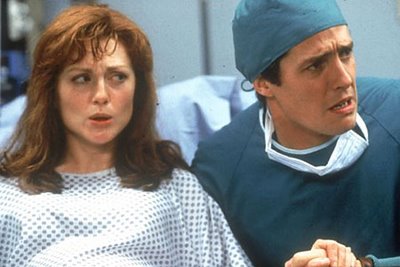
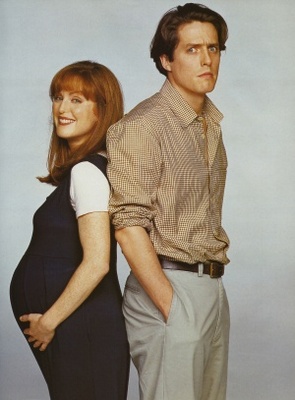
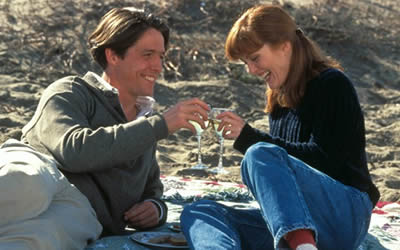
Julianne Moore and Hugh Grant in the film Nine Months

This is a guest review by Tyler Adams.

Male Pregnancy

Nine Months, contrary to all expectations, is not about pregnancy. It’s about a man coping with a pregnancy. Yes. Here’s a film whose subject absolutely and biologically requires a woman – and it’s still about a man.

However, Nine Months does achieve sex equality of the most dubious sort – it’s insulting to men and women.

In the world of Nine Months, women have already accepted that their value lies primarily in their fecundity and that raising children is the only thing that matters. And now, it’s time for men to learn the same lesson.

Rebecca, whose unplanned pregnancy kick-starts the plot, knows full well the consequences of pregnancy. And she ignores them. She wants to keep the baby, immediately, after about five minutes of running time where she isn’t even onscreen.

To the film’s credit, it doesn’t demonize Rebecca for subtly, whisperingly alluding to abortion, but the film glosses over it too much to truly be considered ‘pro-choice.’

The conflict in the film’s first act is all about Samuel accusing Rebecca of getting pregnant on the sly. Yes. She tells him she’s pregnant and he turns it into an act of aggression against him. He blames it on her: condescendingly scoffing that birth control could be anything other than foolproof.

Then we get delightful dream sequences wherein Samuel imagines Rebecca as a praying mantis trying to eat him.

As Anita Sarkeesian points out in her excellent video ‘Tropes vs. Women: The Evil Demon Seductress,’ most praying mantis species don’t engage in sexual cannibalism. And neither do women. Except to adolescent men terrified of female sexuality.

Then there’s Samuel’s friend Sean, our childfree Straw-man. His girlfriend says she wants kids, she leaves when he says ‘no’ – a week later, he’s self-admittedly using another woman to ‘get him over the rough spots.’ He describes her breasts, calves, and skin like food, basically making her sound like a golem made of calzones, candy, and cake.

Bobbie, his ‘girlfriend’ is a stereotypically attractive young woman who literally never says a word during the whole film and has no narrative purpose other than temporary eye candy – so the film treats her about as well as Sean does. With Sean, the filmmakers are essentially equating child-freedom with misogyny. Hey, all women want kids, so not wanting to have kids means being anti-woman, right?

There certainly aren’t any major single, childfree, or independent women in the film. Gail is the only other main adult female character, and she has three daughters and one on the way. She talks to Rebecca about how ‘pregnancy is our profound biological right, something men can never experience,’ when Rebecca expresses her one, solitary note of doubt in the film (in a conversation that doesn’t even pass the Bechdel Test, given that it’s all about men and childbirth). This is pretty much the only time the film really deals with Rebecca’s perspective in a way that doesn’t relate to Samuel.

The idea is that it’s a woman’s duty to have children, which is ‘natural’ and therefore good, and a source of female privilege. Gail even frames this in feminist terms, as if Karen Horney’s ‘womb-envy’ concept was a step forward for gender equality (Enlightenment-era chauvinists celebrated women’s fecundity, too – Enlightenment-era feminists spent more time talking about women’s rights), and there’s anything empowering about the idea that women absolutely must have children regardless of their personal feelings, because, apparently, it’s the one advantage they have over men.

Rebecca calls independent single motherhood ‘fashionable,’ and ‘PC,’ basically dismissing it. She says she would rather have a family – as if a single parent family doesn’t count. All Samuel has to do is propose. Why she doesn’t just pop him the question is unexplained. Apparently, even the audience takes it for granted that that’s the man’s decision to make.

Nine Months is trying to celebrate motherhood through the eyes of a reluctant father. Rebecca’s feelings are barely addressed, and Gail doesn’t seem to know how to celebrate motherhood without also demeaning the childfree. She says of Samuel, ‘You have a baby, that means he’s gotta grow up. That’s what he’s afraid of. I mean, the baby’s the fun part…Look at all this stuff.’

She’s referring to the toy store merchandise. Yes. Apparently the joys of motherhood are not bonding with and nurturing other human beings, but buying them things. Gail has the ultimate conservative vision of motherhood – it combines chauvinism and capitalism!

Professional Parents

“What if the baby can see…your penis, coming toward it, that could scare the hell out of a baby…or what if your penis hit it in the head; it could cause brain damage…”

I’m not embellishing. That’s what Rebecca says, five months into her pregnancy, right before she and Samuel have sex. Rebecca is in her thirties, and – well, given the number of biological errors she made in two lines, I’m terrified of what else she doesn’t know about things you should and shouldn’t do during pregnancy.

What does it say about the state of women’s health education that this scene does not read as satire? And if it was supposed to be funny, well – maybe it could work as horror comedy, but I didn’t see any real commentary.

By the way, it should be mentioned that Samuel is a child psychotherapist. Or ‘kiddy shrink’ as Gail calls him. He’s a child psychotherapist and doesn’t know the first thing about pregnancy. He doesn’t know that amniotic fluid in the uterus protects the baby, and the cervix is blocked throughout most of a pregnancy, or you’d think he would have told Rebecca about it during their attempted sex scene.

He’s allegedly successful at his job, but all we see is his being clueless around children, insensitive around women, and ignorant about everything he should be an expert on. The man has to read a book like What to Expect When You’re Expecting, as if he’s never taken any classes on prenatal development. Well, he didn’t know that birth control is only 97 percent effective, so let’s just assume he’s never even taken sexual education at school.

We do see a competent, female gynecologist who more or less helps set Samuel on the right path, but for some reason, we spend a lot more time with bumbling Russian stereotype Dr. Kosevich. All the better to humiliate Rebecca with, I suppose, during her first doctor’s appointment, and later, during the world’s most farcical labor scene where Samuel nearly kills several people trying to get her to the hospital. Oh, and he starts a fistfight during her delivery. How you advocate birth while making it look horrible and playing it for juvenile laughs is anyone’s guess.

Marty and Gail are ultimately the people Rebecca and Samuel turn to for advice. No matter how poorly socialized their daughters are, they’re experts. A child psychotherapist like Samuel has to ask Marty and Gail for help, and as far as the narrative goes, they outrank a gynecologist. Even though Marty believes that you can tell the fetus’s gender by whether the mother’s carrying high or low, and that sexual positions influence sex determination. Although, the anti-intellectualism works well with the film’s overall sneering at creative and professional individuals.

Sean: “…the world is overpopulated; our society has too many starving children.”

Gail: “Well, I would say our society has too many starving artists…this was our parents’ home, but I don’t see you making any contribution…you keep this up you’ll die alone, like a dog, like a bum. Like Van Gogh.”

Sean is an artist, and Gail demeans him for it, because hey, we all know art doesn’t pay. Not like owning a car dealership like Marty, which is a much better contribution to society, of course.

Of course, Sean’s work seems irrelevant. Since he doesn’t ‘have’ a wife and kids, he’s not making any meaningful contribution to the world at all, according to Gail. She equates being single with being isolated, and being childfree with being childish. And the film takes her side.

When Sean argues that she and Marty used to have interests, and are now just obsessed with their children, she doesn’t even deny it. She just affirms that this is the way it should be. After all, earlier Rebecca instantly accepts that she has to quit her job as a dancing instructor – not just take a leave of absence; actually quit. Samuel, after his transformation, says ‘I don’t give a damn about me; I’m in love with my child.’ Apparently, parents of all genders should be denied personhood outside their children, and this is something all women want, and all men should want.

Girl Children

Ashley Johnson as Shannon Dwyer in Nine Months

Marty goes shopping for sports equipment as he’s assuring Samuel he’s having a boy, on no evidence. Apparently, all boys must be into sports, or they’ll be forced to be, and none of Marty’s daughters are athletes or could be.

When Samuel shows his distaste for being hit in the face or punched in the stomach by Marty or his daughters, Marty and the film insult Samuel’s masculinity. Especially when the daughters do it. When Marty gets into a fight with some Barney stand-in over some petty insults, Samuel doesn’t join in until he’s accused of being gay. It’s okay to be genuinely childish, apparently – like beating someone up in public over petty insults – as long as you look appropriately ‘masculine’ while doing so.

When Marty learns he’s having another girl, he complains (at the end, he relents and says, “I guess having another girl isn’t so bad.” Bravo.), and Samuel smirks about his good fortune in getting a boy. Earlier in the film, one of the reasons Samuel comes around and accepts the pregnancy is learning his child is a boy. The film obviously doesn’t value girls any more than it values women.

Samuel’s character arc is not about him overcoming his sexism – it’s about him ‘growing up’ by accepting fatherhood. When he reunites with Rebecca, he says he’s in love with his son, and is in love with her for having him – in love with her as a vessel, not a person, as Eve Kushner at Bright Lights Film Journal astutely observed. He never really misses her when she’s gone, never really asks how she’s feeling, or even has a real conversation with her – when he comes around, he comes around for the baby and not for her.

The film isn’t subverting the tropes that women, family, and children force men to lose personalities, that all women are content to be homemakers, that losing your personality is part of growing up, or that all people’s worth lies in childrearing – the film is just positively endorsing it all.

There’s nothing inherently bad about having children or getting married. One of the problems comes from the sentiment that you need a spouse and kids regardless of personal taste, or even regardless of the spouse and kids. The way many people talk about this is roughly: get a woman, or get a man, or get some kids. Any will do, apparently.

Children are not your unique children you can nurture and bond with – they’re just a burden that forces you to nobly suffer and mature. Marriage isn’t an outgrowth of a loving relationship between two complete individuals, it’s just an item on your life’s agenda to be crossed off, and establish you as an adult with a life worth living. Your spouse and children exist as objects related to you, and since that’s what you were looking for, that’s what you got.

It’s an attitude that not only reduces acceptable lifestyles down to practically nothing, but degrades the lifestyle it should be promoting. It’s a recipe for unhappy children, and unhappy marriages. Good thing Nine Months stops shortly after the nine months, and we don’t see our couple’s future. What we’ve seen – Samuel’s sullen patients, Marty and Gail’s children, as well as Marty and Gail – are evidence enough.

———-

Tyler August Adams is a Master’s candidate in Environmental Science and Policy, and writes decidedly unconventional reviews and reflections on the media at http://nevermedia.blogspot.com.


‘Girl in Progress:’ Female-Centric Film Tackles Strained Mother-Daughter Relationships, Single Motherhood and Navigating Adolescence

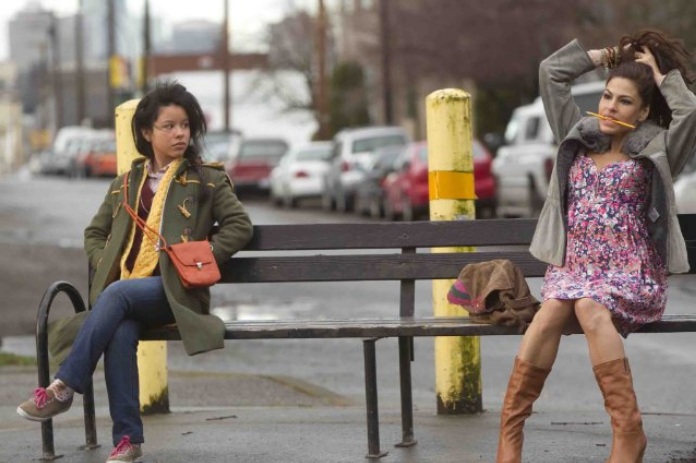
Cierra Ramirez (Ansiedad) and Eva Mendes (Grace) in Girl in Progress

When I was growing up, I never felt like a child. With her continuous string of bad boyfriends, I always felt like I was the one taking care of my single mother and myself. I couldn’t wait to leave home and start a new life. So I can relate to the female-centric film Girl in Progresswhich tackles the topics of navigating adolescence and strained mother-daughter relationships. 
Directed by Patricia Riggen (La Misma Luna aka Under the Same Moon) and written by Hiram Martinez, Girl in Progress features Eva Mendes as Grace, a struggling single mom. After reading coming-of-age books in school, her teen daughter Ansiedad (whose name means “anxiety”) decides to take a “shortcut to adulthood” and stage her own coming-of-age story. Ansiedad strives to forge her identity and chart her own course in the world.
Wait, a film focusing on women or girls? Directed by a woman? With women of color as characters?? Yes, yes and yes!
Vivacious, flawed and cavalier, single mom Grace left home after having Ansiedad at 17. Working two jobs, she struggles to pay the bills, including Ansiedad’s expensive private school tuition. Grace often seems like a big kid herself — eating all the cereal, misplacing money, forgetting to buy shampoo. She tries her best but it’s very clear early on she has no clue how to be a mother to her precocious teen. 
Played by newcomer Cierra Ramirez, Ansiedad is smart, perceptive, sarcastic and self-aware. She takes care of her mother, doing chores while her mom plays dress up in her bedroom. When her mom passes out after coming home late with her married boyfriend, Ansiedad carefully takes her shoes off. She knows (and tells) her mom she has terrible taste in men. She pushes her mom to pursue her dreams and go back to school. The roles have reversed. Even at her young age, Ansiedad is the responsible one, begrudgingly mothering her mom.
Exasperated by her childhood, Ansiedad decides it’s time to move on and grow up. But in order to do that, she believes she must reach certain milestones first. With the help of her best friend Tavita (scene-stealing Raini Rodriguez), Ansiedad plots her coming-of-age — winning the chess tournament, becoming rebellious, drinking, transitioning from a “good girl” to a “bad girl,” having sex for the first time — all so she can leave the mantle of girlhood behind. 
Cierra Ramirez and Raini Rodriguez
Through her appearance, Ansiedad tries out various identities — nerdy, Hot Topic-esque punk, quirky preppy — all in an effort to find herself. Butterflies are a common symbol throughout the film, a metaphor for Ansiedad’s metamorphosis from girlhood. She yearns to grow up and escape her disappointing mother, who fails to give her the guidance and support she so desperately craves.
There’s a subplot of Tavita struggling with her weight. When Ansiedad tries to fit in with the cool girls, she betrays her best friend, cruelly taunting her weight. Later Tavita swallows diet pills in an effort to conform to thinness. A huge part of adolescence, a negative body image paralyzes many girls’ self-esteem. I just wish the message “you’re beautiful the way you are” rang louder.
Beyond scenes of fat-shaming and slut-shaming, the jarring utterance of the R word made me cringe. Granted, teens say assloads of inappropriate and offensive things. But no one corrects them. There’s also a horrific “joke” about domestic violence (WTF??). Grace’s boss tells one of her co-workers she can’t be a restaurant manager because her husband beats her (someone seriously laughed at that in my theatre). He later tells Grace the server quit because she had a “fight with her stairs.” I’m not sure if the filmmakers were trying to convey characters’ douchebaggery or if they just thought ableism and abuse were funny. Newsflash, they’re not. Either way, the issues are treated nonchalantly, never given the exploration they truly need.
The film feels choppy as it vacillates between humorous moments of clarity along with bittersweet earnestness and stumbles of forced melodrama and clunky acting by some of the supporting cast. Despite the missteps and histrionics, moments of brilliance shine through. The opening scene, Ansiedad’s class presentation in which she shares her mother’s mistakes was funny and captivating. I adored Ansiedad and Tavita’s camaraderie. Mendes gave a great performance as the immature mom. But hands down, the absolute best moments in the film belonged to the fantastic Rodriguez. Her nuanced portrayal of a teen finding her way mesmerized and captivated.
With several Latino/a characters and Latinas in leading roles, the Girl in Progress effortlessly weaves class and ethnicity throughout the story. Ansiedad’s mother struggles to make ends meet while Tavita lives in a mansion with her mom sipping cocktails. Riggens said she liked setting the film in Seattle (filmed in Vancouver) as it’s not a border state or city, where most movies with Latinas take place. 
Eva Mendes and Cierra Ramirez
One of the best scenes occurs between Grace and Ms. Armstrong (Patricia Arquette), Ansiedad’s English teacher. Ms. Armstrong tells Grace that Ansiedad is planning to run away and force herself into adulthood. We see race and class dynamics subtly play out as Grace believes the white educated teacher judges her and lack of education. In their exchange, we witness Grace’s insecurities about not finishing school and how her mother didn’t provide her with needed support. While we feel the sting of Ansiedad’s understandable resentment towards her mother, Grace’s ineptitude isn’t demonized. Rather we begin to understand she failed to receive support from her mother too. Grace just doesn’t realize she’s replicating the same toxic pattern of neglect with her own daughter.
Ansiedad desperately tries to take a different path than her mother. But she realizes (interestingly when she mimics her mother’s hairstyle in a scene), that she’s shadowing her mother, reenacting the same shitty mistakes. But with a feel-good ending wrapped up too neat and tidy, the resolution of Grace and Ansiedad’s mother-daughter dynamic felt inauthentic. It was like, “Why are you never here for me?!” “Okay I’ll be here for you.” Ta-dah…the end! Wait, what??
I wished Girl in Progress delved deeper, exploring the role reversal and tangled relationship between Grace and Ansiedad. It does however perfectly capture that frustrating push pull of adolescence — the desire to want your mother to support and be proud of you yet the simultaneous craving for independence and freedom.
With women only comprising 33% of speaking roles and even fewer films featuring women of color, we desperately need to see and hear more diverse women’s voices behind the camera and on-screen. Riggens said Girl in Progressis really about females, about women” of all ages. Repeatedly passing the Bechdel Test, the movie isn’t about Grace’s search for love or Ansiedad finding a father figure. Despite a number of male characters, they exist peripherally; the women and girls take center stage. Ultimately, Ansiedad realizes her mother truly loves her. She also discovers the value of female friendship, something we don’t nearly see often enough in film.
No matter how nurturing, mother-daughter relationships are often fraught with tension, a complicated web of emotions. To this day, I still grapple with issues surrounding my mother, as many of us do. But Girl in Progress reminds us adulthood isn’t a destination. Rather it’s an ongoing journey where we (hopefully) continually evolve and grow.

Guest Writer Wednesday: The Avengers: Are We Exporting Media Sexism or Importing It?

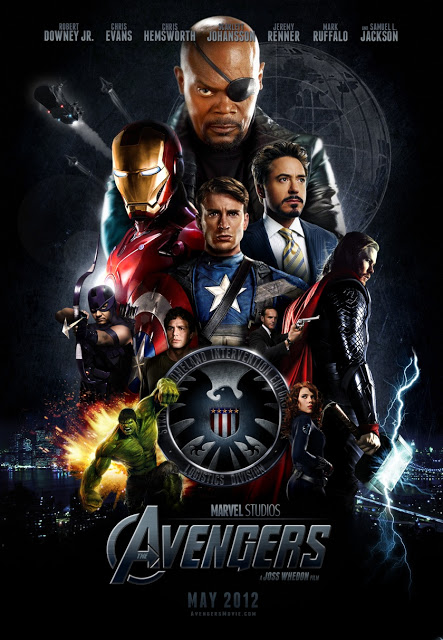
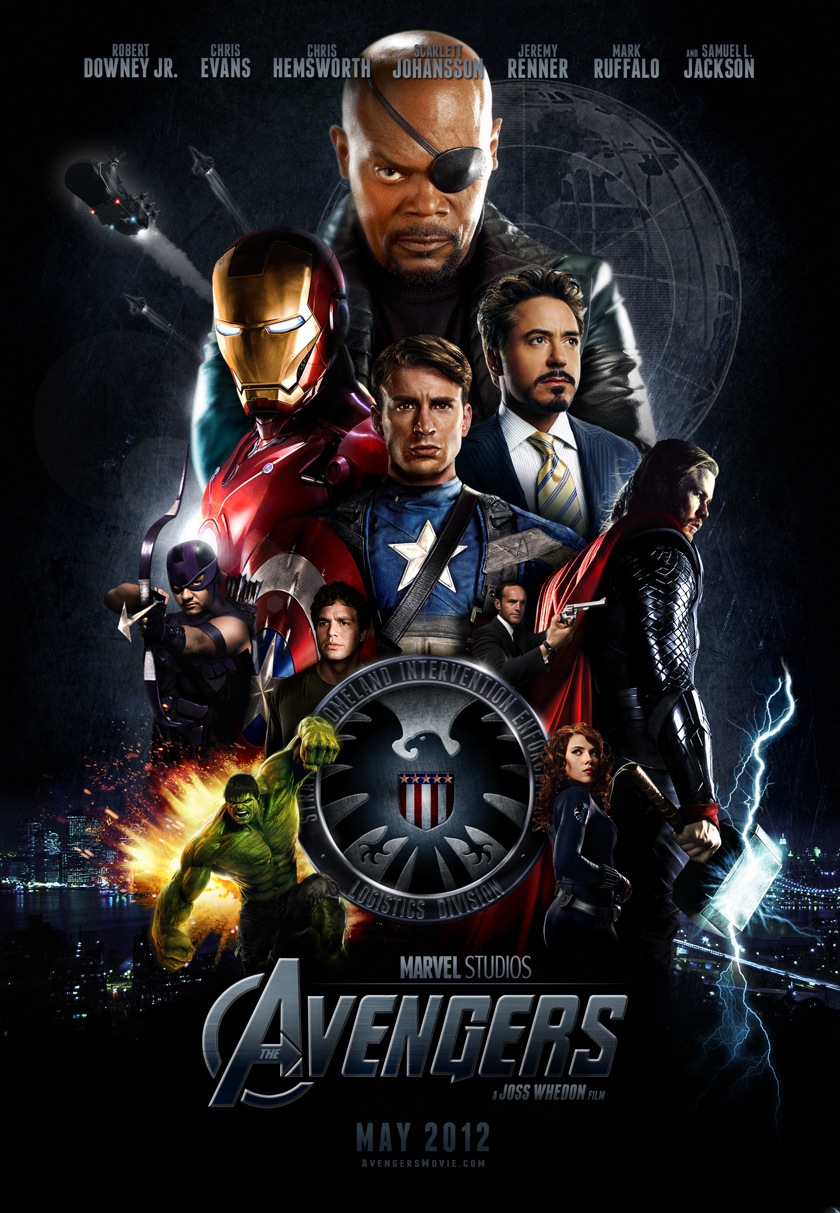
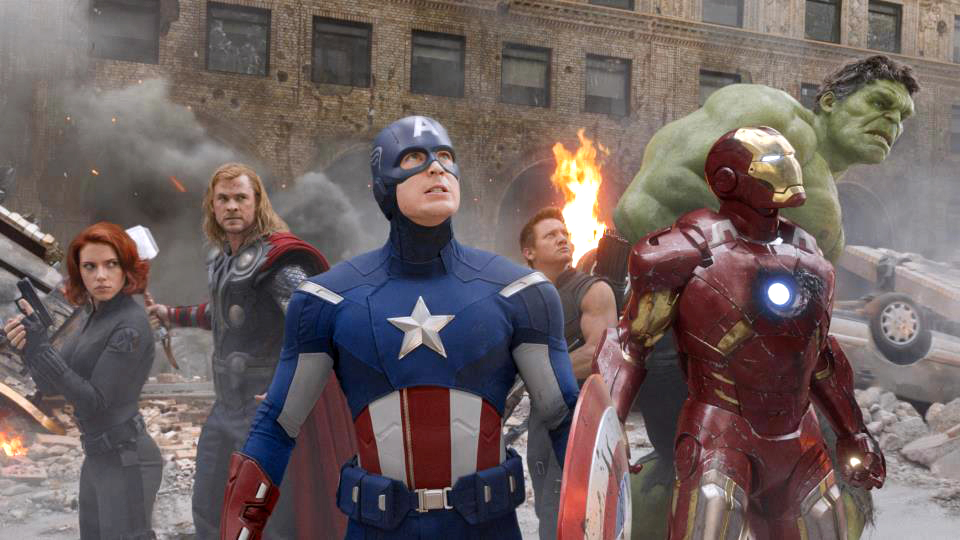
The Avengers movie poster
This is a guest review by Soraya Chemaly and is posted with permission. 
The Avengers opened last week and, shattering records, far outpaced all other Cineplex offerings nationally. The movie grossed more than $200 million over the weekend (compared with The Hunger Games $8 millon weekend receipts and seven week total of $380m). The movie has gotten generally good reviews for plot, witty superhero banter and some interesting character representations – not the least of which focus on the central and relatively well-fleshed out (no pun intended) Scarlett Johansson character, Black Widow. Director Joss Whedon get’s major points for featuring her not as the typical sexy sidekick, but as an actual ass-kicking superhero peer.
However, the movie’s domestic success this weekend was surpassed by its sales overseas. The movie had pre-US release openings in Beijing, Rome, London and Moscow raked in more than a quarter of a billion dollars internationally. The overseas market now makes up 70% of US movie ticket sales. It grew 35% during the past five years, compared to just 6% in the US market. This is important information for how Hollywood, already deplorably lacking in gender balanced production, will or will not portray women in films. 
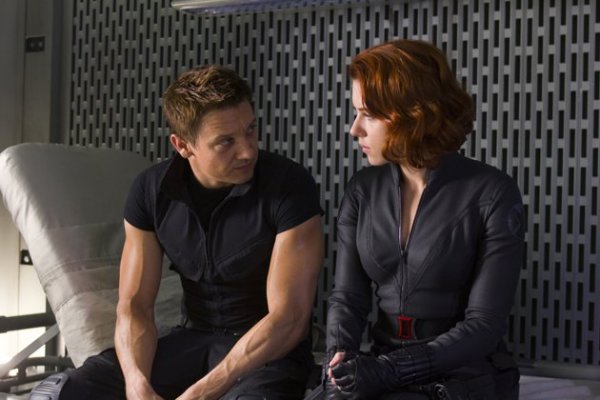
Jeremy Renner and Scarlett Johansson in The Avengers
Because it is a blockbuster megacomic book release there has been much discussion about the female audience for comic books and action films. Suffice to say that there are a lot of women, me included, that are huge fans of both. Despite the presence and strength of the Black Widow character however, the ratio of male to females in this movie is predictably Smurfette Principley: one female to six males and probably the same ratio or much worse in disposable character and crowd scenes. In addition, she appears to be the only character without her own franchise.
This movie’s success however illustrates the question: Are we importing or exporting our sexism? According to the Motion Picture Association, in 2009, women were responsible for more than 50% of US movie ticket sales. You might think that this would elicit some interest in the minds of the men who make movies (and yes, they are still primarily men as evidenced by the stats below). But, instead of the profit potential of American female movie goers resulting in more female lead characters (in every genre) or more female-centered stories, we have a completely different framework for estimating what will sell. Namely, the exponential growth and impact on Hollywood of the global market and the demands that growth places on production and development of content. 
Samuel L. Jackson as Nick Fury in The Avengers
Where does this global growth leave characters like Black Widow and movies with female centric stories or leads? What happens when Hollywood produces movies to meet the needs of the world’s fastest growing and most populated countries – which also happen to be those with the most skewed gendercide-based birth ratios? Cultures that habitually accept the elimination of females aren’t going to be that interested in stories about women and girls, especially those that feature powerful, culture-threatening, transgressive characters.
It means more testosterone heavy action films with women as sex-toys, pawns and eye-candy. It’s why G and PG rated movies, increasingly popular in the US, have been outstripped by R rated movies, which are often loud, violent, fight-filled extravaganzas that don’t require complex characters or plots and can translate across multiple cultures. Cross-cultural entertainment product development, in order to work and be profitable, seeks the lowest common denominator—which it seems is a certain-type of language-neutral male aggression, violence, and power. It’s much trickier, not to mention subversive, to present complex characterizations of men and women that include non-traditional representations of women who are sexually liberated and empowered. Entertainers don’t want to rock the cultural boat, they just want to sell more movie tickets. So, basically, whereas a few members of international audiences might care about the travails of a small-town girl dealing with an unwanted teen pregnancy or even an intergalactic, painted-into-her-tensile-tights, justice-seeking female heroine, all members of international audiences can appreciate being swept away in an asteroid-created tsunami from hell from which strong men seek to protect the planet’s weak, which is why a movie like 2012 made $166 million at the US box office, but made $604 million overseas. 
Scarlett Johansson as Black Widow in The Avengers
As a result, it is predictable that the US movie market will see an increase in the seasonal barrage of hyper-masculine, violent super-hero and action-hero films that do much to perpetuate out-dated, harmful hyper-gendered stereotypes of both men and women. Don’t get me wrong, I love some of these movies, but there is a gross imbalance in how films are currenty written, produced and made and there is absolutely no offsetting movies like these with virtually any other entertainment portrayals of women. This sexist, dumbing down of content has real ramifications in our culture as we try to develop a more balanced and genuinely equitable society – especially in terms of entertainment and media representations of gender.
“What makes me so sad is that these films are seen as our cultural imprint,” explains Melissa Silverstein, founder of the Athena Film Festival and of the influential blog, Women and Hollywood. “This is a huge problem because we struggle for women’s stories to be taken seriously, and as the worldwide box office continues to be so important it seems that women will continue to be second class citizens.”
A study released by the USC Annenberg School for Communication & Journalism in December 2011, based on a survey of the top 100 grossing movies of 2009 revealed that 67.8% of all speaking characters (in excess of 5000) were male. In addition, female characters, usually isolated by virtue of there just being one speaking role, were consistently depicted in sexualized ways. Twenty-three percent of women versus 7.4% of men appeared in revealing clothes or partial nudity. The fact that only 3.6% of the directors and 13.5% of the writers of these films are women is particularly telling when you consider that the ratios are substantively different depending on the gender of the story teller: in movies directed by women, 47% of characters are female versus 32%. These ratios are the same as they were in, get ready, 1946
Jeremy Renner, Scarlett Johansson, and Chris Evans in The Avengers
In reviews of seventeen “Must See” Holiday Movies for families recommended by Common Sense Media in December, only one had a female lead character—Breaking Dawn. The other sixteen feature boys or men in lead roles. The others primarily adhered to the Smurfette Principle. According to The Geena Davis Institute on Gender and Media, the ratio of boys to girls becomes more extreme as they age. In the Institute’s study of the 50 top grossing family movies, females were 32.4% of speaking roles for G rated movies. That number declined to 27.7% for PG-13 movies. Boys outnumber girls in movies three to one. In addition, as in adult movies, girl characters are consistently presented with less clothes and hyper-gendered physical characteristics, like tiny waists. Almost every movie on the list for the past holiday season was told from a male perspective and reviews of these movies did nothing to systematically address the messages sent by their collective presentation.
And I saw no mention, during the reviewing process, of the impact of international ticket sales on product development. But, this is how Chris Dodd, Chairman and CEO of the MPAA put it in regards to overseas sales: “These numbers underscore the impact of movies on the global economy and the vitality of the film-watching experience around the world. The bottom line is clear: people in all countries still go to the movies and a trip to the local cinema remains one of the most affordable entertainment options for consumers.”
Selected portions of this article appeared on the Huffington Post and The Good Men Project.

———-

Soraya Chemaly writes feminist satire. She is a regular contributor to Fem2.0, The Feminist Wire, Alternet, Role/Reboot and The Huffington Post. She is also the creator of the retired blogs: Poog, a Goop Spoof and The Guide to Manic Moms

Guest Writer Wednesday: Disney: The Little Mermaid

This piece by Ana Mardoll is cross-posted with permission from her site Ana Mardoll’s Ramblings.

Disney. The word is so synonymous in my mind with “animated feature films” that it’s like using “Kleenex” for “tissue.” When children come to my house, as they sometimes do, they’re invariably drawn to my huge selection of “Disney movies,” only about 70% of which are actually affiliated with Disney in any way shape or form. I enjoy most of them, or I wouldn’t own them. They each have their own problems, but a good many of them have something truly positive that I treasure. And what better way to start a deconstruction of animated feature films with the one I knew first and loved best: The Little Mermaid?
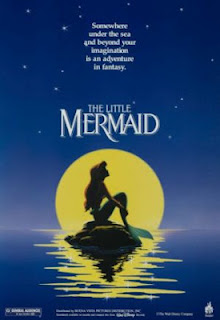

The Little Mermaid is possibly one of the most contentious movies I’ve ever loved. It was created in 1989, and has been specially beloved by many children in general and by myself in particular since then. I must have watched the movie eighty squintillion times as a child; it was one of the few videos I loved enough to manage to convince my parents to buy, and I watched it until the video literally broke from use. By that point, Disney had locked the reel in their “appreciate for value” vault and when they relaunched the movie in theaters in 1997, I was there to see it on the big screen. I have never been able to watch the movie without sobbing straight through from opening titles to end credits.

I sometimes feel like everyone I meet online has seen this movie at least once. Almost all of them have an opinion on the movie. Most of the opinions are strongly polarized: either Ariel is a free-thinking young woman who bravely rejects racism to forge her own destiny and create a lasting peace between two cultures or she’s an idealized anti-feminist icon, complete with Barbie-doll figure and shell bikini, completely willing to throw away her family, her culture, and her own voice for the sake of a man she’s never even met.

Those who fall between these two views tend to stay out of the flame wars. I don’t blame them.

I like The Little Mermaid. I like a lot of things that are problematic, and I don’t think there’s anything necessarily wrong with liking problematic things as long as a certain awareness is maintained that Problems Abound Therein. Art is complicated like that. But I like The Little Mermaid and I think it’s compatible with valuable feminist messages. Certainly, it was my first introduction into a feminist narrative and I have always considered the problematic romance storyline to be camouflage for the real story. But we’ll see whether or not you agree.

Please note that everything I say from here on in is just my opinion.

For me, The Little Mermaid is the story of an Otherkin girl living in a world that is hostile to Otherkin. Ariel is a human born into a merperson’s body, and in a culture that routinely lambasts humans for the very same things that the underwater world does: eat fish. (Seriously. That shark at the beginning who chases Ariel and Flounder is clearly trying to eat them. These are not Happy Vegetarian Fishes.)

For me, The Little Mermaid is the story of a feminist girl living in a world that is hostile to feminist ideals. Ariel is a headstrong young woman who wants knowledge and growth and her own voice, but these things are being systematically denied to her. The only form of learning her father permits is that of patriarchy-approved women’s pursuits: she may study music, but not other cultures.

For me, The Little Mermaid is the story of a culture-conscious girl living in a world that mandates insularity. Ariel wants to learn about cultures and peoples and practices and histories different from her own, but she lives in a world that holds even third-hand study of such things to be utterly forbidden because the power structure believes that the populace is safer if they are steeped in fear and ignorance. (Fearful merpeople won’t try to make contact with the humans, and thus fear maintains their secrecy.)

And now I’ll walk through the film and explain why I feel these things.

The opening titles air over singing humans as they work on the local prince’s pleasure ship / wedding ship / fishing ship. Well, there are three ships in the movie, and they all look pretty much the same to me, so I’m going to assume that Prince Eric has a fleet of all-purpose boats and this is one of them. But the sailors are singing while they collect fish in their nets and Eric (and the audience!) is learning, and here are a couple of problematic things up-front. 

One, everyone in this universe is white. (We’re going to be seeing this one a lot in the Disney deconstructions.) Two, this is not a working class universe. Oh, the fishermen are fishing, but this is really the only work you’re going to see in this movie outside of a quick shot of laundry-washing and some cooking. I think Eric’s kingdom is supposed to be one of those picturesque smaller ones where the royalty aren’t far removed from the common folk and don’t mind getting their hands dirty, but it’s kind of a muddled message and it only gets worse when we get to Triton’s kingdom. Let’s just place a big sign over the deconstruction that these are Privileged White People with the inherent issues that inevitably follow. 

We pan down under the sea to the King Triton’s Schmancy Music Hall and Combination Throne Room just in time to see Ariel completely fail to show up for a music gig that was intended largely to glorify her father while his daughters display themselves to the populace and use their vocal talents to praise his name. I can’t imagine why a young woman might think she had better uses of her time than to be a public ornament to her father, nor why she might refuse to come to rehearsals (as Sebastian tells us). And when her father realizes that Ariel has failed to show up for the concert, his eyes literally turn red with rage. Yowza. 

And here is an important point: Ariel’s dad is abusive. Oh, I think he doesn’t try to be, and I even think he doesn’t want to be, but he is. And I really do think it’s a function of The Patriarchy Hurts Men, Too. You see this clearly in the scenes with Triton and Sebastian: both men shore up each other’s will to be harsher than they otherwise individually would be inclined to be, and they do this because they think it’s expected of them. When Triton is alone and when no one is looking, his face softens, his expression is sad, and he sighs and weeps for the decaying relationship he has with his daughter. It’s when others are looking — notably, Sebastian, the only other adult male in Triton’s scenes — that Triton is at his most abusively fierce. 

I don’t think this is a coincidence. Triton isn’t monstrous and Sebastian doesn’t callously bring out the worst in him; they both reinforce each other’s commitment to harmful patriarchy ideals, because they’ve been raised to believe the patriarchy expects them to. Neither is it a coincidence that Triton’s final act of redemption comes after he and Sebastian have revisited a previous conversation and they’ve admitted that they were both wrong and that their actions were harmful. But now I’m jumping ahead. 

By giving Triton this characterization, Ariel is immediately given a rich and sympathetic background before she even swims onto the stage. She’s living in a deeply patriarchal and oppressive community where her status as “princess” is largely ornamental and wholly subject to the whims and wishes of her father. While she probably had moments of tenderness between her and her father, particularly when she was younger and could be indulged as a child instead of punished for being a woman, their relationship is strained by his insistence on publicly conforming to aggressive and abusive parenting models whenever anyone is looking. These shifts in emotional tone probably confuse and frustrate Ariel: why is her father so kind at times and yet so harsh at other times? She’s coped with the on-and-off abuse by literally withdrawing. By forgetting rehearsals and the concert and pulling back into her cavern of collections, she’s not passively asserting herself or deliberately catering to the patriarchy; she’s trying to carve out a safe space, mentally and physically. 

We are introduced to Ariel who, at great personal risk to her safety — both from the sharks who seek to eat her and from her father who could severely punish her — she is scavenging human items from old shipwrecks. And this… is amazing! Our protagonist is an explorer. What’s more, she’s a scientist, going to a direct source (albeit a bad source, since the seagull is actually ignorant of human affairs, but Ariel has no way of knowing that) to be educated on the items she finds. She wants to understand the humans, and to study the things they do and the items they create. She has a whole secret museum dedicated to all the things she’s collected over the years. 

Words fail me in describing how incredible I find this. In another movie, or in a book, there would be more time spent on just how incredibly subversive Ariel is being and has been, for literally years and years. This isn’t a trivial hobby or a girlish obsession; she’s the only person in her culture who is both willing and privileged enough (due to the fact that Triton might not blast his own daughter into tiny bits for breaking his laws) to almost single-handedly set up an entire cultural museum of study on a race of people right outside the kingdom’s doorstep. The sheer bravery and gumption and intellectual devotion necessary for Ariel to have done what she’s done is amazing: she’s essentially created her very own Human Studies department right under the king’s nose because studying other cultures is important, dammit

I dare you to bring me a Disney heroine who has demonstrated similar levels of bravery, intellect, scientific pursuit, and proactive awesomeness within the first 15 minutes of her own movie. 

Then we cut over to Ursula, and… I have mixed feelings about Ursula. On the one hand, she’s a fat woman and a villain in a movie that has problematic body portrayals. Ariel’s sisters are almost uniform in body type, expect for Adella who kind of sort of maybe looks a little bit bigger than her sisters, in the Lane Bryant model sort of way (i.e., same breast and hip proportions, just slightly bigger all over) and who was promptly slimmed down for the sequel because Disney got the memo that fat people are not sexeh because DEATHFATS. The only other fat women in this movie are the castle servants, who are fat in the non-threatening happy-servant kind of way, and the fat woman in the Ursula song who “this one [is] longing to be thinner.” And — rage! — the fat merwoman’s tail extends up and over her breasts like Ursula’s does, but the thin incarnation of the fat woman has the bare-stomach shell-bra combo that Ariel sports. Because nude fat stomachs are obscene and ugly, but thin fat stomachs are normalized and pretty! Grr, Disney. 

But! Ursula is sexy. Her breasts! Her butt! The way she moves! Her voice! I don’t honestly remember really… noticing this as a child, but it’s there and it’s largely treated as… normal. Ursula isn’t evil because she’s sexy, nor does she seem really to be evil because she’s fat. She’s just evil and fat and sexy, all in the same package, and I guess that’s kind of cool? I’m not sure. But then when I noticed that in this viewing, I realized that this movie is actually VERY filled with women’s bodies. Can we say that about any other Disney movie? 

I don’t just mean the bikinis and the tummies; the women’s bodies here move. Ursula struts realistically around her cave and gods but those breasts and butt are there and they move. And — skipping forward a bit to Ariel’s “I Want” song — Ariel shakes her hips when she sings about “strolling along” the street; she undulates her whole body sensually when she imagines being “warm on the sand.” There are bodies in this movie! And… while they are sexy bodies, I don’t feel like I’m being clubbed with Male Gaze. I like it. I like how it seems to normalize women’s bodies as real, as things that come in different sizes, as things that can be uncovered and sexy and yet not objectified into T&A without a head or a personality needed. I’m just sorry that we have to leave the 1980s in this regard. 

Coming back to the movie, Triton yells at Ariel for missing rehearsal. He cuts her off multiple times in this scene, and calls humans “barbarians” which is a nice bit of othering to throw onto the pile of objections to Triton’s character. He then tosses a tone argument at Ariel, which effectively cuts off not only what she was going to say but also punishes her for reacting realistically and legitimately to his bullying. Then Triton tells her that as long as she lives under “my ocean,” she’ll obey “my rules,” which is totally not controlling or an abusive conflation of kingly privilege and parental privilege. And then Triton and Sebastian decide that Ariel, who is a young woman budding into her sexual awakening, needs “constant supervision.” Patriarchy for the win. 

And then we have Ariel’s “I Want” song and it still gives me shivers. The opening lines — “If only I could make him understand. I just don’t see things the way he does. I don’t see how a world that makes such wonderful things could be bad.” — reinforce that Ariel is not only longing to be human already, but she’s also inherently more open-minded than her close-minded and prejudice liege-father. Her fantasies of being human conflate with her fantasies of living in a feminist-friendly society where she can speak her mind freely and grow intellectually: “Betcha on land, they understand; bet they don’t reprimand their daughters. Bright young women, sick of swimmin’, ready to stand. And ready to know what the people know; asking my questions and get some answers.” 

MORE WOMEN! The picture of fire and the wind up toy that shows dancing both have women in them. The parallel is obvious in that Ariel wants to be these women, but I’m still blown away looking at how many women are in this film in places where I frankly think nowadays they’d be edited out. Maybe it helps that this movie wasn’t made or marketed with the All Important Male Demographic in mind, I don’t know. 

Sebastian tumbles out and informs Ariel of what she already knows: her father would be furious if he found out about the museum. Which makes so much sense, really, that his racial hatred of humans extends so far that he would deny his subjects the ability to even study them, if only to come up with more effective ways of avoiding the humans, because studying leads to understanding and understanding leads to compassion and compassion doesn’t mesh well with racial hatred. And, yes, I know they’ve woobied him up with two decades’ worth of backstories and personal tragedy, but I think that waters down the message that sometimes even people we love can be racist assholes. 

We zip up to the surface for Ariel to see Prince Eric and for some character establishing shots. And I have to say that Eric is probably my favorite Disney prince. He’s hanging out with his working class and while that could be seen as slumming, he doesn’t seem to mind getting rope burn on his hands and he knows how to steer the boat, so he’s at least not adverse to learning. And he goes back to a fiery burning ship to save his dog. 

Ariel saves his life. 

They didn’t have to do it this way. They could have had Ariel and Eric catch a glimpse of one another and fall in love that way. Ariel could have been singing in a quiet grotto and Eric could have been drawn to the sound and seen her for a split moment before she disappeared. It would have been pretty and feminine and sweet. But they didn’t do that. They had her proactively search the burning wreckage of a ship, and drag an unconscious man to safety on the shore. And that tells me two things. One, in 1989, being saved from death by a woman didn’t emasculate you forever in the eyes of the (probably) male screenwriters. Two, in 1989, saving a handsome man from drowning was considered an acceptable female fantasy with all the strength, verve, and determination that accompanies that.

Haha, no, there’s totally not a backlash against feminism today in 2012. IT’S ALL YOUR IMAGINATION. 

Sebastian tries to convince Ariel that life under the sea is better than life as a human. He has a jazzy musical number and Ariel gives him quirky yeah-I’m-not-buying-it looks before it becomes clear that she’s not really needed for this song routine and goes off with Flounder. And here is a big ol’ world-building mess because apparently the fish neither work nor eat, and they all live off of plankton delivered to their doorstep every morning by magic. Or so Sebastian seems to think from his position of Privilege? I dunno. This is why deconstructing movies with talking animals is hard

Triton calls Sebastian into his throne room and interrogates Sebastian while cheerily pointing his weaponized triton at the little crab. Haha, that is not scary at all! Sebastian breaks down and tells Triton about Ariel’s museum, and Triton shows up and brutally destroys it all while she weeps and begs him to stop. And this scene? Wrecks me every time. The bit with Triton building himself into a rage — “One less human to worry about! … I don’t have to know them — they’re all the same. Spineless, savage, harpooning fish-eaters, incapable of any feeling…” — is both horrifying and priceless because it really gets through how xenophobic and racist Triton truly is. He doesn’t care that he’s frightening his daughter; the rage has built in him to a point where terrorizing her makes more sense to him than actually talking to her or doing anything other than abusing his position as both king and father. 

And this scene is so utterly valuable. Because now Ariel will go to the sea witch and trade her entire life away (and her voice) to go chase after a man she’s never met. Remember that anti-feminist message referenced way back up there at the beginning? But that’s not what she’s doing, not really. As much as Ariel laments in a moment that “If I become human, I’ll never be with my father or sisters again,” her father has driven her away. Ariel isn’t safe under the sea, not emotionally or psychologically. Her life’s obsession with studying and understanding and educating herself on human culture will never be accepted — and if she persists in trying to do so clandestinely, it will only be a matter of time before someone discovers her secret, betrays her to the king, and all her work is destroyed. She knows that fate is inevitable, because it’s just happened not ten minutes ago. 

Ariel can either go home and be a good mermaid and play with her hair and go to voice rehearsal and marry a merman who will never share her interests or understand her and she can live and die frustrated and unfulfilled. Or she can take a chance and become everything she’s ever wanted: a human. And she can become that human by finding true love — “Not just any kiss,” Ursula cautions. “The kiss of True Love.” — with the first human she’s ever met, a man who attracts her with his courage and bravery and adventurous spirit. It’s a gamble, and possibly not a good one, but it must seem like the one hope for happiness left available to her. 

Human! Ariel washes up on Prince Eric’s beach and is taken for a traumatized survivor of a shipwreck, which seems plausible enough. And while I’m not 100% sure I like Grim pressing Eric to woo the traumatized survivor of a shipwreck rather than, say, provide for her education and psychological care and place her in the best possible position to choose how she wants to live the rest of her life, I do love that Eric is shown as being highly reluctant to treat Ariel with anything less than courtesy and respect. A privileged man who doesn’t react to a pretty half-naked woman washing up on his beach like Christmas has come early? Yes, please. 

There’s a scene with a French chef that is so heavy on the cultural stereotypes that I don’t even know what to say. I was going to say that this was one of the only animated feature film songs that features a foreign language, but then I remembered the Charo song in Thumbelina, which is also heavy on cultural stereotypes. *sigh* 

Then Eric and Ariel go on a tour of “his kingdom,” which seems to basically be this one decent-sized town, and Ariel is in complete Manic Pixie Dream Girl mode, but for once this makes sense because everything she sees is literally new and exciting and amazing and a dream come true. And then he lets her drive the carriage and she loves it and clears an oddly-placed death-defying jump and once the panic passes, Eric settles back like this is the good life and Ariel is clearly having a ball. I think that’s sweet, frankly. 

And then there’s a lot of singing and near-kissing and Ursula showing up to ruin things and Ariel being towed out to the ship which is not nearly as awesome as her swimming out there under her own power, and I get that it makes sense that swimming-with-legs would be something she’s not mastered, but still it feels like the Feminism Power has run out, and then Ariel and Eric reunite just in time for it to be TOO LATE and Ariel is a merperson and Eric does not care even a little bit because Eric is not a racist asshole like Triton. And then Eric saves Ariel’s life with a harpoon while Triton watches, and this is hilarious given Triton’s earlier rant about humans-who-wield-harpoons. 

After the exciting showdown scene, Eric recovers slowly on the shore while Ariel watches from her rock. Triton and Sebastian watch from further out, with Triton realizing that she really does love him and that this hasn’t all been About Him and her special butterfly rebellion. Gee, ya think? Sebastian tells him “children got to be free to lead their own lives” and Triton references as earlier conversation where Sebastian said the opposite. And this is the moment where everything is unspoken, but for me it seems like they’re saying yeah, this whole Patriarchy thing is garbage and we were wrong. And then Triton gives Ariel her legs back, she marries Eric, and there’s a new era of peace for both kingdoms, and it is awesome. 

And… yeah. It ends in a 16 year old marrying a guy she’s known all of three days. (Assuming we don’t go with the standard handwave that between cuts there could have been years and years of dating that we didn’t see. Because movies don’t work like that.) And, devoid of context, that is Very Problematic. Hell, even with context, it’s not something that gives me warm fuzzies. I do not like the Mandatory Marriage at the ends of these movies, or the implication that it’s not a Happy Ending without one. And I like the Mandatory Marriage even less when it happens to two teenagers (or one teenager and one guy in his early twenties) who’ve known each other only over the course of a few adrenaline-packed and hormone-driven days. I don’t feel like this is a healthy formula. So there’s that.

But it’s also one of the few movies I can think of where an Otherkin protagonist gets the form she’s always felt was really hers. And it’s a movie where a brave young woman defied the racist and xenophobic laws of her homeland in order to create a greater understanding between two cultures and almost single-handedly engineer a peace between both kingdoms. And she did all this while she was sixteen, as a young woman in an abusive family where she was only valued for her ornamental status. She held on to her inner essential self and managed to forge her own path without ever once beating herself up for the abusive things that others did to her. Throughout the movie, the entire narrative seems to scream that being strong-while-female is not a bad thing: it’s okay to defy your racist asshole dad, it’s okay to save the life of the handsome guy who won’t then turn around and act all emasculated and shun you, it’s okay to own your “acceptably feminine” talents in ways that make you happy, social expectations be damned. And for a movie that is now over twenty years old, that seems kind of awesome. 

Ana’s Happy Feminism Fuzzies Scorecard 
– Otherkin narrative where protagonist proactively gains the form she wants 
– Feminist narrative where protagonist longs to be taken seriously as a cultural researcher 
– Intellectual narrative where protagonist values museums and cultural study 
– Racial/Cultural narrative where protagonist demonstrates that Racism Is Bad 
– Body Positive (with caveats) narrative where women characters abound of different body sizes 
– Patriarchy Hurts Men narrative where good men are abusive because of patriarchal expectations 

Ana’s Sad Epic Fail Scorecard 
– Narrative that is entirely cast with white people and has a Angry French Chef stereotype 
– Narrative that contains muddled class portrayal and is largely about privileged people 
– Narrative that contains no openly QUILTBAG characters 
– Narrative that ends with a teen marriage between two almost-strangers  

Final Thoughts: The Little Mermaid is — like most Disney movies — rife with issues of class, race, hetereonormity, and body portrayal. But in my opinion it’s ironically one of the least problematic movies in the set (“ironic” because the current cultural narrative is that we’re now BETTER at those things than we were in the 1980s), and if you’re a white heterosexual class-privileged girl living in an oppressive patriarchy — as I was when I came to the movie — it may just resonate with you. Maybe.

As a final link, here is a picture of Disney Princesses dressed as the villains in their movies. I like the Ariel/Ursula swap so very much.


———-

Ana Mardoll is an avid reader and writer. She loves cats, fairy tales, and intense navel gazing. She blogs on a near daily basis from an undisclosed location in the wild, untamed, and astonishingly dusty Texas wilderness. Her photo-realistic avatars are a gift from best friend and invaluable writing buddy, J.D. Montague.

To read more of Ana’s writings, including her snarktastic literary deconstructions, visit her website at www.AnaMardoll.com.
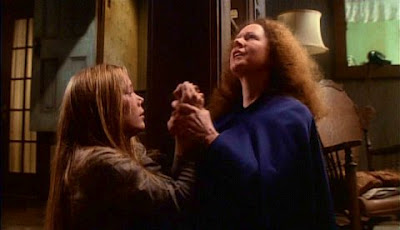
‘The Avengers,’ Strong Female Characters and Failing the Bechdel Test

Natasha Romanoff  / Black Widow (Scarlett Johansson) in The Avengers
Cross-posted at Fem2pt0.

Smashing box office records, audiences have been swept up in The Avengers hullabaloo. Interesting and compelling, the epic superhero film based on the Marvel comics unites Black Widow, Captain America, Iron Man, Hawkeye, the Hulk and Thor “to form a team that must stop Thor’s brother Loki from enslaving the human race.” It was good. Really good. It contained complex characters and funny, clever dialogue. In a genre that exhibits strong female characters yet often objectifies women’s bodies or reduces them to ancillary love interests…how was The Avengers’ portrayal of women?

With Joss Whedon, a proud feminist and Equality Now supporter, at the helm directing and screenwriting, I eagerly hoped for a feminist film. I absolutely adore Firefly, only watched a handful of Buffy episodes (I know, I know…I need to watch more), and I couldn’t stand Dollhouse (don’t even get me started on the predication of rape, objectification and misogyny…but I digress). Forever inspired by his radical feminist mother and his love for X-Men character Kitty Pryde, Whedon shows an adept talent for creating and writing strong female characters.
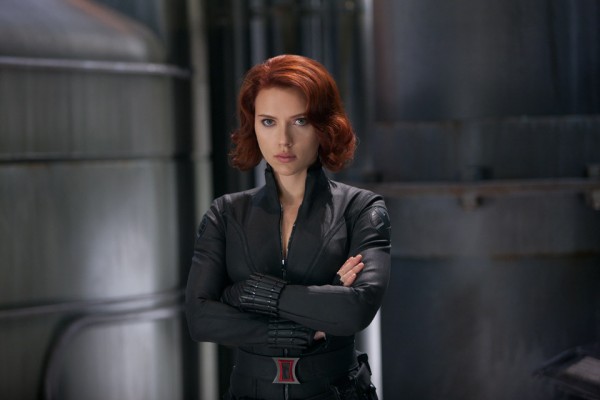
The lone female Avenger is Natasha Romanoff, aka Black Widow (Scarlett Johansson), a “highly trained spy,” assassin and martial arts master. Haunted by a dark past, she’s a fearless warrior possessing a razor sharp mind and an impressive knack for interrogation. In one of the best scenes, she goes head to head with the film’s villainous nemesis Loki (and Thor’s brother) in a labyrinthine mind game. While I’m not thrilled that Black Widow uses “feminine wiles” as a method of manipulation, her opponents anticipate vulnerability in her because of her gender. Natasha deftly uses and exploits their stereotypical gender biases to her advantage.
Black Widow could have easily become a one dimensional character. Yet she embodies strength and depth. She’s decisive and forever in control of her emotions. Although I don’t like the implication that being emotional equates weakness. She’s not technically a superhero (nor is her partner archer Hawkeye) as she doesn’t have special powers. Yet she arguably had the best fighting sequences with her nimble and dexterous prowess. There’s one where she’s tied to a chair and kicks ass…it’s seriously amazing! Johansson talked about how she would be delighted to do a Black Widow film in the realm and style of The Bourne Series. That sounds freaking awesome.

Black Widow / Natasha Romanoff
In most films and TV series, the media objectifies and commodifies women’s bodies for the male gaze, reducing a woman to her sexuality. While she dons tight costumes, that doesn’t happen here. She’s not merely a sex object. Black Widow is an integral part of the team. She’s the one who thinks they should all work together when petty arguments and inflated egos threaten to divide them. SPOILER!!! -> Natasha ultimately ends the climactic epic battle as she’s the only one who realizes they need to close the portal in order to halt the influx of the alien army. <- END SPOILER Black Widow plays with gender stereotypes but doesn’t wield her sexuality as a weapon. She uses her ridiculously impressive martial arts ass-kicking skills for that.
Aside from Black Widow, The Avengers film depicts S.H.I.E.L.D. Agent Maria Hill (Cobie Smulders, my favorite actor on HIMYM) and two brief scenes with Pepper Potts (Gwyneth Paltrow). Maria is one of S.H.I.E.L.D. Director Nick Fury (Samuel L. Jackson)’s Chief Lieutenants. She’s calm, collected and authoritative, even in dangerous situations. We see Maria run the deck of the S.H.I.E.L.D. Helicarrier. But she doesn’t approve of controlling people as we see when she criticizes Fury for manipulating The Avengers’ emotions to finagle a specific response. Pepper is the CEO of Stark Industries (Iron Man/Tony Stark’s company), as well as his girlfriend. She’s intelligent, precise, organized and charming.
When asked about Whedon’s strong female characters, Johansson called him “gender blind:”
“He wants his female characters to be dynamic and competitive and assured and confident. And it has nothing to do with anything but the fact that he just celebrates those kinds of strong female characters.”
S.H.I.E.L.D. Agent Maria Hill (Cobie Smulders)

AlterNet’s Julianne Escobedo Shepherd thinks The Avengers possesses a “stark feminist perspective” as it differs from so many other superhero films. Even in movies with multiple female characters like X-Men, the women often orbit the male characters. Not so in The Avengers. Escobedo Shepherd goes further asserting Johansson portrays Black Widow’s “talent for manipulation as a boon for the art of spying, rather than any kind of femme fatale cliché.” 

Despite three strong female characters and Black Widow’s awesomeness, I didn’t find the movie overtly feminist. I can’t help but wonder if people are looking to find feminism where not a whole lot actually exists because of Whedon’s reputation. The Avengers contains some gender problems.
Loki hurls a misogynistic insult at Black Widow, calling her a “mewling quim.” Translation, a “whining cunt.” Lovely. He reduces her to her vagina. Now, not everyone’s going to get the inference right away. I know I didn’t. Although something about the condescending tone made me suspect a gendered insult. Whedon says he often “abuses” language, depicting different vernaculars, including Shakespearan dialogue, to reveal character traits. It’s interesting that instead of writing an overt insult, Whedon subversively portrayed Loki’s sexism.
Some people apparently accused Whedon of “not being macho enough” to direct the superhero bonanza. So let me get this straight. If a guy is a proud feminist and writes strong female characters, that makes him unmanly to direct an action movie? And what does that say about women…that female directors possess too much estrogen to direct? Ugh.
Many critics and bloggers have focused on the Hulk, thanks in large part to Mark Ruffalo’s fantastic talent and the hilarious snarky dialogue, thanks to Robert Downey Jr.’s quick wit as Iron Man. Interestingly, of the 6 Avengers, Black Widow gets the 3rd most screen time. Yet she still remains the only female Avenger in the film. And that’s a problem.
(L-R): Black Widow (Scarlett Johansson), Thor (Chris Hemsworth), Captain America (Chirs Evans), Hawkeye (Jeremy Renner), Hulk (Mark Ruffalo), Iron Man (Robert Downey Jr.) – The Avengers…and Black Widow as the one female

In the comics, The Avengers had a rotating line-up of superheroes. Couldn’t the movie portray an additional female Avenger, like Wasp or Scarlet Witch or She-Hulk? Maybe they didn’t want two green Hulks. Fair enough. Although She-Hulk, a brilliant attorney, is pretty badass. Whedon even said that when they weren’t sure if they could accommodate Scarlett Johansson’s tight schedule, an early script contained the female superhero (and founding Avenger) Wasp. He “fell in love with the character.” 
So here’s my question: why did they have to scrap the role of Wasp the minute they secured Johansson’s Black Widow? Why not have 2 female superheroes in one film?? Sadly, the movie suffers from the Smurfette Principle.
Coined by feminist writer Katha Pollitt in looking at children’s entertainment, the Smurfette Principle is when a male ensemble features one female character. Think the Smurfs (before the introduction of Sassy), the Muppets and Voltron (I’m clearly showing I’m a child of the 80s here). Pollitt asserts that the problem with this trope is that “boys define the group, its story and its code of values. Girls exist only in relation to boys.” As the articulate Anita Sarkeesian at Feminist Frequency points out, it transcends children’s entertainment as we see in films like Star Wars, Star Trek, Watchmen and even Inception as well as TV shows like early seasons of Big Bang Theoryand It’s Always Sunny in Philadelphia
Films and TV relegate women to “sidekicks or sexy decorations.” Luckily, Black Widow suffers neither of these fates. She holds her own as a fierce and capable character, neither shoved aside nor reduced to a dude’s love interest. But it’s still problematic that Black Widow is the only female team member. The male Avengers contain multiple male personalities: a sarcastic genius playboy, a lonely selfless soldier, a skilled sniper, and a tortured brilliant scientist. But as far as women’s representation, there’s just one female Avenger. Granted, she’s a badass. But it would have been nice to see more diverse personalities…which might have been rectified with another female superhero.

(L-R): Hawkeye (Jeremy Renner), Captain America (Chris Evans), Black Widow (Scarlett Johansson)

But my biggest problem? No women talked to each other. At all. What the hell is up with that??
Like Film School Rejects’ Gwenn Reyes, I too found the glaring lack of women talking to each other to be The Avengersgreatest flaw.” Maria talks to the other Avengers. As Nick Fury’s right-hand person, it makes sense she would interact with the Avengers. Plus Maria and Natasha have probably crossed paths before since Black Widow already worked for S.H.I.E.L.D. Couldn’t the two women have talked about the upcoming battle? Or strategized, commiserated…anything?? 
Just because the portrayals of the female characters were positive, doesn’t mean I think the movie smashed the Bechdel Test, a simple test that asks that two named female characters talk to each other about something other than men. With women comprising only 33% of speaking roles on-screen, The Avengers failing the Bechdel Test proves the cavernous gender gap in film and how far we still need to go.
Let me be clear. Most movies — superhero or otherwise — couldn’t care less about portraying complex, intelligent, strong, dimensional women or gender equitable roles. So The Avengersis a step in the right direction. But if you only depict your two female characters (no matter how empowered they are) talking to men, it subtly reinforces the notion that women’s lives revolve around men.
While it’s a really good action movie with strong female roles, I still expected more feminism from you, Joss Whedon.

Bully: Documentary Review

Bully (2011)

This piece is from Monthly Contributor Carrie Nelson.

Growing up, I was never one of the “cool” kids. Far from it – I had a few close friends, but I also spent a lot of time by myself, reading and writing and daydreaming about movies I wanted to make someday. I also never wore the trendiest clothes, and I was generally awkward in social interactions. As a result, I was made fun of frequently in middle school. Even though I didn’t know how to articulate it at the time, I knew I was different, and my classmates knew it, too. And like many non-conformers, I was bullied because of my differences. But nothing that I experienced is comparable to what kids today are going through. Bullying has existed since the dawn of humanity, but only in the last few years has it become a national news story. Children – some as young as 11-years-old – are now bullied to the point of taking their lives. What’s caused this dramatic change? 
Bully is an important film, because it addresses this critical epidemic. It follows the stories of five young people, ranging in age between 11 and 17: Tyler, a boy who committed suicide and whose parents are suing his school district and holding the district accountable for his death; Alex, a boy who is physically assaulted daily on the school bus and doesn’t know how to talk about it with his parents; Kelby, a girl whose bullying started once she came out as a lesbian; Ja’Meya, a girl who was sent to a juvenile detention center after trying to defend herself and threatening her bullies with a gun; and Ty, a boy whose parents launched the anti-bullying organization Stand For The Silent after his suicide. Though Tyler and Ty are unable to personally share their stories during the film, their parents create vivid pictures of their sons’ experiences. Both families are now significantly active in the anti-bullying movement, and they carry on the legacy of their sons’ through this work. (Aside: It is critical to mention that the specifics of Tyler’s death are unclear, and there are some questions as to whether or not his suicide is directly connected to bullying, though these questions are not addressed in the documentary.) 
Kelby in Bully
We do, however, get to hear directly from Alex, Kelby, and Ja’Meya, and their stories are incredibly moving. I found Kelby’s story particularly poignant, given the pervasiveness of LGBT bullying today. More than any other subject profiled, Kelby expresses a love for her life and a determination not to let bullying determine her future. Though she experiences immense homophobic abuse, she refuses to hide in the closet, and she forms friendships with other outsiders so that she’s never truly alone. Kelby’s story is one of perseverance, and it’s deeply inspiring. I was also awed by Ja’Meya’s story. Her experience highlights the significant disparities in punishment that exist in our justice system. Though Ja’Meya did bring a loaded gun onto a school bus, she did not hurt anyone, and she did it out of self-defense. Yet her bullies have not been penalized for hurting her, and she faces 45 felony charges. Ja’Meya’s story is by far the most complex, and to me it was also the most upsetting – it is so painful to watch her locked away just because she was bullied and didn’t know how to handle it. Ja’Meya’s experiences show the horrifying reality that even when victims do try to defend themselves, they still end up being the ones punished. 
Ja’Meya in Bully
Bully is an important film, and it’s a good film. It’s very well crafted, and director Lee Hirsch did an excellent job of choosing compelling subjects and letting them speak for themselves. That said, Bully is not a great movie. It is a fiercely passionate movie, which is critical, but because it shares its passion exclusively through personal stories, it neglects to explore crucial facts about the bullying epidemic and its dangers. The film doesn’t really explore the phenomenon of cyber-bullying, a relatively new form of bullying that is just as serious a problem as “traditional” bullying. Despite the inclusion of a lesbian subject, the film also ignores the reality that a disproportionately high amount of bullying incidents and bullying-related suicides relate to the victim’s actual or perceived sexual orientation or gender identity. Additionally, the only school official profiled is one who is completely incompetent and dismissive of the bullying that occurs on her watch, which renders invisible the positive and progressive actions taken by many educators and administrators to prevent bullying. Exploring these issues and including specific facts and statistics about the changes in bullying over the last decade would have made the film far more empowering. 
In 2009, Sirdeaner Walker testified before Congress in support of the Safe Schools Improvement Act. Walker’s son, Carl, had committed suicide at the age of 11 after being repeatedly tormented by classmates. During the hearing, Walker stated, “I know now that bullying is not a gay issue, or a straight issue. It’s a safety issue. It’s about what kind of learning environments we want for our children and how far we’re willing to go to protect and teach them.” I thought of her words when I watched Bully, because if the film does anything right, it shows bullying as a universal experience – and one that needs to be stopped. The problem is that, ultimately, bullying probably can’t be stopped. Sexual harassment, abuse, rape, murder, bigotry – these are all things that are serious problems and that need to stopped, but because cruelty will always exist in the world, these problems will also always exist in the world. That can’t be helped. What can be helped is the way we address these situations when they do happen. 
I feel the same way about bullying. Bullying may never cease to exist, but we can at least push harder for national safe school legislation, stronger enforcement of zero-tolerance policies, and better support systems for young people who are bullied. I wish Bully had taken the time to address any of these potential strategies directly. Instead, it closes with the message “Stop Bullying,” which is certainly an admirable message but not one that can realistically be fulfilled. I wish more time had been devoted to exploring the Stand For The Silent campaign, but it is mentioned almost as an afterthought toward the end of the film. And while it’s true that the filmmakers have partnered with Facing History and Ourselves to create a educational curriculum around Bully, I wish the film itself had contained the facts and guidelines included in the curriculum. Teaching guides and informational websites are only useful if they are sought out, and the sad truth is that I doubt that everyone who sees Bully will seek out these important resources. Bully sheds critical light on a universal epidemic, but its downfall is that it keeps the message universal, rather than making it tangible and realistic to achieve. There is a difference between powerful stories and empowering messages, and ultimately, Bully relies too much on the former and not enough on the latter.


Carrie Nelson is a Bitch Flicks monthly contributor. She is a Staff Writer for Gender Across Borders, an international feminist community and blog that she co-founded in 2009. She works as a grant writer for an LGBT nonprofit, and she is currently pursuing an MA in Media Studies at The New School.

‘The Five-Year Engagement:’ Exploration of Gender Roles & Lovable Actors Can’t Save Rom-Com’s Subtly Anti-Feminist Message

Violet (Emily Blunt) and Tom (Jason Segal)
 I’ve never planned a wedding and I’ve never been engaged. Yet I can relate to the The Five-Year Engagement’s premise. My dream is to move to NYC and become a writer. While my partner is incredibly supportive of me, he loathes NYC and has a life in Boston. So what do two people do when their careers take them in two opposite directions? Who yields? Who compromises? That’s what the romantic comedy The Five-Year Engagement explores. 
Violet (the AMAZING Emily Blunt), a psychology PhD grad, and Tom (Jason Segal, who I will forever think of as HIMYM’s adorbs Marshall), a sous chef in an upscale restaurant, are madly in love. They get engaged and begin to plan their wedding with comedic results. When Violet gets a fellowship in another state, trials and tribulations strain and challenge their bond.
I was uber excited to see it. I mean, a film with Emily Blunt, Jason Segal, Alison Brie, Chris Pratt AND Mindy Kaling?? I’m in! Blunt and Segal, who are friends in real-life, have an easy rapport and an effortless chemistry. The movie shines when it focused on wedding preparations: San Francisco vs. London for the wedding locale, religion in the wedding, including Tom’s “Jewish drawer.” While the beginning and ending were cute, albeit predictable, the movie dragged on. But what bothered me most was the subtly anti-feminist message.
When Violet is awarded a fellowship in Michigan (and they both live in San Francisco), Tom is incredibly supportive of Violet. He tells her that it’s her dream so of course they’ll move to Michigan. And it’s only for 2 years. No biggie. Until the 2 years turns semi-permanent when funding for Violet’s post-doc is extended. Then Tom tells her that he hates Michigan (totally understandable…I hate a lot of places too). Then things unravel quickly. 
Violet tells Tom she doesn’t want to give up her career and resent him like her mother did when she quit her career after she married her father. Later, when Violet confronts Tom about his disappointment in his career, Tom tells her, “Men and women are different. We don’t sit around and discuss our feelings!” Oh I’m sorry, was someone quoting the book, that fount of wisdom, Men Are From Mars, Women From Venus??? Tom then tells Violet that as the man he should be supporting her. Kill. Me. Now.
Jason Segal, he not only stars in the movie but also co-wrote the script, says the film “reflects” that “gender roles are finally equalizing and some men’s egos are having a hard time catching up with that phenomenon.” He was intrigued by the idea of a gender role reversal:
 “A lot of people say, ‘Why would Tom move across country and give up his job so she can pursue her dreams?’ but you would never in a million years ask that question if the roles were reversed. I think it’s actually quite sexist to even ask that question. It’s what we would expect a woman to do for her husband, so why wouldn’t we expect a husband to do it for his wife?”
Wait, he declares something sexist?? Swoon! And he’s absolutely right. Not only do people expect women to follow the men in their lives for their careers, film and TV shows often reflect that too. But Violet, an intelligent, hard-working academic couldn’t have critiqued his retro machismo? She couldn’t have called out his bullshit? Really?? Not buying it.
And don’t even get me started on the fucking hunting scenes. Tom befriends a hunter (Chris Parnell) and starts hunting too. Did we really need a “gag” about an innocent dead deer falling off the roof of the car so he then has to stick the deer in the passenger seat with its head going out the sun roof?? Spare me. Is the hunting supposed to be some kind of reinforcing of Tom’s masculinity? Especially since his fiance’s career is taking off more than his because he chose to follow her to Michigan for her career? Is supporting the woman you love follow her dream really supposed to be emasculating??
Near the beginning of the movie, in a toast at their engagement party, Violet’s sister Suzie (Alison Brie) says she doesn’t “believe in marriage or kids.” But after seeing how perfect Violet and Tom are for each other, she “understands the whole institution.” SPOILER!!! -> As soon as Suzie gets pregnant after a drunken one-night stand with Tom’s best friend Alex (Chris Pratt), she marries Alex, a guy who seems to repulse her and who she barely knows. They have the baby, nary a discussion of abortion or adoption.
A shot-gun wedding, really? Did we take a time warp back to 1942?? That’s right, all women really want to get married and have babies! And the fact that Suzie JUST said that that she didn’t want to get married or have kids; she’s not even going to think about abortion for one moment?? <-END SPOILER Thanks, Hollywood for erasing women’s reproductive choices.
Hands down the funniest scenes is when Violet and Suzie talk in Cookie Monster and Elmo voices (ADORBS!!), asked to talk in Sesame Street character voices by Suzie’s daughter. For one brief moment, Suzie admits that she gave up her career as a kinesiologist and now cleans up poop. Women talking to each other about sacrificing their goals? Yes! But that’s it. That’s as far as it goes. No rousing pep talk by her sister, no advice about following her dreams. Even this brief exchange subtly reinforces the notion that women’s careers shouldn’t matter nearly as much as men’s aspirations.
Hollywood notoriously erases female friendships. Violet never really spends time with female friends. Really? She doesn’t have any close female friends besides her sister? Tom has his best friend Chris Pratt. While they do talk about Violet, they also make jokes and talk about their careers. Yes, Mindy Kaling is Violet’s post-doc friend Vanetha and the two briefly (so briefly, you’ll miss it if you blink) talk about psychological experiments. And yes, we see Violet and her sister talk too…almost exclusively about weddings and men. That’s right, ladies…our lives revolve around men. 
Sisters Suzie (Alison Brie) and Violet (Emily Blunt)
Speaking of revolving around men…when SPOILER!!! -> Violet’s professor kisses her in a bar, she tells Tom a few weeks later. Infuriated, Tom tells Violet that she must have done something that made him think it was okay to kiss her. Can we say rape apologism?? Now, I know what you’re probably thinking. You’re thinking how the hell did she jump from a kiss to rape?! But hear me out. It’s the same victim-blaming logic that tells women that their behavior brings rape, sexual assault, domestic violence, street harassment on themselves. <- END SPOILER Rather than questioning the doucheiness of the professor, Tom immediately blames Violet’s behavior. 
Lest you think we’ve evolved passed all this machismo bullshit, the professor reminds Tom (and the audience) that we’re all just “cave men acting on impulse” when he justifies kissing Violet. To top it off, SPOILER!! -> Violet’s academic career is completely undermined when we learn that not only was she chosen to become a faculty member over another candidate because she was dating the professor, but he never would have even entertained her psychological experiment had another post-doc student suggested it. <- END SPOILER
I liked that The Five Year Engagement didn’t fall prey to many of the usual rom-com clichés and stereotypes. I liked that Violet was never demonized or portrayed as villainous for pursuing her career (nor should she be). I empathized with both Violet and Tom because I could relate to both sides. The movie shows how easily relationships can unravel and how there is no perfect moment to get married. I really appreciated the film’s message that a perfect fairytale ending is just that: a fairytale. But…
SPOILER!!!-> While I loved, loved, loved that Violet re-proposes to Tom, <-END SPOILER the ending seems to undo the overarching anti-fairytale theme. Violet and Tom don’t resolve or even discuss their problems. They don’t address the breakdown of trust. We don’t know where they will live or if they agree on having or not having children. But it doesn’t matter…love conquers all! Is it really so cynical to think that sometimes love just isn’t enough? 
Talking about how many films contend with couples’ competing “career trajectories” either “complicating or ending romantic relationships,” David Edelstein at NPR criticized The Five-Year Engagement, as its “interpretation is reactionary, told largely from the perspective of a man victimized by feminism.” The New York Times’ A.O. Scott liked the film but echoes Edelstein’s complaint: 
“It is certainly possible to raise a feminist eyebrow at the way The Five-Year Engagement ultimately answers this question, which is to say with a timid and slightly cynical traditionalism…”
I expected a hilarious skewering of wedding rituals and traditions a la Bridesmaids. Yes, funny moments are sprinkled throughout the movie. And clearly Segal recognizes sexism. But that’s not the sense I got after leaving the theatre. Instead, the movie bore the implication that feminism strains relationships.
Now, it’s easy to dismiss romantic comedies as they’re fun, sentimental and not overly serious. I mean this is just a silly wedding movie, right?? But as the fabulous Chloe Angyal wrote at Jezebel, “they are powerful pieces of popular culture:”
“Rom coms furnish us with ideas and expectations about some of the most important things in life: love, work, friendship, sex, gender roles. And some of those ideas are worryingly sexist and regressive.”
The Five-Year Engagement raised incredibly valid questions regarding gender, career, expectations, goals and sacrifice. But it never answers them or even provides commentary critiquing sexism. Instead it ends up inadvertently reinforcing sexist stereotypes. Over and over again, we’re told men are cave men hunters and women shouldn’t give up their careers. Oh wait…no, they should or their relationships will be fucked up.
Relationships are hard. Unpacking and dismantling gender stereotypes is incredibly hard too. But The Five-Year Engagement doesn’t indict patriarchy. Sadly, while it attempts to explore gender role reversal, it ends up condemning enlightened men and empowered women.