Claire Underwood: The Queen Bee in ‘House of Cards’

House of Cards poster

Written by Amanda Rodriguez

The first season of Netflix’s House of Cards set the tone for an amazing series, populated with nuanced characters, conflicting motivations, and a whole hell of a lot of awesome scheming. When the primary antihero, Frank Underwood, brilliantly portrayed by Kevin Spacey, addresses the camera, breaking the 4th wall, it’s reminiscent of the way in which Shakespeare’s Richard III addressed the audience, sharing the breadth of his intentions and the depths of his wiles. House of Cards paints a bleak world where everyone is compromised while the dictates of money and power seep into everything from our political system to our press and, finally, to our very homes. I’m particularly impressed with the multifaceted female characters.There’s Zoe Barnes, the young up-and-coming journalist who’ll do anything for a story, but she’s the kind of hungry reporter who’ll bite the hand that feeds her.

“Okay, so you think when a woman asks to be treated with respect, that’s arrogance?” – Zoe Barnes


Then there’s Linda Vasquez, the White House Chief of Staff, who is perhaps the only honest, plainspoken person in the entire series, and though her intelligence, strength, integrity, and lack of guile are admirable, they may make her easy prey for the likes of Frank Underwood.
“Tough as a two dollar steak.” – Frank Underwood of Linda Vasquez…too bad she’s not actually Latina
We also have Gillian Cole, the brilliant water rights activist whose conscience compels her to tell lies in order to smear her boss, Claire Underwood.
“I won’t let people like you fuck up the world my child has to live in [even] if I have to tell a few lies…” – Gillian Cole to Claire Underwood
Finally, there’s Janine Skorsky the seen-it-all jaded journalist who gets the chance at a career-making story through her dogged persistence and the help of Zoe Barnes, a fellow woman who happens to be a junior reporter.
Janine Skorsky in House of Cards
Though there are even more interesting female characters on the show, I’d like to focus on the queen bee; the show’s ultimate female antihero (antiheroine?), Claire Underwood portrayed by Robin Wright. She’s the wife of Congressman Frank Underwood and the Executive Director of the Clean Water Initiative (CWI). She is smart, infinitely capable, poised, and absolutely ruthless.
“No, I’m not going to ask for your blessing on every decision I make.” – Claire Underwood to Frank Underwood

One of the first meaningful interactions we get with Claire is when she fires 18 staff members in order to create a new water well building project while not taking donations from SanCorp, a source that would indebt her husband for political favors. She has Evelyn Baxter, her office manager, do the dirty work, and then Claire proceeds to fire Evelyn because she was vocal in her concerns about the mass layoffs. The impression this gives us of Claire is that she is cold, calculating, and completely intractable. More than a match for her husband, the master manipulator Frank, Claire is willing to do whatever it takes to achieve her goals, regardless of whether she must apply her cutthroat ambition to a philanthropic enterprise like well building.

“I love that woman. I love her more than sharks love blood.” – Frank Underwood of Claire Underwood

Though the layoffs at her job set Claire up as the restrained, soft-spoken, heartless “ice queen,” we later find that these sorts of sacrifices actually affect her deeply when she uses her status as Frank’s only completely trusted ally in order to sabotage his education bill for her own gains. After repeatedly asking for her husband’s help with finances and influence (because his political aspirations have grievously limited those things for her organization) and after repeatedly being rebuffed and ignored by him, Claire, as a favor to Frank, agrees to speak to a couple of representatives who are leaning against voting for his education bill. By intentionally not swaying these votes, Claire causes the bill to fail and therefore secures the necessary influence with the Sudanese government she needs to begin her well building project. When Frank confronts her, we see Claire’s most impassioned response of the entire season:

“[I did it] For myself. I can’t operate based on plans you haven’t shared with me…I don’t feel as though I’m standing beside you…I fired half of my staff for us. I have turned down donations for us. I drafted Peter’s bill for us. I diverted time and energy…for us…Be honest about how you’re using me just like you use everyone else. That was not part of the bargain.”

Claire asserts that Frank hasn’t behaved in keeping with their agreement, their partnership. She makes it clear that she will not allow him to take advantage of her and that if they’re not working as a unit, she will take matters into her own hands to meet her needs and objectives. Claire then proceeds to leave town to visit with a former lover of hers, thus also meeting the emotional needs that Frank has neglected. Her independence and her unwillingness to tolerate Frank’s complacency here are admirable.

The imperious Claire Underwood

The marriage between Claire and Frank is also unique. Claire recounts Frank’s marriage proposal:

“Claire, if all you want is happiness say no. I’m not going to give you a couple of kids and count the days until retirement. I promise you freedom from that, I promise you’ll never be bored…He was the only one who understood me. He didn’t put me on some pedestal, he knew that I didn’t want to be adored or coddled.”

They have a very open, autonomous, conspiratorial relationship wherein they sleep with other people and keep no secrets from each other. I do question the fact that Claire’s affair with Adam has genuine depth and substance, while Frank’s affair with Zoe is a blatant cliche replete with the middle-aged married man sleeping with the young ingenue, the power dynamics grossly skewed (though even that tryst ends up taking us into surprising places). The two affairs are in keeping with the notion that men can have casual sex and women cannot because they require an emotional connection.

I also question Claire’s rising desire to have children. Is this budding maternal instinct meant to humanize her? The idea that she had always wanted children but repressed her desires to accommodate Frank’s hatred of children is not at all in keeping with her character. Since when does she relegate her wants to the backseat, especially for decades? I do, however, appreciate the continued independence that she shows in this regard, seeking fertility treatments without Frank’s knowledge because he has failed her as a partner. Not only that, but the pregnancy itself could be a strategic play to thwart Gillian’s lawsuit for wrongful termination due to pregnancy discrimination; the logic being: how could one pregnant woman wrongfully fire another pregnant woman due to her pregnancy? 
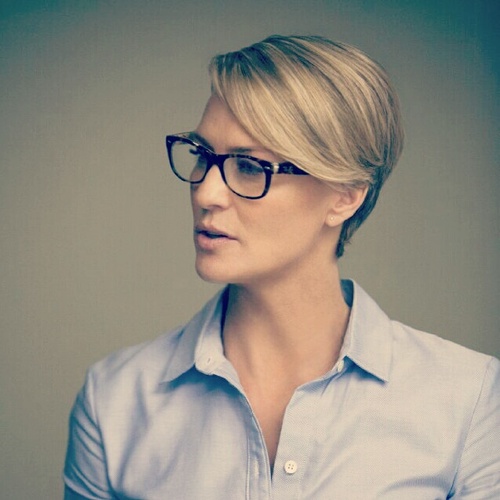
Claire Underwood in House of Cards

There’s no denying that despite her highly suspect morality, Claire Underwood is an extraordinarily powerful woman. Her power stems from a confidence in her capability, her intelligence, and her ambition. Claire has power because she knows she has power. She has power because she’s taken it and guards it fiercely. Is she a decent person? Absolutely not. Is she a feminist role model? Probably not. But representations of nuanced powerful female characters are in short supply in Hollywood. I’d love to see more women (on screen and off) with Claire’s sense of her own strength and self-worth. Let’s hope Netflix is onto something, and keep our fingers crossed that House of Cards Season 2 is just as rich with complex women as its first season was.
Sex Acts: Generational Patriarchy and Rape Culture in Gurfinkel’s ‘Six Acts’

Written by Rachel Redfern

Jonathon Gurfinkel’s debut film, Six Acts, winner of the TVE Another Look Award at the San Sebastian Film Festival, is premiering in the United States at the 2013 Tribeca Film Festival. The film is the product of six years of research and filming on the part of newcomers Jonathon Gurfinkel and screenwriter Rona Segal, who spent a substantial amount of time interviewing and speaking with young teenagers, asking about their experiences and stresses.

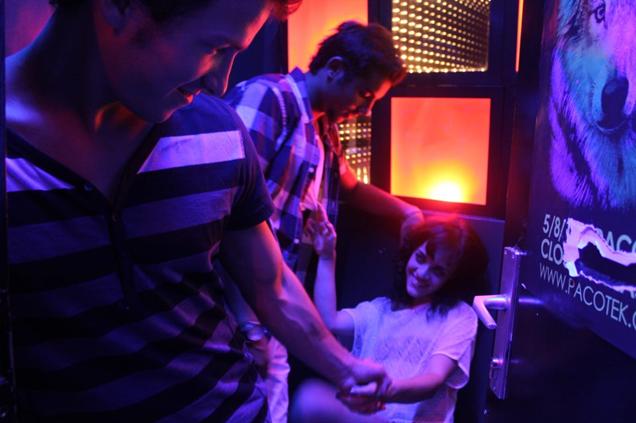
Six Acts (which can also be heard as ‘sex acts’) is about a young Israeli girl, Gili (Sivian Levy), who has just moved to a new school in an affluent suburb where she begins to engage in sexual activity with a number of her peers, essentially being passed around from boy to boy. While Gili holds the title role and the film is about the things that happen to her, in reality, the film is very much about portraying the generational behaviors of patriarchy and entitlement that allow rape and sexual assault to go unnoticed.

Perversely, Gili is raped again and again during the course of the film; she has just been convinced that she wanted it and that she enjoys being used for sex. These rapes are delicately portrayed in the way that Segal has scripted these scenes: Gili is pressured again and again and her repeated statements of “No” are not directly ignored, but brushed aside as the boys play angry when she refuses, clearly manipulating her. It’s significant that in each scene she is pressured and physically held or pushed until she finally gets quiet and the act is performed ending with kisses and the question, “Baby, did you like that” afterwards. At which point she smiles a little, looks away and tries to convince herself that she did. The two main boys in the film play a deceptive game; the first one, Tomer is quiet and seemingly arrogant; the second boy, Omri, is friendly and charming. Their characters are so finely crafted however, that for most of the movie, you find yourself still intrigued by these boys. Gurfinkel acknowledged the difficulty in filming these scenes saying,

“Some might say that the boys can’t be at fault because Gili seems like she’s actively cooperating, like she might want it. But this touches on the psychological formula of the strong against the weak, and the film shows how people take advantage of the weak, not just in a sexual way.”

Sivian Levy as Gili in Six Acts
Continuing with that goal of displaying the “psychological formula of the strong against the weak,” Omri’s father, his father’s friends, his brothers, and his own friends are all complicit in encouraging their aggressive and disrespectful behaviors. Cleverly, the film does a wonderful job of showcasing how Omri’s father’s conduct has influenced him into believing that such actions are how men should treat women. It’s frustrating to see how this cycle is repeated as Omri passes on his knowledge of exploitation to his much younger brother. It’s indicative to see the way that even Omri’s father’s friends look at Gili as she enters the room; they case her up and down and smile suggestively.

Shockingly, even Omri’s mother shrugs off the fact that her husband discusses his flirtations in front of her and merely closes her office door to her 13-year-old son’s conversation with his friends about how they should “fuck Gili.”

In fact, in many ways, the film is also a huge indictment about modern parenting, since no mother or father seems to take particular care as to where their children are or what activities they are doing, merely serving to enable them in the destructive and violent behavior that happens in their houses even while they’re present.

These scenes offer insight into the troubled lives of teens, specifically those living in Israel, though the film was also intended to tell a universal story. I have little experience with Israel, so it would be interesting to hear whether it’s portrayal of Israeli life is an accurate one.

The film’s setting is then of particular importance; while I expected discussion about religion and regional politics, there were none. The film literally takes place from the self-centered viewpoint of the universally common, affluent, and entitled suburban teenager. None of these issues plays a role because none of the characters care; the only things that matter are cars and poker and sex and money and drugs and sports. Minus the Hebrew being spoken, this film could have taken place in London, Los Angeles, Tokyo, or any other city with a stable middle-class. 

Sivian Levy as Gili in Six Acts
The world of flash, materialism, and ambition exists completely out of sight of the self-aware and moderate, with no such positive characteristics being shown by any character. The drive for the immediate is all that matters, and each of the boys is obviously the product of a family and cultural attitude that enables them to act upon this drive without consequences. In fact, after one of the many assaults enacted upon Gili, the young boy demands a kiss and then offers to buy her fast food on the way to the pharmacy. He then demands that she take a morning after pill, driving her there and giving her two packs just to make sure she’s not pregnant, regardless of the fact that she tried to leave and said she would handle the situation on her own. The fact that she could be pregnant is his only possible consequence, and even in that she is forced to comply with his demands (not that I’m against the morning after pill, just other people telling women when they should and should not take it).

One thing that I think could be potentially problematic in discussing a film like this is of course the trap of blame. In a few of the reviews that I have read so far there have been some people intent on blaming Gili for her actions, or at least pushing her as the impetus for these actions: she sent the boys a photo, she answered the call when they asked her to come over. One reviewer even went so far as to say that there’s “no point in feeling sorry for her” because she is rude to one of the boys before he rapes her. However, Segal’s intentions in writing the film belie such destructive victim blaming, as she states in an interview with regard to Gili’s character, “You can ask anyone and they will recall having a girl in their class who was always known to be ‘loose.’ I wanted to show that her decisions are not so black and white.”

Similarly, during my experience of watching the film, it seemed to me that I was merely watching the sad and terrifying journey of a girl who was too trusting and too naïve to see how terrible her new friends really were, and who lacked any responsible figure willing to step in and protect a minor.

Though Gili’s character is not without its problems: Gili’s desperate need for acceptance and love is painted in broad strokes, and it’s easy to see how easily she gets caught up in self-destructive behavior. The realization that her new friends are no friends at all is, as it is in real life, hard to see in the moment. On a very personal note, it was sad to see some of myself in her, to see the ways she so easily became devalued; it’s unfortunate that so many women will probably feel the same as I did when I watched the movie. 

Sivian Levy as Gili in Six Acts
The music is lovely but very much a part of the background; the cinematography is bold and engaging, highlighting the harsh situations that Gili has found herself in. Nothing is softened.

Six Acts premiers on April 18, 2013 at the Tribeca Film Festival at a point when sadly, a multitude of rapes and startling attitudes about rape culture have been exposed: incidents such as the Steubenville rape case, the problematic media aftermath, and the brutality of the gang rape in Delhi, just to name a few. While not always an easy movie to watch, I believe that Six Acts could be a very important film for these issues. I truly hope that it will reach a wide audience. 

For information about additional screenings continue on to the 2013 Tribeca Film Festival website.

———-

Rachel Redfern has an MA in English literature, where she conducted research on modern American literature and film and its intersection; however, she spends most of her time watching HBO shows, traveling, and blogging and reading about feminism. 

Gratuitous Female Nudity and Complex Female Characters in ‘Game of Thrones’

Yes, ‘Game of Thrones’ is a show that loves its nudity. HBO is known for gratuitous displays of naked ladies in many of its show, but ‘Game of Thrones’ might as well exist on a network called HBOOB.

Written by Lady T
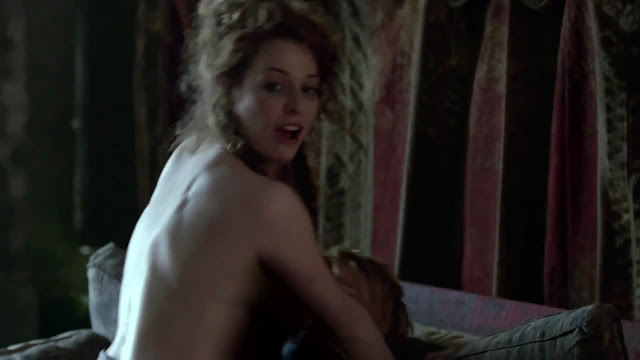
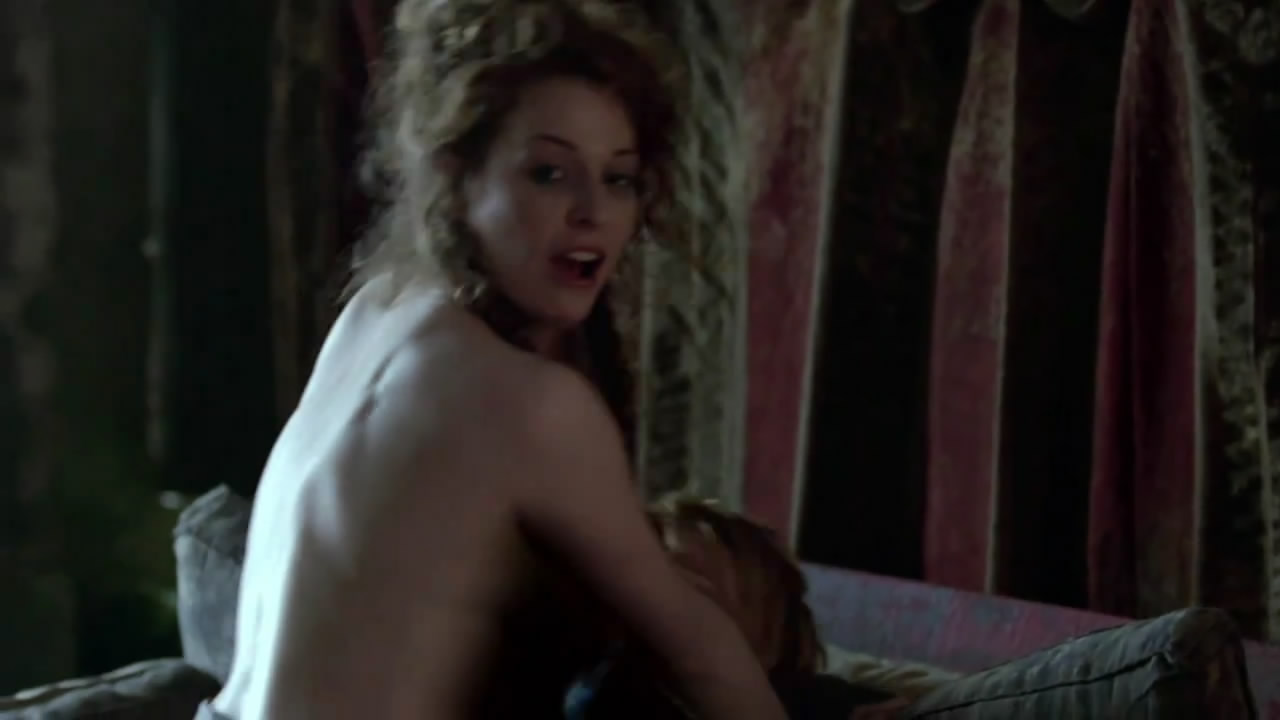
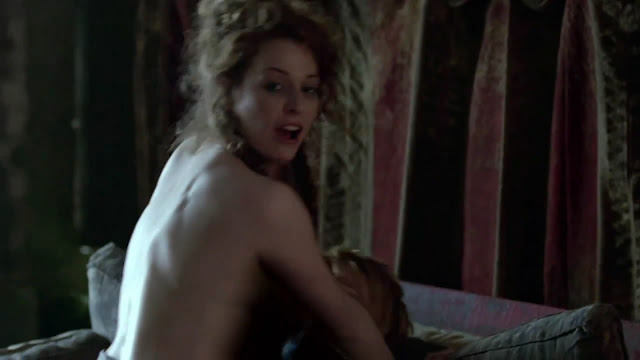
Ros from Game of Thrones. Full frontal nudity in 3… 2… 1…
[Yes, I have read the books.]
Game of Thrones, the HBO series based on George R.R. Martin’s A Song of Ice and Fire novels, premiered in April 2011. Since then, the show has received attention for its sprawling scope, large cast, morally complex characters, strong acting (particularly the performance of Peter Dinklage as Tyrion Lannister), and the numerous shots of prostitutes and naked boobs in almost every episode.
Yes, Game of Thrones is a show that loves its nudity. HBO is known for gratuitous displays of naked ladies in many of its show, but Game of Thrones might as well exist on a network called HBOOB. The series premiere alone had more boob close-ups than a Girls With Low Self-Esteem video (yes, that was an intentional reference to Arrested Westeros!) Numerous feminist writers have commented on the gratuitous nudity of the show, with Melissa McEwan at Shakesville and Madeline Davies at Jezebel nicknaming the program “Game of Boners.” (I prefer Game of Tits, myself).


Doreah: not nude in this scene, but give her a minute
Now, Game of Thrones is hardly the first show or film to show a lot of gratuitous female nudity, and I’m sure it won’t be the last. What I find interesting about the criticism of Game of Thrones’ gratuitous female nudity is that it’s not limited to feminist outlets and blogs. Mainstream television critics and humor outlets are talking about the soft-porn quality of the nudity and sex scenes:
  • Myles McNutt, critic and academic blogger, coined the term “sexposition” to describe the nudity on Game of Thrones, a term adopted by Alan Sepinwall and used in other criticisms of the show.
  • Someecards came out with a Game of Thrones-related “romantic” card that reads, “I want to get you as gratuitously naked as a Game of Thrones character.”
  • The Onion wrote about the season premiere with an article entitled, “Game of Thrones’ Season 3 Opens with Every Character Getting Fingered While Discussing the Arrival of Winter.”
  • Saturday Night Live did a sketch last year about Game of Thrones and its two creative consultants: author George R.R. Martin, and a 13-year-old boy who adds naked women in the background of every scene.
Apparently, all this talk of sexposition displeases and even offends the producers:

“A frustrated Weiss responded to a question about the amount of sex and nudity on the show, and the commentary about it, by saying, ‘We put in the show what we think belongs in the show. There are going to be people who think there’s too much of something, or not enough. If you create a show with a committee of a million people, you’re not going to make a very good show. We do what’s right to us.'”

Well. I’m satisfied. *cough*
Still, even though I’m glad to read these criticisms, I can’t help but wonder–why this show? Why is Game of Thrones unable to escape the “sexposition” jokes when other shows with gratuitous nudity are praised for grim dark realism?
I have a couple of theories about that, but I think the main reason Game of Thrones‘ nudity has become a popular punchline has to do with the show’s wide array of complex female characters.


Daenerys Targaryen, between one nude scene and another


Game of Thrones is not like Lord of the Rings or other popular fantasy series that forget that women exist. Women are prominent in the society of Westeros, whether behind the scenes or fighting on the fields.
Game of Thrones has traditionally feminine characters like Catelyn and Sansa Stark, Cersei Lannister, and Margaery and Olenna Tyrell, queens and noblewomen who exist mostly in the domestic sphere but also show keen shrewdness about the way the world is stacked against them.
Game of Thrones also has female characters who break traditional gender roles, who would rather fight with a sword or a bow and arrow than get married and have children: Arya Stark, Osha, Yara Grejoy, Ygritte, Meera Reed, and Brienne of Tarth.
Game of Thrones has Daenerys Targaryen, a woman who combines traditionally feminine traits and a fierce warrior spirit by coining herself as the Mother of Dragons. (She’s also one of the few female characters who has had nude scenes that actually served a purpose.)
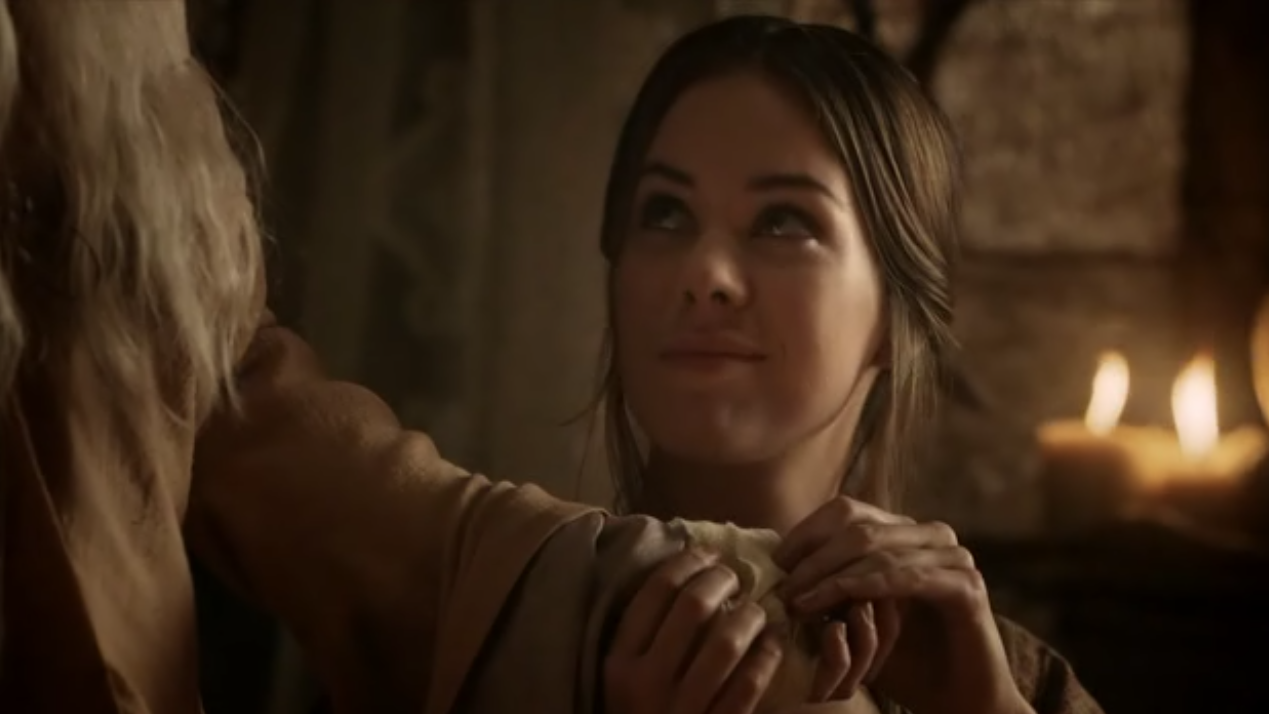
Game of Thrones even allows some of its female characters more complexity and development than they received in the book. Shae, a prostitute and Tyrion’s paramour, is a giggly non-entity of a character in the novels. On the show, she is a sharp observer of human behavior and compassionate to Sansa.
Game of Thrones has a scene where a female knight pledges fealty to a woman. How many times has that occurred in television history?


Considering the presence of so many complex women in Game of Thrones, it seems like critics might save their nudity-related complaints for other programs that populate their shows with mere ciphers (if they cast any women at all). So why are we still talking about nudity on THIS show?
I think our culture has become so accustomed to seeing naked women used as props in advertising, film, television, and in other forms of media, that we don’t always notice objectification anymore. Those of us who are actively feminist will notice unnecessary boobage in a show, but more casual consumers of media and popular culture might not pick up on the objectification in such displays of nudity, because the objectification is everywhere.
Game of Thrones, however, gives us scenes with characters like Cersei and Catelyn and Arya and Brienne and Daenerys, shows them as complex and complicated and morally gray as any male character on the show–and two minutes later, gives us a scene where a male character talks to a woman who exists as nothing more than a naked giggling prop.
The shift is jarring, as if the show is saying, “Women are complex, just like men–now here are some more boobs in soft glowy lighting, brought to you by The Male Gaze™.” It’s jarring enough that even a casual viewer is more likely to notice. You can’t be oblivious to the naked giggling props when there are so many fully-clothed, complex human beings around, reminding us that women are people.
Or maybe the most casual of viewers can look at a scene where a man exposits all his schemes and dreams to one prostitute finger-fucking another prostitute and think, “Okay, that’s a little too much, even for me.”

———-

Lady T is an aspiring writer and comedian with two novels, a play, and a collection of comedy sketches in progress. She hopes to one day be published and finish one of her projects (not in that order). You can find more of her writing at The Funny Feminist, where she picks apart entertainment and reviews movies she hasn’t seen.

Gratuitous Female Nudity and Complex Female Characters in ‘Game of Thrones’

Written by Lady T  

Ros from Game of Thrones. Full frontal nudity in 3… 2… 1…
[Yes, I have read the books.]
Game of Thrones, the HBO series based on George R.R. Martin’s A Song of Ice and Fire novels, premiered in April 2011. Since then, the show has received attention for its sprawling scope, large cast, morally complex characters, strong acting (particularly the performance of Peter Dinklage as Tyrion Lannister), and the numerous shots of prostitutes and naked boobs in almost every episode.
Yes, Game of Thrones is a show that loves its nudity. HBO is known for gratuitous displays of naked ladies in many of its show, but Game of Thrones might as well exist on a network called HBOOB. The series premiere alone had more boob close-ups than a Girls With Low Self-Esteem video (yes, that was an intentional reference to Arrested Westeros!) Numerous feminist writers have commented on the gratuitous nudity of the show, with Melissa McEwan at Shakesville and Madeline Davies at Jezebel nicknaming the program “Game of Boners.” (I prefer Game of Tits, myself).

Doreah: not nude in this scene, but give her a minute
Now, Game of Thrones is hardly the first show or film to show a lot of gratuitous female nudity, and I’m sure it won’t be the last. What I find interesting about the criticism of Game of Thrones’ gratuitous female nudity is that it’s not limited to feminist outlets and blogs. Mainstream television critics and humor outlets are talking about the soft-porn quality of the nudity and sex scenes:
  • Myles McNutt, critic and academic blogger, coined the term “sexposition” to describe the nudity on Game of Thrones, a term adopted by Alan Sepinwall and used in other criticisms of the show.
  • Someecards came out with a Game of Thrones-related “romantic” card that reads, “I want to get you as gratuitously naked as a Game of Thrones character.”
  • The Onion wrote about the season premiere with an article entitled, “Game of Thrones’ Season 3 Opens with Every Character Getting Fingered While Discussing the Arrival of Winter.”
  • Saturday Night Live did a sketch last year about Game of Thrones and its two creative consultants: author George R.R. Martin, and a 13-year-old boy who adds naked women in the background of every scene.
Apparently, all this talk of sexposition displeases and even offends the producers:
“A frustrated Weiss responded to a question about the amount of sex and nudity on the show, and the commentary about it, by saying, ‘We put in the show what we think belongs in the show. There are going to be people who think there’s too much of something, or not enough. If you create a show with a committee of a million people, you’re not going to make a very good show. We do what’s right to us.'”

Well. I’m satisfied. *cough*
Still, even though I’m glad to read these criticisms, I can’t help but wonder–why this show? Why is Game of Thrones unable to escape the “sexposition” jokes when other shows with gratuitous nudity are praised for grim dark realism?
I have a couple of theories about that, but I think the main reason Game of Thrones‘ nudity has become a popular punchline has to do with the show’s wide array of complex female characters. 

Daenerys Targaryen, between one nude scene and another

Game of Thrones is not like Lord of the Rings or other popular fantasy series that forget that women exist. Women are prominent in the society of Westeros, whether behind the scenes or fighting on the fields.
Game of Thrones has traditionally feminine characters like Catelyn and Sansa Stark, Cersei Lannister, and Margaery and Olenna Tyrell, queens and noblewomen who exist mostly in the domestic sphere but also show keen shrewdness about the way the world is stacked against them.
Game of Thrones also has female characters who break traditional gender roles, who would rather fight with a sword or a bow and arrow than get married and have children: Arya Stark, Osha, Yara Grejoy, Ygritte, Meera Reed, and Brienne of Tarth.
Game of Thrones has Daenerys Targaryen, a woman who combines traditionally feminine traits and a fierce warrior spirit by coining herself as the Mother of Dragons. (She’s also one of the few female characters who has had nude scenes that actually served a purpose.)
Game of Thrones even allows some of its female characters more complexity and development than they received in the book. Shae, a prostitute and Tyrion’s paramour, is a giggly non-entity of a character in the novels. On the show, she is a sharp observer of human behavior and compassionate to Sansa.
Game of Thrones has a scene where a female knight pledges fealty to a woman. How many times has that occurred in television history?

Considering the presence of so many complex women in Game of Thrones, it seems like critics might save their nudity-related complaints for other programs that populate their shows with mere ciphers (if they cast any women at all). So why are we still talking about nudity on THIS show?
I think our culture has become so accustomed to seeing naked women used as props in advertising, film, television, and in other forms of media, that we don’t always notice objectification anymore. Those of us who are actively feminist will notice unnecessary boobage in a show, but more casual consumers of media and popular culture might not pick up on the objectification in such displays of nudity, because the objectification is everywhere.
Game of Thrones, however, gives us scenes with characters like Cersei and Catelyn and Arya and Brienne and Daenerys, shows them as complex and complicated and morally gray as any male character on the show–and two minutes later, gives us a scene where a male character talks to a woman who exists as nothing more than a naked giggling prop.
The shift is jarring, as if the show is saying, “Women are complex, just like men–now here are some more boobs in soft glowy lighting, brought to you by The Male Gaze™.” It’s jarring enough that even a casual viewer is more likely to notice. You can’t be oblivious to the naked giggling props when there are so many fully-clothed, complex human beings around, reminding us that women are people. 
Or maybe the most casual of viewers can look at a scene where a man exposits all his schemes and dreams to one prostitute finger-fucking another prostitute and think, “Okay, that’s a little too much, even for me.”

———-

Lady T is a writer with two novels, a play, and a collection of comedy sketches in progress. She hopes to one day be published and finish one of her projects (not in that order). You can find more of her writing at www.theresabasile.com.

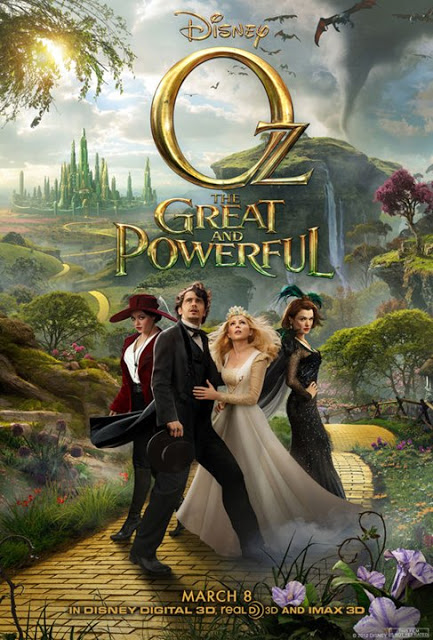
No, ‘Oz the Great and Powerful,’ We Don’t Need More Male-Centric Fairy Tales

Written by Megan Kearns.

After seeing Oz the Great and Powerful, I was annoyed. And angry.

Everything in the film revolves around one dude: James Franco as Oscar Diggs aka Oz. Bleh. It’s a patriarchal dream come true.

Women in the film fawn over Oz, swoon over him, make googly eyes at him, get enraged by him and arguably wreck their lives because of him. Glinda (Michelle Williams), Evanora (Rachel Weisz) and Theodora (Mila Kunis) all repeat throughout the film that Oz is there to save them. Even after Glinda who’s wise to his shenanigans, knows he’s not really a wizard, she still perpetuates the façade that he’s a savior, the one person who will bring the land salvation. Oz literally puts a female character, the broken China Girl, back together. Oz catalyzes Theodora’s destructive transformation from naïve and sweet, albeit with a quick temper, to heartless and wicked. Oh and of course we get women pitted against each other. Just for funsies.

The film is boring and vapid. The tissue-thin characters lack depth, wasting the tremendous talents of Rachel Weisz, Michelle Williams and Mila Kunis. Hideous gender stereotypes get tossed around. In her fantastic review, Natalie Wilson points out the film’s many weaknesses, including reinforcing the trope that women are wicked and erasing the feminism of the books.

One of the reasons that made Wicked and The Wizard of Ozso special — they focus on the women for a change. As Bitch Flicks writer Myrna Waldron astutely points out, the Oz series boasts powerful women in leadership roles. The women aren’t princesses (aside from Princess Ozma in the books of course). The women are either “ordinary” or witches, dismantling the “all witches are evil” trope. The women in Oz lead, give advice, scheme, make decisions on their own, go on journeys, forge friendships. They may work cooperatively with men but they don’t sit around and wait for men to save them.

So how did this happen? How did a female-centric, feminist series devolve into male pandering? It comes down to an aspect of the film’s production that to the best of my knowledge I haven’t seen anyone else raise: the need for “a fairy tale with a good strong male protagonist.”

Producer Joe Roth — who didn’t realize The Wizard of Oz was just the first in a series of 14 books, — shares what drew him to develop Oz the Great and Powerful:

“When [screenwriter] Mitchell [Kapner] starts talking about that man behind the curtain and how he got there, this storyline immediately strikes me as a great idea for a movie for a couple of reasons. One was because I love The Wizard of Oz. But this character is only in the last few minutes of that film and we have no idea who he is.

“And the second reason was — during the years that I spent running Walt Disney Studios — I learned about how hard it was to find a fairy tale with a good strong male protagonist. You’ve got your Sleeping Beauties, your Cinderellas and your Alices. But a fairy tale with a male protagonist is very hard to come by. But with the origin story of the Wizard of Oz, here was a fairy tale story with a natural male protagonist. Which is why I knew that this was an idea for a movie that was genuinely worth pursuing.”


So only films with a “natural male protagonist” are worth pursuing? Roth has also produced Alice in Wonderland, Snow White and the Huntsman and the upcoming Angelina Jolie film Maleficent – all female-centric fairy-tale films. So maybe he’s tired of all the ladies. And of course he can personally pursue any story he wants. But to take such an iconic series with a plucky female protagonist, full of complex female characters and a female ruler (Ozma) and then strip it of its female empowerment and nuance all to focus on a dude?? Stop. Just stop.

What’s great about Dorothy is she’s not a princess. She’s a “regular” girl on a quest and an emotional journey, something we too often see men and boys embark on. Now I understand if they didn’t want to rival the Judy Garland classic. But why not film one of the other books in the series? Or why not film the musical Wicked, a story revolving around the bonds of female friendship?

So what about Roth’s assertion, that it’s difficult to find male leads in fairy tale films? Nope, it’s really not that hard. Jack the Giant Slayer, Shrek, Aladdin, Mickey and the Beanstalk, Pinocchio, Peter Pan, The Sword in the Stone, Hercules, hell even Beauty and the Beast all feature male leads in fairy tale films.

As I’ve written before when I wrote about my excitement for Brave, too many children’s films, particularly animated films, don’t feature girls and women in leading roles. “Originally titled Rapunzel, Disney’s Tangled, the most recent animated film featuring a girl, was renamed a gender-neutral title to be less girl-centric. Its marketing didn’t just focus on Rapunzel but featured “bad-boy” thief Flynn Ryder in order to lure a male audience. Male characters dominate animated films.” Wreck-It Ralph, Ice Age, Rango, Kung Fu Panda and aside from Bravethe entire pantheon of Pixar’s films (Toy Story, Up, Wall-E, etc.), put male roles front and center.

As of 2010, “family films exhibited a gender disparity as only 29% of speaking roles belonged to female characters in the top grossing films within the past few years.” Superhero films (Spiderman, Iron Man, Batman, The Avengers aside from Black Widow), and swashbuckling adventures (Pirates of the Caribbean, Star Wars) — all with huge audiences of children — also feature male protagonists. Most movies for kids are just sexism in training.

In fairy tale films, the female characters we do see are princesses (Brave, Snow White and the Huntsman, The Little Mermaid, The Princess and the Frog, Cinderella, Beauty and the Beast, Sleeping Beauty). While there’s nothing wrong with having characters as princesses — and with Brave we got a huge step for female empowerment — as a collective they contribute to princess culture. Princess culture typically celebrates female objectification, reifying the stereotype that women’s and girls’ worth should be tied to their beauty. It also perpetuates the pressure of perfection — women and girls must be everything to everyone. And princess culture follows girls into womanhood with wedding obsessions and the fairy tale myth of finding Prince Charming.

In too many films for both children and adults, female characters’ fall into tropes of damsels in distress, femme fatales, and manic pixie dream girls. Their stories often revolve around men, just like in Oz. The women talk about men. They wax about finding love. They yearn to be rescued, looking to men to fix their lives. 

With the pervasive lack of female protagonists, media implies that girls and women don’t matter. It teaches girls they should serve as supporting roles in real life, rather than lead themselves. In a film with three powerful sorceresses, the message shouldn’t be that a “good man” can save us all.

So no, we don’t need any more films, fairy-tale or otherwise, revolving around men.

Bitch Flicks’ Weekly Picks

What Peggy Olson From ‘Mad Men’ Teaches Us That Sheryl Sandberg Doesn’t by Michelle Dean via The Nation

‘The Host’: Less Anti-Feminist than Twilight, but Hardly a Sisterhood Manifesta by Natalie Wilson via Ms. Magazine Blog

Five Striking Similarities Between Elisabeth Moss’ Roles on ‘Mad Men’ and ‘Top of the Lake’ by Beth Hanna via Thompson on Hollywood

Why Do “Good Girls” Need To “Go Bad?” by Yoonj Kim via Bitch Magazine Blog

Reel Women: On Inappropriate Reactions from the Audience and Where Responsibility Lies by Britt Hayes via Screen Crush

[Amplify] True Colors: Documentary Film Featuring LGBT Youth of Color in Love, Friendship, and Theater! via QWOC Media

Read Our Review and Watch a Clip of New Documentary ‘Free Angela [Davis] and All Political Prisoners by Randall Jenson via Bitch Media 

Are Female-Led Blockbusters Finally Here to Stay? by Mark Harrison via Den of Geek 

What have you been reading or writing this week?? Tell us in the coments!

Movie Makers from the Margins: Sarah Polley

Written by Erin Fenner
I stumbled onto Sarah Polley during a typical Sunday TV slam – in which my roommate(s) and I watch  a set of television shows and/or movies while gently tearing them apart for end o’ weekend laughs.

With only Netflix to stream on this particular weekend we ended up on a movie we assumed would be a typical snort-inducing indie flick: the type that has good intentions and an endearingly low-budget, but still follows a set formula with too-familiar archetypes, dialogue and the sort of acting that can only be done with a whispery voice.

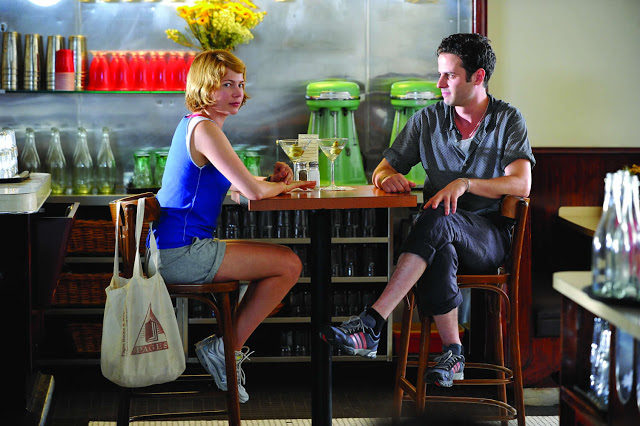
Michelle Williams and Luke Kirby in Sarah Polley’s Take This Waltz

Our Sunday tease-fest was abruptly cut short because we had picked Take This Waltz. Within the first minutes of watching the film we realized we had accidentally found something fresh and interesting. The camerawork alone was captivating. The writing was surreal while remaining painfully grounded. The story about a young married woman, Margot (Michelle Williams), exploring her own dissatisfaction with her marriage while trying not to explore her attraction to another man was intense, exceedingly sexy and hilarious.

It didn’t take long before we – typical Millennials with our addiction to information and technology – started feverishly Googling the film: then discovering the filmmaker was a “she.” That may have been the first time I accidentally found a female director. Every other time has been purposeful and even then it has been rare to catch movies that were directed or written by women.

An article in the New York Times celebrated that out of the top 250 grossing films in 2012 there were more female filmmakers than the year before. That increase was from five percent to nine percent. And while any increase in diversity is valuable, I can’t help but feel a bit cynical about whipping out party favors when women are making less than 10 percent of the top grossing films.

In a society that espouses equality as an ideal; the absence of women filmmakers should incite righteous indignation, right?

Mostly it just goes unnoticed.

After my brain was lovingly melted by Take This Waltz I did what I usually do when falling for a tall dark and surrealist or postmodern director. I sought out the whole collection. I needed to see all the Polley films ever made! Achieving that was just too surmountable. The young director has only made three films, and only two are available on DVD. I can’t even be a Polley geek. I can’t go to Polley trivia nights. Watching two DVDs in a row can’t even be a Polley marathon.

The second Polley I watched was her first feature-length film, Away from Her, about a couple and how they deal with their relationship when one of them develops Alzheimer’s and eventually needs to move to a long-term care facility.

Gordon Pinsent and Julie Christie in Away from Her
In Hollywood people over 60 are usually depicted as feeble and they are portrayed most often through the perspective of their children or grandchildren. Even The Notebook which features an aging couple – one suffering from Alzheimer’s – takes place mostly in the past: mostly when the couple was first falling in love and their cheeks were still fat with youth. The happy ending is that they die together.


Away from Her, instead focuses on the relationship of the aging couple as it exists in the present. The couple has regrets. They have fond memories – but their primary concerns are about how to handle their current situation and what they are losing now. Also. It shows that people over 60 have sex in a sexy but normalizing way.

The way in which Polley explores aging and disease is refreshing because while it is so different than most of the media we consume it actually more accurately represents life.

To get these sorts of new narratives we need directors from all backgrounds: not just the white male variety.

Women filmmakers are still getting into the business. They’re less established and get less attention. Which is why we need to have a director spotlight here on Bitch Flicks – and why this will turn into a column. We’ll be speaking with up-and-coming filmmakers and reviewing the works of directors who face marginalization for their identity.

Because Polley was the first female director I discovered without trying I decided it was time to make more of an effort to seek out directors from all backgrounds. If you have suggestions for writers, directors, producers or filmmakers you want to see written about: leave them in the comments so we can have a conversation.

Meet New Bitch Flicks Writer Janyce Denise Glasper


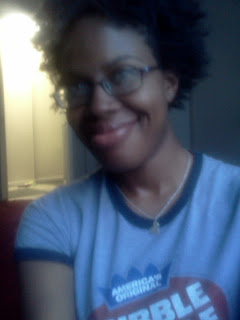
A bubblegum tee & a wisecracking smile only means mischief! 

Hello everyone!
My name is Janyce Denise Glasper, a little quirky artist, writer, vegan, calico mommy, animal rights, and feminist activist currently residing in Dayton, Ohio soon to be transitioning to Philadelphia, Pennsylvania to attend Pennsylvania Academy of the Fine Art’s Post Baccalaureate Program. I’m so thrilled to be upgraded to a Bitch Flicks weekly contributor and have much to bring to this very diverse roundtable!
While undergraduate studying at the Art Academy of Cincinnati (where I met BF co-founder, Amber Leab and have a BFA in drawing!), I had taken Art of Film and enjoyed watching films and reviewing them. Each analysis really started to garner my interest and appreciation for the entire film experience. Now I never leave a theater until the credits are finished rolling!
Bitch Flicks then influenced what I really wanted to write about – a feminine point of view!
Heavily reminiscent of the Guerrilla Girls agenda – these strong, brave activists asserting ways of getting more women artists of past and present recognition, Bitch Flicks, a forum passionately setting out to exploit the wrongness of media’s perceptions of women and highlighting valuable pros that empower the fight is a beautiful war that deserves to be commended. Hollywood is still an ugly, brutal place, objectifying our “weak” gender, baring our mighty breasts to the audacious male ego, making us crave hungrily for valiant, fiery roles on and behind camera, but BF strives to bring forth a change by attacking that system with an army of writers using their words as mighty swords. It is such a humbling honor to be a part of waving the victory flag.
“I wish you talked more,” Amber had written on my final in the Artist as Writer class. I was a very quiet, inner being, but now I realize more that writing is another way to scream of injustice and inequality.
In art, my portraiture work focuses primarily on illustrating identity – being an African American woman growing up in American society and weaving roots of past and future into a profound connection while also adding in pop culture influence such as soap operas and romance novels. It correlates well into my film interests because I enjoy screenplays showcasing African American females as intelligent, uplifting, spiritually enlightened, who are considered beautiful, influential characters.

Why isn’t this a movie already??
My favorite films include The Color Purple (Alice Walker is such a phenomenal poetic writer and inspiration), Spike Lee’s Crooklyn, Jason’s Lyric, Love Jones, Imitation of Life, Pariah, Chocolat, and Hedgehog. Though there are no minorities in this film (except a male policeman), I do enjoy the surreal ugly duckling (or in this case, “pigling”) fairy tale, Penelope, so much and cannot wait to write out the why. It’s beautiful in sets, costume, and story.  
As for television, Mindy Kaling is a pretty awesome hoot! I just long for the days of strong, close knit female relationships and diversity in a place where men aren’t always the catalyst for ice cream binging and tears. Women are a vivacious, independent, and crafty lot and can be written to be so! It’s the 21stcentury!  
Excitingly enough, Lunafest is this coming Sunday at my local art house and I have already bought my ticket, and it makes me happy to learn that all proceeds go toward Planned Parenthood of Southwest Ohio Region. If you’ve never heard of Lunafest – it’s a film festival of shorts for women by women, and it’s from 3PM-12AM, the longest time I will have ever spent at a movie theater! Looking forward to sharing the experience with BF readers!  I’m bound to see women being displayed at their thoughtful best here. 
Alas, I must say that I am also a big time Joss Whedon fan and that Buffy the Vampire Slayer, though a blonde heroine, got me through high school. I identified with her being labeled “different” and a social outcast because at my school there was something wrong with wearing hair naturally. Perms and relaxers reigned supreme. It was considered boyish and African to not fall into the European tresses mode. Yes. African American students of today think any association with Africa is an ugly, shameful ideology and I think media plays a horrid manipulation on our sensibilities as a race. I’ll have to write about that sometime…
My Angel puppet, my Olivia, my shoes, my yoga mat, my loves

I am proud to be a geek and refuse to hide in any closet. I wear my purple rimmed glasses, character t-shirts, and afrocentric braids with pride and cherish the helluva of my vast collection of Buffy and Angel comic books and action figures. I’ve been to Wizard World Philadelphia once and Chicago 3 times, shaking James Marsters’ hand and taking a picture with Emma Caulfield – Spike and Anya respectively on Buffy. Those are just some of the perks of working as an assistant to an eBay action figure and comic book retailer! Ha ha!
My other loves include Sugarygingersnap, a blog highlighting my art work progression, local art events, and some film reviews, and AfroVeganChick, which centers my vegan and natural hair journeys with delicious food recipes for the belly as well as hair, skin, and face. In my spare time, I enjoy reading, kitty snuggling, thrift shopping, Wii Fit, belly dancing, riding buses at random, collecting rubber ducks, Days of Our Lives, and summer picnics at my little duck-filled pond.
If you would love to follow along, like Visa, I’m everywhere you wanna be online: Twitter, Pinterest, Facebook, Instagram, and Google+

‘The Yellow Room’ and the Timeless Locking Up of Women’s Experiences


Written by Leigh Kolb
Charlotte Perkins Gilman’s “The Yellow Wallpaper,” on its surface, is about a woman in the late 1800s suffering from what we now understand is postpartum depression. Her physician husband locks her away in a room–employing the popular “rest cure” of the time (which Gilman had been forced to endure)–and she slips deeper into depression and eventual madness because of the isolation.
The story is also about the solitary nature of women’s experiences, and how so frequently how women are “dealt” with in society–the treatment–is much more harmful and devastating than the problem itself.
These themes propel Assal Ghawami’s short film,  The Yellow Room, which was inspired by Gilman’s story.
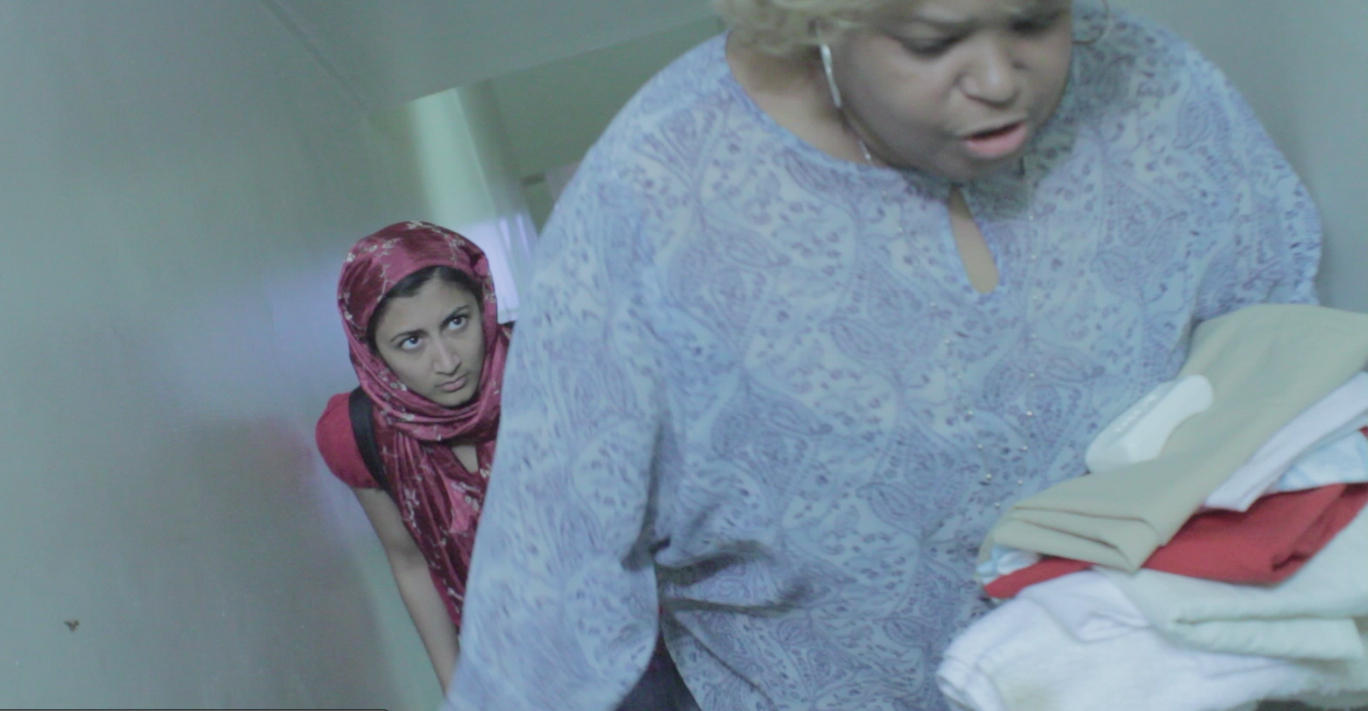
The Yellow Room takes place in a tenement house in an American city. Sanaz, the protagonist, is a young Pakistani immigrant who is seeking an illegal abortion from a Latina “medicine woman.” The woman gives her a baggie of four pills and instructs Sanaz to “take two the first hour. When it starts, you put the rest under your tongue.”
She shows her to her room, which is painted a muted shade of yellow. The young woman who appears to be staying in the room also is a foil to Sanaz–angry, loud and threatening. When she finally storms off, Sanaz is left alone, avoiding calls from her boyfriend (and pushing him away when he calls, hanging up when he promises to “help [her] with the baby”).
Teresa shows Sanaz to her room.
Much like the protagonist in “The Yellow Wallpaper,” Sanaz is left alone. Her boyfriend doesn’t seem to understand the severity of the situation, or be concerned with what Sanaz wants and needs (just like the husband in “The Yellow Wallpaper”).
Ghawami’s film is beautiful, and I found myself aching for more than 10 minutes. In an interview with RH Reality Check, Ghawami goes in depth in discussing both the technical aspects of the film–it was shot with one lens, and the (perfect) music was composed by a female friend from film school–and the social aspects of it.
Sanaz must deal with the consequences alone.
Ghawami–who was born in Iran and grew up in Germany–was inspired to write the film after hearing a story of a woman who had ended her pregnancy with a medicinal herb and thrown the fetus away in the garbage. Instead of judging the woman, Ghawami condemns the society that forces women to choose these routes. She says,
“The Yellow Room, similar to ‘The Yellow Wallpaper,’ is an exploration of an old conundrum. Ultimately it’s the women who deal with the consequences, no matter if you are pro-choice or anti-choice. I just want people to look at the debate from a new angle—from the eyes of the woman who goes through with the experience itself.”
Because film so rarely explores women’s stories (especially about abortion) it’s difficult to find a chance to look through the “eyes of a woman,” tragically. If we had more exposure to those stories, certainly the dialogue surrounding these issues, and even legislation, would be affected.
In Gilman’s “Why I Wrote ‘The Yellow Wallpaper,'” she explains that the “best result” she had from writing the story is that the specialist who prescribed the harsh rest cure had changed his treatment practices since reading the story. Gilman’s story is fiction, although derived from her experiences, but it’s fiction with a social impact. Clearly, women weren’t allowed to tell their stories of isolation and further mental illness in the confines of the rest cure, because not writing or being mentally stimulated was a key part of the “cure.” Women’s stories, of course, are marginalized and often ignored.
In 2013, over a hundred years later, women’s stories about reproductive choice are typically excluded from the national dialogue. Sure, a record number of laws threatening women’s rights to abortion have been proposed and passed in the last few years, but women’s stories are largely absent.
And while we need those stories, we also need art to convey those stories.
Ghawami says:
“I don’t think art needs a cause, but every social cause, hell yeah, needs art! … Films can be a canvas in which we can find our own truth. Art encourages free thinking.”
What the antagonists in both “The Yellow Wallpaper” and The Yellow Room (the protagonists’ families, partners and societies) want is control over the women in the story. To shut a woman into a space, to back her into a corner so her choices are solitary and dangerous, is to, ultimately, control her.
There is hope and freedom at the end of The Yellow Room that we don’t see in “The Yellow Wallpaper.” Ghawami doesn’t make Sanaz a tragic character; she makes her world tragic.
The aesthetics of The Yellow Room are haunting yet beautiful, and the lush strings that accompany Sanaz’s story are jarring yet gorgeous.
The Yellow Room will be screening at colleges and film festivals in the coming months, and at public venues in the New York/New Jersey area. The film’s Facebook page has updates.
Ghawami’s commentary on not only the power of film, but also how the historic literature of women’s struggles connects to the current crisis in women’s rights, gives me great hope that we will see more from her in the future.
The “social cause” of reproductive rights needs art–not just editorials or heavy handed propaganda, but stories. The Yellow Room is a lovely example of how to do the subject justice.
—–

Leigh Kolb is a composition, literature and journalism instructor at a community college in rural Missouri. 

‘The Sapphires’ and Solidarity Between People of Color

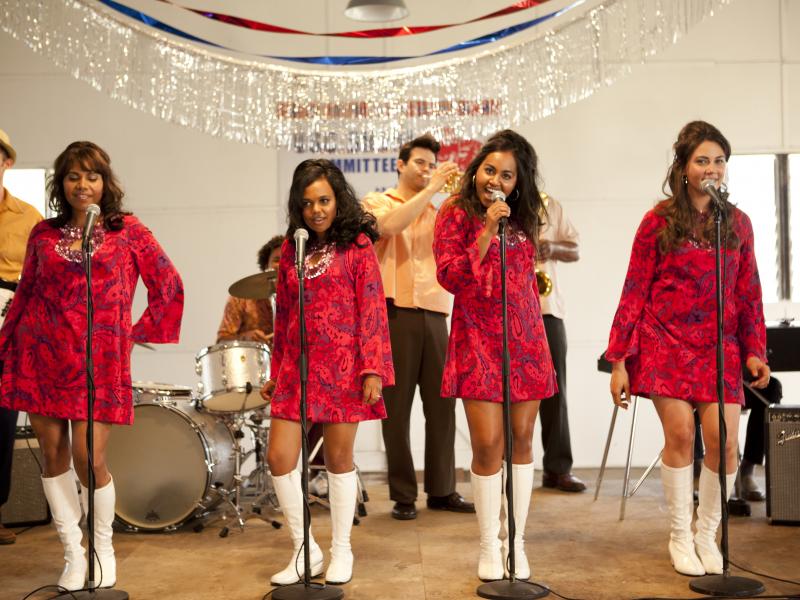
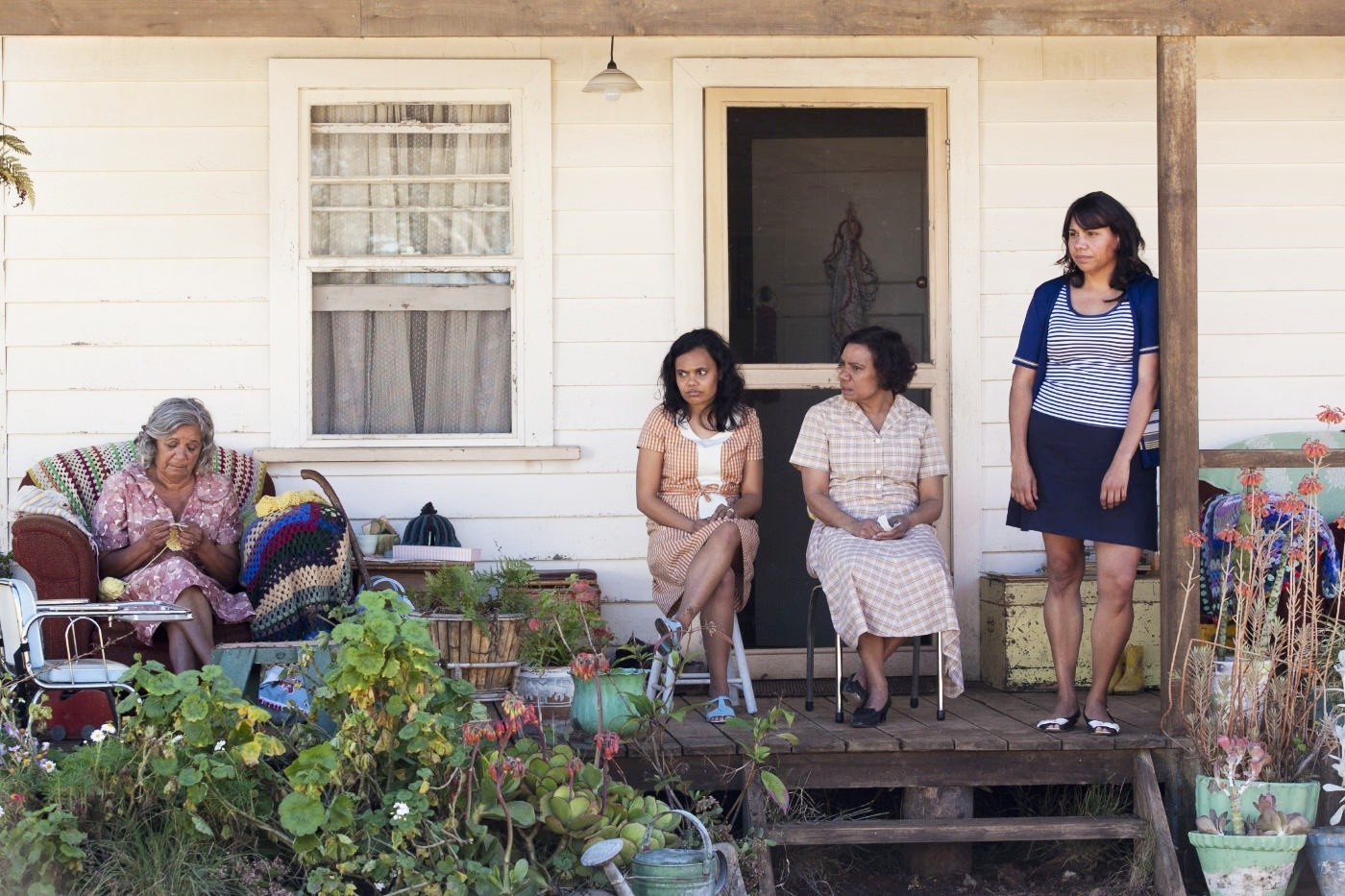
The Sapphires (2012)

 
This is a guest post written by Jaya Bedi.

I predict that this is going to be a very popular film. 
Well, it already is a popular film — in Australia. But I can already tell that its about to become a classic with me and my friends — up there with Mean Girls, Pride and Prejudice, and Bend it Like Beckham — and its only a matter of time before the rest of North America discovers what a gem this movie is. The fact that Bridesmaids actor Chris O’Dowd is one of the stars is only going to make it more popular, as is the fact that it passes the Bechdel Test with flying colors. But what’s really interesting about this film is its treatment of race and cultural identity. 
The Sapphires is about a group of four young Aboriginal women in 1968, who receive a career-making opportunity: travel to Vietnam and sing for the American troops fighting the war. We follow our heroines from their obscure beginnings, through their “discovery,” their rising fame, and the triumphant return home, and we meet a slew of predictable characters along the way. Make no mistake; this is not a film that breaks the rules of the music biopic genre. But what this film lacks in originality, it makes up with heart. The director never loses his compassion for the outlandish personalities he’s dealing with. We develop a deep appreciation for Cynthia, the hilarious sister with no personal boundaries; Gail, the overbearing mama bear of the group, and Dave, the hapless alcoholic manager/keyboardist, with whom we can’t help but fall in love.
While The Sapphires has the feel of a rollicking adventure, the film deals with some very serious issues, and does so with tact and grace. The film does not shy away from showing the blatant discrimination that the girls face because of the color of their skin — this is made clear at the beginning of the film, following Cynthia and Gail’s disastrous performance at an all-white country club. The film takes a firm stance on internalized racism as well — we see the shame that Kay feels at being associated with her black cousins, and her attempts to pass for white. But this isn’t so much a polemic about the prejudice and discrimination that Aboriginal Australians face as it is a coming-of-age tale, for Kay especially. Kay goes from feeling helpless in her despair at their situation, to feeling empowered by her identity as a woman of color; she learns to love being who she is, despite the hardships that being black entails. 
When the girls arrive in Saigon, they are immediately enraptured by the American men they see everywhere. Cynthia falls in love with an audience member immediately, and Kay develops a gigantic crush on a handsome soldier she meets at the hotel. What made me sit up and pay attention was the fact that not a single man the girls show interest in is white. From the second they get there, they are immersed in black American culture (they are, after all, singing soul music), and they have no desire to leave and fraternize with any of their white counterparts. This isn’t because they are barred from mingling with white soldiers by rule or custom — they don’t do it because they don’t want to do it. They specifically seek out black men as romantic partners because they feel a kinship to them. It was refreshing to see men of color depicted as genuinely romantically desirable, without the gross fetishization that usually occurs when black men and sex are involved.

In Australia, Aboriginals are considered to be “black.”

 The girls feel connected to the black American soldiers whom they meet, because in Australia, Aboriginals are also considered to be “black.” To be black is to be hated, feared, and shunned — as it is all over the world. No wonder that their struggles as marginalized people in their own land would resonate so strongly with black soldiers, who faced similar discrimination back home. The story is a microcosm of the greater alliances that were being built between Australian Aboriginals and black Americans at the time. Black American soldiers on shore leave from the Vietnam War often spent time in Australia, and, fed up with the racist treatment they received from white Australians, would gravitate to the black neighborhoods, where they would share the latest in black American music and political ideas. Inspired by black American thinkers, Aboriginal activists launched a domestic Black Power movement in Australia, with the intention of reclaiming the pejorative implications of the word “black,” to turning it into something to be proud of, and to fighting for more self-governance and an end to racial discrimination within Australia. 
If I had one critique of the film — I wish we had seen a little more from the black men whom Cynthia and Kay date. I wish we could have seen their conversations. I wish as much attention was paid to Kay’s relationship with her boyfriend as was to Dave and Gail, who strike up a peculiar friendship. I wish we could have seen more of Kay’s transformation from self-hating white-identifier to being an Aboriginal woman with a strong sense of self, a proud woman of the Yorta Yorta clan. The change seemed rather sudden, not at all justified by the narrative. Kay’s boyfriend felt more like a foil for Kay’s character rather than an actual character in his own right, which is problematic when one of the things that helps Kay discover her identity is her relationship to a black American man, and to black American culture.

This is a story about American empire, in a way. After all, it takes place on the periphery of the Vietnam War, which was fought in order to strengthen the influence of the American empire on Southeast Asia. It’s a story in which representatives of two racist nation-states meet and exchange ideas — but in an ironic twist, the actors happen to be racially marginalized minorities. Instead of reinforcing the racist hegemony, these people of color resist by sharing ideas of self-love. And amid all the larger questions and issues that this film brings up — it is also an intensely human story, one of family ties and reconciliation, of falling in love, and remembering who you are. For these reasons, The Sapphires is ultimately successful. 


Jaya Bedi is a twenty-four year old blogger living in Connecticut. She likes to write about race, politics, and television. You can follow her on twitter at @anedumacation

‘Clueless’: Way Existential

Written by Robin Hitchcock
With Bitch Flicks celebrating its fifth anniversary this week, I wanted to write a positive and celebratory post. So I thought I would revisit one of my favorite flicks, Amy Heckerling’s Clueless, for which I have not a single unkind word.
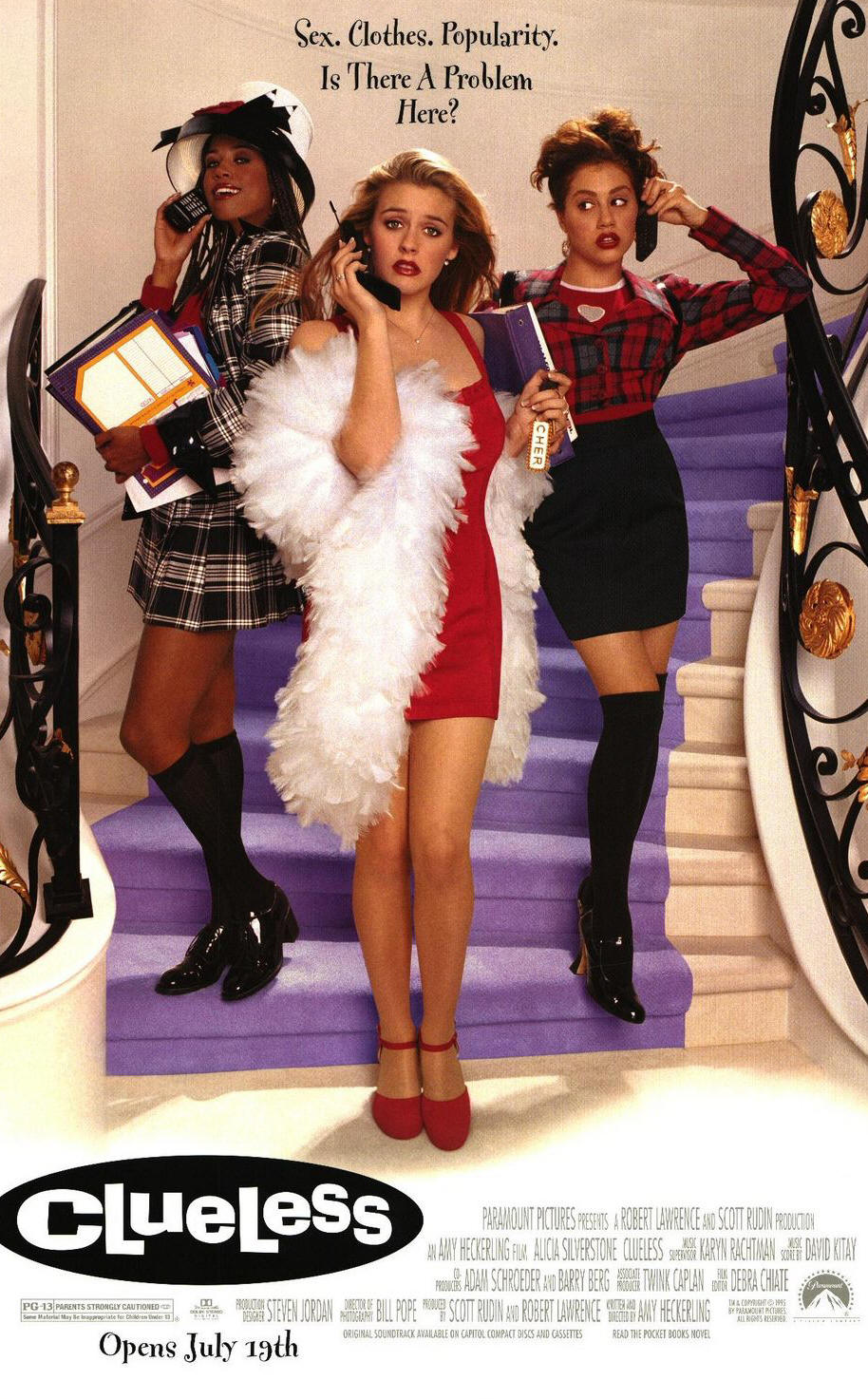
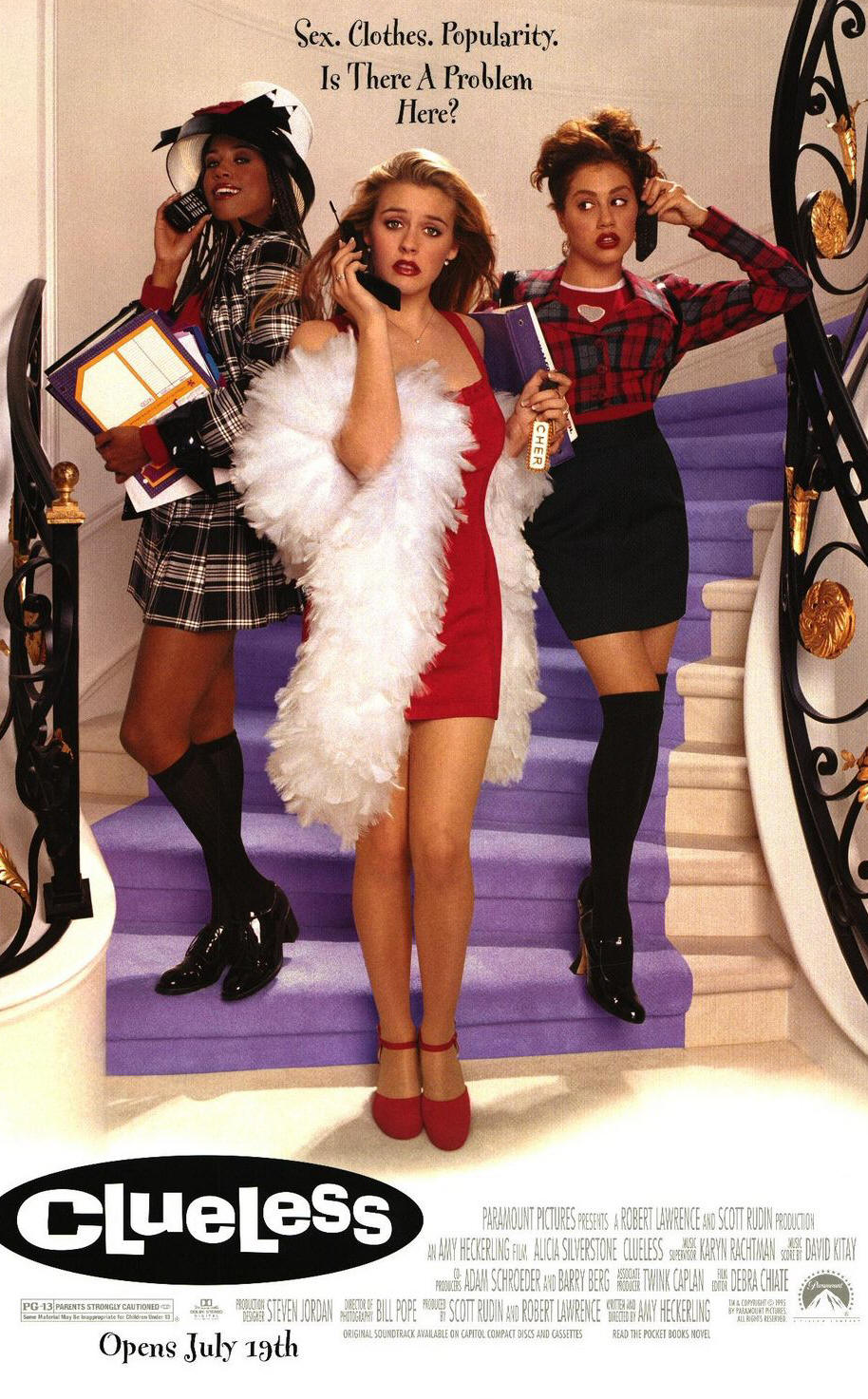
Clueless movie poster
Clueless repositions the basic plot of Jane Austen’s Emma into a Beverly Hills high school. Like Austen’s title character, Clueless‘s heroine Cher (Alicia Silverstone) is a somewhat spoiled rich girl who operates in her own reality, one slightly off-kilter from everyone else’s perception of the world. But she is not stupid, or unkind, or even particularly egotistic. Although her matchmaking and various schemes to help others are almost always somewhat self-motivated, you wouldn’t call her selfish (not to her face). Cher is an extremely likeable (and relentlessly quotable) character. This entire movie could have easily been an exercise in “look at this dumb shallow bitch,” but Heckerling’s affection for her character (echoing Austen’s for Emma) and Silverstone’s charisma sidestep that antifeminist pitfall.
Dionne and Cher
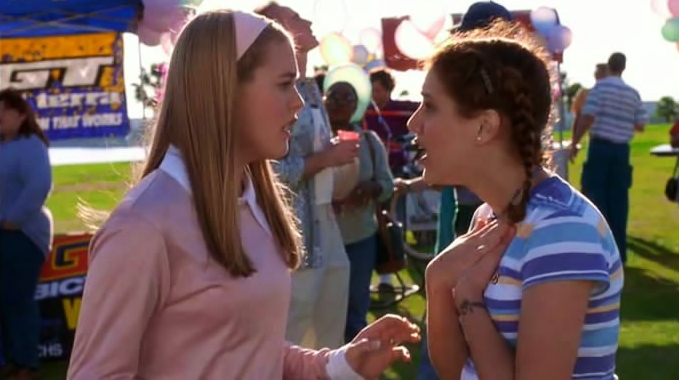
Another delightfully feminist feature of Clueless is its depiction of female friendships. There are plenty of romantic subplots to go around in this movie, but the most important relationships are between Cher and her best friend Dionne (Stacey Dash) as well as Cher and her new friend/”project” Tai (Brittany Murphy). These relationships show a lot of love, mutual support, and genuine enjoyment of time spent together, reflecting real-life female friendships in a way that is STILL woefully underrepresented in media. But these friendships are not devoid of conflict or competitiveness, which also rings true. One of my favorite scenes is when Cher and Tai make up after a blowout fight, a conversation beginning with shy small talk but quickly escalating to mutual apologies and tearful appreciation of one another. Who hasn’t had this moment with their best girlfriend?
Cher and Tai make up after a fight
Clueless also boasts an exceptionally nuanced and respectful depiction of teen sexuality. When Cher, Dionne, and Tai discuss their respective levels of sexual experience (Tai has had sex, Dionne is “technically a virgin”, and Cher is “saving herself for Luke Perry”), no one’s choices are judged. Later, when Cher finds out the guy she’s crushing on is gay, she’s surprised but almost immediately embraces him as a close platonic friend.
In general, Clueless is extremely respectful of its teen characters, even as it satirizes their naïveté and superficial tendencies. Cher can be ditzy but still corrects a pretentious college student’s misquotation of Hamlet. Dionne’s boyfriend Murray is able to eloquently justify calling her “woman”: “street slang is an increasingly valid form of expression. Most of the feminine pronounces do have mocking, but not necessarily misogynistic undertones.” Tai marvels, “you guys talk like grown-ups.” This was three years before Dawson’s Creek forced awkwardly sophisticated through it’s teen mouthpieces, and leagues more successful.
Heckerling’s unexpected adaptation worked so well that Clueless launched an entire sub-genre of the high school-set classic literary adaptations; yielding everything from the delightful 10 Things I Hate About You (a take on The Taming of the Shrew), to the enjoyable but problematic She’s All That (one of Hollywood’s many Pygmalion adaptations), the drearily self-serious Cruel Intentions (Les Liaisons Dangereuses), and the brutally faithful O (Othello). And that’s a significantly abbreviated list (anyone else remember A Midsummer Night’s Dream-inspired Get Over It? Sisqó was in it! Does anyone else even remember Sisqó?). I for one would love to see a revival of this trend. If we’re going to bring back floral prints from the graveyard of the 1990s, why not this?
I strongly suspect there was some kind of magic radiation on set that dramatically slowed the aging process in the main cast, because Paul Rudd and Stacey Dash are basically the male and female poster children for “ageless,” and Alicia Silverstone and Donald Faison are still looking remarkably fresh faced themselves. [And now, I shall pour one out for gone-too-soon Brittany Murphy. RIP] But that is neither here nor there. Clueless is timeless not because of its preternaturally ageless cast, but because it is much more than just the cultural parody it appears to be at first blush.

"You won’t be the first pig I’ve gutted!": The Women of ‘Pan’s Labyrinth’

Written by Amanda Rodriguez
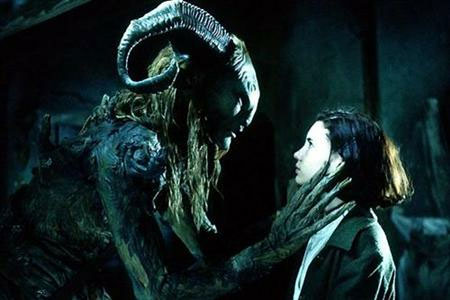
I unabashedly adore Guillermo del Torro’s Pan’s Labyrinth. It’s beautifully rendered between two dark, cruel worlds. Our heroine, Ofelia, wants to escape the foreignness and brutality of her new life as the stepdaughter of “The Captain,” a cold and violent military officer hunting down rebels as part of Franco’s fascist regime in 1944 Spain. Though full of magic and possibilities, the fantastical Underworld to which she so desperately wants to escape (in which she is a lost princess whose father has searched eons for her) is also full of horrors, danger, and death. The story of this lost young girl striving to be brave and good, striving to believe in a better world despite all the pain and darkness is heartbreaking.
Pan’s Labyrinth passes the Bechdel test while showcasing three unique female characters. There’s young Ofelia herself along with her kind, mild, and beautiful mother, Carmen, and finally Mercedes, the housemaid who is secretly a rebel spy. All these women are depicted with compassion and depth, but let’s examine them each more deeply to see how they fare under a feminist lens.
First we have Ofelia. 
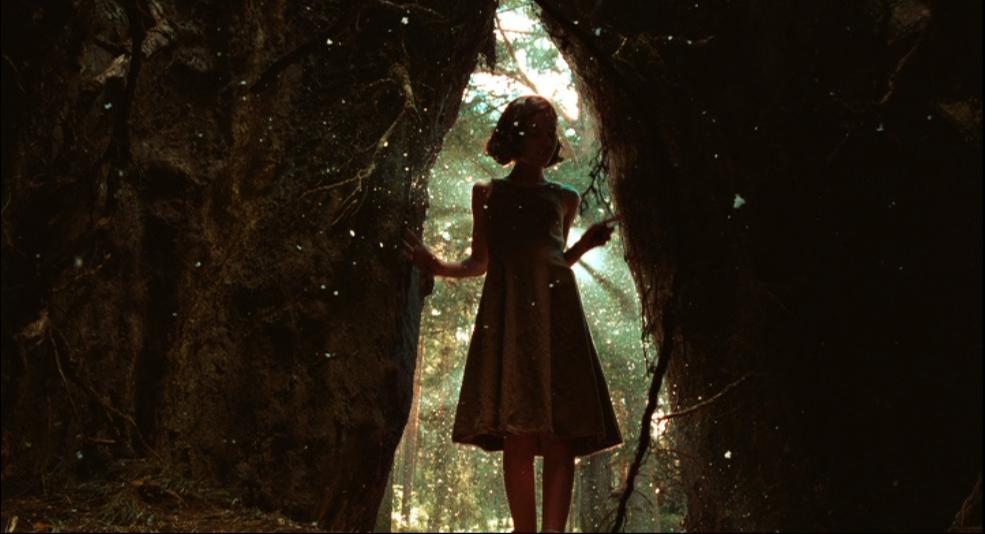
Ofelia is an imaginative girl who loves books and her mother. Not only that, but she is a courageous and loyal tomboy who is willing to sacrifice her life as well as her mythic destiny for love of her infant half-brother. At first glance, Ofelia appears to be a strong feminist representation, but as I wrote about in my previous Bitch Flicks review Brave and the Legacy of Female Prepubescent Power Fantasies”, things aren’t always as they appear. I say Merida from Brave and Ofelia from Pan’s Labyrinth (among others):
“[are] actually situated within a somewhat prolific trope of female prepubescent power fantasy tales. Within this trope, young girls are allowed and even encouraged to be strong, assertive, creative, and heroes of their own stories. I call them ‘feminism lite’ because these characters are only afforded this power because they are girl children who are unthreatening in their prepubescent, pre-sexualized state.”  

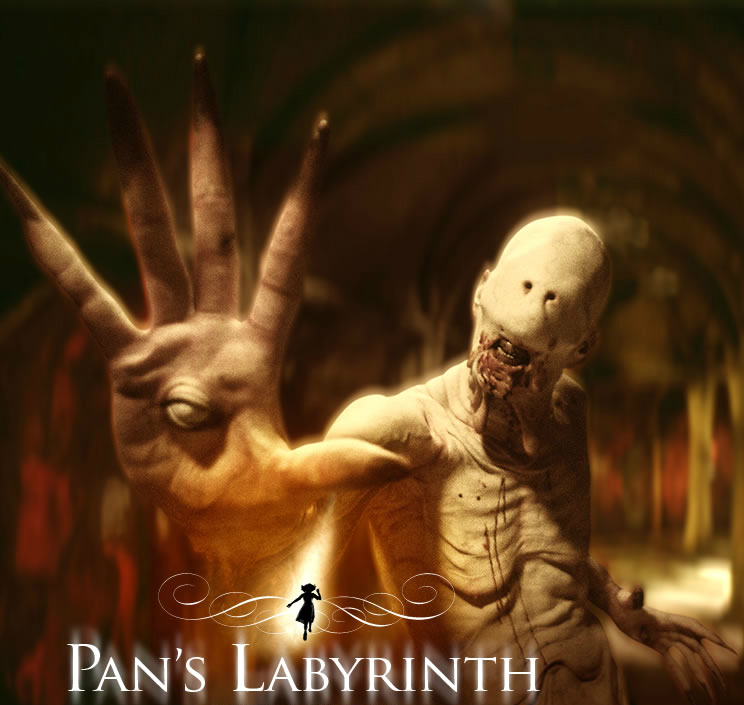
When Ofelia meets the faun, he insists that, though he’s certain she is the immortal princess, she must undertake three tasks to prove her “innocence” is intact and that she has not truly become mortal yet. Metaphorically speaking, these tests will ensure her virginity; the implication being that if she is no longer a virginal child, she will not be pure enough to take her rightful place as heiress of the Underworld. In fact, when Ofelia must retrieve a dagger from the child-eating monster, her willful indulgence in two grapes nearly sabotages her bid for immortality. The carnality and unnatural appetites of the child-eating monster coupled with the beautiful, forbidden banquet in his chamber set the scene for a reenactment of Eve’s apple eating and the ensuing Fall of Man. The tasting of the forbidden fruit is synonymous with the awakening of sexuality, and when he learns of Ofelia’s inability to control her appetite, the faun cruelly rebuffs her, yelling that she has ruined her chances to return to her true home.
“You would give up your sacred rights for a brat you barely know? You would give up your throne for him?” – The Faun
Though Ofelia is the princess, the faun dictates all her rules and tasks, appearing and disappearing as he pleases and demanding she obey blindly. These traits are paralleled with The Captain’s black-and-white thinking as well as his cruel capriciousness. Both worlds are governed by cold patriarchal forces that this young girl must navigate, where she has no power to change the rules or the worlds themselves.
Next there is Carmen, Ofelia’s mother.
Carmen is a gentle and kind woman in an unenviable plight who we watch become drained of hope and life. Her husband, a tailor, dies, and she is left alone to care for her daughter in an uncertain, war-torn city, so she marries the unaffectionate, nearly inhuman Captain Vidal and becomes deathly ill carrying his child. Her poverty and the desperation of her situation are insinuated when Carmen says to Ofelia that The Captain, “has been very good to us. You have no idea.” However, the primary reason she gives Ofelia for marrying The Captain is, “I was alone too long.” Her sexual and relationship needs, the film insists, trump her dire straits. This is a unique characterization of a woman in that her needs as a woman governed her choice, and despite the catastrophic outcome, the film never blames or judges her for being human.
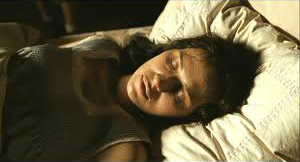
However, Carmen’s defining attribute is her beauty. While she sleeps, Carmen’s adoring daughter speaks to her little brother through Carmen’s belly saying, “She’s very pretty, you’ll see. Even though she’s sad some of the time, when she smiles, you’ll love her.” Not only is Carmen’s beauty of paramount importance, she is primarily concerned with superficial things like pretty dresses, clean shoes, modesty, and that her daughter grow up into a proper young woman. This, in combination with the way she languishes in such a difficult pregnancy, define Carmen as “mother.” Being pregnant with the offspring of such an evil man threatens Carmen’s health and ultimately kills her. Though this tale is magical realism, I’m uncomfortable with the “beautiful vessel” implications that are inescapable in Carmen’s characterization. However, her troubled pregnancy can also be interpreted as her loss of hope. When the story begins, Carmen is full of expectations about how life will be once she and her daughter settle in with The Captain at his base. By the end of her pregnancy, though, she says through lips bleached of life, “As you get older, you’ll see that life isn’t like your fairy tales. The world is a cruel place. And you’ll learn that even if it hurts! Magic does not exist…not for me or anyone.” This is a tragic woman who’s tried to conform to society’s expectations of her by being beautiful, soft-spoken, and proper, but she has still not been afforded a decent life with even a meager offering of happiness.
Lastly, we have Mercedes, the housemaid rebel spy made of steel.
My…effing…hero…
Mercedes has infiltrated The Captain’s base, feeding information, supplies, and letters to a secret rebel camp in the forest. She and Ofelia form a bond where Mercedes is at once a maternal figure and a co-conspirator. Despite reproaching herself for the cowardice of her silence, Mercedes suffers the indignities The Captain inflicts upon her without complaint because she is a guerrilla soldier, fighting against a tyrannical political regime with nothing but her wits and her small, dull kitchen knife.
When Mercedes is discovered, The Captain ties her up in the storeroom, preparing to torture her. He insists all his guards leave him to the task, sneering, “For God’s sake, she’s just a woman.” Subtly, Mercedes warns him of his grave underestimation of her, “That’s what you always thought. That’s why I was able to get away with it. I was invisible to you.” The Captain continues to disregard her, and before he realizes it, she’s escaped using her dull kitchen knife to cut the ropes and to stab him repeatedly. When he is at her mercy, she says, “I’m not some old man! I’m not some wounded prisoner! Sonofabitch! Sonofabitch! Don’t you dare touch the girl! You won’t be the first pig I’ve gutted!” She fish hooks him, permanently disfiguring his face.
“You won’t be the first pig I’ve gutted!” – Mercedes the Supreme Figure of Badassery
All there is to say is, “Wow.” This pivotal scene shows Mercedes as full of strength, compassion, and unshakable resolve. She asserts her power as a woman, defying not only the gender binary that subjugates women, but defying her class and the military state authoritarian structure as well. She tells The Captain that women aren’t weak like old men or wounded prisoners, and she even cites the power her trade as a kitchen maid has given her before viscerally showing him that power. Even in the height of her rage, Mercedes is still thinking of the welfare of Ofelia, who is her friend, surrogate child, and ally.
The way Mercedes wields her power is starkly contrasted with the way in which the patriarchal figure of The Captain wields his. All three women have a more complex world view than The Captain. Even Carmen who seeks love in the unlikeliest of places because she is full of naive trust appreciates that emotional well-being is of paramount importance. Though Ofelia is only a lost child caught between harsh reality and dark fantasy, even she recognizes the imperative of morality and self-sacrifice when faced with the choice: do evil to gain a reward or do good and lose everything. All three women are flawed, multifaceted characterizations of unique women in a situation made terrible by an oppressive patriarchal force as represented by Captain Vidal. Though the three could be woodenly interpreted as mother, maiden, and child, their individual depth coupled with their oftentimes unexpected strength and clarity give them value in a feminist reading of Pan’s Labyrinth. As feminists, we don’t ask for idealized portrayals of feminist heroines; we ask for complexity, realistic representations of women, and a critical approach to the patriarchal paradigm. Pan’s Labyrinth gives us all that and more.