Women in Politics Week: With a Complex Black Female Protagonist Created by a Black Female Showrunner, I’m Rooting for ‘Scandal’

This post by Megan Kearns previously appeared at Bitch Flicks on April 17, 2012.

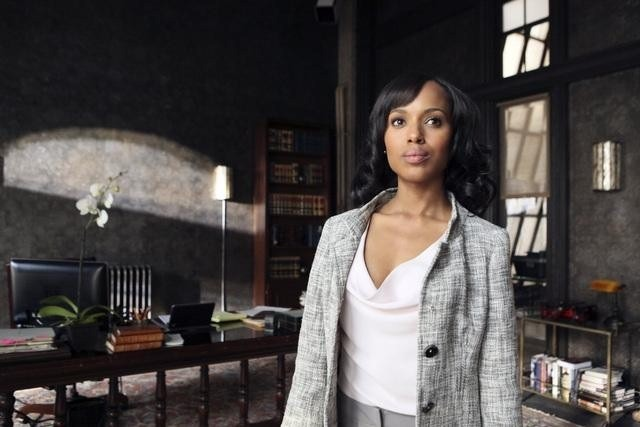
Kerry Washington as Olivia Pope in Scandal

I love Grey’s Anatomy. Is it melodramatic? Absolutely. But its dramatic storylines, sharp dialogue and diverse cast have hooked me from the very first episode. So when I discovered writer, producer, showrunner Shonda Rhimes created Scandal, a political thriller TV series revolving around a woman of color, I knew I had to watch.

Kerry Washington (a feminist in real life…huzzah!) plays Olivia Pope, an assertive attorney who’s a “crisis management expert,” inspired by former George H.W. Bush administration press aide Judy Smith (who also happens to be a producer of the show). Olivia runs a small organization of lawyers who fix scandals and clean up messes like murder charges and infidelity. With a subtle and nuanced performance, Washington is definitely the best part of the series.
What’s so interesting (and fucking sad) is that Scandal is the only prime-time TV show on right now centering around an African American woman. And it’s the first network show with a black female lead in 30 years (that is horrifying). I’ve often heard Washington is a fantastic actor and she was great in the heartbreaking For Colored Girls. Here she commands the screen with confidence and poise. Olivia is an intelligent, successful and empowered woman. Others look up to her, revere her and even fear her shrewd insights and relentlessness to finish a job. She’s demanding, requiring her staff to pull all-nighters and enforcing rules like no crying in the office and not answering “I don’t know” to a question she asks. Powerful politicians turn to her for advice. She negotiates deals on her terms. While new employee Quinn (Katie Lowes) idolizes her, Olivia is far from a paragon of perfection. She’s vulnerable with a messy and complicated love life. She’s flawed, not always likeable (although I personally love her!) and uses Machiavellian tactics to complete a job. But this mélange makes her all the more interesting.
Washington was recently on The Melissa Harris-Perry Show (one of my absolute favorite feminist icons EVER!!!). She talked about inclusivity and how she and Harris-Perry, as two women of color on TV, are “expanding the idea of who ‘We the People’ is.” She also discussed playing a complex female character on-screen:
“…When I read this script, I was so blown away by this woman who in one area of her life, in her professional life, she’s brilliant and sophisticated and in power. And then in her personal life she’s vulnerable and torn and confused. And I thought this is an incredible challenge for any actor. But we also don’t get to do that often — as women in this business, as people of color in this business — to have all of that complexity to explore.”
And she’s right. We too often don’t see complex women, especially women of color, on-screen.
I loved the political intrigue and the focus on a single, accomplished, career-driven woman. And of course how could I not be delighted that Henry Ian Cusick (aka dreamy Desmond from LOST) has found a new series. I was thrilled that the show opens from Quinn’s perspective, taking a job with Olivia because of her reverence for her stellar reputation. I also loved that within the first 7 minutes, a character derided a potential client because he was an anti-choice, anti-gay Republican. While many people assume the media suffers from a liberal bias, too few shows actually discuss abortion or LGBTQ issues. 
While most of it is good, some of the dialogue felt a bit staged or forced. I cringed when Olivia body polices and chastises new employee Quinn for displaying too much cleavage and when Abby (Darby Stanchfield), one of Olivia’s employees, gleefully calls a female murder victim a whore…and drops the whore word a few more times in the next episode too. While there are several female characters (none of whom are really fleshed out yet beyond Olivia), most of the time they’re interacting with men. Although Olivia does have conversations with a young woman who claims is having an affair with the president (Olivia’s former boss) and with the wife of a Supreme Court nominee. No strong female friendships emerge yet. But we’re only 2 episodes into the series. Female friendships comprise the cores of Rhimes’ other shows, Grey’s Anatomy and Private Practice. So I’m hopeful that we’ll see more female interaction as the series progresses.
Much like its complicated protagonist, the series isn’t perfect yet. But it’s got potential. I’m rooting for it because we can never have too many sharp political dramas. And we can never have too many female leads, especially with women of color. 
Scandal is a big deal. Not only do we have a woman of color protagonist, we have a series written and created by a woman of color. With Grey’s Anatomy, Private Practice and Scandal, Rhimes belongs “in an elite group of TV show runners who have multiple series on the air at the same time.” In each of Rhimes’ television shows, she puts women at the forefront. While she has held open casting calls for all ethnicities and has African American, Latina, Asian American and white women in her shows, she’s never had a series revolve around a woman of color. Until now.
In an Essence interview, Kerry Washington said she felt “lucky” to be a woman of color in Hollywood right now:
“I think it’s a really special time to be a woman of color in this business. The landscape of who has the power is changing. We are in more influential positions and are able to have a say in the stories that are told. I feel very lucky to be in the business now…”
But The Grio’s Veronica Miller asserts that it’s hard to have faith in “Hollywood’s relationship with black actresses:”
“It will be easier when black actresses become more visible in roles across the spectrum, (think fantasy hits like Harry Potter, or romantic dramas like The Notebook) and not just ones that call for an African-American female.”
Racialicious’ Kendra James points out the pressure TV shows like Scandalwith black leads face:
“It’s risky for a network that depends on millions of viewers for advertising revenue to cast a lead that the majority of viewers (read: white people) may not relate to. While a show like Pan Am (fondly known as Carefree White Girls Explore the Third World) can fail to take off without consequence, it feels, at times, as if the fate of every black actor and actress on television rides on the success or failure of one show each season.”
Here at Bitch Flicks, we talk a lot about the need for more women in film and TV, in front of and behind the camera. Women comprise only 15% of TV writers and 41%-43% of TV roles are female. But we also desperately need more women of color. 
In a time when Trayvon Martin was shot for being a young black man wearing a hoodie…when racist Hunger Games fans can’t empathize with a black character in the film adaptation…when accomplished and ridiculously talented black female actors like Viola Davis have a hard time finding roles…when black female actors must play either maids or drug addicts or sassy best friends…when female actors of color get sidelined from the cover of Vanity Fair — our society tells people of color over and over and over again implicitly and explicitly that their bodies and their lives don’t matter.
It’s time to change that. It’s time for our media to stop revolving around white men’s stories and reflect the diversity of our world.
Women in Politics Week: ‘Election’: Female Power and the Failure of Desperate Masculinity

“I just think people are made uncomfortable by ambitious women.”

– Tom Perrotta, author of Election, the book that inspired the film

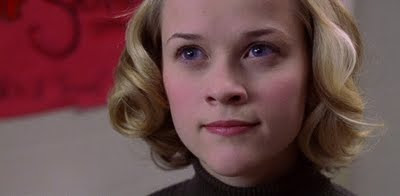
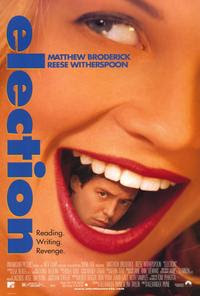
The 1999 film Election features Tracy Flick (Reese Witherspoon), a power-hungry young woman who will stop at nothing to get what she wants and Jim McAllister (Matthew Broderick), an emasculated male high school teacher who loses everything trying to keep Flick out of power.
She wins. He loses. But he doesn’t realize it.
Election–which was nominated for an Academy Award and a Golden Globe and won the Independent Spirit Award for Best Film–is a film that has been immortalized for its depiction of Tracy Flick, a high school junior who, after building a flourishing “career” in academics and extra-curricular activities, is running for Student Government President of George Washington Carver High School.
Tracy Flick (Reese Witherspoon) running for Student Government President
At the beginning of the film, Flick and McAllister are narrating their own stories with pride. She is well-aware of her accomplishments, and he believes his position as a history and civics teacher is fulfilling and that he serves as an inspiration to his students. He thinks his is a position of power.
Jim McAllister (Matthew Broderick), Teacher of the Year
As their stories intertwine, McAllister pauses to let this audience in on some information about Flick.
“Her pussy gets so wet you can’t believe it.” McAllister flashes back to his best friend, Dave Novotny, sharing this detail about Flick. Novotny, who was a math teacher at the high school, had been having an affair with Flick (who at the time was a sophomore).  
Almost immediately, Flick begins telling her side of the story. “Our relationship was built on mutual respect and admiration,” she says in her confident, chipper and stern voice. He talked to her like she was an adult, and she reciprocated. She points out that she didn’t have a father growing up, and “you might assume I was psychologically looking for a father figure, but I wasn’t.” She goes on to say that he was strong and made her feel protected, which clearly shows that perhaps her self-analysis wasn’t fully realized.
That said, she is the one who ends the relationship. Novotny sends her a homemade love-letter booklet, and she and her mother turn it in to the principal. (He’d “gotten mushy” and acted like a baby, she later tells McAllister.)
“We’re in love,” pleads Novotny, sobbing to the principal. He is fired, his wife kicks him out and he’s forced to move home and live with his parents. Typically, this type of story line ends with the young woman feeling victimized and being ostracized at school; however, Flick’s involvement with him is kept secret, and she never acts like a victim.
These plots sound problematic, obviously, but it’s important to note that in this dark comedy, none of the characters is wholly likable or sympathetic.
These themes of threatened masculinity that permeate the film are not, as it might seem, criticisms of feminism. Instead, the emasculation of McAllister (and Novotny) is portrayed as their own failing, which makes them incapable of fully functioning and succeeding. Their desperate plight for masculinity and power–at work and in the bedroom–ultimately undoes them.
Flick knows the answers, although McAllister doesn’t want to hear them
Flick and McAllister’s stories continue, as the tension between their narratives grows. “Now that I have more life experience,” Flick says, “the more I feel sorry for McAllister.” He’s in the “same little room, in the same stupid clothes… and year after year after his students go to big colleges, big cities… make loads of money. He’s got to be jealous.”
“Like my mom says,” adds Flick, “the weak are always trying to sabotage the strong.”
She then mentions that she’s an only child of a single mother, and that her mom is really devoted to her and wants her to do all the things she couldn’t. She constantly writes to famous women to ask how they got where they are, and for advice for her daughter.
(While this sounds perfectly lovely and like an exception to the constant portrayal of strong women/female protagonists with absent mothers, Flick’s mother is imperfect, and is obviously pushing her daughter into the life she wishes she had had.)
McAllister becomes more and more obsessed with keeping Flick away from the presidency (he’s the advisor who she’d most closely work with) as he sees her thirst and push for the leadership position. While one may be tempted to think his obsession is tied to some kind of revenge for Novotny’s life being ruined, that doesn’t appear to be the case. McAllister asserts that Novotny was in the wrong. Instead, McAllister’s disdain for Flick is rooted in something deeper, something irrational.
Her power–sexual, academic and political–is threatening to him.
He begins a downward spiral of trying to take her down. He recruits a popular young man to run against Flick. In his personal life, he and his wife are having trouble conceiving (most reviews note that he is unable to impregnate his wife, which is an interesting conclusion, considering his infertility is never deemed the culprit, but this assumption is part of the emasculation), and he becomes enamored with Novotny’s ex wife, Linda (McAllister only seems to be stereotypically masculine in her home–mowing the lawn, doing household projects, fixing the drain, etc.). They have sex once, and instead of meeting him at a hotel after work like they plan, she tells Diane McAllister (her friend and his wife) that they’d had sex. He’s kicked out of the house, and continues down the spiral, waiting all night in his car at Linda’s house, where he urinates in the yard (sadly attempting to mark his territory?) the next morning. His right eye, which had been stung by a bee, is swollen shut and he’s an absolute mess. 
McAllister falls apart
His desperate grabs for power–sexually, politically and masculinity–are failures.
McAllister’s small beat-up car, his failed sexual exploits (even watching porn he is inactive and submissive), his dual attempts at control of and utter intimidation by Flick and his desire for affirmation are all indicative of some kind of masculine failure. His discomfort with female power sends his desperate need for control and some kind of stereotypical masculinity that is out of his reach and outdated.  
Other symbols that point to McAllister’s failure are his swollen eye (which can be symbolic of the antichrist in Christian and Islamic scripture), his choice of Pepsi (after Flick points out that Coca-Cola is always the no. 1 cola brand), his continued association with garbage from the beginning of the film to the end and his tiny basement apartment where he ends up after trying–and failing–to rig the election in Paul’s favor.
McAllister doesn’t see himself as a failure, though. His upbeat narration at the end of the film (after he has been fired from his teaching job and goes to New York City, where he’s working as a docent at the American Museum of Natural History) shows that he didn’t quite accept or understand the gravity of his actions. 
As the film cuts to his narration at the end, the image is a neanderthal penis, which pans out to a display at the museum where he works. When he’s introducing his new girlfriend, they are looking at a mirror image of two nude neanderthal figures. This image is indicative of his primal urges of masculinity that have served him so poorly and are so out of date.
Flick wins at the end. While the audience sees her disappointment at Georgetown University (she is still lonely, and has a hard time finding others like her), she’s successful. McAllister sees her in Washington D.C. getting in a limo with a Nebraska senator. While he seems to assume she’s sleeping her way to the top (even though her affair with Novotny didn’t help or hurt her), she appears to be in a professional capacity and secure in her career. She looks fulfilled.
So while we don’t have warm feelings about Flick (her tirades and poster-ripping aren’t character strengths, but they’re realistic), her dedicated hard work–lonely and alienating as it might be–takes her where she wants to be. Her mother and the years of letters of advice from powerful women helped pave her way.
When McAllister sees her, he thinks about her “getting up early to pursue her stupid dreams–I feel sorry for her.” His anger rises, and he thinks, “Who the fuck does she think she is?” before throwing his fast food drink at the limo.
She’s Tracy Flick, that’s who the fuck she thinks she is. And she won.
In a 2009 interview with Tom Perrotta (the author of Election, which was the basis for the screenplay) about the “evolution” of Tracy Flick, he says:
“What I was responding to with Tracy was new: a generation of hard-charging women, the daughters of first-generation feminists and unapologetic achievers. This was the late 80s and early 90s, and they were different than the girls I had grown up with, more willing to compete. The only other cultural reference points for women like that then were movie stars and entertainers. People like Madonna. Who was it going to be in politics? Golda? Indira? Thatcher? By default, there are few female political touchstones.” 
The 2012 election ushered in a record number of women in both the Senate and House of Representatives. There is movement, but the McAllister-like “traditional America” (as pundits mourning the loss of white male America call it) is holding strong. The House GOP recently released its list of committee chairs, all of whom are white men
This desperate masculinity can still keep pushing, and like McAllister, sadly try to mark its territory, but the Tracy Flicks will win. 
The very last scene of the film is McAllister giving a museum tour to a group of small schoolchildren. He asks a question, and the only hand raised is a young girl–she shoots her arm up in the air with pride and confidence, and he’s caught off guard, wanting anyone else to answer (just like he does with Flick at the beginning of the film). He may try to keep denying strong females and trying to reduce their power, but as Flick proved, that just won’t work.
Face of determination
Meanwhile, Flick “hardly ever thought about Mr. McAllister… it’s almost like he never existed in the first place.”
While Tracy Flick perhaps isn’t the best role model for young women (see: Leslie Knope), she is not the villain. McAllister, instead, in his desperate grab for control over these powerful young women, is. He just can’t see that through his privilege.


Leigh Kolb is a composition, literature and journalism instructor at a community college in rural Missouri. 

Women in Politics Week: Politics Is a Man’s Game: The Trope of the Great Woman in Early Hollywood Narratives

This is a guest post by Tom Houseman.
Movie still from The Great McGinty
Since the 1990s the sight of female politicians, both in real life and in films and television shows, has become more and more common. Women are making great strides in the American political landscape—when new congressional representatives are sworn in in January there will be a record number of candidates in the House—and the film and TV industries have done their best to keep up with that trend, if not necessarily pave the way. Dramas from The Contender to Commander in Chief and comedies including Veep and even Political Animals show the unique struggles that women face when they rise to positions of power, some more insightfully than others.

This change has been both rapid and recent, as well into the 20th Century women were barely present in politics, at least on the front lines as elected leaders. And while women have been a growing presence in the House of Representatives since 1917, Hollywood was less than progressive in its depiction of women serving in political offices. Politics in films made in the ’40s and ’50s was strictly a man’s world, with the men taking charge as both the heroes and the villains, the bosses of the corrupt political machines and the up-and-comers either succumbing to them or fighting back against them. But these films were not devoid of women, but those women had their own roles to play.

Female characters in these political films found a niche into which they could be fit, a trope on which sufficient variations could be introduced that it ended up showing up multiple times over the decades. When considering this type of character the phrase “Behind every great man is a great woman” comes to mind. That is where the women in these movies stood: behind the man, attempting to push him toward greatness, sometimes successfully, sometimes not. These Great Women did not achieve anything on their own, or draw attention to themselves, but were behind-the-scenes players using the power they had over the protagonist in pursuit of their goals.

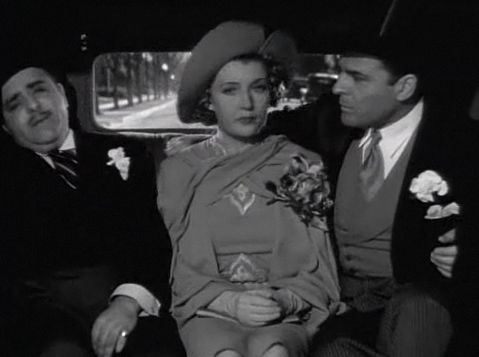
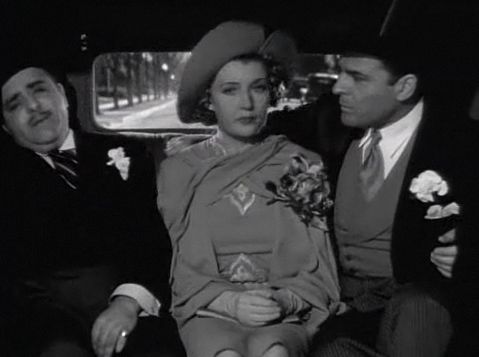
The most generic and straightforward example of this type of character appears in the 1940 film The Great McGinty, the directorial debut of Preston Sturges. As blunt a political satire as they come, the film tells the story of a bum who walks the crooked path to political stardom. Dan McGinty (Brian Donlevy) is hired by a political boss to help rig elections, and ends up so impressing his superiors that they keep on promoting him. McGinty is convinced to run for office, and arranges a marriage of convenience with his secretary, Catherine (Muriel Angelus) as a way to make himself more appealing to voters.

But Catherine, who is a widow with a child, does more than just help McGinty’s political status. She begins to exert her influence on him, eventually convincing him to stop his illegal methods. This does not end well for McGinty, who ends up abandoned by his bosses in prison before he manages to escape to the Caribbean. But at least we know that he escaped with his soul, thanks to the conscience instilled in him by his wife.

While the major female character in The Great McGinty is extremely one-dimensional, other films were able to find more interesting ways to explore this type of role. The year before, in 1939, Frank Capra’s Mr. Smith Goes to Washington was released in theaters. While the traditional Great Woman represents the film’s moral compass, Mr. Smith goes in the opposite direction in developing its story. Jefferson Smith is a bright-eyed idealist from the midwest who is chosen to be a United States Senator by a corrupt Governor who assumes Jeff will toe the line. But Jeff has ideas of his own and quickly gets in trouble with the political machine built on bribery and graft.

James Stewart and Jean Arthur in Mr. Smith Goes to Washington
Saunders (Jean Arthur) is Jeff’s secretary, bitter and jaded, announcing at the very beginning of the film her intention to quit. She sees Jeff as a rube and a bumpkin who has no business in politics, and when he comes up with an idea for a bill to turn a stretch of land in the midwest into a Boys’ Camp (using the exact land that his corrupt bosses want to use for a dam) Saunders attempts to put him in his place by explaining to him how difficult getting anything done in Washington is, but she ends up fueling his passion by giving him the knowledge to accomplish his goals.

When Jeff’s idealism clashes with his fellow senators’ cruelty and perfidy, it is Saunders, her faith in democracy restored, who stands up for him and helps him take on the political machine. Several scenes feature Saunders standing in the balcony of the senate chamber, shouting and waving to give Jeff advice on what his next move should be. Of course it is Jeff whose valiant stand and day-long filibuster are able to overthrow the corrupt politicians and save the day, but Saunders is extremely active behind helping and supporting him every step of the way.

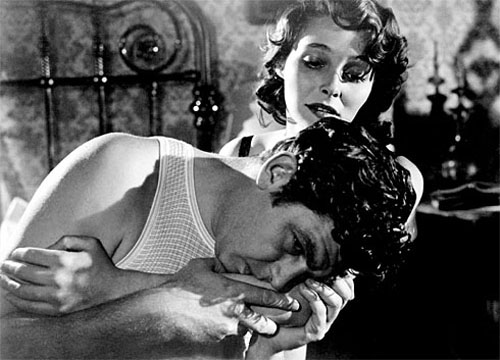
Perhaps the most complex and powerful take on the Great Woman character is in the 1956 film A Face in the Crowd, which was directed by Elia Kazan. Marcia Jeffries (Patricia Neal) is a young Arkansas journalist who finds alcoholic bum Larry Rhodes (Andy Griffith) to perform on her radio show. After she nicknames him “Lonesome Rhodes” he becomes a local sensation, with his folksy charm, homespun wisdom, and disregard for authority making him a star.

As Lonesome becomes more and more popular his ego inflates drastically, and Marcia watches on as he succumbs to his lust and alcoholism. At the same time she sees how he is blatantly manipulating his audience and using his popularity to become a powerful political figure. Despite realizing that he has become a pedagogue who uses everyone around him, including her, Marcia is too willing to indulge Lonesome because she is in love with him. When he is feeling weak and relies on her for comfort she takes him in repeatedly, against her better judgment.

Lonesome becomes a major political figure thanks to his national television show, and becomes the advisor to a presidential candidate, helping shape his image to seem less elitist and more “of the people.” Marcia realizes how dangerous Lonesome has become, and when he reneges on his proposal to her by having a quickie wedding with an eighteen year-old he meets while judging a pageant, she accepts that she has a responsibility to knock him off his pedestal. During a live taping of his show Marcia turns the speakers on while Lonesome is mocking his audience, destroying his reputation and his political career. As a Great Woman Marcia was unable to turn around the man who had fallen from greatness, and so she had to destroy him, or rather, set him up to destroy himself.

What do these three women have in common, other than that they stay in the background while the men in their lives do great or terrible things? All three women have a power over these men that no other characters in the film have. In The Great McGinty and A Face in the Crowd it is an emotional power; Catherine uses hers to convince McGinty to do the right thing, and Lonesome frequently admits to Marcia that he relies on her, although she is unable to save him from his hubris and instead helps bring about his downfall. In Mr. Smith Saunders becomes the only character that Jeff can trust, and her knowledge and guidance leads him to victory.

Movie still from A Face in the Crowd
None of these three women is overtly sexual, at least compared to the other women we see in the film. Catherine is seen as chaste and pure and even when she and McGinty fall in love there is no hint of lust in their relationship. Saunders intentionally de-sexes herself around her co-workers, none of whom even know her first name, and she deeply resents Susan, the daughter of a corrupt senator who uses her feminine wiles to distract Jeff from the shady dealings going on around him. And while Marcia does have sex with Lonesome (coming out in the ’50s gave the film the leeway to imply, if not show, extramarital sex), the film clearly gives her the moral high-ground over the other floozies with whom he has sex, as well as the very young woman he marries instead of Marcia.

There is even a motherly quality to all three women, each guiding and protecting the men in their lives in a distinctly maternal manner. Even though all three relationships have a romantic undertone, these women’s interactions with the protagonists have a protective, loving yet chiding and slightly condescending quality that is reminiscent of how a mother might treat a child. In Mr. Smith Saunders at one point describes her pride in seeing Jeff take the Senate floor by storm as being like a mother watching a son’s impressive feat. That motherly pride is one of the defining traits of the Great Woman, as a way to differentiate her from the harlots who might try to lead the protagonist away from the right path.

As the ’60s progressed women began taking roles of greater prominence, still often acting behind the scenes, though, exerting their influence outside the public eye. Characters such as The Manchurian Candidate‘s Eleanor Iselin (Angela Lansbury) showed how roles were evolving for women in political films, and would lay the seeds for characters in films from G.I. Jane to Legally Blonde 2, which include female politicians who still pulled strings in the background. But there are still female characters whose roots can be seen in films like The Great McGinty, Mr. Smith Goes to Washingon, and A Face in The Crowd. So every time you are watching a political film and the most important female character is a wife or a secretary or a journalist (think State of Play or The Ides of March), remember the influence of these early films and cringe at how far we haven’t come.

———-
Tom Houseman was born white, straight, male, cis, and rich. He has done a lot of work unpacking and understanding his many forms of privilege. He is far from perfect, but he is learning. He writes film reviews and analysis for BoxOfficeProphets.com. If you want to officially like him, you can do so at Facebook.com/tomhousemanwriting.

Women in Politics Week: Political Humor and Humanity in HBO’s ‘VEEP’

4i0YfCh_FULL21


Written by Rachel Redfern.


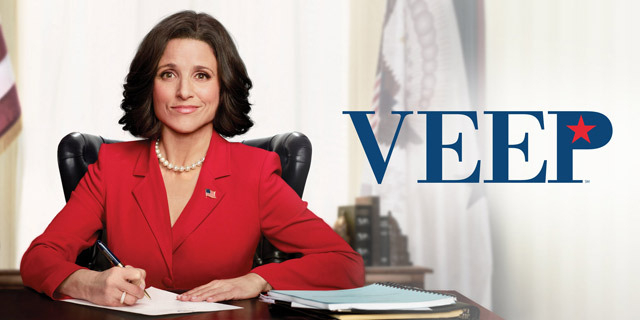
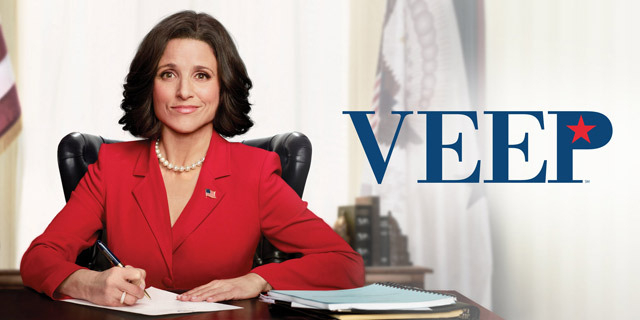
Foul-mouthed and frazzled, Julia Louis-Dreyfus (eternally known as Elaine from Seinfeld), stars as United States Vice-President, Selina Meyer, in the Emmy Award-winning HBO political satire, VEEP. The show focuses on Dreyfus’ character, a woman who wants power, but resides in a fairly weak place, politically, having to hide in the shadows of the president and worry about her approval ratings.

There are two Hollywood versions of Washington, D.C.–one where the president is Morgan Freeman and he’s strong, but compassionate, and you feel good about being an American. The other version is something out of a John Grisham novel in which the city is one giant 60 Minutes expose of cynicism and conspiracy (the latter version just makes you sad to be alive). VEEP is the second, minus the conspiracy and snipers and with the addition of obsessive BlackBerry use.

Since the show never features the president, VEEP is free to focus on the more trivial aspects of federal politics, like the clean jobs bill Selina tries to put together, only to have the president close it down and give her obesity instead (not that obesity isn’t a big issue, it just offers a few more humorous situations than Guantanamo Bay). VEEP is interesting though, not because the characters surrounding her are ridiculous, but because Selina, the main character, is ridiculous and unlikable herself. She’s a toxic political figure, a creator of monumental gaffes and inappropriate situations who doesn’t even have the excuse of good intentions. Her intentions are always self-serving and she treats her staff atrociously, often assigning them the blame for her mistakes.

Julia Louis-Dreyfus as Selina Meyer in HBO’s VEEP
Selina’s staff isn’t any bundle of joy either; they’re just as unethical and self-serving as she is. Amy (Anne Chlumsky) is her competent, yet also incompetent chief of staff; Gary (Tony Hale of Arrested Development), is her faithful personal aide who is so loyal he takes a sneeze in the face to save her from being sick, and even breaks up with her boyfriend for her (in a sidenote, this is the second role that has featured him as a mildly obsessed man with an insane devotion to an older woman, a role that is played out as being emasculating and undignified); Sue (Sufe Bradshaw), is her sassy secretary; Mike (Matt Walsh) as the over-the-hill fading director of communications; Dan (Reid Scott) who is politically savvy, but also a social climber of epic proportions; and of course, the weird presidential liaison, Jonah (Timothy Simons), who tries to sleep with Amy.
Selina and her female staff are just as foul-mouthed and unpleasant as their male counterparts, a fact I actually really like about the show. Instead of giving the women a rosy, fictional gloss, they’re painted more as unique players in the political process, rather than just a token show about “Women in Politics.” In that vein, the show does portray the still highly sexualized role of female leaders, which is disturbing, but unfortunately very realistic. Examples of sexual harassment are fairly common on the show, like when Sue is the recipient of some pretty blatant comments from a congressman, which she just shrugs off; the death of a famously lecherous senator is mocked as everyone raves about him publicly, but in private, all the women sarcastically share their stories of his disgusting behavior. It’s sad to think that this situation is probably very common; male political figures lauded as leaders, when in reality they’re abusive perverts. For me though, the most astute and frustrating example of this came when Amy, Selina’s chief of staff, has to negotiate with two congressmen from Arizona; their immediate disdain for her and the patronizing, “sweetheart” she receives when she sits down is so realistic and problematic I wanted her to smack them. And yet, like so many powerful and intelligent women, she just had to take the condescension or risk sounding like an “over-emotional bitch.” This portrayal of randy behavior from the male senators strikes a contrast to the depth of scrutiny that the women on the show receive about their sex life. When Selina has a pregnancy scare, the media goes crazy and many of her interviews after address that very personal topic, rather than larger, national issues.
Selina-Meyer


Humorously though, her cynical staff decide to turn it into a sympathy moment and try publish a story about in a woman’s magazine. It’s one of many instances when Selina’s stance as the loving, but absent mother plays a role in her political success; It’s only when Selina cries on camera about missing her daughter that her approval rating increases. Comedy shines again as the greater revelator of cultural inequality as Selina’s motherhood is constantly called into question (as is her femininity when she’s given the nickname, “Viagra inhibitor”). As is always the case, a male leader’s relationship with his children is less important than his hairline, but a female leader must always appear guilty and remorseful about her position, she must always regret the fact that her ambition has taken her out of the home or risk being perceived as cold-hearted or worse, un-maternal.

In the end, Selina (and even most of her staff) are undeniably unlikable people. Very little (if any) time of the sitcom is spent showing political figures as doing anything to improve the lives of their constituents; rather their days are filled with scheming and backbiting. Despite the fact that the characters aren’t people you would ever want to meet, the show does highlight the selfish and elitist world of the Unites States’ highest political people, and it’s a nice change to have that shown with a female lead.

veep3

Aside from the very astute commentary that the show makes about gender and politics, one of it’s greatest strengths is in the area of the gaffe. Oh the political gaffe: Romney and his 47 percent, Akin and his “women have a way to shut that whole thing down,” Vice-President Joe Biden about half the time. While all we see is the unbelievably stupid thing that a public figure has just said on national television, VEEP does an excellent job of leading up to Selina’s gaffes. They give us the background story and the same information that Selina is given so that when the gaffe does occur it’s incredibly funny, but also a bit understandable. It’s an element of the show that serves as a great reminder of the humanity of our politicians; while yes they say stupid things sometimes, we probably would too if we were in their shoes. I mean, I say stupid stuff all the time, I’m just lucky enough that there aren’t any TV cameras around when I say it. At the end of the day, politicians are just people with better hair.


Rachel Redfern has an MA in English literature, where she conducted research on modern American literature and film and its intersection, however she spends most of her time watching HBO shows, traveling, and blogging and reading about feminism.


Women in Politics Week: "The Women of Qumar": Feminism and Imperialism in ‘The West Wing’

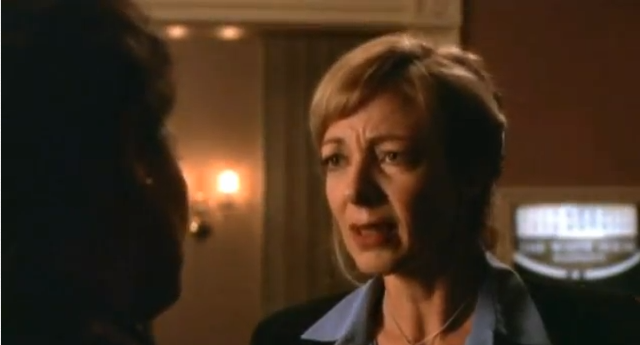
CJ Cregg (Allison Janney) in The West Wing

Guest post written by Pauline Holdsworth.
 
CJ: They beat women, Nancy. They hate women. The only reason they keep Qumari women alive is to make more Qumari men. 

Nancy: What do you want me to do? 

CJ: How about suggesting that we sell the guns at them, suggesting that we shoot the guns at them? And by the way, not to change the subject, but how are we supposed to have any moral credibility when we talk about gun control and making sure that guns don’t get into the hands of the wrong people? God, Nancy, what the hell are we defining as the right people? 

Nancy: This is the real world, and we can’t isolate our enemies. 

CJ: I know about the real world, and I’m not suggesting we isolate them. 

Nancy: You’re suggesting we eliminate them. 

CJ: I have a briefing.

Nancy: You’re suggesting –

CJ: I’m not suggesting anything. I don’t suggest foreign policy around here. 
 Nancy: You’re suggesting it right now. 

CJ: It’s the 21st century, Nancy, the world’s gotten smaller. I don’t know how we can tolerate this kind of suffering anymore, particularly when all it does is continue the cycle of anti-American hatred. But that’s not the point either. 

Nancy: What’s the point?

CJ: The point is that apartheid was an East Hampton clambake compared to what we laughingly refer to as the life these women lead. And if we had sold M1A1s to South Africa 15 years ago, you’d have set the building on fire. Thank God we never needed to refuel at Johannesburg.

Nancy: It’s a big world, CJ. And everybody has guns. And I’m doing the best I can. 

CJ: (tearfully) They’re beating the women, Nancy. — “The Women of Qumar,” Season 3, Episode 9, The West Wing

“The Women of Qumar” originally aired on November 28th, 2001, approximately two months after the first American airstrikes in Afghanistan. That timing is crucial to consider when looking at how this episode presents an imagined Middle East. Though The West Wing is often billed as optimistic counter-history and as an antidote for the policies and politics of the Bush administration, the show’s Qumari plot line is much more of a fictional transcription of current events than it is a progressive alternative. Most importantly, in creating Qumar as a fictional country meant to evoke the worst American fears and prejudices about life in the Middle East, Aaron Sorkin effectively packages and sells many of the motivations behind the current war in Afghanistan in the guise of progressive entertainment.

Nancy McNally (Anna Deavere Smith) CJ Cregg (Allison Janney) in The West Wing
A kind of “I speak for all women” conviction is displayed by Press Secretary C.J. Cregg in this episode, whose conversation with National Security Advisor Nancy McNally (Anna Deavere Smith) suggests her belief that all other female members of the administration share her perspective. Her suggestion that all-out militarism is an appropriate reaction to the gender-based oppression experienced by the women of Qumar is troubling on several levels. First, it contributes to a “savior” narrative which glosses over the very real existence of gender-based violence and oppression in North America and paints Middle-Easterners as explicitly violent, backwards, and misogynistic. Second, since Qumar is a fictional amalgamation of various imagined versions of Islamic countries in the Middle East, it’s implicit in C.J.’s argument that Islam is a chief factor in these women’s oppression — a loaded assertion which makes troubling assumptions about the experiences of Islamic women, particularly with regards to personal agency and faith.

It’s also worth noting how convinced C.J. is that the United States will one day be at war with Qumar. “This isn’t the point, but we will. Of course we will. Of course we’ll be fighting a war with Qumar one day and you know it,” she tells Nancy. And by the end of the fourth season, the United States and Qumar will be at the brink of military conflict, but it won’t be because America has stepped in to nobly rescue the women of Qumar from their religion and culture — it will be the end result of a series of events set in motion by President Bartlet’s authorization of the extrajudicial assassination of the Qumari defense minister, Abdul Shareef. 

“The Women of Qumar” won Allison Janney an Emmy, and contains what is perhaps her most impassioned speech on women’s issues. It’s framed as a look at C.J.’s personal, emotional side and seems largely intended as character development — but as the Qumari plot line becomes more and more important throughout the next two seasons, C.J.’s initial framing of the issues becomes more integral to the show’s moral stance on militarism and foreign policy. Her outbursts in this episode seem intended to garner emotional support and lend legitimacy to the Bartlet administration’s foreign policy, which tends to favor intervention and unilateral strikes and which often betrays a belief in the inherent moral superiority of the United States as a kind of self-appointed global police. Rather than presenting C.J.’s perspective as a morally ambiguous mobilization of feminist rhetoric in the service of imperialism and militarism abroad, her speech in this episode is glorified as a noteworthy example of her personal feminist politics. 
In “Under Western Eyes: Feminist Scholarship and Colonial Discourse,” Chandra Talpade Mohanty writes, “I would like to suggest that the feminist writings I analyze here discursively colonize the material and historical heterogeneities of the lives of women in the third world, thereby producing/re-presenting a composite, singular “Third World Woman” — an image which appears arbitrarily constructed, but nevertheless carries with it the authorizing signature of Western humanist discourse.” In “The Women of Qumar,” this amalgamating force is literally employed as a plot device, one which creates an archetypal Third World Woman and then invents an amalgamated nation around her.

One of the most troubling moments in C. J.’s conversation with Nancy is her statement, “Apartheid was an East Hampton clambake compared to what we laughingly refer to as the life these women lead” – a statement that paints this amalgamated, fictional country (which refers back to viewers’ hazy imaginings of the Middle East as a whole) as a region so backwards, so violent, and so primitive that no women’s life there could possibly be worth living. In addition to erasing the diversity of Middle Eastern women’s experiences, C.J.’s words here suggest that she considers herself, as a white feminist, to be an authority on deciding whether or not the lives of racialized women are “real” lives. Given that many of these women would experience drastically increased violence and displacement as a result of an American investigation, her implicit suggestion here that the current “worth” of the lives of the women of Qumar is something for Americans to decide and for Americans to wager with is particularly problematic.

The Middle East appears so frequently in popular culture as a simplistic amalgamation of stereotypes that the practice has earned a name on TV Tropes. The site writes that this trope, “Qurac”, has three main iterations — an Arabian Nights version, a version featuring a tin-pot dictator, and “Jihadistan”. In all three, Middle Easterners are depicted as fanatical, violent, and greedy. The West Wing employs this practice again by inventing “Equatorial Kundu,” a “generic” African country experiencing civil war. In both cases, the insertion of fictional countries into real-world geography allows the writers to include what they consider to be “typical” Middle Eastern and African storylines, without being held accountable for perpetuating harmful stereotypes by any one real-world country or government.

CJ Cregg (Allison Janney) in The West Wing
The use of mainstream feminist rhetoric to justify and legitimize war hits painfully close to home, since The West Wing’s Qumari plot line was airing alongside the mobilization of this rhetoric in real time to advocate for an American presence in the Middle East. This rhetoric, which framed the war as an effort to liberate Middle Eastern women from the oppression of veil and Taliban alike, continues to thrive today — in the third presidential debate, both President Obama and Governor Romney displayed more enthusiasm for women’s issues when they fit into a narrative of militarism abroad than when they tied in to domestic issues. It’s worth noting that when asked directly about the gender pay gap and other women’s issues in the second debate, both candidates shied away from the question to refocus their energies on the economy — but though no questions about women’s issues were raised during the foreign policy debate, both were happy to offer unsolicited analysis of the U.S.’s responsibility to “protect” women’s rights abroad via drone strikes and continued American presence. 
In the political context in which these episodes aired, the mobilization of imperialist feminism is not just a monolithic and over-simplified representation of feminist politics, but also a troubling repackaging of war in an otherwise-progressive show. 
More broadly, Aaron Sorkin has been criticized throughout his career for his tendency to “[create] one-dimensional female characters in male-dominated settings,” as Ruth Spencer wrote in The Guardian. Though The West Wing brought us Allison Janney’s fantastic portrayal of C. J. Cregg, it’s also rife with women who waver between being genuinely-realized characters and caricatures of strong women in politics — for example, Amy Gardner and Abigail Bartlet. When it comes to representing feminist politics, The West Wing tends to funnel women’s issues through one character and one character only in any given episode — and given that character is more often than not Amy Gardner, the show’s representation of feminist advocacy in politics becomes limited. 
In addition to C. J.’s speech, “The Women of Qumar” is also notable for the introduction of Amy Gardner, played by Mary-Louise Parker, who would frequently act as the face of the show’s feminism throughout the rest of its run. When Amy is introduced, she’s arguing with Josh about legalizing sex work, a conversation in which she dismisses Josh’s concerns about “creat[ing] more criminals in a criminal environment” and disregards questions of women’s ability to unionize, access social services, health care benefits, and exert a degree of control and regulation within their industry. Amy often seems to be convinced that she speaks for American women as a whole and knows what’s best for them, a conviction which is rarely problematized by a show which by and large neglects to present contrasting feminisms or delve into any women’s concerns beyond the discourse of white mainstream feminism. Though she and Josh often fight over women’s issues, their conversations more often devolve into flirting than they do into substantive engagement with the issues at hand. In “The Women of Qumar,” Josh’s suggestion that her desire to police sex work is at odds with a belief that the government should stay away from women’s bodies is a compelling and worthwhile discussion, but one which is, disappointingly, left to fall by the wayside in favor of their interpersonal chemistry. 
The issues raised here point to a larger issue with the way feminist politics are represented in the show — a tendency to engage with feminism on a surface level and a failure to adequately inhabit its complexities and contradictions. And by privileging a certain brand of white mainstream feminism and by failing to place that feminism in any sort of critical context, The West Wing’s foray into political feminism is, for the most part, a missed opportunity.
——
Pauline Holdsworth is a fourth-year English student at the University of Toronto, where she is the Editor-in-Chief of The Strand. She also covers women’s issues for Campus Progress. You can follow her on Twitter at @holdswo.

10 Statements ‘Shakespeare In Love’ Makes About Women’s Rights

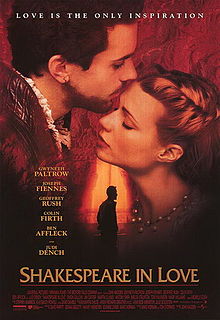
Shakespeare In Love Poster
Shakespeare In Love is one of those films that gets a lot of hate from critics and movie buffs. Its crime? Beating Saving Private Ryan for the Best Picture Academy Award. Funny, I didn’t know that when the Academy makes a decision you disagree with, it somehow instantly makes the winning film terrible. The Academy makes terrible decisions all the time – but that’s a problem with the voters, not the films they choose. At any rate, I think another reason why this film gets an enormous amount of hate is because it’s a romantic comedy. A CHICK FLICK, OH MY GOD! And yet, this supposed ‘Chick Flick’ was directed by a man, written by men (including Tom Stoppard, a playwright most famous for Rozencrantz & Gildenstern Are Dead) and with a cast (for historical reasons) mostly populated by men. 

And yet, oddly enough, this film is pretty feminist. The rights and roles of women have come a very, very long way since the 1590s, and yet this film shows us the major societal problems that occur when women are denied agency. The lack of rights given to the film’s heroine, Viola DeLesseps, seem needlessly cruel and puritanical to modern standards. However, Queen Elizabeth I’s reign should be seen as an important time in feminist history. Not only did she prove to England, and the world, that a woman could rule and be a highly capable leader on her own without a husband, she brought England into a Golden Age. Elizabeth I is thus used in this film as a symbol of the kinds of heights women can achieve if they are only given the opportunity.

What this shows me is that if feminists keep fighting for women’s (and LGBTQ, and POC) rights, future generations will also look back on our era and see our as of yet denied rights the same way we view the rights denied women in the Renaissance era. The things we have been fighting for will be considered a given. Progress is only a future away.

By showing the major societal flaws that occur when women are denied agency, here are 10 statements that Shakespeare In Love makes on Women’s Rights:
Shakespeare kisses Viola as Thomas Kent
1. Women were not allowed to be actors: The first major conflict of the film is Viola’s longing to be an actor. She adores Shakespeare’s plays and reveres poetry above all. But it was the law that only men can appear on stage as actors in plays; it was seen as lewd and obscene for women to act. This is one of those aspects of Elizabethan society that seem positively absurd by modern standards. Could you imagine our movie industry today if every female character was played by crossdressing men and prepubescent boys? And yet, some vestiges of this type of law still remain – women are still seen as the gatekeepers of morality. It is still a fact that some things are seen as okay for men to do, but obscene and disgusting for women to emulate. Slut vs. stud, anyone? At any rate, there is a blatant women’s rights violation here in that Viola’s true ambition – just to act – is seen as illegal and immoral.

2. Fathers control their daughters’ destinies. As the beautiful daughter of a social climbing merchant, Viola DeLesseps is seen by her father as a mere asset, not his child. He does not even ask her if she desires to be married, nor does he tell her that he has decided her future for her behind her back. He is even contemptuous of her when speaking to her future husband, and blatantly bribes the Earl of Wessex to marry her: “Is she obedient?” “As any mule in Christendom. But if you are the man to ride her, there are rubies in the saddlebag.” Marriage at this time, at least for nobility/aristocracy was seen more as a business or political transaction, and love is never considered.
3. Husbands control their wives even before they’re married. Lord Wessex is not a nice guy. At the DeLesseps’ party, Wessex refers to Viola as “my property” before their engagement is even official. He threatens Shakespeare’s life for admiring Viola – he is extremely possessive of her, and Viola does not even know yet that she is to marry him. He later starts ordering Viola around, throwing screaming fits if she dares to be late. Viola’s unguarded contempt of Wessex, and her later escape from their wedding carriage to see the play, show that she is strong-willed, and not at all likely to be the submissive bride he was hoping for. Viola is thus pushing the limits of freedom that are available to her in defiance of the arranged marriage.
4. Women are not allowed to make their own choices of marriage. The pain that Viola’s arranged marriage causes serves as the other major conflict of the film. Viola can never marry Shakespeare. Even if he were not married with children, he is poor, and playwrights/actors are seen as the amongst the lowest class people in London. As the daughter of a rich merchant, she would never be allowed to marry so far beneath her station. Her father has bought the Earl of Wessex so his grandchildren will be nobility – she is not even given the choice as to whether she may have children or not. It is Viola’s duty to follow her father’s wishes – she does not get any choice at all. She also knows that were she to defy Wessex, Queen Elizabeth would know the cause, and execute Shakespeare for it, as Elizabeth has given her official consent to the marriage. 
5. Women are expected to be submissive and humble. The Earl of Wessex must get the Queen’s consent to marry, so Viola is to appear at court before her. Wessex thus demands that she be “submissive, modest, grateful and brief” when she is presented to the Queen. He is in effect asking Viola to defy everything that she feels inside just so Lord Wessex can increase his personal fortune. Because she is an actor, she initially behaves as he requests, but when she impulsively defends the ability of plays/poetry to represent the truth and nature of love, she actually impresses Elizabeth enough for her to officiate a wager between Lord Wessex (who denies that plays have this power) and a disguised Shakespeare. The ironic subtext of Wessex’s demands is that he is expecting Viola to behave as would please a man of that time, forgetting that Elizabeth is first and foremost a woman.
Viola and Shakespeare as Romeo & Juliet
6. Women are seen as possessions. As mentioned earlier, Lord Wessex refers to Viola as “my property” before their engagement has even become official. Her father compares her to a mule, and vulgarly makes a double entendre about “riding” her to Lord Wessex. Lord Wessex also goes into a murderous rage and is intensely jealous that William Shakespeare has won Viola’s love. The only thing that he shows pleasure in is when he believes that Shakespeare (who he thinks is Christopher Marlowe) has died. His power is such that he can threaten Shakespeare’s life, in public, in front of multiple witnesses who are friends of his, without fear of repercussion – Shakespeare covets that which belongs to Wessex. But the women in this story know better. On Viola’s wedding day, both her Nurse and her mother are weeping – not for joy, but for knowing that the men of the age control Viola’s destiny.
7. Consent is seen as optional. There is a very strong contrast between Lord Wessex and William Shakespeare in how they approach Viola as a lover. When Wessex informs Viola that they are to be married, he tells her, “You are allowed to show your pleasure.” He then informs her that he chose her because he was attracted to her lips, and then forces a kiss on her. When she slaps him, he reminds her that she cannot defy her father nor her Queen. In contrast, when Shakespeare and Viola prepare to make love for the first time, he interrupts her to make sure that she truly does consent to sex with him: “Wait! You’re still a maid, and perhaps as mistook in me as I was mistook in Thomas Kent.” “Are you the author of the plays of William Shakespeare?” “I am.” “Then kiss me again, for I am not mistook.” The true and ideal nature of love is for both parties to enthusiastically consent to physical pleasure – it is quite telling that the poor playwright respects the agency of women far more than the rich Earl does.
8. Virginity is seen as a prize to be won. When Viola is presented to Queen Elizabeth, she detects that something is different about her, and correctly surmises that she has fallen in love and lost her virginity since the last time she saw her. She tells Lord Wessex: “Have her, then. But you are a lordly fool. She’s been plucked since I saw her last, and not by you. It takes a woman to know it.” Notably, she is not implying that Wessex is a fool for marrying a non-virgin, but for marrying a woman that will never love him. This above all makes Wessex murderously jealous. And yet, Viola too sees her lost virginity as something that was precious: “I loved the writer and gave up the prize for a sonnet.” She has no regrets about her love affair with Shakespeare, but also knows that Lord Wessex is not likely to forgive her for emotionally and physically loving anyone but him.
9. Elizabeth I is sympathetic to Viola’s situation. Viola was recruited to play Juliet when the teenage boy actor’s voice had suddenly broken, and the Master of the Revels was intending to arrest all of the actors for knowingly allowing a woman to act onstage. Elizabeth I was watching the play in disguise. She comes to Viola’s rescue, and decides to pass her off as her pseudonym, Thomas Kent: “The Queen of England does not attend exhibitions of public lewdness. So something is out of joint. Come here, Master Kent. Let me look at you. … Yes, the illusion is remarkable. And your error, Mr. Tilney, is easily forgiven. But I know something of a woman in a man’s profession. Yes, by God, I do know about that.” Her last statement is incredibly powerful when related to how this film interprets women’s rights. She, more than anyone else in that era, knows what it is like to be someone who has all the power in the world, and yet none of it at the same time. She later reflects on the powers she does not have: “Why, Lord Wessex. Lost your wife so soon?” “Indeed, I am a bride short, and my ship sails for the new world on the evening tide. How is this to end?” “As stories must when love’s denied — with tears, and a journey. Those whom God has joined in marriage, not even I can put asunder. Master Kent. Lord Wessex, as I foretold, has lost his wife in the playhouse. Go make your farewells, and send her out. It’s time to settle accounts.”

10. Gender is but a performance. One of the more interesting subtextual elements of this film is how it chooses to approach gender. Most obviously, Viola convincingly played two male parts at the same time – that of her pseudonym, Thomas Kent, and as Romeo Montague. She would never have been discovered if she had not made love with Shakespeare in a place where they could be spied on. She binds her breasts when playing Thomas, which is a common practice used by transgender men. The laws requiring that only men can be actors cause another layer of representation of gender – older men must play older women, and prepubescent boys play young women. They do not show shame or discomfort at being made to crossdress – it is a just part to play, just like all gender is an instinctive societal role that is played. In the end, when Shakespeare immortalizes Viola as the heroine of his next play, Twelfth Night, that play eventually becomes famous for its metacommentary on the nature of gender and theatre itself: Viola is a female character who masquerades as a man, but is played by a young man masquerading as a woman. A man plays a woman playing a man. The lines of gender are blurred – even in Shakespeare’s time he knew that there’s no such thing as the gender binary.
This film deserves to be loved again. Its producers may have bought its many Academy Awards (though I don’t think anyone is going to argue about Judi Dench’s win) but that does not invalidate the film’s greatness. It is one of the few comedies to win Best Picture, and though it is bittersweet, it is a film that fills me with joy every time I watch it. And anyway, I’m an English major. Loving Shakespeare comes with the territory.

Myrna Waldron is a feminist writer/blogger with a particular emphasis on all things nerdy. She lives in Toronto and has studied English and Film at York University. Myrna has a particular interest in the animation medium, having written extensively on American, Canadian and Japanese animation. She also has a passion for Sci-Fi & Fantasy literature, pop culture literature such as cartoons/comics, and the gaming subculture. She maintains a personal collection of blog posts, rants, essays and musings at The Soapboxing Geek, and tweets with reckless pottymouthed abandon at @SoapboxingGeek

Female Literacy as a Historical Framework for Hollywood Misogyny

Literacy has long been a powerful tool. For a subjugated group to become literate, freedom, power and representation were surely close to follow.
On the other hand, if those subjugated groups remained illiterate–by force or lack of access–hegemony could be kept intact.
Women have had to fight religious, social, political and even medical institutions that tried to keep them from comprehensive eduction and broad literacy. (Of course, women’s literacy and access to education is still restricted in many fundamentalist religious cultures worldwide–from the extreme of the Taliban attempting to assassinate a 14-year-old Pakistani girl who blogged and pushed for an education, to the more subtle Christian Patriarchy Movement in the US, which advocates young women eschew college to be “stay-at-home daughters.”)
Historically, women’s literature was often relegated to spiritual diaries, letters and personal reflections on the feminine sphere. As literacy became more widespread in the 19th century, women began entering the publishing world in earnest (usually with male or androgynous pen names), although they were often met with scorn, as the female author George Eliot satirizes in “Silly Novels by Lady Novelists” (from which TV Tropes gleaned numerous modern tropes).
In her New Yorker review of the book A Woman Reader, Joan Acocella writes:

“In thinking about wisdom, it helps to read about wisdom—about Solomon or Socrates or whomever … Likewise, goodness and happiness and love. To decide whether you have them, or want to make the sacrifices necessary to get them, it is useful to read about them. Without such introspection, women seemed stupid; therefore, they were considered unfit for education; therefore, they weren’t given an education; therefore they seemed stupid.”

This cycle of restricting and then denigrating women’s literacy and women’s writing can be seen today not only in the marginalization of women writers, but also in Hollywood. When women finally break through and are able to tell their stories, those stories are immediately dismissed as silly and trivial.

Mark Twain, who despised Jane Austen’s silly novels, said,

“Everytime I read ‘Pride and Prejudice’ I want to dig her up and beat her over the skull with her own shin-bone.”


The Slate article “A Brief History of the Beef Against Women Reading,” notes:

“As the marketplace for words increasingly skewed female, men started trolling, claiming that women’s novels were sexually corruptive, dangerously distracting, and hopelessly unrealistic, or even damaging to women’s mental health. (One 19th-century doctor, faced with a novel-reading woman, prescribed a book on beekeeping instead.) Male authors adapted by publishing helpful advice for women targeted at keeping them in their place.”

It is no wonder, then, that Hollywood tends to symbolically annihilate women’s stories, and that some film audiences push back against powerful female characters or scoff at the “chick flick” genre. All of this recorded history about women reading and writing (and why they were kept illiterate to keep them subjugated, and why their eventual published writings were met with scorn) provides a framework for the difficulties that female screenwriters and directors face in cinema.
On The Hathor Legacy, Jennifer Kesler documents that during her film courses at ULCA, she was routinely reminded to essentially not write screenplays that pass the Bechdel Test. One industry professional told her, “The audience doesn’t want to listen to a bunch of women talking about whatever it is women talk about.”
This is typically the excuse given in regard to why women’s stories are not universal, and why they won’t “sell.” Tradition is hard to break. Male audiences won’t go see stories revolving around women, right?
Perhaps this bleak, largely anti-feminist landscape in Hollywood is more deliberate. If we acknowledge women’s long history of being neglected education and literacy, and that women have been repeatedly told (or observed) that their stories lack action and intrigue for a broad audience, how can this not have larger social effects? And at some point, do we come to the conclusion that these messages are what the dominant group wants?
Women’s stories are women’s stories and many have common themes that support cultural stereotypes and show women how they are supposed to be. Even if a film breaks stereotypes, the viewership is expected to just be female. Ask Men has a “Top Ten Chick Flicks We Can Stomach” guide, to save men from “too much pain” on date night.
Women are not a minority. They are more than 50 percent of the population in the US, and have met and surpassed men in undergraduate and graduate degrees.
However, according to the Women’s Media Center:
 

– Of the top 250 domestic grossing films, women were 5% of the directors, 14% of the writers, 18% of the executive producers, 25% of the producers, 20% of the editors, and 4% of the cinematographers.

– In the key behind-the-scenes role in entertainment television, women were 18% of the creators, 22% of the executive producers, 37% of the producers, 15% of the writers, 11% of the directors, 20% of the editors, and 4% of the directors of photography.

The documentary Miss Representation points out that only 16 percent of films feature female protagonists.
Social change is slow; this is not news. Films, however, are a reflection of society–our norms and our fears.
And fear of female power, of female dominance, is real.
Roger Ebert recently published a guest blog post by a film reviewer who experienced censorship by a misogynist publisher. In an e-mail to the columnist, the publisher said:

“I don’t want to publish reviews of films where women are alpha and men are beta.
where women are heroes and villains and men are just lesser versions or shadows of females.

i believe in manliness.” [sic]

This isn’t an isolated opinion. If women in power upset the masculine trajectory of dominance in the real world (see: legislation on reproductive rights, religious hierarchies, the lack of equal representation of women in government) and incite fear in “traditional America,” of course powerful women on the big screen are a threat to the patriarchy. Our media, then, is a powerful hegemonic tool.
In my Women’s Literature class this week, I had assigned a few graphic and difficult pieces that dealt with birth and abortion. I asked my students, “How many stories and poems about men in war have you read in literature classes?” They nodded, and responded that there had been many. None, however, had read stories by women about birth or abortion.
This disconnect in the stories we hear and see and the actual stories we live is stark. And if women’s stories are continually pushed aside in scriptwriting courses or passed over for stories by and about men’s experiences, then women will undoubtedly continue to be subjugated outside of novels and movie theaters, and their realities will seem less like reality, and more like a marginalized sub-plot.


Leigh Kolb is a composition, literature and journalism instructor at a community college in rural Missouri. 

A Review and An Interview: ‘Aung San Suu Kyi: Lady of No Fear’

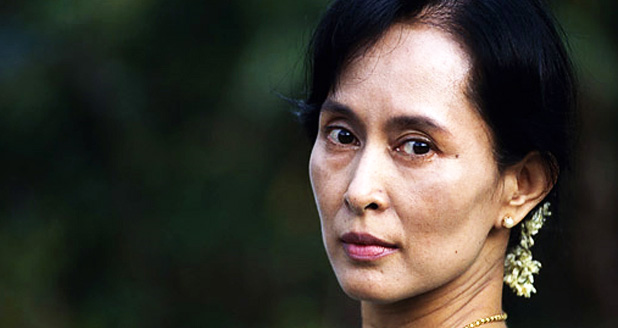
To say that Aung San Suu Kyi, political prisoner and General Secretary for the Burmese National League of Democracy is one of the world’s most powerful and inspirational women would not be a stretch. Leaving the safety of England and the care of her family she endured 15 years of house arrest in her non-violent quest for removal of the military junta in power and the instating of democracy in Myanmar. Last week I was lucky enough to attend the 12th Annual Gwangju Film Festival here in South Korea and watch the 2010 documentary, Aung San Suu Kyi: Lady of No Fear. Even luckier was that the director, Anne Gyrithe Bonne, was in attendance and graciously agreed to an interview.

It’s entirely coincidental that my interview with Anne Gyrithe Bonne will be published during the same week that United States President, Barack Obama, will be in Myanmar. While Myanmar’s current leadership has released many of their political prisoners, Myanmar still struggles with human rights violations. The President of Myanmar, Thein Sein, has promised to review all of the current political prisoners and seek their release by the end of the year. Hopefully President Obama’s visit to Myanmar can spur more changes and continue to encourage their transition to a stable and safe country.

The admirable Aung San Suu Kyi, ever mindful of the hard road towards peace, has warned against too early an acceptance of the government’s words, cautioning against their possible motive of appeasement and fearful that the country could slip back into military control with, ‘the mirage of success’ in front of them. Aung San Suu Kyi’s great strength and personal sacrifice in her fight against the government is ongoing and complete, features that are simply displayed in Bonne’s film.

Aung San Suu Kyi: Lady of No Fear naturally covers Aung San Suu Kyi’s infamous periods of house arrest and the personal discipline and mental fortitude she possessed which allowed her to be such a powerful leader and democratic activist. However, the film focuses on Aung San Suu Kyi’s private life, which Bonne would argue is essential to understanding her involvement in the Burmese struggle for democracy. Bonne specifically chose to focus on the astounding relationship between Aung San Suu Kyi and her husband, Michael Aris, since Aris was a major support to Aung San Suu Kyi and similarly held her belief that Burma was everything: more than each other, more than their children. 

Aung San Suu Kyi

What the film does especially well at demonstrating is the incredible mythic power that Aung San Suu Kyi has over the Burmese people. Because of her background as the daughter of the great commander and soldier of independence, Aung San, as well as her renowned public speaking abilities, Aung San Suu Kyi was able to step into her father’s shoes; as one loyal Burmese supporter said of her, “She is not only a fighter, she is a commander.”

I asked Bonne what she felt that Aung San Suu Kyi had given to women of the world, particularly those involved with the issue of human rights and she suggested something very simple: “rebelliousness.” Without this rebelliousness, a rebelliousness founded in the exemplary cause of civil rights and human freedoms, hierarchies cannot fall and ongoing cycles of violence and abuse and repression cannot be removed. One of the most stunning moments of the film came during a clip of an interview Aung San Suu Kyi had given some years ago. In the interview she’s asked about the situation of her communications with the outside world. While she was given permission to write letters to her family, they were all censored by the government; so, incredibly, she refused to send any more letters because she didn’t want to, “communicate through the authorities.” Even completely isolated from her family she refused to give in to the demands of tyranny and authority.
There is a second side to her though; her graceful and poised nature set her apart from other would-be leaders, and even from her college friends. Aung San Suu Kyi was educated at Oxford during the sixties and while other women were exploring the sexual revolution, Aung San Suu Kyi protested that she wanted to be a virgin when she married and that for now she would, “just hug her pillow at night.” In many ways Aung San Suu Kyi never forgot that she was from Burma, even refusing British citizenship as a way to maintain her heritage, for, as she told Michael when they married, “If Burma needs me, I will go.”

This dual-nature she possesses highlights her relationship to Burma: Burma was always her home, but neither was she the government’s puppet, sporting a rebellious streak of her own. A rebellious streak that Bonne believes is demonstrated in her marriage to Michael Aris, who despite his cosmopolitan upbringing, was still an “enemy of Burma” as an Englishman. Aung San Suu Kyi directly went against her mothers wishes, her family’s wishes, and even the wishes of her country by marrying the man she loved: her mother refused to even attend the wedding.

For many years Aung San Suu Kyi stayed in Oxford with her family, giving birth to two children and supporting her husband’s rising career as a Buddhist scholar, a topic that surprisingly Michael actually taught Aung San Suu Kyi about and an interest that the two of them shared. Eventually, Aung San Suu Kyi began to start her own projects, beginning a biography about her father and even applying to graduate school. However, the sudden failing health of her mother in 1988 called her back to Burma, unknowing that she would become its most outspoken and inspiring democratic activist in just a few short months.

In reference to Aung San Suu Kyi’s sudden propulsion into Burmese politics Bonne felt that Aung San Suu Kyi had been seduced by Burma, stating that, “She had been a proper housewife for a long time, ‘ironing Michael’s socks.’ During that time period the world was more about the man; if you wanted to get a Ph.D you couldn’t because you had your children and your house and your husband. Then there was the 8-8-88 revolution and she went to Burma to visit her mother and she was finally elevated. She gave a lot of public speeches, speeches with some say 250,000 thousand people, some say even 500,000 people; she was an amazing public speaker and people loved her.”

But her success would lead to great personal sacrifice, a situation that Bonne outlines in her film. While many are aware that Aung San Suu Kyi was held under house arrest for almost 15 years, some might not be aware that she was allowed to leave if she chose: she just wouldn’t be allowed to return. The conditions for her release were dependent upon her willingness to live in exile from Burma, however, despite her desire to see her family (Aris and her children were refused visa’s into Burma starting in 1995) she knew that she could only be effective if she stayed in Burma. And how could she leave Burma knowing that so many others could not? How could she leave knowing that Burmese people were suffering and political prisoners were being abused? She therefore chose separation from her family rather than abandon her people, a decision that led to criticism against Aung San Suu Kyi, some saying that she had ‘abandoned her children:’ A harsh accusation against any mother. 

Anne Gyrithe Bonne
Yet the interviews featured in the film point out this damaging double standard, a double standard that one of the greatest proponents of democracy and peace of our generation has had to endure. While male human rights activists have had to leave their families in the past, no one accuses them of child abandonment (Nelson Mandela was in prison for 27 years, but no one ever mentions his children). One of Aung San Suu Kyi’s friend’s from Oxford pointed out, that even the Buddha left his family in to go into the forest and meditate for a while, and yet a woman of self-sacrifice who gave everything for the family that was her country of Burma, still can’t be free from the lazy and illogical and damaging double standards that still rule our society.
 
It was the necessity of exposing the information about Aung San Suu Kyi leaving her children in England to serve Burma that was Bonne’s greatest concern about producing this film; “I was afraid of destroying her cause. It was a balancing act to make her story and also be respectful because I was afraid that the general [leader of Burma] and others would see the film and think she’s a bad mother and end up damaging her cause.” However, Bonne continued to make the film, believing it was essential to uncover the story behind the icon, to realize what had nurtured such a strong and effective supporter of democracy and civil rights.

The documentary then walks a delicate line in respectfully baring Aung San Suu Kyi’s unique past, highlighting her political achievements, while also demonstrating Aung San Suu Kyi’s own humanity. In that light, the film focuses more on her personal relationships and features interviews from several of her close friends and family. Interviews that reveal just how much Aung San Suu Kyi sacrificed for the people of Burma after the Burmese government refused to allow Aris to visit his wife, even as he was dying of prostate cancer. Michael died in 1999 in England, unable to say goodbye to his beloved wife.

Despite the tragic circumstances surrounding Aris’s death and the Burmese governments unwillingness to allow him into the country, Bonne believes that Michael’s death served to increase Aung San Suu Kyi’s popularity and power among the Burmese people. When it became known that she had given up everything for them, she became even more beloved and her supporters ever more loyal.

While great attention should obviously be paid to Aung San Suu Kyi’s incredible political triumphs, when asked about what she wanted audiences to take away from the film, Bonne explained that she hopes people see, “That there’s always a story behind the person and then realize what price they had to pay to become that person and who they are.” A tie-in to a beautiful line in the film where Aung San Suu Kyi says, “Nothing is free: if you want something of value you must make payments accordingly.” According to Bonne, Aung San Suu Kyi, “paid a big price.”

The extended version of the film (which I was able to view on Monday night) actually starts at the end of her house arrest, the first few minutes of the film showing footage of Aung San Suu Kyi after her 2010 release. This is unique for many reasons: the documentary was originally released a mere two days before Kyi’s 2010 release. Bonne is humble about this astounding coincidence however, acknowledging that the film certainly, “brought people’s eyes to her.” Obviously the film created a fair amount of exposure about Aung San Suu Kyi’s situation and must have helped to place pressure on the Burmese government. In 2011 the film was selected for the exclusive Berlin ‘Cinema for Peace’ Festival, after which a journalist was finally allowed into Burma to photograph Aung San Suu Kyi.

Bonne’s film exposes Aung San Suu Kyi’s humanity and in so doing has shown the strength and desire for freedom that is possible in leaders and which is fundamentally necessary for the development of human rights in the future. As Aung San Suu Kyi has said, “we must nurture mental strength and support each other,” because it is then that we experience true freedom: “freedom from fear.”

Rachel Redfern has an MA in English literature, where she conducted research on modern American literature and film and its intersection, however she spends most of her time watching HBO shows, traveling, and blogging and reading about feminism.


Not So Thankful for These Holiday Movies

The Vicious Kind crew heading home for an extremely uncomfortable Thanksgiving
The Vicious Kind, directed by Lee Toland Kriegar, opens in a diner. For a few uncomfortable moments we watch our protagonist, Caleb (Adam Scott) nearly weep to himself. This is the first of many almost-sobbing scenes. Throughout the film we get sort-of-explained chin wiggling, lips shaking and red eyeing. The first line Caleb utters – almost into the camera – is, “You know they’re all whores, right?” And so the tone is set for this dysfunctional family/Thanksgiving film.
Thanksgiving should be a great holiday for the center of good ol’ American realist drama. But, it can draw directors that want to explore the more obnoxious family dynamics over a colonialist turkey carcass. The holiday functions as a device that can bring together characters who would otherwise not associate with each other and force them to interact against the not-so-distracting backdrop of one of the least commercialized holidays of the season.
The Vicious Kind, in particular, focuses on Caleb, who I think we are supposed to sympathize with. It appears that way since we follow his story, and perspective. There are moments where it appears he softens. And it is his story that is most resolved at the end of the film. So, I think we are supposed to have some degree of compassion for him. The problem is that he is misogynistic, abusive, jealous, misanthropic and many more words that are only associated with detestable characters. He has a paternalistic agenda to “protect” his younger brother, Peter (Alex Frost), from women. Caleb does not approve of Peter’s new girlfriend, Emma (Brittany Snow), making many snide and overt comments to suggest that she is fickle and promiscuous. Caleb makes these claims without much evidence beyond Peter telling him that Emma had cheated on her previous boyfriend. (We all know that the relational and sexual decisions women make as 19-year-olds define their character overall.)
Emma is a flat character who awkwardly shrugs off inappropriate comments from her boyfriend’s father (J.K. Simmons) and pushes back against Caleb’s aggressive advances. She is generally polite to everyone, but obviously uncomfortable. Caleb calls her a “whore” in the grocery store. He tries to kiss her. He makes awful comments in every in-between moment. But then, after she and Peter makes an unsuccessful go at sex, Emma rushes out of the house to meet with Caleb who has been lurking outside the house. Then they get to banging in Caleb’s old bedroom. There isn’t much explanation for this. There is no reason we should believe Emma would be attracted to Caleb since he has only been out rightly horrible to her – save for a few creepy moments where he confesses attraction. When she insinuates she had been a virgin, Caleb rushes out of the room chiding her with, “Peter’s in love with you!”
How’s that for reinforcing the virgin-whore dichotomy?
The tone of The Vicious Kind brings to mind heavy-handed movies that appear to parody themselves in their portrayal of poor men being devastated by the wiles of women. See: The Room. Caleb all but says, “You’re tearing me apart!” When in fact, he is the dominating tool that needs a more demanding character arc. Emma leaves the situation distraught. Caleb gets to reconnect with his father. Caleb can continue to be a misogynist in this setting – he is rewarded at the end by a suggested reparation with his father. Emma, on the other hand, is loaded down with guilt and self-loathing.
Pieces of April is another film with unlikable characters trying to celebrate a family holiday. While it features a female lead, April (Katie Holmes), it doesn’t represent gender much better than The Vicious Kind.
In Pieces of April, April (Katie Holmes), plays with turkeys
April is trying to host Thanksgiving for her family. Her mother, Joy (Patricia Clarkson), is dying of cancer and she is working on making at least one good family memory. But, her oven is broken. And, she has a contemptuous relationship with her mother. She seeks help from her neighbors – using their ovens. We also follow her family as they drive her direction. Mostly, the traveling scenes are just interactions between Joy and family members. She’s acidic and cruel. Watching April cook and interact is also painful – she’s oblivious and self-absorbed.
Don’t worry though. There are some really rational and considerate male characters. April’s boyfriend, Bobby (Derek Luke) is thoughtful and intelligent. He pushes (sometimes literally) April through the process of making dinner. Joy’s husband, Jim (Oliver Platt), is the literal and emotional driver of the family.
See April and Joy cannot reconcile their disdain of each other without the paternal help of the men in their life. They are both immature and obnoxious in their own ways. Joy regularly storms off – implicitly demanding to be chased. At one time she leaves the car and sticks out her thumb with the intention of heading back home. April pouts on the stairs, blows balloons, huffs and is incompetent in the kitchen. We watch her try to mash uncooked potatoes in a too-long scene.
Thankfully, in Pieces of April we don’t see the intense and near-violent anti-woman sentiment that is in The Vicious Kind, but we are still stuck with infantile female characters and the subtle assertion that they are incapable without a man to lead them through their own problems.
While it will be good to get past the Thanksgiving flicks this season, that unfortunately means that corporate and faith-fetishizing Christmas films are next.

Director Spotlight: Anne Gyrithe Bonne

One of our favorite things to do here at Bitch Flicks is to spotlight and support female directors. It’s an established fact that the amount of female directors in Hollywood is substantially less than that of their male counterparts: roughly 5% of big-grossing films are directed by women.

However, while the numbers are small in Hollywood, indie films, international films, and documentaries have a growing number of talented female directors producing incredible work.
Anne Gyrithe Bonne
This week Bitch Flicks is spotlighting a great female documentary director, Anne Gyrithe Bonne, from Fredricksburg, Denmark. Laudably, Bonne’s films focus on human rights, showcasing prominent civil rights activists and their struggles for equality or democracy; she is especially interested in revealing “the story behind the icon” and considering the great personal sacrifices that these figures must make in order to achieve their goals.
Bonne has made several notable films. In 2004 she made The Will to Live, which was shot between September 11, 2001 and March 11, 2002 in the USA, South Africa, and Honduras: a hugely significant time for each of those countries since all were dealing with the difficult question of forgiveness after a national crisis. South Africa had the Truth and Reconciliation Commission following years of Apartheid and human rights abuses; the criminal charging and death of many human rights defenders in Honduras; the 9/11 terrorist attacks on the World Trade Towers that killed 6,000 people in the USA.
In 2008 she made The Art and the Maladjusted, a film about the influential Danish director, writer, debater and former artistic director of Odense Film Festival, Christian Braad Thomsen.
Most recently though, Bonne took on the difficult task of documenting the life of pro-democracy leader and human rights activist, the irrepressible Aung San Suu Kyi; this critically acclaimed documentary (nominated for ‘Best Documentary’ and the ‘Golden Butterfly’ award at the Movies That Matter film festival in the Netherlands) discusses Aung San Suu Kyi’s personal life in an attempt to understand what inspires and drives the Nobel Peace Prize winner. Bonne chose to specifically focus on Aung San Suu Kyi’s education at Oxford and subsequent marriage to Michael Aris (Buddhist scholar and Aung San Suu Kyi’s fiercest supporter of her cause).
Bonne was able to gain the trust of some of Aung San Suu Kyi’s closest friends and colleagues and the resulting film is one of great emotional depth and honesty about one of the 21st century’s most influential women. Bonne is respectful of Aung San Suu Kyi, but neither does she shy away from addressing criticism that some have leveled at her.
I was lucky enough to see the film here South Korea last week at a local film festival. Even more fortuitous was the fact that Bonne was in attendance at the screening and graciously granted me an interview. Check back here on Tuesday for my interview with her and a review of Aung San Suu Kyi: Lady of No Fear.
Click here for the Aung San Suu Kyi: Lady of No Fear website and here to see the BBC world interview with Anne Gyrithe Bonne.
Rachel Redfern has an MA in English literature, where she conducted research on modern American literature and film and it’s intersection, however she spends most of her time watching HBO shows, traveling, and blogging and reading about feminism.

Women Doctors: Professionally Competent, Messy Personal Lives

Mindy Kaling as Dr. Mindy Lahiri in The Mindy Project
Originally published at The Funny Feminist.
You know what I’d like to see more of on television? Stories about women who are successful in their professional lives, but whose personal lives are a complete mess. I especially want to see more of these stories about female doctors.
Take Emily Owens, M.D., for example. Starring Mamie Gummer, Emily Owens, M.D. tells the story of a medical intern who discovers that life in a hospital is just like high school. In the first episode, she confesses to her old high school crush that she likes him only to be shot down, and realizes that her high school nemesis is interested in her high school crush, but she also diagnoses a condition and performs a life-saving procedure during her first day on the job.
Or let’s look at Mindy Kaling’s new sitcom. The Mindy Project, recently picked up for a full season, tells the story of Mindy Lahiri, a gynecologist whose dating life is a mess. In the first episode of the show, she rudely interrupts an ex-boyfriend’s wedding and drives a bicycle into a pool, but by the end of the pilot, she’s heroically delivering a baby to a patient who doesn’t have health insurance – even interrupting a date to do it.
Or let’s go back in time a few years to a show called Grey’s Anatomy, the drama that won’t die (even when most of its characters do). Ellen Pompeo plays Meredith Grey, an intern who accidentally sleeps with her boss the night before her first day. (By “accidentally sleep with,” I mean that the sex was intentional, but she did not know the man was her boss.) She struggles with a patient, but gets a sexy love interest and a guy crushing on her forlornly from the minute he meets her. She’s also the intern who makes the miraculous discovery of what’s wrong with her patient, and figures out how to help a fellow intern’s patient.
Am I mess or a rock star intern? I can’t remember! | Meredith Grey (Ellen Pompeo) in Grey’s Anatomy
Now, pretend you’ve been living under a pop culture rock for the last few years and know nothing about these three shows or the actresses who play these characters. Based just on the descriptions, would you be able to tell which program was the satire/comedy and which two programs took the “professionally skilled, personal mess” trope seriously?
…Okay, so maybe the bicycle in the pool was the giveaway. Fair enough. The point remains that television continues to have a problem with professional women. Showrunners don’t seem to know how to write professional women characters without turning them into neurotic messes who can control nothing about their personal lives, and lately, female doctors are getting the brunt of that particular cliche.
I like comparing these female doctor characters to a character like House on House, M.D. or Dr. Perry Cox on Scrubs (who has been compared to House by other characters on Scrubs, amusingly enough). These men are professional geniuses whose personal lives are also fraught with drama, but we’d never call them neurotic. They’re curmudgeonly assholes who bark perfectly crafted sarcasm at their professional inferiors, colleagues, and bosses. Their personal lives are messes because they’re misanthropic, or because they’re masking years of built-up pain. Women doctors have messy personal lives because they overanalyze and are neurotic and always pick the wrong men.
I don’t know if showrunners write women doctors this way because they lack imagination, or because they’ve internalized sexist stereotypes, or because they don’t know how else to make a professionally competent women sympathetic to an audience. “We’ve got a woman doctor here, because women can be doctors now, but women who are TOO put-together will be a turnoff, so we’ll make her a mess outside of work! INSTANT EMPATHY!”
Fortunately, Mindy Kaling is aware of this cliche, and the episodes of The Mindy Project following the pilot have veered away from “professionally competent, personally messy” plots.Show-Mindy is often portrayed as less neurotic and more of a jerk, and Kaling is more interested in making the character funny than making her likable. Show-Mindy is several steps in the right direction, and I hope we start seeing more characters like her, soon.
But not too soon, because I want there to still be a market for my own pilot about a professionally competent, neurotic female doctor. Doctor Love tells the story of Hilarie Love, a young physician who can’t seem to get her personal life together. In the pilot episode, Hilarie goes on her first date since high school, where her prom date stood her up to go have sex with the cheerleader. Unfortunately, she winds up wearing an outfit where none of the clothes match, and gets so nervous that she throws up on her date in the middle of a restaurant, and almost accidentally kills him when she stands up and knocks the table on him. Then she gets called into work, and performs a miraculous, life-saving surgery (even though she’s not a surgeon) on a young blind boy who’s been shot, removing the bullet with her bare hands and donating her own blood to rejuvenate the child. This catches the attention of a handsome attending physician who finds her competent and pretty, and is still intrigued by Hilarie even after she throws up on him, too.
What do you think? Do we have a hit?
Oh, I get it. It’s butterflies in the…er, ribcage. | Mamie Gummer in Emily Owens, M.D.
Lady T is an aspiring writer and comedian with two novels, a play, and a collection of comedy sketches in progress. She hopes to one day be published and finish one of her projects (not in that order). You can find more of her writing at The Funny Feminist, where she picks apart entertainment and reviews movies she hasn’t seen.

Women Doctors: Professionally Competent, Messy Personal Lives

Mindy Kaling as Dr. Mindy Lahiri in The Mindy Project
Originally published at The Funny Feminist.
You know what I’d like to see more of on television? Stories about women who are successful in their professional lives, but whose personal lives are a complete mess. I especially want to see more of these stories about female doctors.
Take Emily Owens, M.D., for example. Starring Mamie Gummer, Emily Owens, M.D. tells the story of a medical intern who discovers that life in a hospital is just like high school. In the first episode, she confesses to her old high school crush that she likes him only to be shot down, and realizes that her high school nemesis is interested in her high school crush, but she also diagnoses a condition and performs a life-saving procedure during her first day on the job.
Or let’s look at Mindy Kaling’s new sitcom. The Mindy Project, recently picked up for a full season, tells the story of Mindy Lahiri, a gynecologist whose dating life is a mess. In the first episode of the show, she rudely interrupts an ex-boyfriend’s wedding and drives a bicycle into a pool, but by the end of the pilot, she’s heroically delivering a baby to a patient who doesn’t have health insurance – even interrupting a date to do it.
Or let’s go back in time a few years to a show called Grey’s Anatomy, the drama that won’t die (even when most of its characters do). Ellen Pompeo plays Meredith Grey, an intern who accidentally sleeps with her boss the night before her first day. (By “accidentally sleep with,” I mean that the sex was intentional, but she did not know the man was her boss.) She struggles with a patient, but gets a sexy love interest and a guy crushing on her forlornly from the minute he meets her. She’s also the intern who makes the miraculous discovery of what’s wrong with her patient, and figures out how to help a fellow intern’s patient.
Am I mess or a rock star intern? I can’t remember! | Meredith Grey (Ellen Pompeo) in Grey’s Anatomy
Now, pretend you’ve been living under a pop culture rock for the last few years and know nothing about these three shows or the actresses who play these characters. Based just on the descriptions, would you be able to tell which program was the satire/comedy and which two programs took the “professionally skilled, personal mess” trope seriously?
…Okay, so maybe the bicycle in the pool was the giveaway. Fair enough. The point remains that television continues to have a problem with professional women. Showrunners don’t seem to know how to write professional women characters without turning them into neurotic messes who can control nothing about their personal lives, and lately, female doctors are getting the brunt of that particular cliche.
I like comparing these female doctor characters to a character like House on House, M.D. or Dr. Perry Cox on Scrubs (who has been compared to House by other characters on Scrubs, amusingly enough). These men are professional geniuses whose personal lives are also fraught with drama, but we’d never call them neurotic. They’re curmudgeonly assholes who bark perfectly crafted sarcasm at their professional inferiors, colleagues, and bosses. Their personal lives are messes because they’re misanthropic, or because they’re masking years of built-up pain. Women doctors have messy personal lives because they overanalyze and are neurotic and always pick the wrong men.
I don’t know if showrunners write women doctors this way because they lack imagination, or because they’ve internalized sexist stereotypes, or because they don’t know how else to make a professionally competent women sympathetic to an audience. “We’ve got a woman doctor here, because women can be doctors now, but women who are TOO put-together will be a turnoff, so we’ll make her a mess outside of work! INSTANT EMPATHY!”
Fortunately, Mindy Kaling is aware of this cliche, and the episodes of The Mindy Project following the pilot have veered away from “professionally competent, personally messy” plots.Show-Mindy is often portrayed as less neurotic and more of a jerk, and Kaling is more interested in making the character funny than making her likable. Show-Mindy is several steps in the right direction, and I hope we start seeing more characters like her, soon.
But not too soon, because I want there to still be a market for my own pilot about a professionally competent, neurotic female doctor. Doctor Love tells the story of Hilarie Love, a young physician who can’t seem to get her personal life together. In the pilot episode, Hilarie goes on her first date since high school, where her prom date stood her up to go have sex with the cheerleader. Unfortunately, she winds up wearing an outfit where none of the clothes match, and gets so nervous that she throws up on her date in the middle of a restaurant, and almost accidentally kills him when she stands up and knocks the table on him. Then she gets called into work, and performs a miraculous, life-saving surgery (even though she’s not a surgeon) on a young blind boy who’s been shot, removing the bullet with her bare hands and donating her own blood to rejuvenate the child. This catches the attention of a handsome attending physician who finds her competent and pretty, and is still intrigued by Hilarie even after she throws up on him, too.

What do you think? Do we have a hit?
Oh, I get it. It’s butterflies in the…er, ribcage. | Mamie Gummer in Emily Owens, M.D.
Lady T is a writer with two novels, a play, and a collection of comedy sketches in progress. She hopes to one day be published and finish one of her projects (not in that order). You can find more of her writing at www.theresabasile.com.